
Americans have an instinctive belief that the presidency comes with a kind of permanent curtain. Not just during a term, but forever. A sense that some conversations, some records, some embarrassing details are simply not for the rest of us.
That instinct is understandable. It is also incomplete.
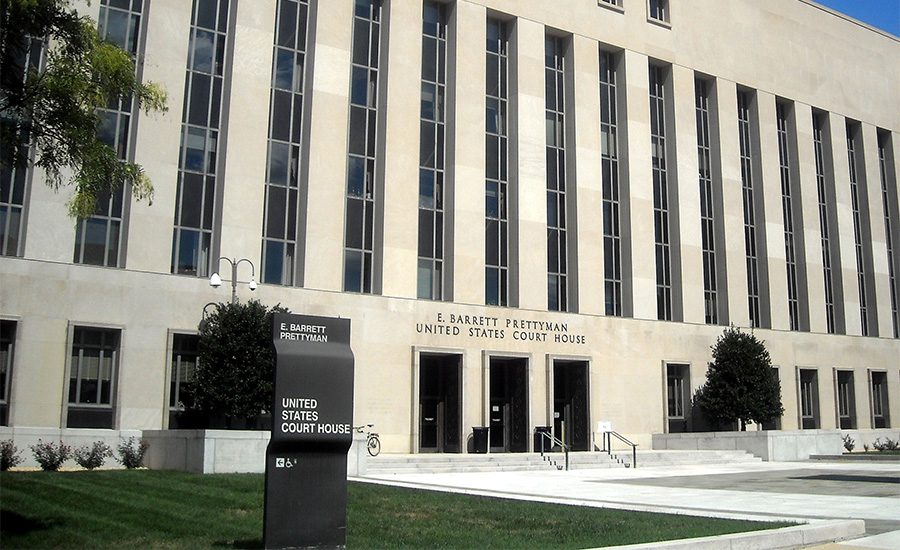
In a new fight over audio recordings and transcripts of interviews Joe Biden gave to his ghostwriter years ago, a federal judge has now cleared the way for the Justice Department to release redacted versions of those materials, over Biden’s objections. The ruling is not a sweeping constitutional pronouncement about transparency. It is a FOIA dispute about how the Justice Department balanced privacy against public interest, and whether that balancing was lawful.
Join the Discussion
What the judge did
U.S. District Judge Dabney Friedrich rejected Biden’s effort to block the Justice Department from releasing recordings and transcripts from interviews he conducted with writer Mark Zwonitzer in 2016 and 2017 while working on a memoir. The materials have been sought under the Freedom of Information Act, including by the Heritage Foundation. Republicans in Congress also sought the recordings after a 2024 report cited them as documentation of Biden’s “diminished” mental capacity.
The judge did not order an immediate public dump. She paused the effect of her decision for three weeks to allow Biden to appeal. His lawyers indicated they would.
On the merits, the court’s reasoning turned on a classic FOIA tension: how much weight to give personal privacy, and how much weight to give the public’s interest in understanding what the government did and why.
Friedrich concluded Biden had not shown, at this stage, that the Justice Department acted unlawfully in deciding to release the materials with redactions. The Department of Justice, she noted, planned “extensive redactions” that would remove sensitive details including information about Biden’s family and health issues.
One line from the opinion captures the democratic purpose behind FOIA even though FOIA is a statute, not a constitutional command. Friedrich wrote that Biden “has not identified any public harm that would arise absent an injunction in this case,” and that the remaining privacy interest is outweighed by the public’s interest in the materials and FOIA’s “policy of broad disclosure of Government documents in order to ensure an informed citizenry, vital to the functioning of a democratic society.”
What Biden argued
Biden’s lawyers warned that disclosure would be irreversible and said the court should block release while an appeal plays out. In their telling, the injury is not just personal privacy. They also pointed to “weighty law enforcement interests,” arguing that once private conversations are released, “the disclosure of his private conversations cannot be undone,” and any resulting damage “will be permanent.”
Why these tapes are different
If these were purely private recordings sitting in a desk drawer, courts would have little to say about them. But the legal gravity here comes from where the recordings ended up and how they were used.
Special Counsel Robert Hur investigated Biden’s handling of classified materials and relied on portions of these interviews in his official work. Biden kept government documents in various offices, including an unsecured garage, and Hur used some of the transcripts to write portions of his government report. Hur’s report publicly described Biden’s memory and recall in blunt terms, including references to “diminished faculties and faulty memory.” Hur also pointed out Biden struggled to remember events and strained to relay even his own notebook entries.
That matters because once the executive branch uses a record to justify a prosecutorial decision, that record becomes harder to treat as if it were merely personal. Friedrich put it this way: “This case presents a confluence of significant public disclosures of prosecutorial decision-making, explicit reliance on particular records, and the statements of a high-profile public figure to support the Department’s decision.”
That is the core transparency principle at work. The government cannot easily say, “Trust our conclusions,” while withholding the pieces it used to reach them, at least not when Congress has told agencies through FOIA that disclosure is the default and secrecy is the exception.

FOIA as a check
The Constitution does not contain a general right to government information. The First Amendment protects speech and press, but it does not guarantee access to every government document. That access is largely a product of modern law, especially FOIA.
FOIA flips the usual posture of bureaucracy. Instead of “you cannot see this unless we let you,” it presumes you can see it unless an exemption applies. Agencies can still withhold a great deal. But they have to justify secrecy using a defined set of categories, and courts can check the work.
That judicial check is the point. In practice, FOIA is one of the main ways the judiciary forces the executive branch to defend its secrecy in public, using reasons that can be tested rather than slogans that cannot.
What courts can require
Courts cannot run the executive branch. But they can do several things that change the transparency equation, especially in FOIA cases like this one.
1) Enforce statutory disclosure duties
When Congress creates an obligation like FOIA, courts can order agencies to comply. That does not mean every record becomes public. It means the executive must fit its withholding into a lawful exemption and explain itself.
2) Compel production in litigation
Outside FOIA, courts can require the government to produce information through subpoenas and discovery when it is relevant to a case. That is not public transparency in the abstract. It is transparency in service of adjudication. Still, the effect can be similar because court filings and hearings often become public.
3) Reject claims that are too broad
The executive branch has real privileges, including protections for sensitive national security information and certain internal deliberations. But those privileges are not self-executing. When challenged, a court may review whether the claim fits, whether narrower redactions would suffice, or whether the public interest and the needs of justice outweigh the asserted secrecy.
What courts usually cannot require
This is where civic education has to resist the temptation to turn every transparency dispute into a morality play. There are hard limits.
- Courts generally cannot force disclosure of genuinely privileged presidential communications when the privilege properly applies and the need is not sufficient to overcome it.
- Courts do not rewrite FOIA’s exemptions. If an exemption squarely covers a category, a judge cannot order release just because the information is interesting.
- Courts often defer in national security contexts, especially where classified sources and methods are implicated, though deference is not absolute.
The enduring question is not whether secrecy exists. It does. The question is who bears the burden of justifying it, and how often an independent judge is willing to say: show your work.
Why it matters
It is tempting to read this case as a referendum on one politician’s reputation. But the legal lesson is broader and, frankly, more useful.
Modern executive power often runs on information control. Not just classified intelligence, but ordinary institutional control over what becomes visible, when, and through which narrative. FOIA, and the courts that enforce it, are one of the few durable tools citizens have to challenge that control without needing to win an election first.
Friedrich’s decision suggests a principle worth remembering even when your preferred party occupies the White House: when the government relies on records to explain a major exercise of executive discretion, it becomes harder to argue those same records are too private, too sensitive, or too inconvenient for the public to see. Redaction can protect legitimate privacy. It cannot become a substitute for accountability.