
In movies, the dramatic moment is the verdict. In real criminal cases, the most decisive moment can happen earlier, in a quieter room, in front of a judge who is not deciding guilt at all.
That moment can be a motion to suppress, the legal request that certain evidence never reach the jury because the government obtained it in a way the Constitution does not allow. The Fourth Amendment usually stands at the center of that fight. But suppression can also reach into the Fifth Amendment (including Miranda issues and voluntariness) and into Due Process and, in some post-charge settings, the Sixth Amendment (including flawed identification procedures).
A suppression ruling is not a technicality. It is one of the Constitution’s main enforcement mechanisms in everyday life: if government actors cut constitutional corners to get evidence, the consequence can be that the evidence is unusable.
Join the Discussion
What a motion to suppress is
A motion to suppress is a pretrial request asking a judge to exclude evidence from trial. The basic claim is simple: the evidence may be relevant, but it was obtained in violation of the Constitution or other binding law, so the jury should not see or hear it.
Most suppression motions are built on the exclusionary rule, the doctrine developed by the Supreme Court to deter unconstitutional searches and seizures by keeping illegally obtained evidence out of court.
One important nuance: suppression is most firmly established as a remedy for constitutional violations. For violations of statutes, court rules, or procedural requirements, the remedy depends on the specific law. Sometimes suppression is available. Sometimes the remedy is something else (or no remedy at all).
What counts as evidence that can be suppressed
- Physical items, like drugs, weapons, documents, phones, or clothing
- Statements, including confessions or admissions made during interrogation
- Test results, such as blood draws, breath tests, or laboratory analysis tied to an unlawful seizure
- Identifications, including lineups, photo arrays, and showups conducted in an unfair or suggestive way
- Derivative evidence, meaning later evidence discovered because of an earlier constitutional violation
That last category is where suppression becomes structurally powerful. Courts often call it the fruit of the poisonous tree: if the tree was poisoned by illegality, its fruit can be tainted too.
Fourth Amendment basics
The Fourth Amendment does not ban searches. It bans unreasonable searches and seizures. That single word is where most litigation lives.
In broad terms, the Fourth Amendment asks a few recurring questions:
- Was there a search or a seizure?
- Did the defendant have standing, meaning a legally protected privacy or property interest affected by the government action?
- Was there a warrant? If so, was it valid?
- If there was no warrant, did an exception apply?
- Even if police had authority to search or seize, did they exceed the scope of that authority?
If the answer chain points to “unreasonable,” suppression is typically the remedy the defense asks for. Courts still apply numerous limits and exceptions. Suppression is common enough to be routine, and technical enough to be strategic.
Common grounds for suppression
1) No warrant and no valid exception
Most people learn the basic idea first: police generally need a warrant. The real legal fight is usually about the word “generally.” Many searches occur without warrants because the government claims an exception applies.
Commonly litigated warrant exceptions include:
- Consent searches, where the dispute is whether consent was voluntary and whether the search stayed within its scope
- Search incident to arrest, where the dispute is whether the arrest was lawful and what can be searched afterward
- Exigent circumstances, like emergencies that allegedly made waiting for a warrant unreasonable
- Plain view, where officers claim they were lawfully present and the incriminating nature of the item was immediately apparent
- Vehicle searches, where mobility and probable cause often change the analysis
- Inventory and impound searches, where the dispute is whether police followed standardized procedures rather than using “inventory” as a pretext
- Protective sweeps, where the dispute is whether officers had a lawful basis and stayed within a narrow safety rationale
- Border and special-needs searches, where traditional warrant requirements may be relaxed in limited contexts
- Probation and parole searches, where supervision terms can significantly affect Fourth Amendment protections
In court, the question is not “Did police have a hunch?” It is whether the government can prove the legal conditions for the exception it is relying on.
2) A warrant that fails or is executed wrong
A warrant is not a magic amulet. The Fourth Amendment requires warrants to be supported by probable cause and to particularly describe the place to be searched and the items to be seized.
Defense motions often argue that:
- The affidavit did not establish probable cause
- The warrant was too broad, turning a targeted search into a general rummaging expedition
- Police searched the wrong place or seized items outside the warrant’s scope
- Officers violated execution rules in a way that matters to the remedy
A specialized version of this challenge is a Franks issue: the claim that the warrant affidavit contained material falsehoods or omitted critical facts, intentionally or recklessly. If the judge agrees, evidence found under that warrant can be suppressed.
One common point of confusion: knock-and-announce compliance is often litigated, but suppression is generally not the remedy for a knock-and-announce violation when officers had a valid warrant to search. Courts may treat it as a wrong with different consequences, not automatic exclusion of the evidence found.
3) Unlawful stops, detentions, and mission creep
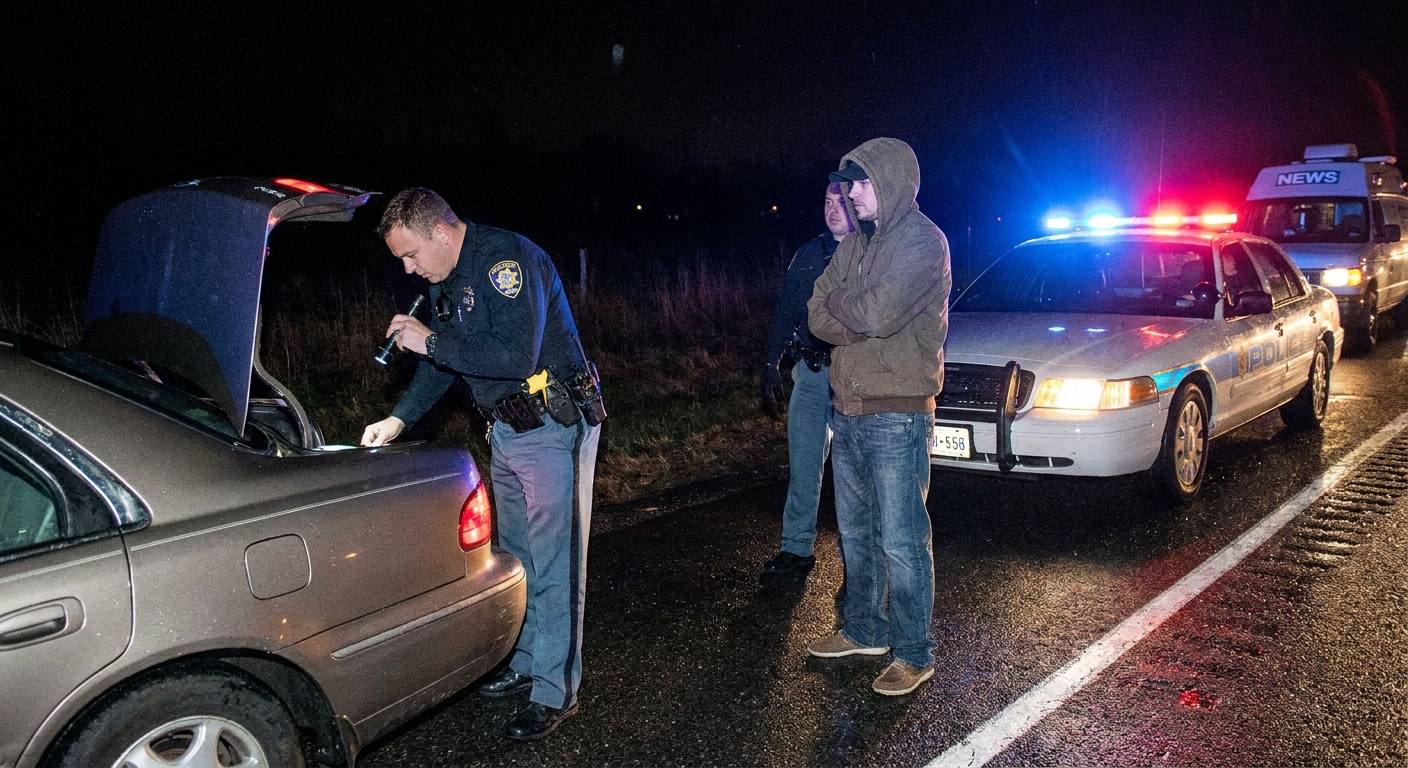
Fourth Amendment problems often begin before any search. A traffic stop, a stop-and-frisk, or a detention outside a home can be a seizure. If the initial seizure was unlawful, everything that follows can be vulnerable.
Courts commonly examine:
- Whether officers had reasonable suspicion or probable cause to initiate the stop
- Whether the detention lasted longer than needed for its lawful purpose
- Whether questioning or investigative steps improperly expanded the stop
This is where Fourth Amendment doctrine becomes less about dramatic raids and more about the everyday mechanics of policing: timing, scope, and justification.
4) Miranda and involuntary statements (Fifth Amendment)
Suppression is not limited to physical evidence. A defendant can move to suppress statements made during interrogation if the government violated Miranda requirements or if the statement was not voluntary.
Two common arguments are:
- No Miranda warnings during custodial interrogation
- Coercion, where the totality of circumstances suggests the statement was not the product of free choice
Miranda issues often turn on two deceptively simple questions: Was the person in custody, and were they interrogated?
It is also worth noting that Miranda suppression typically targets statements. The relationship between Miranda violations and later discovered physical evidence can be more complex and fact-specific. Physical evidence derived from an unwarned but voluntary statement is often not suppressed, while coercion and involuntariness raise deeper due process problems and can create broader “fruit” arguments.
5) Identification problems (Due Process and sometimes Sixth)
Eyewitness identification can be compelling, and it can be dangerously fragile. Suppression motions sometimes target identification procedures that were so suggestive they created a substantial risk of misidentification.
Commonly challenged scenarios include:
- Showups, where a witness is presented with a single suspect shortly after a crime
- Photo arrays where one person stands out due to lighting, background, or appearance
- Lineups where instructions or officer cues steer the witness
These challenges are often litigated as a Due Process issue. Depending on timing and circumstances, the Sixth Amendment right to counsel can also attach to certain post-charge identification procedures, creating another path to exclusion.

What happens at a suppression hearing
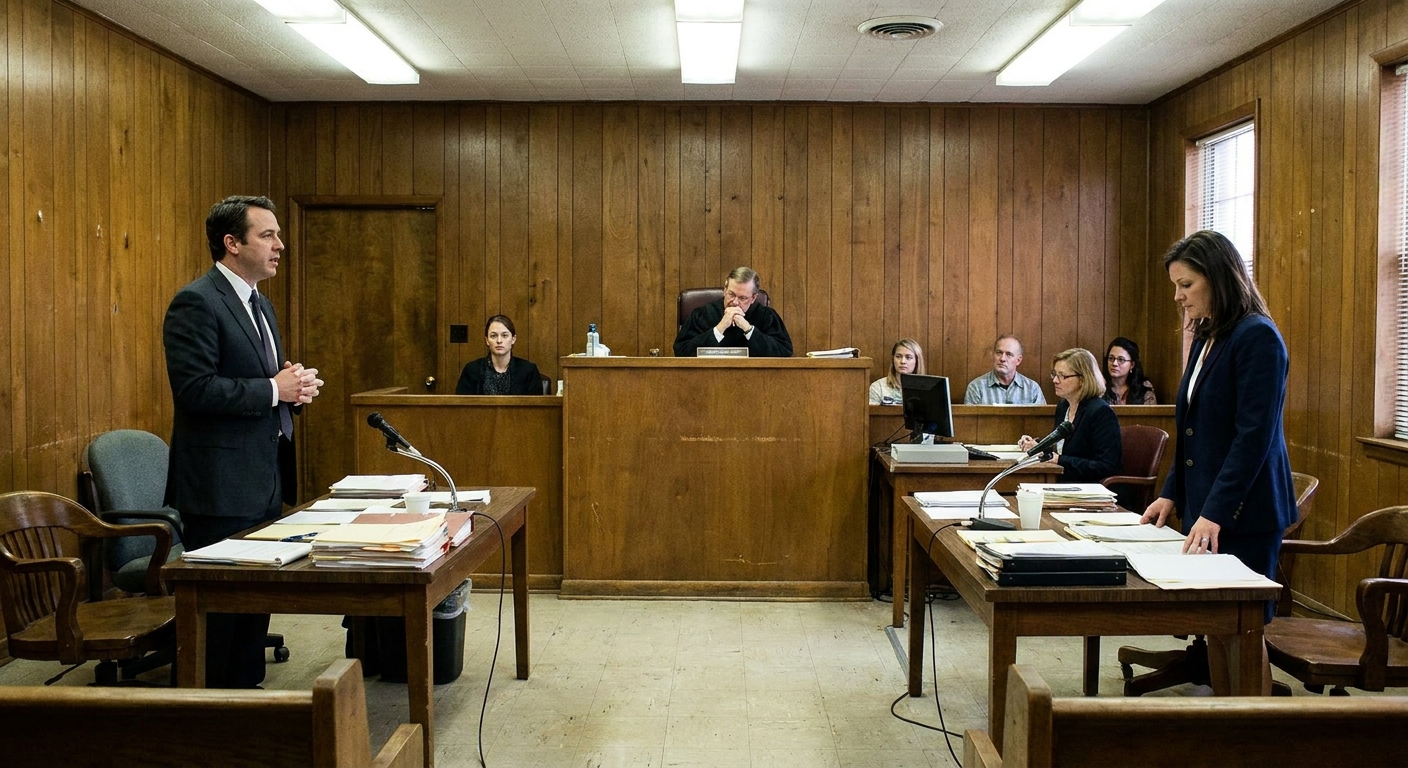
A suppression hearing is where constitutional theory meets factual detail. The judge becomes the factfinder for the motion, and the attorneys build a record that may matter later on appeal.
Step by step
- The defense files the motion, identifying the evidence to be excluded and the legal grounds
- The prosecution responds, usually arguing the search or seizure was lawful or that an exception applies
- Witnesses testify, often including police officers, forensic analysts, and sometimes civilian witnesses
- Exhibits are introduced, such as body-camera video, dashcam footage, warrant affidavits, maps, or phone extraction reports
- Legal argument, where both sides connect the facts to constitutional doctrine
- The judge rules, sometimes immediately, sometimes in a written order later
Who has the burden of proof
The details vary by jurisdiction and by issue, but a common pattern is:
- The defense must raise the issue and, in many contexts, show standing, meaning a protected privacy or property interest in the place searched or item seized.
- For warrantless searches, once the issue is properly raised, the prosecution often bears the burden to justify the search by proving an exception applies.
- For warrant-based searches, the defense often attacks probable cause or particularity, while the prosecution may invoke doctrines that protect good-faith reliance on a warrant. For a Franks claim, the defense typically bears a demanding burden to show intentional or reckless material falsity or omission.
In practice, suppression hearings can feel like mini-trials focused on a narrow slice of the story: what officers knew, what they did, and what the Constitution allows them to do next time.
Deadlines also matter. Suppression motions are usually subject to strict filing rules, and missing them can waive issues that would otherwise be litigated.
Limits and exceptions
The exclusionary rule is powerful, but it is not absolute. Courts have recognized several doctrines that can keep evidence in even when something went wrong.
Doctrines that can defeat suppression
- Good-faith reliance: evidence may be admitted if officers reasonably relied on a warrant later found defective
- Inevitable discovery: evidence may come in if the government can show it would have been found through lawful means anyway
- Independent source: evidence may be admissible if it was obtained through a separate, lawful path untainted by the violation
- Attenuation: if the connection between illegality and evidence becomes sufficiently remote, the taint can be considered dissipated
These doctrines reflect a recurring theme in search-and-seizure law: the Fourth Amendment is a rule of reasonableness, and courts often ask whether suppression meaningfully deters misconduct in the specific situation at hand.
State practice can differ, too. Some state constitutions and state courts provide broader protections than the federal baseline, and some state suppression rules are more defendant-protective than federal doctrine.
How rulings shape the case
A suppression ruling can change the trajectory of a case more than any cross-examination at trial, but it is not the only pressure point. Charging choices, plea negotiations, and witness credibility can matter just as much. When suppression is central, though, it can function like a switch that changes what the case even is.
If the motion is granted
- The prosecution may lose key evidence and be forced to dismiss or reduce charges
- Plea negotiations can shift dramatically in the defendant’s favor
- The government may pursue an interlocutory appeal in some jurisdictions
- The trial, if it happens, becomes a different case with a different narrative
If the motion is denied
- The evidence comes in, often strengthening the prosecution’s leverage
- The defense may preserve the issue for appeal, but must proceed under a tougher trial posture
- Defendants may reassess the risk of going to trial versus pleading
It is also worth separating two ideas that people sometimes blur together: suppression is about excluding evidence, while dismissal ends a case. Suppression can lead to dismissal, but it does not automatically do so. Sometimes the government still has enough admissible evidence to proceed.
The bigger Fourth Amendment picture
The Fourth Amendment is often taught as a set of bright lines: warrant equals lawful, no warrant equals unlawful. But the actual doctrine is a landscape of questions about privacy, property, reasonableness, and remedy.
A motion to suppress is where that landscape becomes practical. It is the mechanism that turns the Fourth Amendment from a statement of principle into a tool with consequences.
That matters for civic education because suppression law shows something essential about constitutional rights in the modern state: rights do not enforce themselves. They are enforced through procedures, burdens, hearings, and judicial rulings that most citizens never see.
Common questions
Does suppression mean the defendant got off on a technicality
Sometimes the evidence is reliable and still suppressed. The point is not to reward wrongdoing. The point is to set constitutional boundaries for the government. If courts admit evidence obtained through unconstitutional methods, the Fourth Amendment becomes a suggestion.
At the same time, the law does not treat every violation the same way. Courts often balance deterrence, costs, and the specific doctrine at issue, and some violations do not trigger exclusion even if a court finds the government acted improperly.
Can a judge suppress only part of the evidence
Yes. A judge might suppress certain statements but not others, or suppress items seized outside a warrant’s scope while allowing items properly seized.
Is suppression only for the Fourth Amendment
No. Fourth Amendment suppression is common, but courts also suppress evidence due to Fifth Amendment problems like Miranda and coercion, and due process problems with identifications.
Do these rulings affect only one case
They affect the individual defendant immediately, but they also shape police practice over time. Suppression decisions create incentives, and appellate opinions create rules that ripple beyond the parties in the courtroom.