
You can feel the constitutional tension in the phrase “presidential tariff power.” Tariffs are, generally, taxes of a particular kind: customs duties on imported goods. The Constitution assigns taxing and trade powers to Congress. Yet modern trade law often runs through executive-branch processes, where import costs can rise quickly after an executive-branch determination and a published notice or proclamation.
If that sounds abstract, think of familiar modern examples: Section 232 “national security” tariffs (steel and aluminum) and Section 301 tariffs responding to “unfair trade” (including the long-running China tariff program). Both operate through statutes Congress wrote, but they are put into motion through executive-branch processes. Section 232 frequently culminates in presidential proclamations. Section 301 is administered through the U.S. Trade Representative, with direction and policy involvement from the White House varying by administration.
That tension is exactly why a recent court ruling involving de minimis shipments matters. It is not just a fight about cheap packages. It is a fight about where Article I ends and executive discretion begins.
Join the Discussion
What de minimis means
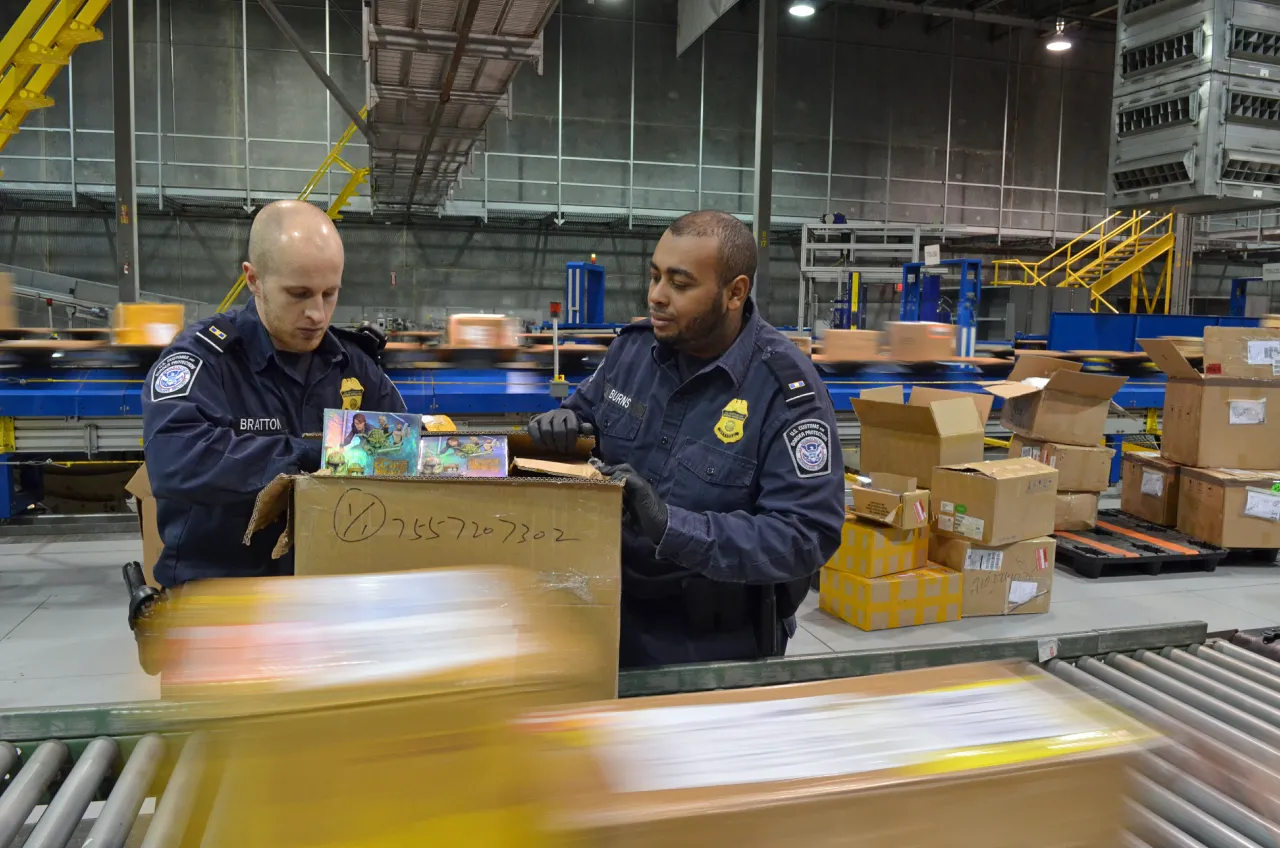
De minimis is Latin for “about minimal things,” often summarized as the idea that the law does not concern itself with trifles. In U.S. customs law, it refers to a rule Congress enacted that lets certain low-value shipments enter with simplified processing and, under the statute’s conditions, be admitted free of duty, subject to statutory exclusions and implementing rules.
The governing statute is 19 U.S.C. § 1321. Today, the headline threshold most people hear is $800. Practically, though, eligibility depends on the statute’s conditions and the implementing regulations, plus CBP’s operational administration. It is also limited by statutory exclusions and program rules, meaning some goods and some situations do not qualify even if the value is low (and other legal requirements can still apply).
You will sometimes see this described operationally as “one person, one day.” Treat that as a rough shorthand for how low-value eligibility is often discussed and managed in practice, not as a standalone legal rule and not as a substitute for the statute, regulations, and CBP guidance.
The core idea is administrative: if a package is so low-value that the cost of assessing and collecting duty is not worth the effort, Congress can authorize Customs and Border Protection to clear it with lighter paperwork. But de minimis is not a free pass from the rest of U.S. law. Even when a shipment can use the de minimis process, admissibility rules, other-agency requirements, statutory exclusions, and trade measures can still matter depending on the goods and how the relevant program is written and implemented. Also, “duty-free” is not always the same thing as “free of every charge,” because fees and other assessments can have their own statutory and regulatory rules.
Over time, that small administrative convenience became a major pipeline for e-commerce. When millions of packages flow in under a de minimis threshold, the “tiny exception” can start functioning like a parallel import lane.
Why it became combustible
- Tariff policy can be diluted. If a tariff is aimed at certain goods, a de minimis channel can reduce how often that tariff is collected.
- Enforcement becomes harder at scale. More packages, less documentation, and faster clearance create pressure points for screening, valuation, and country-of-origin checks.
- It spotlights a constitutional question. If tariffs are taxes, who is really choosing when the tax applies, Congress or the president, especially when statutes and administrative processes intersect?
What the ruling did
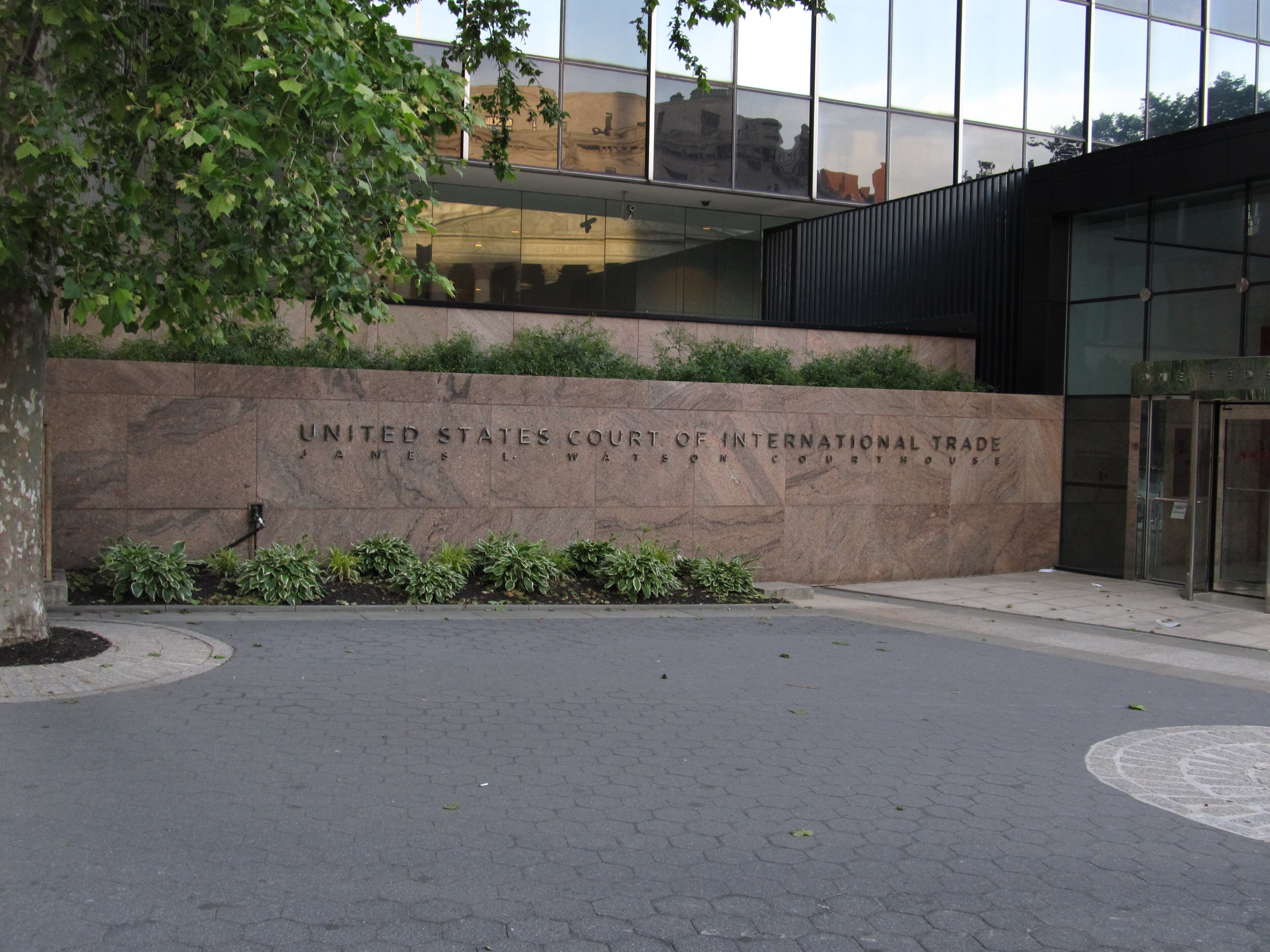
The news hook here is One Stop Shop LLC v. United States, decided by the U.S. Court of International Trade on August 15, 2024 (Court No. 23-00266, Slip Op. 24-95, Judge M. Miller Baker). The court granted the government’s motion to dismiss under USCIT Rule 12(b)(6) for failure to state a claim.
The dispute centered on whether CBP may assess Section 301 additional duties on covered products when they enter using the de minimis process in 19 U.S.C. § 1321. The importer argued, in substance, that using the de minimis entry mechanism meant the goods should be treated as duty-free even if they otherwise fell within a Section 301 action. The government’s position was that de minimis is a clearance mechanism, not a blanket immunity from lawfully imposed duties.
The court rejected the idea that § 1321 creates an automatic, across-the-board shield against duties that another statute and its implementing action lawfully impose. The key interpretive move was straightforward: § 1321 is a targeted, conditional low-value clearance provision, and it does not, by its terms, override otherwise-applicable duties that attach to covered merchandise under a separate tariff action. Put more plainly: if a product is on a Section 301 list, routing it through the de minimis channel does not automatically erase the additional duty.
One practical point matters for readers. Cases like this often turn on how statutes, implementing regulations, and CBP’s entry procedures fit together. The key question in any specific product category becomes concrete and statutory: what does the particular Section 301 action cover, how does it define covered merchandise and the relevant entry types, and what do the implementing rules say about collection when goods use simplified entry?
This is also where readers can get misled. The case is not best understood as a court inventing new presidential power. It is a court interpreting how two congressional enactments, plus their implementing machinery, interact in the real world.
How Section 301 works
Section 301 refers to authorities in the Trade Act of 1974 that allow the United States to respond to certain foreign trade practices. In the modern tariff context, a Section 301 “tariff” is typically structured as additional duties applied to covered products, implemented through USTR action (including notices and annexes that identify covered tariff lines) and then administered at the border by CBP.
A helpful distinction for non-specialists: ordinary customs duties are the baseline rates in the tariff schedule. Additional duties are extra charges layered on top by a specific trade remedy or action, such as a Section 301 action. Other charges and fees can have their own rules and do not always track “duty” in the way people assume.
That framing matters because disputes about de minimis are often, at bottom, disputes about classification and collection. Is a given charge treated as part of the ordinary customs duty structure, or as an additional duty that still attaches when merchandise is imported, regardless of whether the entry paperwork is simplified? The answer usually comes from the specific Section 301 action and the implementing rules, not from a generalized assumption that “de minimis means duty-free for everything.”
A real purchase example
Suppose a consumer orders a $60 accessory from a China-based seller, and the item falls under an HTSUS tariff line covered by a Section 301 annex. The package arrives as a low-value shipment and would otherwise qualify for de minimis clearance. The core point of the dispute in One Stop Shop was whether that simplified entry lane automatically makes the shipment immune from the Section 301 additional duty. The court’s answer, in substance, was no: de minimis processing does not, by itself, wipe out an otherwise-applicable Section 301 duty.
In practice, that kind of cost does not always show up as a neat “tax” line item at checkout. It may be collected through the entry process and built into what the carrier, logistics provider, platform, or importer of record charges for delivery, depending on how the shipment is entered and who is treated as responsible for customs compliance.
Where tariff power sits
The Constitution is not subtle about who holds the taxing and trade powers.
- Article I, Section 8 gives Congress power to “lay and collect Taxes, Duties, Imposts and Excises.” Tariffs fit comfortably inside “Duties” and “Imposts.”
- The same section gives Congress power to “regulate Commerce with foreign Nations.” That is the textual home base for trade rules, including customs regimes.
So why does a president ever look like the person “imposing a tariff”?
Because Congress can write statutes that delegate limited tariff-setting authority to the executive branch, often contingent on findings like national security threats (Section 232), unfair trade practices (Section 301), or emergency conditions (in other contexts).
That is the constitutional bargain: Congress sets the framework, then authorizes the executive branch to act within it.
Delegation basics
Delegation is where trade law lives in practice. Congress cannot personally manage day-to-day tariff classification, country-of-origin determinations, or rapidly changing trade conditions. So it builds tools and hands them to the executive branch.
Delegation still has limits. Two ideas keep appearing whenever tariff disputes reach the courts:
1) Intelligible principle
The Supreme Court has generally allowed Congress to delegate power to agencies and the president as long as Congress supplies an intelligible principle, meaning a guiding standard that cabins discretion.
Trade statutes often use standards like “national security,” “unfair trade,” or “emergency,” and then require findings or procedures. Critics argue these standards can be too broad. Supporters argue trade requires flexibility and that Congress remains the ultimate author because it can amend or repeal the statute.
2) Major questions
In recent years, courts have shown greater skepticism toward executive actions that reshape the economy in sweeping ways without clear congressional authorization, a trend often discussed under the label major questions doctrine. In trade and tariff cases, its role is more cautious and less settled than in headline domestic regulatory disputes. The practical point that still carries over is how judges frame the statutory question: Did Congress clearly authorize this kind of move?
Can a president do it alone
Not in the pure constitutional sense.
A president does not have a freestanding, Article II power to tax imports just because it is “trade policy.” Under the Constitution’s structure, the president executes the law. Tariffs generally arise from congressional statutes, and presidential tariff actions operate through delegated statutory authority.
What presidents can do is impose tariffs when Congress has already built a statutory trigger and handed the executive branch the ability to pull it.
Accordingly, litigation in this area usually turns on statutes, not on a broad claim that the president “owns” tariffs. The constitutional issue is downstream: whether Congress delegated too much, whether the executive stayed within the statute, and whether the action was procedurally lawful.
How de minimis fits
De minimis is not a constitutional term. It is a statutory and administrative design choice. Congress created a simplified entry process for low-value goods in 19 U.S.C. § 1321. The executive branch, through CBP and related trade tools, administers it through regulations and day-to-day procedures.
The key legal friction point is this: when tariffs apply to certain goods under a specific statute, does de minimis operate as an automatic exemption?
The ruling in One Stop Shop reads as a no to that categorical claim. It signals that de minimis status does not necessarily erase duty liability when a lawful tariff measure covers the merchandise and the implementing framework does not create a carve-out.
In constitutional terms, that is best understood as a boundary-setting interpretation of what Congress authorized through customs and trade statutes, and how the executive branch may administer those statutes in a world where e-commerce has turned “minimal” shipments into mass commerce.
Key takeaway
- This is mainly statutory. The fight is about how § 1321 interacts with a Section 301 action and its implementing rules.
- Tariffs still trace to Article I. Even when the executive branch administers and announces tariff actions, legitimacy runs through Congress’s taxing and commerce powers.
- De minimis is a process, not a magic cloak. Simplified entry can reduce paperwork, but it does not automatically eliminate obligations that Congress has imposed elsewhere.
What this did not decide
It helps to keep the decision in its lane. One Stop Shop is not a referendum on every modern tariff delegation, and it does not decide the legality of Section 301 delegation itself. It also does not directly apply big constitutional frameworks like nondelegation or the major questions doctrine. It is primarily an interpretation of how § 1321 and a Section 301 action fit together, in the procedural posture of a dismissal for failure to state a claim.
It also does not necessarily answer, once and for all, how every future low-value entry will be treated across every Section 301 list or modification. Collection mechanics can vary with the specific action, the implementing notices, and how entry types are handled.
Judicial review
Trade cases often frustrate observers because courts can appear deferential. It is not that courts are “given room” by the Constitution. It is that courts often defer to the political branches in parts of foreign affairs and trade, and they frequently uphold broad statutory delegations when Congress has spoken in general but workable terms.
Still, “deferential” does not mean “hands off.” Courts routinely ask three basic questions:
- Authority: Did Congress actually authorize this action in a statute?
- Scope: Did the executive stay within the statute’s limits?
- Process: Were required findings, procedures, and administrative steps followed?
If challengers lose, it is often because the statute is broad, the administrative record supports the government’s findings, or the court concludes the issue is one Congress has already committed to executive administration.
What this means next
If tariffs can apply even in the low-value import process, two big implications follow.
First: less of an escape hatch
For consumers and businesses, the practical impact is simple: more small shipments can carry tariff costs that used to be avoided or were less consistently collected, depending on what goods are covered and how CBP implements the relevant tariff program.
Second: Congress stays the choke point
Even when a court upholds executive action, the deeper constitutional reality remains: Congress can rewrite the statute. Congress can raise or lower the de minimis threshold in 19 U.S.C. § 1321 (as it has done before through legislation). Congress can explicitly exempt or explicitly include categories of goods for particular tariff programs. Congress can narrow the triggers that allow tariff actions to be taken quickly.
What the decision does not do, in plain English:
- It does not change the $800 de minimis threshold. The number is set by statute and changes only through legislation.
- It does not mean every small package will automatically be charged. Collection depends on the specific tariff action, product coverage, entry type, and CBP implementation.
- It does not create a new, free-floating presidential power. The action still runs through statutes Congress enacted and how courts read their interaction.
Appeals from the Court of International Trade generally go to the U.S. Court of Appeals for the Federal Circuit. As of publication, this article does not state whether an appeal was filed in this case.
That is the part of the Constitution that does not trend on social media but still governs the whole story: Article I is where tariff legitimacy ultimately comes from, even when Article II is where the action happens.
FAQ
Is de minimis in the Constitution
No. It is a statutory customs rule created by Congress in 19 U.S.C. § 1321 and administered by the executive branch.
Are tariffs taxes
Yes, in the constitutional sense they are generally treated as a form of tax: customs duties on imports. In constitutional language they are “Duties” or “Imposts,” and the taxing power belongs to Congress under Article I.
Why do presidents keep winning tariff cases
Often because Congress wrote broad delegations, because courts often defer to political branches in trade and foreign affairs, and because the executive branch can show it followed the statute’s procedures and findings.
If people do not like this result, what is the fix
Legislation. Congress can change de minimis rules, narrow delegations, impose clearer standards, or require more procedural hurdles before tariffs apply.