
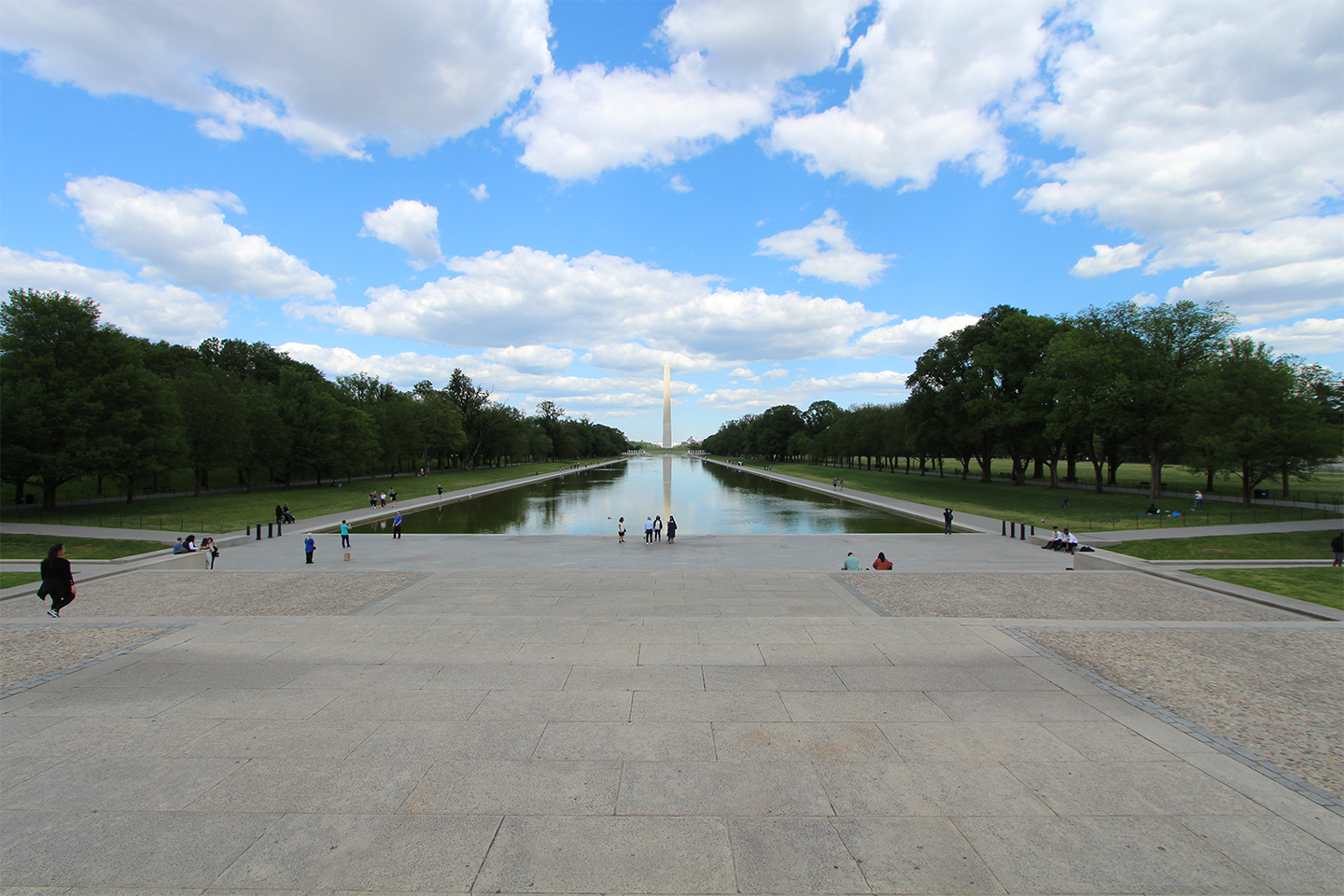
You can stand at the Lincoln Memorial, look down the National Mall, and feel like you are standing inside the country’s shared memory. That is part of why vandalism stories involving the Reflecting Pool resonate so strongly. The Pool is not just a tourist backdrop. It is part of the National Mall and Memorial Parks system, administered by the National Park Service (NPS), and protected by federal law and federal regulations. What looks like an ordinary property damage incident can quickly become a federal case because of where it happens and whose property interests are involved.
A recent post circulating online alleges damage to the Reflecting Pool and adjacent grounds, including claims about ripping at a coating and applying a corrosive substance to newly installed grass. Whether any particular allegation proves true is a matter for investigators and, if charges are filed, a court. What is durable is the legal framework. If someone damages an NPS-managed feature like the Reflecting Pool, here is what typically happens and what federal law actually covers.
Join the Discussion
Why this can be federal
The Reflecting Pool sits within National Mall and Memorial Parks, administered by NPS (Department of the Interior). In Washington, D.C., that often means federal management, federal regulations, and a federal law enforcement presence. It can also mean complicated jurisdictional lines, including federal authority and, in some settings, overlapping or concurrent jurisdiction with the District. Administration and control matter at least as much as formal “ownership” labels.
In practice, two legal layers often apply at the same time:
- Federal criminal statutes enacted by Congress and prosecuted in federal court (Title 18 of the U.S. Code).
- NPS regulations in Title 36 of the Code of Federal Regulations, which can be enforced as federal offenses on park land.
That does not mean federal cases are alien compared to city vandalism cases. Many ingredients are familiar: proof of intent, proof of damage, repair estimates, restitution, probation conditions. The main difference is that the United States is often the victim, the rules include federal regulations, and charging decisions are made through federal channels. In D.C., another nuance is practical: the U.S. Attorney’s Office for D.C. prosecutes federal crimes and also prosecutes many local D.C. Code offenses, so “federal” versus “local” can be a charging choice rather than a hard boundary.
Congress’s authority
The Constitution does not contain a single neat sentence that says, “Congress shall protect monuments.” It does something more foundational. It gives Congress power over federal property and the District of Columbia, and it allows Congress to build enforcement mechanisms to make those powers real.
Three constitutional ideas do most of the work here:
- The Property Clause (Article IV, Section 3, Clause 2): Congress may “make all needful Rules and Regulations” respecting federal property.
- The District Clause (Article I, Section 8, Clause 17): Congress has broad governing authority in the District of Columbia.
- The Necessary and Proper Clause (Article I, Section 8, Clause 18): Congress may create enforcement tools, including criminal penalties, to carry its powers into effect.
Put plainly: where the federal government administers and protects a place like the Reflecting Pool, Congress can regulate it and criminalize its willful destruction.
What laws can apply
Charging decisions depend on the facts: what was damaged, how it was damaged, the repair cost, the defendant’s intent, whether tools or chemicals were used, and whether the conduct created safety risks. Prosecutors often have overlapping options. These are common buckets, with examples readers can look up.
NPS regulations (36 C.F.R.)
NPS regulations generally prohibit damaging, defacing, or tampering with resources and government property within park areas. Two provisions that frequently appear in damage cases are:
- 36 C.F.R. § 2.1 (Preservation of natural, cultural and archeological resources), which is structured around conduct such as possessing, destroying, injuring, defacing, removing, digging, or disturbing plants, parts of plants, cultural resources, and similar protected resources within park areas, subject to specific exceptions.
- 36 C.F.R. § 2.31 (Vandalism), which prohibits damaging, defacing, or tampering with property and is commonly used for graffiti and other forms of intentional defacement or interference with property.
When you will see these: often in straightforward defacement or tampering cases, sometimes alongside a Title 18 charge when damage is substantial or clearly willful.
Depredation of U.S. property (18 U.S.C. § 1361)
The core federal statute for willful damage to government property is 18 U.S.C. § 1361, which covers willfully injuring or committing depredation against property of the United States (or property being made for the United States).
Two practical points drive case stakes:
- The dollar line: Under § 1361, damage at or below $1,000 is the misdemeanor tier; damage exceeding $1,000 is the felony tier.
- What “damage amount” means: it is typically tied to repair or replacement cost, including labor and specialized restoration. Those estimates can be contested, and they often matter a lot.
When you will see this: where the government wants a clear, general-purpose federal property damage charge, especially when the repair bill is significant or the conduct is plainly deliberate.
Penalty exposure (statutory maximums): § 1361 is commonly described as up to 1 year for the misdemeanor tier and up to 10 years for the felony tier, plus fines. Actual sentences depend on the facts, the Guidelines, and the defendant’s history.
Memorial specific statutes (when they fit)
Some federal laws target specific categories of protected sites. One example is 18 U.S.C. § 1369, which addresses destruction of veterans’ memorials and turns on statutory definitions. It is not a default “National Mall vandalism” statute. Whether it applies depends on what was damaged and whether the damaged feature qualifies as a covered memorial under the law.
When you will see this: when prosecutors can clearly tie the conduct to a qualifying veterans’ memorial as defined by the statute, not merely because the conduct occurred near famous monuments.
Chemicals and hazardous substances
Allegations involving an “acid-like” substance change the posture of a case because chemicals can create safety risks, environmental concerns, and expensive remediation. The legal consequences are often less about a new exotic charge and more about what the evidence proves: willfulness, the scope of damage, and the restoration costs.
In many cases, the clean, accurate analysis is this: if a chemical damages park resources or facilities, it can be charged under the same core tools already discussed, including 36 C.F.R. § 2.1 and 36 C.F.R. § 2.31, and it can support a more serious 18 U.S.C. § 1361 charge by driving up damage amounts and strengthening proof of intent.
Who investigates and prosecutes
People often assume local police handle vandalism. On the National Mall, the key players are usually federal, though coordination with District authorities can happen depending on the case.
- U.S. Park Police often has primary law enforcement responsibility on and around the National Mall.
- NPS officials and commissioned NPS law enforcement rangers may document damage, coordinate closures, and support enforcement and preservation of evidence.
- The FBI may assist in some cases, particularly if there are broader threats, coordinated activity, or a significant federal interest.
- The U.S. Attorney’s Office for the District of Columbia generally makes charging decisions for federal crimes in D.C. It also prosecutes many D.C. Code offenses, which is one reason charging labels can be confusing to readers.
It is also normal for cases to begin with the basics: an employee report, a witness statement, photographs, maintenance logs, and repair estimates. That paperwork is what turns “everyone saw it” into admissible evidence.

Misdemeanor vs felony
In many federal property damage cases, the legal cliff is the damage amount. Under 18 U.S.C. § 1361, damage at or below $1,000 is the misdemeanor tier and damage exceeding $1,000 is the felony tier. Because the Reflecting Pool and its surroundings involve specialized infrastructure and landscaping, repair costs can move quickly.
Other facts that tend to increase stakes include:
- Willfulness: accidental damage is treated differently from intentional ripping, carving, etching, or pouring.
- Tools or substances: blades, solvents, corrosives, or other implements can support intent and increase damage estimates.
- Scope: multiple damaged areas, repeated conduct, or coordinated actions can support broader charging theories.
- Risk to public safety: contamination, slip hazards, or structural hazards can change how prosecutors view the case and what conditions a court imposes.
Even a misdemeanor can carry life consequences: federal court processing, probation conditions that restrict entry to park areas, and restitution orders that are financially crushing.
Restitution matters
When people hear “vandalism penalty,” they think jail. In federal property cases, restitution is often the heavier consequence. In many cases it is required or strongly expected as part of sentencing, even when custody is not.
Restitution can include:
- Specialized cleaning and repair for coatings, masonry, or finishes
- Replacement materials and labor
- Landscaping restoration and, if needed, environmental remediation
- Documented incident-related costs tied to protecting and restoring the site, where allowed
Federal land management matters here: the standard is often restoration of government property to proper condition, not the cheapest possible patch. Defendants can challenge cost and scope, but the bills can still be steep.
Speech vs damage
The National Mall is one of the most speech-protected public spaces in America, and it is also heavily regulated. In a traditional public forum like parks and sidewalks, the government generally cannot restrict speech based on viewpoint. But it can enforce content-neutral time, place, and manner restrictions that are narrowly tailored and leave open alternative channels of communication.
Two principles do most of the work:
- You have a right to speak and assemble, often with permits for large events or for using certain spaces.
- You do not have a right to destroy the forum you are using. Defacing or damaging property is conduct, and courts have upheld penalties for property damage even when the message is political.
The Constitution protects the message. It does not immunize the method when the method is property damage.
How a case unfolds
If you are trying to understand what happens after alleged damage to a place like the Reflecting Pool, the procedural timeline is usually more predictable than the headlines.
- Initial report (employee, witness, contractor, or officer) and documentation of damage.
- Scene response by U.S. Park Police or other federal officers, including photographs and preservation of evidence.
- Video and access review of cameras where available and lawful.
- Damage assessment by NPS and contractors, producing repair estimates and timelines.
- Charging review by prosecutors, matching evidence to statutes and regulations.
- Court process: complaint, summons or arrest, initial appearance, release conditions, and possible plea or trial.
- Sentencing if convicted, often including restitution and park access restrictions.
What to verify
If you are reading an online allegation about damage on the Mall, the most reliable confirmation usually comes from documents and accountable actors, not reposts.
- Agency statements: U.S. Park Police, NPS, or the U.S. Attorney’s Office for D.C.
- Court filings: a criminal complaint, information, indictment, or docket entry that identifies charges and probable cause.
- Repair documentation: confirmed closures, contracting notices, or official statements describing restoration work.
It is also worth remembering that early damage estimates can change as remediation proceeds, and defendants can dispute both causation and cost.
FAQ
Is vandalizing the Reflecting Pool a federal crime?
It can be. Because the Pool is within an NPS-administered park area, damage can be charged under federal statutes like 18 U.S.C. § 1361 and under NPS regulations such as 36 C.F.R. § 2.31 and 36 C.F.R. § 2.1. Which charges apply depends on the facts and the damage amount.
Who has authority over the Reflecting Pool?
NPS administers National Mall and Memorial Parks. U.S. Park Police typically provides primary law enforcement on the Mall. The U.S. Attorney’s Office for D.C. generally prosecutes federal crimes committed there and also prosecutes many D.C. Code offenses, depending on the charge.
What penalties are typical for national park vandalism?
Penalties range from fines and probation to jail, depending on the charge and the damage. Under 18 U.S.C. § 1361, the statutory maximum is commonly described as up to 1 year when damage is at or below $1,000 and up to 10 years when damage exceeds $1,000, plus fines. Restitution is often the most significant consequence because restoration can be expensive and specialized.
If the vandalism was political, does the First Amendment protect it?
The First Amendment strongly protects speech and protest activity on the National Mall. But it does not create a right to deface or destroy property. Political motive does not convert property damage into protected expression.
The larger point
We talk about the National Mall like it belongs to everyone, and symbolically it does. Legally, it is administered and protected as a federal public space with enforceable rules. That is why the response to damage is not handled exactly like a neighborhood graffiti report. It is a question of federal authority, public property, and the government’s duty to preserve the physical spaces where civic life is staged.
The constitutional promise is not that monuments will never be touched. It is that disputes will be channeled through speech and law, not through destruction. The Reflecting Pool is not just water. It is a public forum with boundaries, and the boundary line is usually drawn at the moment conduct becomes damage.