
When lawmakers warn about foreign “Trojan horses,” they are usually not claiming a literal spy thriller plot. They are describing a familiar national-security fear: a domestic-looking organization, advocacy network, donor, vendor, or data infrastructure project that might, in practice, advance a foreign government’s interests while staying inside the ordinary forms of American civil life.
That is the constitutional tension behind the latest House panel inquiry into alleged foreign influence operations tied to adversarial governments and to U.S. data infrastructure. Congress has broad authority to investigate. It has narrower authority to punish. And in between those two is where most of the real action happens: subpoenas, hearings, reports, and referrals to executive branch agencies that actually enforce criminal law.
Join the Discussion
What “Trojan horse” claims mean
In the oversight context, “Trojan horse” is shorthand for influence that arrives through a seemingly normal American channel, then turns out to have hidden links or hidden objectives. The allegation can take several forms, and they matter because different laws apply to each.
- Covert direction: A foreign government or its proxies allegedly direct a U.S. person or organization’s messaging, spending, or organizing.
- Undisclosed financing: Money allegedly traces back to a foreign source but appears as domestic funding by the time it reaches political activity.
- Undisclosed agency: People engage in political or public relations work in the United States while acting “at the order, request, or under the direction or control” of a foreign principal.
- Infrastructure leverage: A U.S.-based asset such as data centers, cloud contracts, undersea cables, or telecom equipment becomes a potential pressure point. Even if it is legal and privately owned, the worry is dependency.
Notice the theme: the allegation is rarely “speech is illegal.” The allegation is that speech, money, or infrastructure is being used in a way that triggers disclosure rules, national security review, sanctions, export controls, or in extreme cases criminal statutes.
Hypothetical (simplified): A U.S. nonprofit runs ads on a hot-button issue. If the funding is actually coming from a foreign state-owned entity, routed through intermediaries, the legal issue may not be the viewpoint of the ads. It may be whether the funding and coordination trigger disclosure or campaign-finance limits.
Why Congress gets involved
The Constitution does not contain a clause that says “Congress may run investigations.” Instead, investigative power is treated as an implied power necessary to make legislation effective.
The Supreme Court has long recognized Congress’s power to investigate in aid of legislation. Anchor cases commonly cited include McGrain v. Daugherty (1927), Watkins v. United States (1957), and Eastland v. U.S. Servicemen’s Fund (1975). In more recent disputes over subpoenas for presidential information, the Court in Trump v. Mazars (2020) emphasized limits and the need for careful tailoring.
In practice, investigations also serve political messaging. Both can be true at once, and courts generally focus on whether Congress is pursuing a legitimate legislative purpose.
That “legislative purpose” requirement is not a formality. When subpoenas are challenged, judges often ask: is the committee investigating in order to consider potential legislation, funding decisions, oversight of existing programs, or impeachment-related functions? Or is it simply trying to expose private citizens for exposure’s sake?
How House investigations work
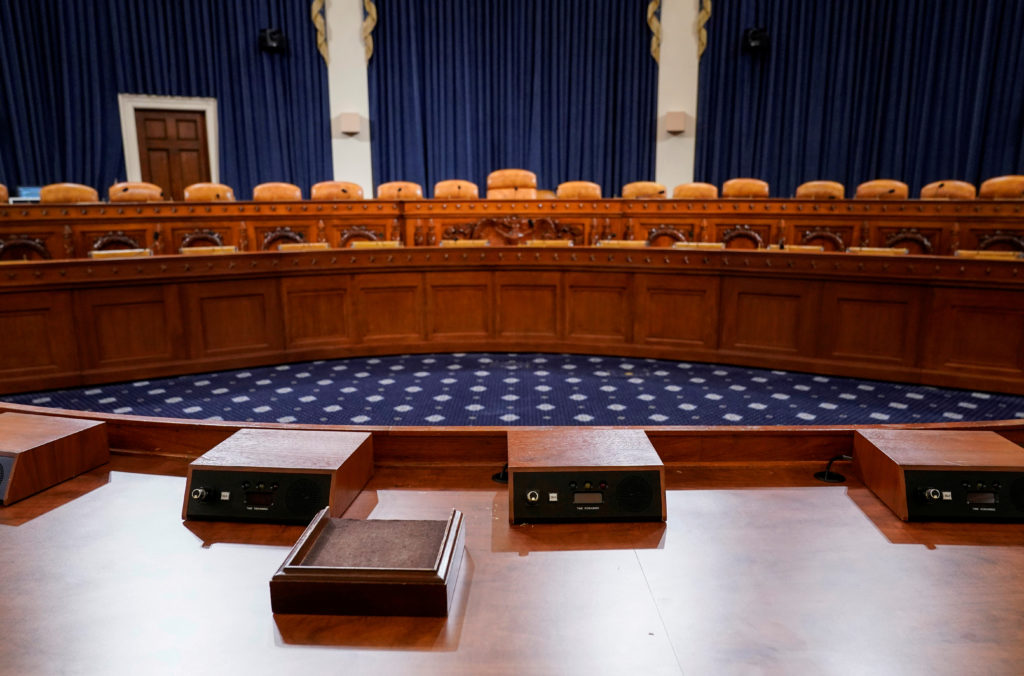
Most people imagine a congressional investigation as a hearing with cameras and sharp questions. That is the visible part. The typical sequence is more procedural and document-heavy.
1) A committee sets the scope
A House committee or select panel defines the subject matter in letters, public statements, and internal authorizations. This scope matters because it sets the boundary for subpoena relevance.
Committee jurisdiction and House rules matter, too. Subpoena authority can vary by committee rules and House resolutions, and it can involve different sign-off requirements by the chair, the full committee, or (in some committees) consultation with the ranking member. House General Counsel can also play a central role when a subpoena fight moves toward court.
2) Requests come before subpoenas
Committees usually begin with voluntary requests for documents, interviews, and briefings. When cooperation breaks down, the committee can issue subpoenas if authorized by House rules and the committee’s own procedures.
3) Depositions and transcribed interviews
Investigators often prefer private testimony first. It locks in a witness’s story under oath without the performative incentives of a live hearing.
4) Public hearings
Hearings can be fact-finding, agenda-setting, or both. A witness’s credibility and the documentary record matter more than viral moments because final committee reports and legislative proposals need citations, timelines, and verifiable links.
5) Findings, legislation, or referrals
Congress can publish reports, propose new disclosure rules, tighten sanctions, adjust agency funding, or refer suspected violations to the Department of Justice or other agencies.
One key limit: Congress can hold someone in contempt for defying a lawful subpoena, but enforcement usually follows one of three routes: a criminal contempt referral to DOJ, a civil enforcement lawsuit, or (rarely) inherent contempt.
What Congress can punish
The constitutional architecture matters here. Congress is the legislative branch. It can create general rules and gather information. It is not designed to be the entity that decides guilt and imposes criminal punishment in ordinary cases.
- Congress can: subpoena documents, compel testimony within limits, cite for contempt, cut or condition funding, restructure agencies, and pass new laws.
- Congress generally cannot: indict someone for a crime, run a criminal trial, or impose criminal penalties directly without the judiciary’s involvement.
There is one big historical exception worth knowing: inherent contempt, where each chamber theoretically can detain a noncompliant witness. In modern practice, it is rarely used because it is politically combustible and logistically messy. Today, contempt disputes often become negotiated compliance or a court fight over subpoena validity.
Subpoena litigation also has its own standards. Courts typically scrutinize scope, burdens, and fit with a legitimate legislative purpose. After Mazars, courts have been especially attentive to tailoring and separation-of-powers concerns when subpoenas implicate sensitive constitutional interests.
Legal tools in foreign influence probes
Foreign influence investigations often orbit a handful of recurring legal frameworks. The details vary, but the categories stay stable.
FARA
FARA, the Foreign Agents Registration Act, is not a ban on pro-foreign speech. It is primarily a disclosure law. If a person in the United States acts as an agent of a foreign principal in covered political or certain public relations activities, the law may require registration and periodic reporting.
FARA cases are fact-intensive because the central question is agency. Were you acting “at the order, request, or under the direction or control” of a foreign principal, or were you independent? That is where emails, contracts, messaging strategy documents, and funding trails become crucial.
FARA also contains exemptions and carve-outs that can matter in real investigations, including exceptions that may apply to certain legal representation, some commercial activities, and other defined categories. Those exemptions are not automatic, but they are part of why FARA analysis is rarely a one-sentence conclusion.
Campaign finance limits on foreign nationals
Federal law (52 U.S.C. § 30121) prohibits foreign nationals from directly or indirectly making contributions, donations, or expenditures in connection with U.S. federal, state, or local elections. Enforcement often turns on two practical questions: whether the person is a “foreign national” under the statute, and whether there was knowing or willful participation in prohibited election-related spending.
This is one reason investigators focus on how money moves through nonprofits, LLCs, intermediaries, and service providers. Not every political donation controversy is an “election interference” crime. The hard question is whether foreign-sourced money was knowingly routed into election spending, or whether the activity was lawful issue advocacy with permissible funding.
Sanctions and export controls
When influence ties touch sanctioned entities, export-controlled technology, or restricted transactions, investigators may look for violations that have nothing to do with speech and everything to do with prohibited business relationships.
Counterintelligence and national security statutes
Some conduct crosses into classic national security territory such as espionage, theft of trade secrets, or acting as an unregistered agent. Those are not congressional charges. They are potential criminal matters for DOJ, often developed with FBI or intelligence community support.
Data centers and leverage
Data centers can become part of a foreign influence story in two different ways, and it is important not to confuse them.
1) Data security and access risk
If a foreign adversary can gain access to sensitive personal data, communications, or government-adjacent systems, the risk is obvious. But the legal questions are usually indirect: contracts, vendor relationships, cybersecurity standards, procurement rules, and export controls, not a single “data center crime.”
2) Leverage and dependency
Even without illicit access, a foreign-linked company’s role in critical infrastructure can create leverage. That is why the U.S. uses tools like CFIUS, sector-specific regulators, and federal procurement rules to evaluate ownership, control, and influence.
CFIUS is not a general regulator of all infrastructure. It reviews certain covered transactions and can impose mitigation measures or recommend that the President block a deal. Congress’s role is often to ask whether these tools are working: Are agencies under-enforcing? Are the standards outdated? Are there blind spots in how ownership is structured through shell companies or affiliates?
Witness rights
Congressional investigations live in a constitutional ecosystem, which means witnesses have real protections even when the committee is powerful.
- First Amendment: Advocacy, association, and petitioning government are protected. That does not immunize criminal conduct, but it raises the bar for fishing expeditions and retaliatory investigations.
- Fifth Amendment: Witnesses can invoke the privilege against self-incrimination. Committees can respond by pursuing immunity in limited circumstances, but that process is complex and often coordinated with DOJ because it can affect prosecutions.
- Counsel and committee rules: Congressional proceedings are not criminal trials, and there is not the same constitutional right to appointed counsel that exists in criminal prosecutions. Still, witnesses are generally permitted to be accompanied by counsel under committee rules, and committees can define counsel’s role during questioning.
- Procedural protections: Committees must follow their own rules, and subpoenas can be challenged in court.
The practical point: a House probe is not just political theater. It is a legal process with consequences, but it is also constrained by constitutional rights and by the separation of powers.
What to watch for
If you want to know whether this kind of probe is producing more than headlines, watch for outputs that change behavior.
- Document releases and timelines that establish who funded what, who communicated with whom, and what was directed versus merely aligned.
- Legislative proposals such as tightening FARA, expanding reporting requirements for certain nonprofits, or updating data security rules for critical infrastructure.
- Agency action like DOJ registrations and prosecutions, sanctions designations, CFIUS mitigation agreements, or regulator guidance.
- Referral letters from committee leadership to DOJ or inspectors general, which can be a bridge between oversight and enforcement.
Sometimes the result is simply deterrence: organizations voluntarily changing compliance practices, strengthening donor vetting, or separating operations to avoid foreign entanglements that create legal exposure.
Constitutional bottom line
The United States is unusually committed to the idea that even unpopular speech gets protection. That commitment does not evaporate when the speaker is persuasive, well-funded, or politically inconvenient.
But the Constitution also presumes a federal government that can defend itself, especially when foreign states try to manipulate American institutions through covert agency, hidden financing, or strategic control of critical infrastructure.
That is why congressional investigations into alleged foreign “Trojan horses” are not, at their core, about banning viewpoints. They are about answering a narrower, harder question: what is domestic political activity, and what is foreign-directed influence operating under a domestic mask? Congress cannot answer that question by intuition. It answers it the old-fashioned way: paperwork, testimony, and the slow constitutional machinery of oversight.