
You can fund a scholarship to reward achievement. You can fund one to expand opportunity. You can even fund one to honor a community, a region, or a field of study.
But once a university accepts federal financial assistance, civil-rights law starts asking a different question: who is being excluded, and on what basis? In practical terms, if a scholarship’s rules say certain students cannot apply because of who they are or where they are from, the school has to be able to justify that rule under the civil-rights conditions that come with federal funding.
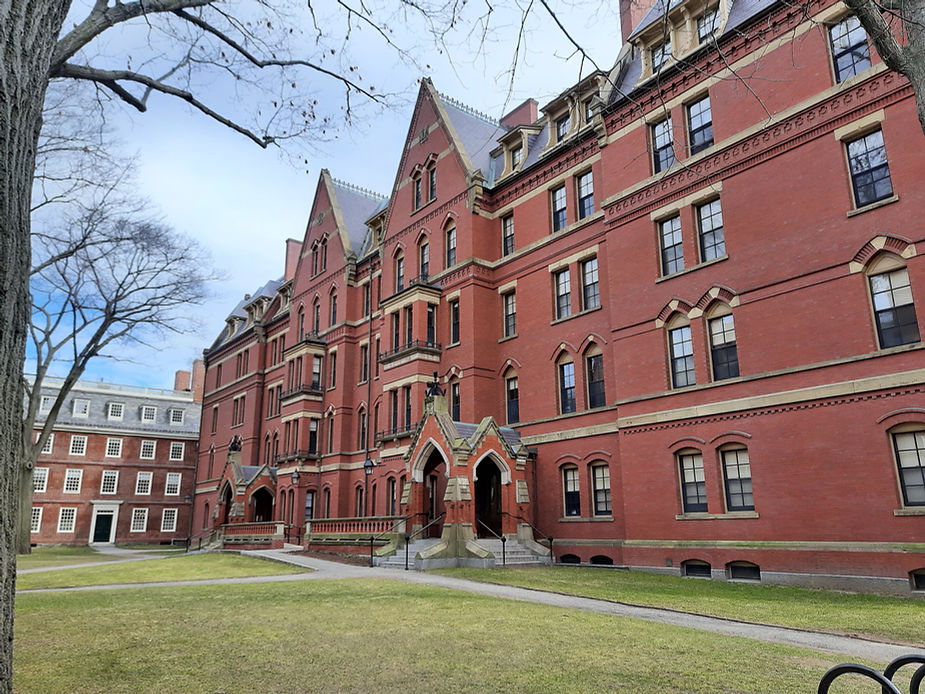
That is the legal engine behind the Justice Department’s reported inquiry into Harvard’s financial-aid and scholarship practices. Public accounts of the issue have included a congressional letter asking DOJ to investigate and describing allegations that certain donor-linked scholarships were structured to exclude “American students” while favoring non-Americans, reportedly involving donors linked to China. The details will matter. For purposes of this explainer, the key point is that at least some of the allegations are reflected in identifiable public documents, and the legal framework it implicates applies far beyond one school and one set of donors.
Join the Discussion
The rule: Title VI
When people hear “civil rights,” they often think of the Constitution first. But in most modern education disputes, the front-line rules come from federal statutes, not constitutional text.
The most important one here is Title VI of the Civil Rights Act of 1964. Title VI says, in plain terms, that a program or activity receiving federal financial assistance cannot discriminate on the ground of race, color, or national origin.
Universities are usually covered because they receive federal funds directly or indirectly. Think:
- federal research grants
- federal student-aid dollars that flow through students
- other federal assistance tied to programs and operations
Title VI is not a general morality clause. It is a condition: if you accept federal money, you accept the nondiscrimination obligation Congress attached to it.
One more point that matters in practice: although Title VI speaks in terms of a “program or activity,” federal law defines that concept broadly for covered institutions. That makes it harder to treat a scholarship as a completely separate silo if it is being run through the university’s own aid machinery.
National origin vs. citizenship
The Harvard allegations raise a common point of confusion. Title VI bans discrimination based on national origin, but many scholarship criteria are written in terms of citizenship, residency, or immigration status.
Those categories overlap in real life, but they are not always identical in law. And it is worth stating clearly: Title VI is aimed at race, color, and national origin, not citizenship status as a standalone category. Citizenship and “alienage” questions often show up under other legal regimes, including program-specific federal aid rules, constitutional Equal Protection doctrines for government actors, and other federal statutes depending on the setting. The right analysis can turn on facts, context, and how a policy is implemented.
National origin is about where you are from
In civil-rights law, “national origin” generally refers to a person’s (or their ancestors’) country of origin, ethnicity, or related characteristics.
So a scholarship that says “only students of Chinese national origin” is very likely to trigger Title VI scrutiny at a federally funded institution.
Citizenship can be treated differently
“Only U.S. citizens” can be a lawful eligibility rule in some contexts, especially when it is tied to federal or state statutory requirements or to how a government program is designed.
But the reverse is what makes headlines here: a scholarship that excludes U.S. citizens or “American students.” If the exclusion is genuinely about citizenship, Title VI is not automatically the right tool. If, instead, the rule is written or applied in a way that functionally tracks national origin (for example, “not Americans” as shorthand for excluding or burdening a protected national-origin group, or favoring students from a particular country of origin), a federally funded institution can be pulled into Title VI territory even if the scholarship language uses citizenship terms.
The key question investigators tend to ask is not just “what word did you use,” but what classification is actually operating, and what the effect is.
Donor money does not fix it
Universities often treat donor-funded scholarships as private generosity with strings attached. And to a point, that is true: donors routinely specify things like intended majors, geographic ties, class years, or extracurricular commitments.
But Title VI does not care whether the dollars came from an endowment gift, a foundation, or a family trust if the scholarship is administered by a federally funded program or activity.
If the institution is the gatekeeper, using its admissions or financial-aid machinery to award the money, then the institution’s civil-rights obligations follow the process.
In other words, “the donor required it” is not a compliance shield. It can become evidence of intent or structure. But it does not erase the school’s legal responsibility.
University aid vs. outside scholarships
One important practical distinction is who is administering the award.
- University-administered scholarships: If the school (or its foundation acting as part of the university’s program) runs the selection process and applies the eligibility rules, Title VI obligations typically attach if the university is a federal funds recipient.
- Truly independent third-party scholarships: A private organization that selects recipients on its own and pays students directly may not create the same Title VI exposure for the university, especially if the university is not controlling eligibility or acting as the decision-maker. Even then, schools have to be careful about how much they facilitate, endorse, or integrate the award into their own aid processes.
This is not a loophole so much as a reminder of how Title VI works. It regulates discrimination by covered recipients in covered programs.
Who enforces Title VI
Title VI is enforced through a mix of agency oversight and, in some cases, litigation.
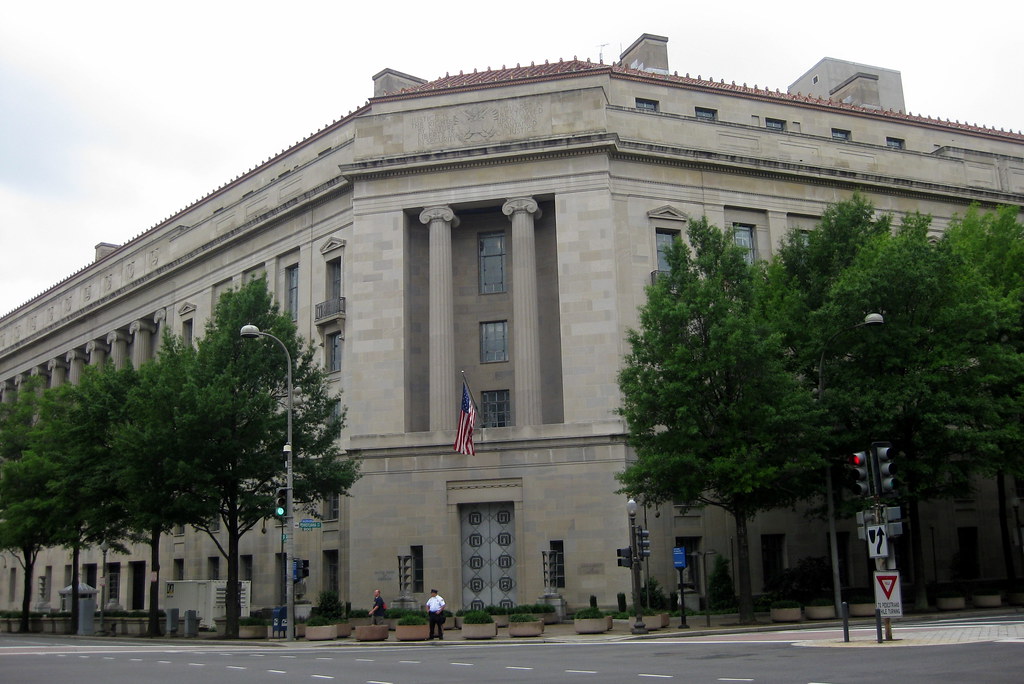
In education, the Department of Education’s Office for Civil Rights is often the day-to-day enforcer for schools and universities. The Justice Department can investigate in certain contexts, can bring or defend litigation, and can coordinate with agencies that have primary oversight depending on the facts and posture of a matter.
Possible outcomes generally include:
- Voluntary compliance: the institution changes scholarship criteria, rewrites donor agreements, modifies review processes, and implements monitoring.
- Resolution agreement: a formal settlement with reporting and oversight obligations.
- Litigation: a federal lawsuit seeking injunctive relief.
- Funding consequences: in extreme situations, the relevant funding agency can initiate proceedings to terminate or suspend federal funds, though this is politically and administratively heavy and often avoided through settlements. DOJ may be involved through referrals and court actions, but it is typically not the entity that directly “turns off” the funding.
Intent and disparate impact
One more nuance matters, especially if you are thinking about how these disputes play out.
Private lawsuits under Title VI generally require proof of intentional discrimination. But agency enforcement often operates through Title VI regulations, and agencies have long taken the position that those regulations allow scrutiny of policies that create unjustified discriminatory effects (often described as “disparate impact”), even when intent is disputed. The scope and durability of disparate-impact authority has been debated in the courts, so the precise legal posture can depend on the forum, the regulation at issue, and current litigation.
That difference is one reason administrative investigations can look different from what a private plaintiff could win in court.
How this ties to constitutional power
It feels strange, sometimes, that the federal government can pressure a private university by threatening funding, when the Constitution never says “Congress shall supervise scholarship criteria.”
The bridge is Congress’s authority to spend for the general welfare, and to set terms on how federal assistance is used. Congress cannot command every private actor directly. But it can say: if you take federal money, you agree to certain baseline rules.
That is why civil-rights enforcement in education often looks less like a courtroom fight over the Fourteenth Amendment and more like contract-style enforcement between the government and an institution that participates in federal programs.
Other rules that can matter
Title VI is central when the alleged discrimination is about race, color, or national origin. But it is not the only legal regime that can touch scholarships and financial aid.
- Federal aid program rules can impose citizenship or immigration-status limits for specific kinds of federal assistance.
- State civil-rights laws may add protections or restrictions that differ from federal law.
- Other federal statutes can sometimes be invoked depending on the theory and facts.
The takeaway is simple: even if a policy is not a clean Title VI fit, that does not mean it is automatically lawful or risk-free. It means you may be in a different legal box.
After SFFA
One more backdrop matters. After Students for Fair Admissions, universities have been re-checking race-conscious admissions policies, and many have also re-examined race-targeted aid, affinity scholarships, and pipeline programs. That landscape is still evolving, and it is separate from the specific citizenship and national-origin questions described above.
Still, the practical overlap is obvious: when scholarships are written to favor or exclude groups defined by protected characteristics, schools should expect scrutiny, whether the issue is framed as race, national origin, or a proxy category that functions the same way.
Designing scholarships safely
Sometimes scholarships can be designed around international exchange, diplomatic programs, or specific lawful immigration-related frameworks. There are also scholarships administered outside a university’s federally funded programs, or by independent entities in ways that do not create the same Title VI exposure for the school.
But for mainstream university financial aid, two practical realities dominate:
- If the eligibility rule tracks race, color, or national origin, expect Title VI risk.
- If the institution administers it, the institution owns the compliance problem.
That does not mean every targeted scholarship is unlawful. It means the eligibility criteria often have to be built around permissible goals rather than identity-based exclusions that map onto protected categories. For example:
- Higher risk: “Only students of Chinese national origin.”
- Lower risk goal framing: “Students pursuing advanced study in Mandarin Chinese for careers in public service or international development,” or “students with demonstrated commitment to U.S. China academic exchange,” or “students from X region who attended high school in Y county,” depending on the donor’s purpose and the school’s program design.
What investigators look for
The public allegation in the Harvard matter is specific: donor influence and scholarship rules that purportedly excluded “American students.” If an investigation proceeds, the facts that tend to matter most in Title VI cases include:
- Exact scholarship language: eligibility criteria, disqualifiers, and any preference rules.
- Administration: who reviews applications, who makes final decisions, and whether the university uses its standard aid office processes.
- Intent and communications: emails, donor agreements, internal notes, and how decision-makers described the purpose of the restriction.
- Effects: who actually received the awards over time, and whether protected groups were excluded or burdened.
- Institution-wide entanglement: whether the scholarship is isolated or part of a broader practice involving certain donors or categories of students.
Those are the building blocks of civil-rights enforcement. Not rhetoric, not assumptions, and not stereotypes about any particular donor community.
The takeaway for students and families
Most people encounter Title VI without knowing its name. They just assume universities have to treat applicants fairly. Title VI is one of the reasons that assumption often holds, at least where federal money is involved.
If you are a student wondering whether a scholarship can lawfully exclude you based on being “American,” “Chinese,” or any other origin-linked label, the legal question is not only what the donor wanted. It is whether the university is operating a federally connected program that must comply with nondiscrimination rules Congress wrote into the deal, and whether the eligibility rule is really about national origin (or is functioning as a proxy for it).
That is what makes today’s Harvard probe more than a campus story. It is a live demonstration of how civil-rights law governs the modern university, one scholarship clause at a time.
Quick FAQ
Does Title VI apply to private universities like Harvard?
Yes, if they receive federal financial assistance. Title VI’s trigger is federal funding, not whether the institution is public or private.
Is “national origin” the same as citizenship?
Not always. Title VI focuses on national origin, not citizenship by itself. But citizenship-based rules can still create Title VI problems if they operate as a proxy for national-origin discrimination or if the facts show national origin is the real classification at work.
Can DOJ take away a university’s federal funding?
In theory, the federal government can seek funding termination for Title VI violations, but the funding agency is typically the one that initiates and carries out those procedures. DOJ’s role is more commonly investigative, coordinating, or litigation-related. In practice, agencies usually pursue compliance agreements or court orders first. Funding termination is procedurally demanding and relatively rare.