
When a state tells a university professor, “You may discuss this idea, but only if you do it neutrally and without endorsement”, what exactly is being regulated: curriculum, or conscience?
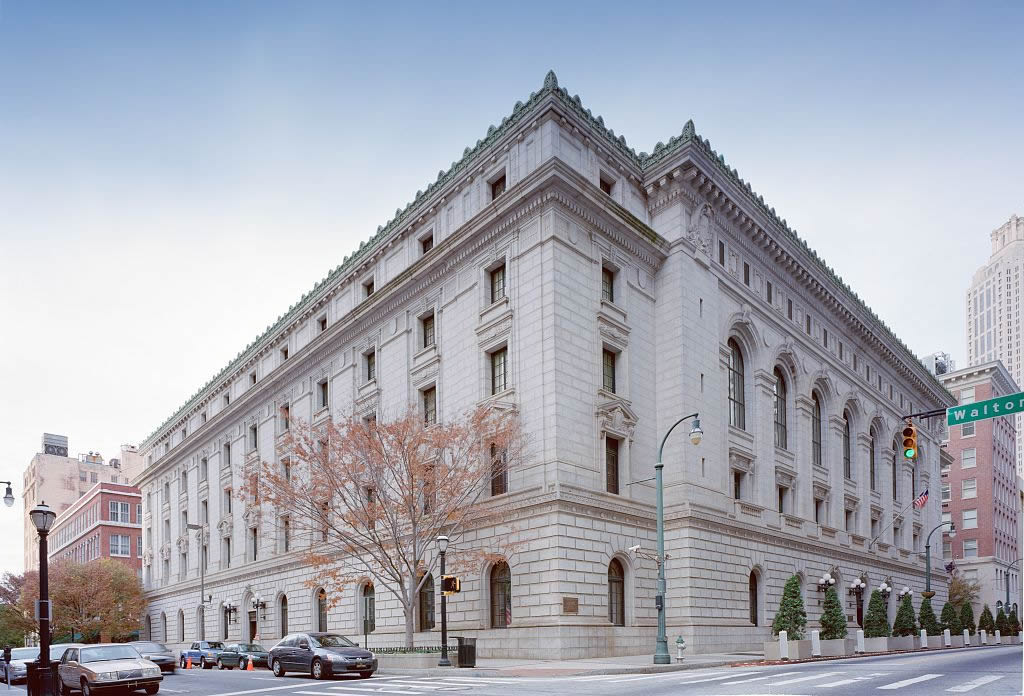
That is the knot now tightening in Pernell v. Fla. Bd. of Governors of State Univ., a Florida case that may be headed toward en banc activity in the U.S. Court of Appeals for the Eleventh Circuit. An en banc rehearing would pull the dispute out of a three-judge panel and put it before a larger set of active judges in the circuit. If that happens, the resulting precedent could matter far beyond one state’s campuses.
Join the Discussion
The case, plainly
The dispute centers on Florida’s Individual Freedom Act as applied to public colleges and universities. The law bars “training or instruction that espouses, promotes, advances, inculcates, or compels” students to believe any of eight listed concepts related to race and sex.
The eight prohibited concepts include claims such as:
- That one race, color, national origin, or sex is morally superior to another.
- That a person is inherently racist, sexist, or oppressive due to race or sex, whether consciously or unconsciously.
- That a person must feel “guilt, anguish, or other forms of psychological distress” because of past actions committed by others of the same race or sex.
- That virtues like “merit,” “excellence,” “hard work,” “fairness,” “neutrality,” “objectivity,” or “racial colorblindness” are racist or sexist, or were created to oppress.
Importantly, the law does not forbid criticizing those concepts. It also allows professors to introduce the concepts “as part of a larger course” if instruction is delivered “in an objective manner without endorsement of the concepts.” The law also does not specify how far past the classroom its restrictions extend, leaving open whether off-campus speeches and other settings may be implicated.
The plaintiffs challenged the law’s application to higher education. A divided Eleventh Circuit panel issued a lengthy decision parsing whether Florida can do this, and how the First Amendment should treat speech inside a public-university classroom.
Why en banc matters
An en banc review is not just a procedural footnote. It is the court’s way of saying this question is big enough, or conflicted enough, that it may need a circuit-wide answer.
Two features make this case a magnet for broader review:
- A split panel. When judges disagree 2-1, it signals unsettled law and invites the full court to step in.
- A high-stakes rule for universities. The decision does not merely address one professor’s discipline after the fact. It addresses an across-the-board, forward-looking restriction that can shape what professors choose to say before they say it.
Procedurally, a major tell is when the court withholds issuance of the mandate. The Eleventh Circuit issued an order stating, “A judge of this Court withholds issuance of the mandate in this appeal.” Under the court’s internal operating procedures, that action likely means an active judge has indicated that, if the panel declines to grant rehearing, the judge wants an en banc poll. That is a signal, not a merits ruling, and any eventual vote could still go against rehearing.
The core fight
Florida’s broadest theory is straightforward: public universities are funded by the state, professors are state employees, and the state should be able to control what gets taught as its own message.
If that sounds like “government speech,” that is because it is. The government-speech doctrine allows the state to select the views it expresses when it is the speaker.
The problem is that the classroom is not a license plate, a monument, or a slogan the government itself approves “every word” of. The panel majority stressed that Florida has traditionally exercised relatively little control over postsecondary education compared to K-12. Florida imposes few curricular requirements by statute, and those it does impose are largely general education requirements.
That history matters because it cuts against the claim that university classroom instruction is automatically government speech. Florida does not, and cannot, exercise “final approval authority over every word” used in every lecture. And common sense matters too: the public does not reasonably believe that every professor in every class at every public university is delivering the official line of the state’s political branches.
Not a one-off employee case
Many First Amendment disputes involving public employees focus on a single speaker and a single episode: a teacher says something, a supervisor disciplines them, and a court asks whether the government’s interests as an employer justify that discipline.
This Florida law operates differently. It is a statewide, ex ante rule aimed at every public-university professor. The constitutional danger is not only punishment, but anticipatory silence. When the rule is vague at the margins, people do what people always do under uncertainty. They play it safe. They self-censor.
The panel majority leaned on the Supreme Court’s distinction between post hoc discipline and broad, prospective speech restrictions, noting that when a law “chills potential speech before it happens,” the state’s burden is greater than it is in an isolated disciplinary action.
Key circuit precedent
The Eleventh Circuit has long relied on Bishop v. Aronov (1991), a case involving the University of Alabama and a professor whose in-class comments veered into religious advocacy. The university directed the professor to stop presenting his religious viewpoint during instructional time, and the court upheld the restriction.
That earlier case is central because it frames the question many administrators want answered: How far may a university go in controlling classroom instruction before it collides with the First Amendment?
But the panel majority in Pernell emphasized a key difference: Bishop involved a targeted directive tied to specific classroom conduct and complaints. Florida’s law is a prophylactic ban written by statewide political actors, aimed at categories of viewpoints across all disciplines and all public campuses. Even on a sympathetic reading, that shift matters. A case-by-case directive is one thing. A statewide list of forbidden “endorsement” is another.
K-12 is not college
One reason these fights are so combustible is that Americans instinctively import K-12 logic into higher education.
In elementary and secondary schools, the state typically exercises far more granular control. Florida’s K-12 system, for instance, is governed by academic standards nearing 7,300 in number, spanning every subject and grade. Teachers are expected to use required materials, follow prescribed courses of study, and employ approved methods of instruction. That reality makes it easier for courts to accept more direct state control in K-12, where the mission is more custodial and the students are minors.
Universities are different by design. Florida law defines the “purpose and mission” of its postsecondary educational system in expansive terms, including enabling students to participate in the search for knowledge and individual development, to discover and disseminate knowledge, to foster diversity of educational opportunity, and to develop intellectual, cultural, and humane sensitivities. Those ambitions fit awkwardly with the idea of unrestricted state control over what university professors may “endorse” in class.
Florida law also requires state universities to assess “intellectual freedom and viewpoint diversity” and, as the panel noted, restricts the Board of Governors from limiting students’ access to protected ideas and opinions they may find uncomfortable, unwelcome, disagreeable, or offensive. That backdrop makes the government-speech framing harder to sustain.
What en banc could change
If the Eleventh Circuit takes Pernell en banc, the court could clarify several points that will shape academic freedom in the circuit and beyond:
- Is a professor’s classroom speech government speech? A broad “yes” would give states far more authority to dictate permissible viewpoints in higher education.
- What test applies to a statewide classroom-speech restriction? The answer determines whether the state must show merely a reasonable pedagogical justification, or something more demanding.
- What work does “academic freedom” actually do? Courts invoke the concept often, but its hard boundaries are famously murky. An en banc decision could draw those boundaries more sharply, for better or worse.
Even if the full court declines review, the procedural signals underscore that the doctrine is still being fought over in real time. That uncertainty can shape how universities draft policies, how professors plan syllabi, and how legislators test the perimeter.
The question underneath
It is tempting to frame this fight as a simple clash of slogans: “indoctrination” versus “censorship.” But constitutional doctrine rarely rewards that kind of comfort.
The harder question is the one that outlasts any single statute or political moment: Should public universities be places where the state sets the boundaries of acceptable conclusions, or places where students learn how to argue with conclusions they dislike?
An en banc ruling in Pernell could move that question from policy arguments into binding circuit law. And once it is doctrine, it will not care which party writes the next list.