
You can learn a lot about American politics by watching what happens when a rising local figure starts tugging on national threads and the fabric actually moves.
Zohran Mamdani, New York City’s youngest mayor in a generation, has become a national political figure not just because he beat former Gov. Andrew Cuomo, but because he has governed like someone intent on proving what is possible with executive power. In his first six months, he has leaned into dealmaking, cutting agreements with the state government, City Council, and the powerful forces of New York’s political ecosystem. At the same time, he has shown he is willing to spend political capital, including against fellow Democrats.
The tension is the point. Mamdani is read as a bogeyman by the right and a savior by parts of the left. His early record suggests something less cinematic and more consequential: a mayor trying to show that democratic socialism can look like delivery, not just messaging.
Join the Discussion
Charm, then the cut
Mamdani’s public persona is not accidental. He can be warm and funny and then, in the next beat, precise enough to draw blood. In one exchange, a throwaway topic like soccer becomes a stage for him to needle, roast, and grin without letting up.
He supports Arsenal. When a Chelsea supporter comes up, he goes straight for ownership and performance, and then widens the target to World Cup loyalties. “Brother, whyyyy ?” he says, grimacing.
That mix of charm and edge is part of his political toolkit. It is also why Cuomo’s debate-night experience has been captured in a single vivid image: getting “skewered by a cheerful democratic socialist in a slim-cut suit.”
From “Z” to “Mayor”
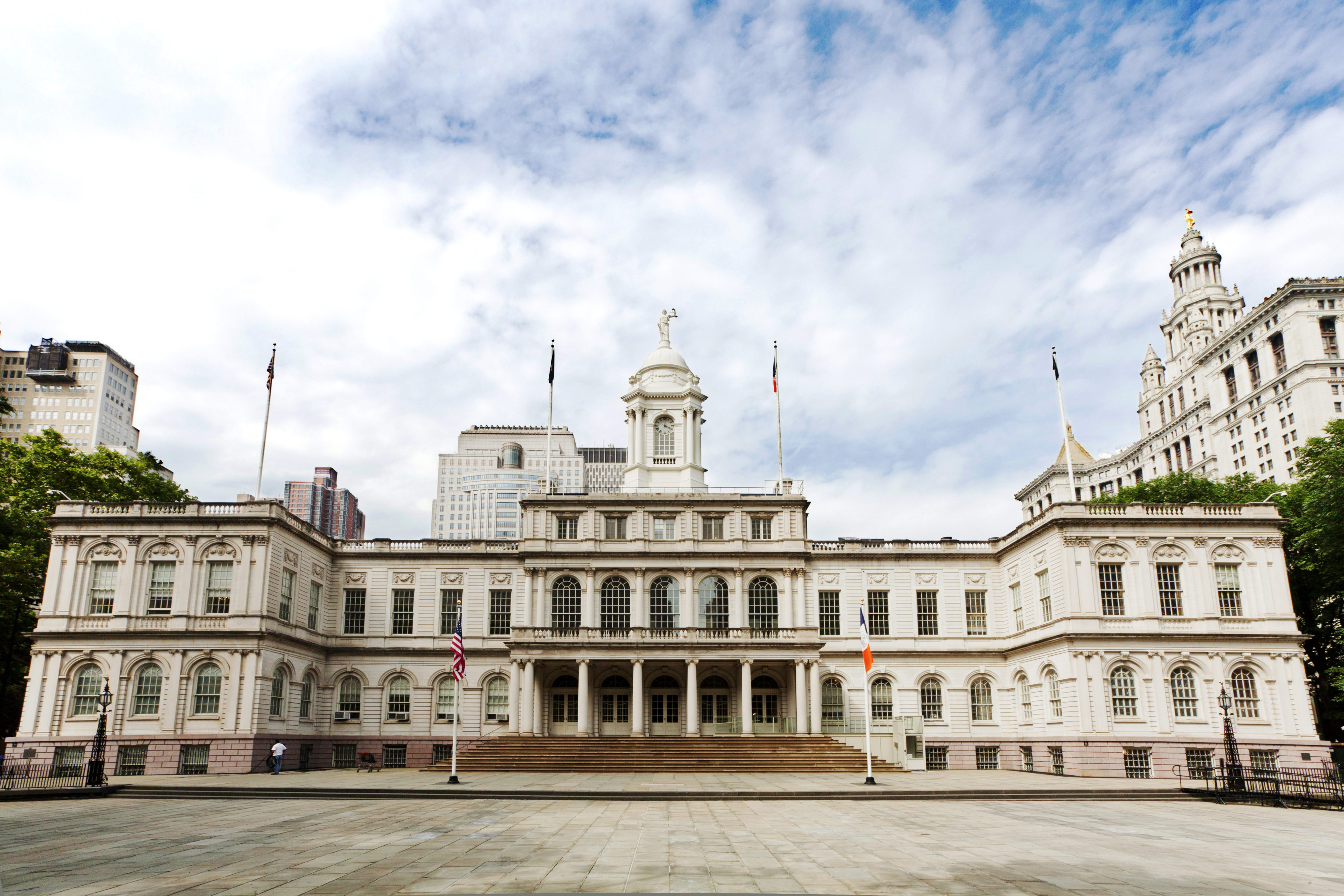
On the campaign trail, he was “Z,” a state senator still close enough to movement politics that a nickname felt natural. After victory, the informality evaporated. In City Hall, people call him “Mayor,” and the room tends to fall in line.
That shift is not just etiquette. It captures the central transition of his first stretch in office: a politician built in canvassing and organizing now operating with the levers of executive power.
Primaries and political capital
After his decisive win over Cuomo in November of last year, Mamdani used the next cycle to push harder. In New York’s June primaries, he endorsed a slate of democratic socialist candidates for national and state office and treated the endorsements as a test of whether his political capital could translate into broader movement power. The effort helped knock off incumbents and made it clear he was prepared to fight within his own party.
He called the night “an incredible evening,” describing what it meant across neighborhoods and boroughs and arguing that “New Yorkers were hungry for change.” He framed the wins as continuity: organizers and field leads from his mayoral effort moving into other races. “It speaks to the fact that for so many of us, it was never about one office, it was about one movement for working people.”
When asked why he chose to take those intra-party shots, he tied it to a promise: “I would use every tool at my disposal to deliver on an affordability agenda.” He also invoked a lesson he attributed to Tim Walz about political capital, paraphrasing it as: “What is the use of having it if you’re not using it to help working people?”
Darializa and backlash
One race Mamdani highlighted involved Darializa Avila Chevalier, who successfully primaried House Hispanic Caucus leader Adriano Espaillat. Mamdani emphasized her path through the same pipeline he wants to expand, noting she had been a field lead on his mayoral campaign, and pointing to how organizers train canvassers who later become leaders themselves.
Avila Chevalier drew criticism for past social media posts praising communist ideology, calling for the police to be abolished, and at one point tweeting “Fuck Kamala Harris.” Mamdani’s advice for handling the blowback was blunt: “this only happens when there’s a chance that you win.” He argued the backlash was a distraction from what he said voters in that district cared about, particularly affordability, and he described the fearmongering and “blatant racism” as part of an attempt to derail her.
Six months of governing
Mamdani has been explicit that he rejects the neat story that campaigning is easy and governing is hard. He described campaigning as asking people to believe in something “despite their own experiences,” while governing is where you get “an opportunity to deliver.”
He pointed to specific actions and numbers from his first six months in office:
- “We have paved over 165,000 potholes.”
- “We have returned tens of millions of dollars to tenants who were taken advantage of by their landlords.”
- “We have put our city on a path to universal childcare, saving parents more than $20,000 a year for parents.”
- He said the city delivered “the lowest recorded number of murders and shootings in New York City history.”
- He also said the city is on a path to “the most ambitious affordable-housing agenda that we’ve seen in generations.”
Critics, including some to his left, have argued he has moderated proposals. Mamdani’s response emphasizes the scale of the job: delivering for “eight and a half million people,” many of whom have learned to experience politics as disappointment. He framed his “North Star” as those “priced out of this city,” and insisted that even within constraints, “there’s a lot more that’s possible to do than what we’ve been told in the past.”
What Democrats forgot
Mamdani situates his politics inside a longer Democratic tradition, arguing that many ideas treated as impossible now would not have shocked the establishment in FDR’s era. He pointed to FDR’s “four freedoms” from 1941, calling them a distillation of a vision that, if offered today, would be heard as radical even though it is grounded in why many Americans are proud to be Democrats.
He also offered a line that functions like both inspiration and warning: “Hope is a responsibility. If you share that with others, it is also a duty to deliver on it.”
The fight inside the party
As the national battle between centrist and leftist Democrats intensifies, Mamdani frames the core question as definition, not factional manners: “What is the Democratic Party if not its voters?” He argues that what has “effectively become our party” is too often shaped by “well-paid consultants and big-money interests,” and he frames his project as re-centering working people. “In this country there is just one majority and that’s the working class.”
He describes a “big tent” party but treats its direction as an open struggle: “Where do we want to go, and what do we want this party to be?” His critique is that Democrats are “constructing an ever-lowering ceiling of possibility,” while Republicans have “seemingly limitless ambition.” For him, the argument only matters if it ends in execution: not just a vision, but governing proof.
FAQ
What made Mamdani a national figure?
He became a focal point after a decisive win over Andrew Cuomo in November of last year, then followed it with governing moves in his first six months and high-impact endorsements in New York’s June primaries that helped knock off incumbents.
What does he say he has delivered so far?
He cited paving 165,000 potholes, returning tens of millions of dollars to tenants, moving toward universal childcare with claimed savings of more than $20,000 a year for parents, and achieving what he called the lowest recorded number of murders and shootings in city history.
How does he explain endorsing controversial candidates?
He frames it as movement building for working people and argues backlash is often a sign of viability: “this only happens when there’s a chance that you win.”
What is his core argument about Democrats?
That the party should be defined by its voters and oriented around material improvements in people’s lives, not consultant-driven politics or an “ever-lowering ceiling of possibility.”
The takeaway
Mamdani’s early tenure reads like a test case for a question hovering over Democratic politics: can a left economic agenda be translated into governance without losing either its moral claims or its competence? He is trying to answer with deals, outcomes, and numbers, while treating intra-party conflict as part of the job.
He is betting that voters do not just want a new tone. They want proof that government can deliver and that the delivery can make life cheaper, steadier, and more livable in the most expensive city in the United States.