

When people talk about the Second Amendment, the conversation often jumps straight to the big questions: bans, permits, and what the Supreme Court has said. But many real-life disputes are smaller and more personal, like what happens when police decide a household feels “volatile.”
This week, a federal judge in New York addressed a version of that problem and held that Nassau County’s reasons and process for suspending two parents’ pistol licenses, based on concerns tied to their college-age daughter, ran into the Second Amendment. The ruling turned on a key set of facts: investigators did not view the parents as dangerous, and the firearms were kept secured.
Join the Discussion
What happened
The case involves a Nassau County couple who have held New York State pistol licenses since 2020.
In February of 2024, their daughter, who was enrolled at SUNY Old Westbury, was admitted to a Massachusetts hospital for mental health treatment.
In September 2024, a patient at the Massachusetts hospital contacted the SUNY school to report that the daughter had drawn images described as threatening or suggestive of mass shootings. Nassau County police transported her to Nassau University Medical Center. She told police the drawing was not meant to depict a shooting or threat.
SUNY Old Westbury and its police handled the school-threat investigation. Nassau County officers also went to the parents’ home to check on the daughter’s condition.
Guns locked up
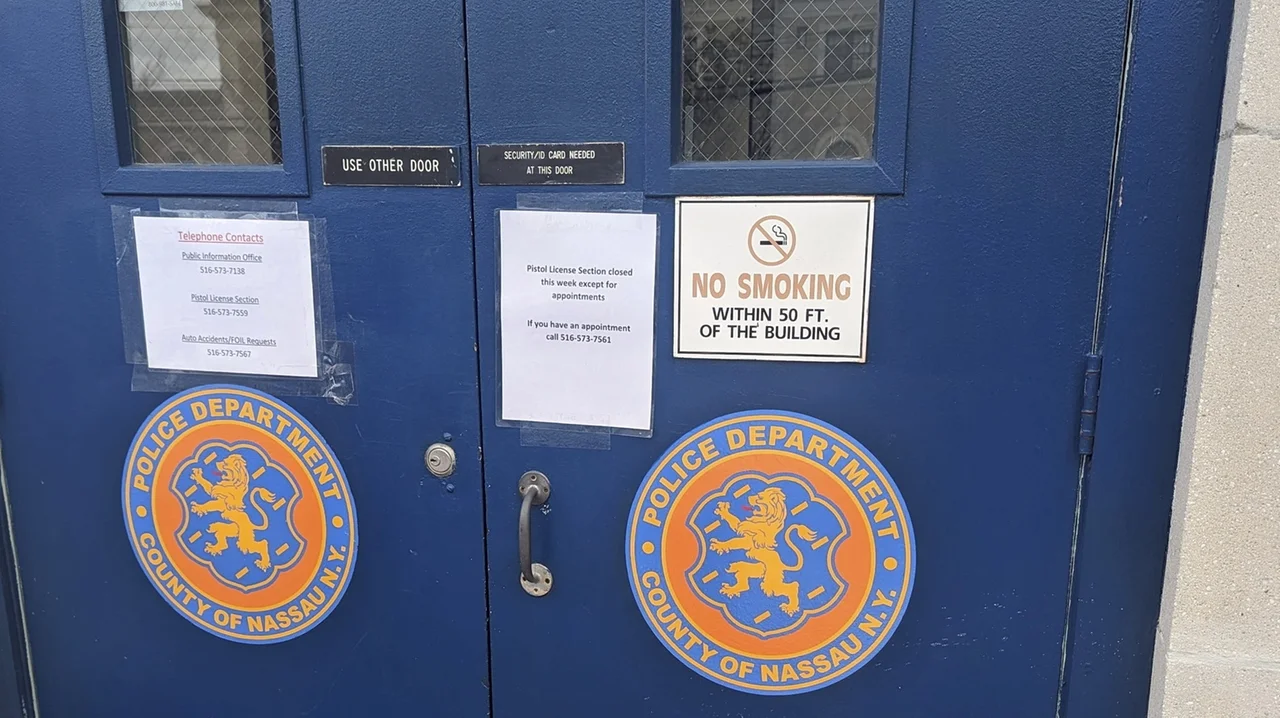
One detail mattered throughout the dispute: police documentation indicated that the parents’ firearms were locked up. A report reviewed during the county’s process said a supervisor had “verified that Plaintiffs' weapons were secured in a safe and that their daughter did not have access to them.”
A lieutenant in the Nassau County Police Department Homeland Security Unit, who was involved in the daughter’s matter, advised the pistol-license unit that because there was “no direct message threatening a shooting,” he did not see a problem with the parents continuing to possess their secured firearms.
At no time during the investigator’s review was it alleged that anyone other than the parents could access the firearms. After the parents provided photos of their biometric safes, the investigator said he was satisfied the weapons were properly stored.
Suspension and demands
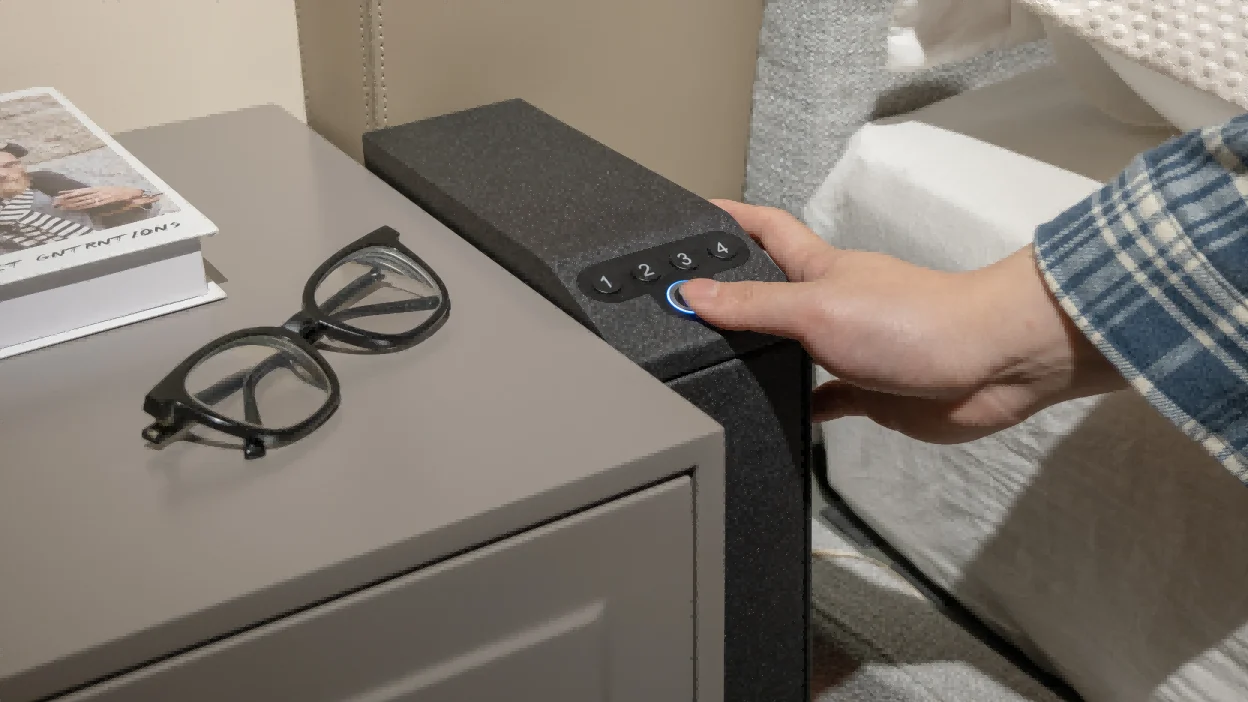
Despite the storage findings, the county treated the daughter as a member of the household and suspended both parents’ pistol licenses. The stated reasons included a “volatile mental situation” in the home tied to a household member’s hospitalization and the claim that the parents failed to notify the pistol-license office about that hospitalization.
County officials also pointed to a broader “totality of circumstances” under administrative review. That included the parents’ decision to place their daughter in an inpatient program, their decision to safeguard their weapons outside Nassau County, and concerns tied to prior application responses.
With the suspension in place, the parents were unable to possess their handguns or purchase new ones until the county lifted the suspension. They surrendered their firearms to a federal firearms licensee, Dark Storm Industries, on October 16 and October 19, 2024.
During the review process, the county demanded a “letter of no objection” from the daughter’s treating psychologist, including the daughter’s actual diagnosis and a statement that the clinician knew the parents held pistol licenses and had “no objection to firearms being in the house.” The investigator testified that even if the daughter only visited a couple times a month, he still worried she might gain access.
At the same time, the investigator testified that he did not consider the parents to be “dangerous” people or threats to public safety. He also did not speak with the daughter or with the girl who made the accusation as part of his investigation.
How long it lasted

The suspension did not end quickly. The investigator testified that the pistol-license unit was “waiting to see what comes of [the daughter’s] treatment and if there [were] any further incidents.” He also explained that there was not a concrete timeline for reinstating licenses, and that the duration could depend on what an investigator and supervisor felt comfortable with under a case-by-case, “totality of the circumstances” approach.
In March of 2025, Mr. Ganz told the investigator he was unable to obtain the requested clinician letter. The investigator and a supervisor reviewed materials and decided to wait a number of months before reinstating the licenses.
In April of 2025, the investigator recommended that the parents sign an acknowledgement of wrongdoing as a condition of reinstatement. Through counsel, the parents refused.
Seven months later, on November 20 and 21 of 2025, the parents received a “verbal admonishment” for failing to notify the pistol-license section of police contact within three business days. Ms. Ganz’s pistol license was reinstated on November 20, 2025, and Mr. Ganz’s license was reinstated on November 21, 2025.
What the judge required
In Ganz v. Nassau County, U.S. Magistrate Judge James Wicks applied the Supreme Court’s modern Second Amendment framework. Under that approach, when the government burdens protected conduct, it must justify the restriction by identifying a consistent historical tradition of comparable regulation.
The court concluded the county did not meet that burden for this sort of discretionary, cohabitant-driven suspension and reinstatement process, especially where the licensees themselves were not found to be dangerous and the guns were secured.
As the court put it, “Defendants cannot automatically suspend a license when it is based on a cohabitant's existence of a volatile situation and not that of the licensee. There is no historical analogue.”
The judge also pointed to the factual mismatch the county could not get around: the investigator testified the parents were not dangerous, and he was satisfied the firearms were securely stored.
Why it matters
Many Americans can picture some version of this scenario: a household member is struggling, a school or hospital flags a concern, and officials want to reduce risk quickly.
The constitutional question is not whether risk reduction is a valid goal. It is whether the government can get there by suspending one person’s enumerated right through an open-ended, case-by-case “wait and see” process driven by a cohabitant’s circumstances, when officials are not claiming the right-holder is dangerous and have already concluded the guns are secured.
Judge Wicks’ ruling says Nassau County could not justify this suspension and reinstatement regime under the Second Amendment’s historical-tradition test. If the state believes someone is a danger, it must use tools aimed at that person, and it must do so in a way the Constitution permits.
What it does and does not do
- It does: allow the parents’ damages claim to proceed against the defendants in their official capacity, based on the unconstitutional suspension of their pistol licenses.
- It does not: announce that police can never respond to household risk or that a family member’s mental health can never be relevant to public safety decisions. The decision focuses on this specific suspension rationale and the county’s discretionary reinstatement demands, including the clinician letter requirement and the lack of a historically grounded standard.
- It does not: decide whether the allegations about the daughter’s drawings were true or false. The constitutional problem addressed was the derivative penalty imposed on the parents.
Practical takeaway
If you are trying to make sense of where the Second Amendment is heading after recent Supreme Court decisions, this case is a useful marker. Courts are increasingly skeptical of administrative disarmament that operates like an indefinite holding pattern rather than a defined legal standard, especially when it targets people who are not themselves accused of wrongdoing.
In everyday terms: rights are personal. Losing a constitutional right generally requires a legally recognized reason tied to the right-holder, not a generalized fear tied to someone nearby.
FAQ
Could Nassau County have required safer storage instead of suspending the licenses?
Storage requirements can be lawful in many contexts, but the key issue here was that officers had already verified the guns were secured and inaccessible to the daughter. The suspension continued anyway, tied to additional discretionary conditions, including a clinician letter and an open-ended timeline.
What Supreme Court case controls the test the judge used?
The decision applied the Supreme Court’s modern Second Amendment methodology associated with New York State Rifle & Pistol Association v. Bruen, which requires the government to justify firearm restrictions by pointing to a historical tradition of comparable regulation.
Does this mean a family member’s mental health can never matter in gun licensing?
Not exactly. But the ruling says officials cannot disarm a law-abiding license holder through a cohabitant-driven suspension and reinstatement process without a historically grounded justification, particularly where there is no finding the licensee is dangerous and where investigators have concluded the firearms are secured.