
When Americans argue about the Supreme Court, they usually argue about outcomes: who won, who lost, and what the justices “did to” one side or the other.
But lately the argument has shifted. Not what the Court decided, but what the Court should be.
After a string of high-profile Trump-era victories at the Supreme Court, some Democrats have started saying the quiet part out loud: maybe the answer is to change the size of the Court itself. Rep. Pramila Jayapal, for example, wrote on X: “Expand the court. Enact term limits. Implement serious ethics and transparency standards.” She has also said Democrats are “absolutely” discussing expansion.
That is a major moment, not because the idea is new, but because it is being treated as a plausible response to unpopular decisions rather than a last-resort structural reform.

Join the Discussion
What is court packing?
“Court packing” is a political term for a simple legal move: Congress passes a law changing the number of Supreme Court justices, and the President fills the new seats with nominees who are expected to shift the Court’s direction.
The Constitution does not set the number of justices. Congress does. The Court has had different sizes throughout American history, though it has been set at nine justices since 1869.
That history matters because it creates a tempting argument: if Congress can change the number, why not change it now?
The harder question is the one we usually avoid: if the Court’s size becomes a partisan lever, does the Court stay a co-equal branch or turn into a legislative accessory?
Why now
Let’s be honest about the timing. No one starts floating Supreme Court expansion because they woke up with a sudden passion for administrative efficiency.
These calls are rising in a moment when the Court’s emergency docket and merits decisions are increasingly shaping immigration policy and executive power disputes, including cases Jayapal cited by name: Mullin v. Doe and Mullin v. Al Otro Lado.
In her own framing, Jayapal accused the Court of limiting legal immigration, narrowing judicial review, and helping advance President Trump’s immigration agenda through emergency rulings affecting protected-status and parole policies across multiple immigrant communities nationwide.
You can believe the Court is getting those cases wrong. You can believe the Court is doing exactly what the law requires. Either way, the political incentive is clear: if you cannot persuade five justices, you look for another route to five votes.
That is where separation of powers stops being a classroom diagram and starts being a real-world survival mechanism.

Not just Jayapal
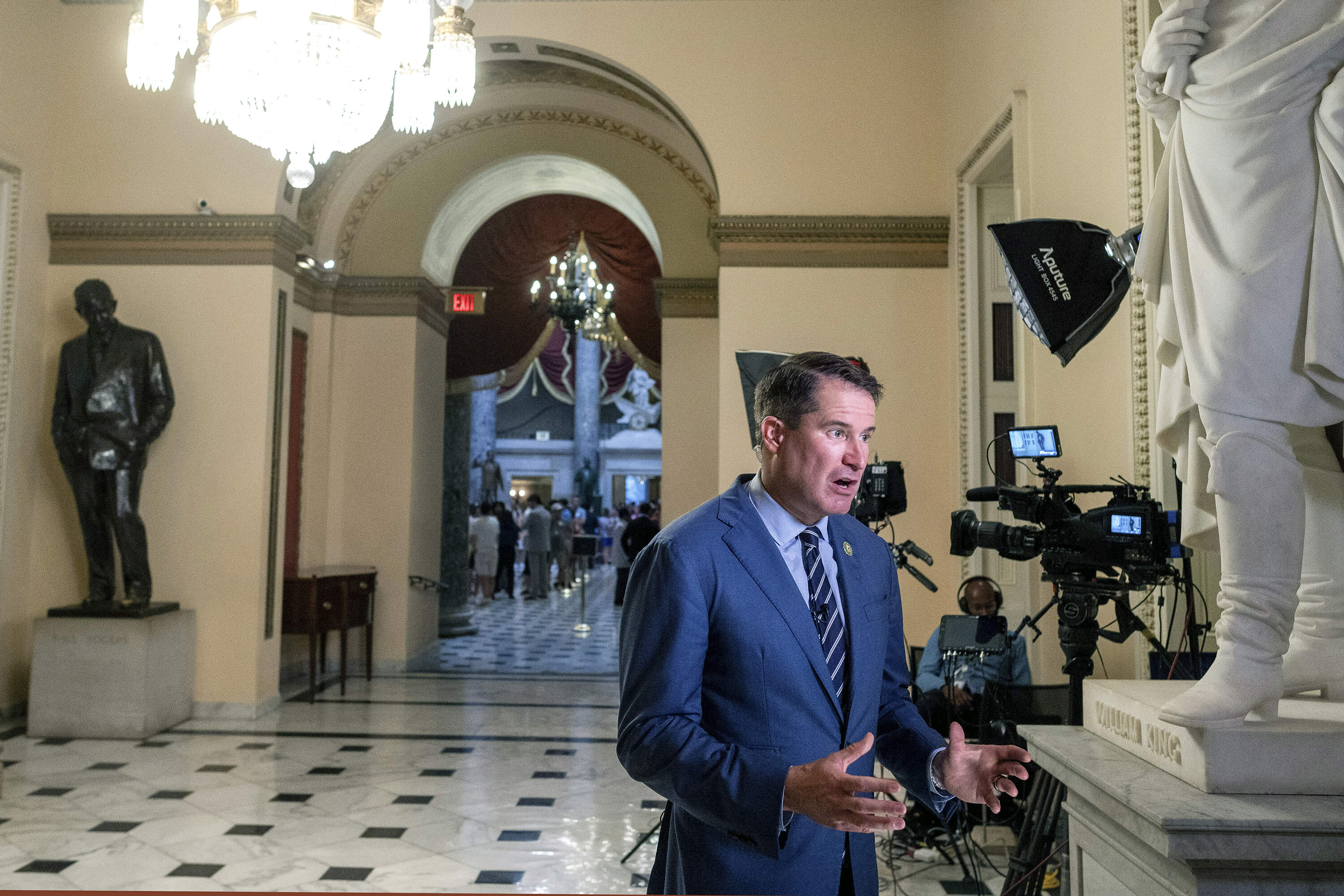
Jayapal is not the only Democrat moving in that direction. Rep. Seth Moulton also said Democrats should talk about court packing after the Haitian TPS ruling.
He connected the debate to Haitian protected-status recipients and argued Democrats should discuss expansion, term limits, ethics reform, and ways to push back against MAGA Republicans after the ruling.
The point is not that every Democrat agrees on the fix. The point is that expansion is no longer being treated as a fringe theory. It is being presented as an available tool in the immediate aftermath of immigration decisions that infuriated Democrats.
Checks and balances
Separation of powers is not primarily about fairness. It is about friction.
The Framers built a system where ambition counters ambition. Congress checks the President. The President checks Congress. The judiciary checks both. Not because any branch is morally superior, but because power, left alone, tends to swell.
Court packing changes that balance in a subtle but profound way: it turns the Supreme Court from a check on political power into something that can be reshaped by political power on short notice.
The key question
If Congress can expand the Court whenever it dislikes constitutional outcomes, what stops the Supreme Court from becoming a policy tool rather than a constitutional referee?
What would change
Supporters often sell expansion as “reform.” Opponents call it a “power grab.” Both labels dodge the mechanics. Here is what would actually change.
1) Independence becomes conditional
Judicial independence is not just life tenure. It is the shared political assumption that judges are not punished for rulings.
If a majority coalition can respond to disfavored decisions by adding seats, the message to the Court is simple: rule our way, or we will redesign you.
2) Confirmations become constant warfare
Confirmations are already nasty. Expansion would make them constant. Every time control of Congress and the White House aligns, the pressure to “correct” the Court would be enormous.
Once one side expands, the other side has a ready-made justification to expand again. At that point, the number of seats is not nine. It is whatever the last election produced.
3) Congress gains leverage over constitutional meaning
We say the Supreme Court “interprets” the Constitution. But court packing lets Congress influence interpretation indirectly by altering the Court’s membership in response to specific legal outcomes.
That does not merely change decisions. It changes the relationship between branches: Congress becomes the branch that can “tune” the judiciary until it gets the sound it wants.
4) The presidency becomes more dangerous
This is the part that surprises people. Many who want to pack the Court do so because they fear a powerful President. But a Court that is visibly political and structurally vulnerable is less able to restrain executive power over the long haul.
Today’s expansion might be aimed at limiting a Trump-era agenda. Tomorrow’s expansion might be aimed at blessing an even broader theory of executive authority.
When the Court becomes a prize, the presidency becomes a battering ram to capture it.
Term limits and ethics
Jayapal and others often pair expansion with term limits and stronger ethics and transparency rules. Those are separate ideas, and they deserve separate arguments.
- Ethics and disclosure rules: Congress has more room to legislate here, though the details matter and there are real separation-of-powers concerns if rules are written to harass or micromanage the Court.
- Term limits: Popular in theory, complicated in practice. Many serious proposals likely require a constitutional amendment to avoid conflicts with life tenure “during good Behaviour.”
- Expansion: Legally easier than term limits, politically explosive, and structurally destabilizing if used as a response to outcomes.
Lumping these together in one “reform package” can make expansion sound as ordinary as financial disclosure. It is not. Court expansion is the one item on the list that can quickly alter the constitutional balance between the branches.
Legitimacy concerns
On Capitol Hill, Republicans have already framed court expansion as a legitimacy crisis in the making. The House Judiciary Committee has held a hearing titled “Court Packing: A Threat to the Supreme Court’s Legitimacy.”
Take away the partisan packaging and there is a serious civic point underneath: legitimacy is not a vibe. It is a public belief that the rules will not change mid-game just because the scoreboard got uncomfortable.
The mirror test
Here is the question that tends to end the argument:
Would you still support court packing if the other party controlled Congress and the White House and used it to lock in its own agenda for a generation?
If your answer is “no,” then what you want is not a structural reform. What you want is a temporary advantage. And temporary advantages have a habit of becoming permanent precedents.
The Constitution is not just a set of rules. It is a reflection of what we are willing to do when we are angry, when we feel cornered, when we lose. Court packing is a test of whether we still believe in checks and balances when the checking gets in our way.