
Temporary Protected Status, or TPS, has a name that sounds like a constitutional guarantee. It is not. TPS is a statutory tool Congress created and the executive branch administers, with federal courts acting as referees when people argue the government did not follow the law.
TPS and DACA are different programs with different legal roots. But they share a familiar vulnerability: both live or die in the space where executive authority, statutory limits, and judicial review collide.
DACA offers one of the cleanest Supreme Court examples of how courts police executive branch decisions in immigration. TPS litigation often follows the same pattern, even though the statutes and facts differ.
If you want a real world example of how that referee role turns into a separation-of-powers fight, you do not have to rely on vague hypotheticals or unnamed disputes. Look at the long-running DACA litigation, where federal courts have repeatedly ordered the executive branch to stop, start, or preserve an immigration program, and where the Supreme Court has stepped in to say what the law requires and what it does not.
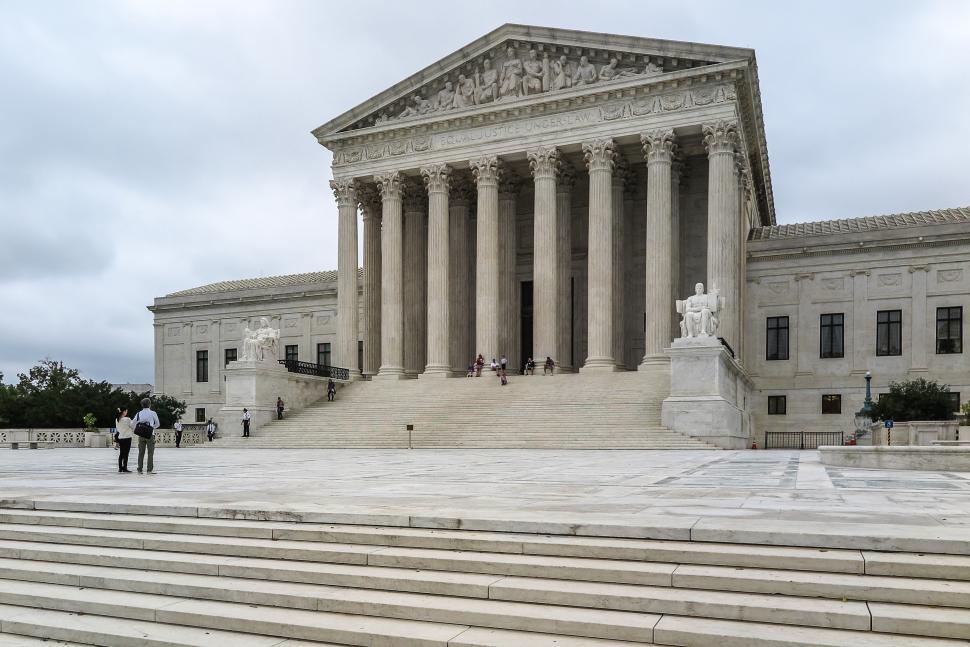
In 2020, the Supreme Court held in Department of Homeland Security v. Regents of the University of California that the Trump administration’s attempt to end DACA was reviewable and was arbitrary and capricious under the Administrative Procedure Act because the agency failed to adequately consider important aspects of the problem, including reliance interests. The Court reviewed DHS’s 2017 rescission decision and found the explanation inadequate on that record. It did not hold that DACA was required by the Constitution, and it did not decide DACA’s underlying legality. It held the government had not ended it lawfully on that record, so the rescission was set aside and the matter was sent back to the agency.
The immediate question that keeps returning in immigration fights like this is dramatic. Can a federal judge defy the Supreme Court?
The constitutional answer is less cinematic but more important: lower courts are bound by Supreme Court precedent. The real disputes are usually about what the Supreme Court actually decided, what it left open, and what remedy a lower court can order while the merits are litigated.
Join the Discussion
Case in brief
- Supreme Court case: Department of Homeland Security v. Regents of the University of California, 591 U.S. 277 (2020).
- What it was about: The Trump administration’s 2017 decision to rescind DACA.
- What the Court held: The rescission was reviewable and was arbitrary and capricious under the APA because the agency’s explanation did not adequately address key issues, including reliance interests. The Court set aside the rescission and remanded to the agency.
- What it did not hold: The Court did not declare DACA itself to be lawful on the merits of the underlying program, and it did not say DACA could never be ended. It said the government had not ended it in a legally sufficient way on that record.
- Why people confuse this with “defiance”: After a Supreme Court merits decision like Regents, lower courts may apply that reasoning to a new agency action or a different record, or manage remedies while litigation continues. The losing side may call that “defiance,” but the legal question is whether the lower court faithfully applied binding precedent.
TPS in court
DACA is not TPS, so it helps to ground the same separation-of-powers dynamic in a TPS case.
One well-known example is Ramos v. Nielsen, a lawsuit challenging the Trump administration’s termination of TPS designations for several countries. A federal district court in the Northern District of California issued a preliminary injunction in 2018 that kept existing TPS protections in place for affected people while the case proceeded, blocking DHS from implementing the scheduled termination dates for the challenged designations during the litigation. The case later continued under the caption Ramos v. Wolf after leadership changes at DHS.
TPS cases also tend to surface a threshold fight that does not always make headlines: whether a particular TPS decision is reviewable in federal court at all, and if it is, what parts are reviewable. The government may argue a decision is committed to agency discretion or otherwise insulated from review. Plaintiffs usually respond that their claims target legal errors, required procedures, or unconstitutional motivations, which are the kinds of issues courts can hear.
Case in brief
- District court case: Ramos v. Nielsen (later Ramos v. Wolf), U.S. District Court for the Northern District of California.
- What it was about: Challenges to DHS decisions to terminate TPS designations for certain countries.
- What the court ordered: A 2018 preliminary injunction that preserved the status quo for existing TPS beneficiaries while the case moved forward, preventing DHS from implementing the scheduled termination dates for the challenged designations during the litigation.
- What it shows: The court did not create TPS or designate countries. It used ordinary judicial review and equitable remedies to pause contested agency action until the legal claims could be decided.
What TPS is
TPS is a temporary immigration status created by Congress in the Immigration and Nationality Act. It allows eligible nationals of a designated country, and certain people who last habitually resided there, to remain in the United States for a limited period when returning home would be unsafe or impracticable.
Congress designed TPS for conditions like:
- Armed conflict
- Environmental disasters
- Extraordinary and temporary conditions that prevent safe return
TPS is not a green card. It does not, by itself, create a direct path to lawful permanent residence. Some TPS holders may qualify for permanent status through other, independent avenues, but TPS alone does not turn into a green card automatically.
TPS does generally come with two major practical protections:
- Protection from removal for the duration of the TPS designation, assuming the person remains eligible and is not disqualified (for example, by certain criminal grounds or other ineligibility rules).
- Eligibility for work authorization through an Employment Authorization Document (EAD), which requires an application.
It also has a built-in expiration logic. Countries are designated for set periods, then the government decides whether to extend, redesignate, or terminate the designation.
Who controls TPS
The TPS statute assigns the key decision to the executive branch, through the Secretary of Homeland Security. The Secretary can designate a country for TPS, extend it, or terminate it, based on statutory criteria.
That is where Article II matters. Immigration policy is shaped heavily by Congress, but it is implemented primarily by the executive branch through agencies like DHS and USCIS. The executive does not get to invent immigration categories out of thin air. TPS exists because Congress created it. The executive’s job is to apply the statute.
In other words, TPS sits in a familiar constitutional middle ground:
- Congress writes the framework and the criteria.
- The executive makes determinations within that framework and runs the program day to day.
- The judiciary decides whether the executive complied with the statute, followed required procedures, and stayed within legal boundaries.
What courts do
Courts do not run TPS. But courts do review agency action, often through the Administrative Procedure Act.
That review is not automatic in every dispute. In TPS cases, the government may argue that some decisions are discretionary or otherwise not subject to review, while challengers argue their claims involve legal errors, procedural failures, or constitutional problems that courts can address.
When DHS terminates or changes TPS in a way that affects people’s ability to remain in the U.S. and work, lawsuits often follow. The typical claims are not “TPS is constitutionally required.” They are claims like these:
- The agency misread the TPS statute.
- The agency failed to follow required procedures under the Administrative Procedure Act.
- The agency’s reasoning was arbitrary or ignored relevant evidence.
- The agency violated equal protection or due process principles in a way that is legally cognizable.
A common early move in these cases is some form of temporary relief, often called a temporary restraining order (TRO) or a preliminary injunction. A TRO is typically short-term emergency relief to prevent immediate harm. A preliminary injunction is longer-lasting relief, entered after more briefing, to preserve the status quo while the case is decided.
Limits of orders
It helps to be concrete about remedies, because this is where separation of powers friction tends to show up.
- What courts can do: Courts can enjoin unlawful agency action, require compliance with the APA’s procedural and reasoning requirements, set aside an agency decision that violates the statute, and preserve the status quo while legality is litigated.
- What courts cannot do: Courts do not themselves designate a country for TPS, rewrite the TPS statute, or permanently grant TPS as a free-standing judicial policy choice. Any order still has to fit within the statute and the court’s remedial authority.
Can judges defy SCOTUS
Not lawfully. The Supreme Court sits at the top of the federal judiciary. Under vertical stare decisis, lower federal courts must follow the Supreme Court’s binding interpretations of federal law and the Constitution.
But accusations of defiance usually arise from something more technical than open rebellion. In practice, there are three common possibilities:
1) Distinguishing, not defying
A district judge may read a Supreme Court decision as applying to a different question, a different statutory provision, a different administrative record, or a different kind of remedy.
That can look like defiance to the losing side, but it is often the ordinary process of legal interpretation: what exactly did the Supreme Court decide, and what did it leave undecided?
2) Managing procedure
The Supreme Court also issues emergency orders, such as stays, that control what happens while appeals proceed. A stay pauses the effect of a lower court’s order.
So a district court can sometimes act after a Supreme Court order if the district court is addressing a different procedural posture, a new agency action, or a different record, so long as it is not contradicting the Supreme Court’s binding holdings.
3) A real conflict
This is the rarest scenario, but it is the one the system is built to fix. If a district court issues an order that directly conflicts with Supreme Court precedent, the government can seek relief from a court of appeals, and ultimately from the Supreme Court.
The corrective mechanism is appellate review.
What “rogue judge” means
“Rogue judge” is a political description, not a legal category. The Constitution does not recognize “good judges” and “bad judges” as separate species. What it recognizes are courts with jurisdiction, binding precedent, and review by higher courts.
When officials accuse a judge of acting outside legitimate bounds, they are usually signaling one of two legal claims:
- The judge ignored a binding Supreme Court holding. If true, the proper response is a stay request and an appeal.
- The judge exceeded remedial authority and intruded on executive discretion. This claim often turns on what Congress made reviewable, what the APA requires, and what sort of injunction a court may issue.
Those are legal arguments. They might be strong or weak. But either way, the system’s pressure valve is appellate review, not a showdown between a single judge and the Supreme Court.
Why these fights happen
Immigration is one of the most executive-administered areas of American governance, but it is still constrained by law. When Congress writes a TPS statute, it is not offering the Secretary of Homeland Security a blank check. It is delegating power subject to criteria and, often, procedural obligations.
Courts step in not to choose immigration policy, but to answer rule-of-law questions:
- Did the agency follow the statute Congress passed?
- Did it provide the explanation the law requires?
- Did it consider the factors the statute makes relevant?
- Did it respect constitutional limits when it acted?
That is judicial review in its most classical form: not governing, but judging whether the government followed the rules that govern it.
What happens next
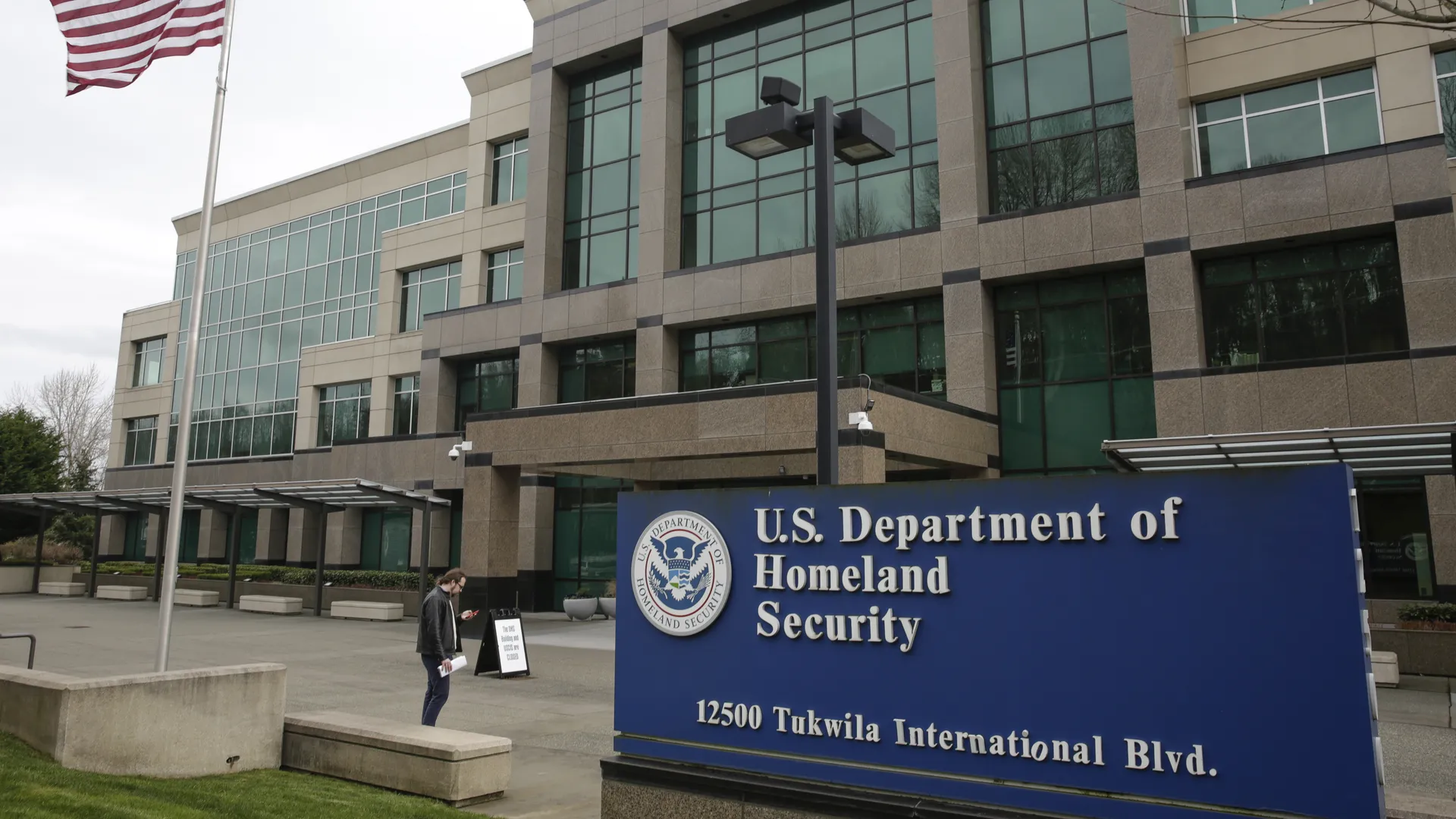
When a district court issues an order that DHS believes is unlawful or inconsistent with Supreme Court precedent, DHS has predictable tools:
- Ask the district court for a stay of its own order.
- Appeal to the circuit court and seek an emergency stay.
- Ask the Supreme Court for emergency relief if necessary.
If higher courts agree the district judge exceeded lawful authority, they can narrow or vacate the order. If higher courts disagree, the order stands. Either result is how the system is designed to work.
FAQ
Is TPS a constitutional right?
No. TPS is a statutory program. Congress could amend it, expand it, narrow it, or repeal it. People may have constitutional claims about how the government administers TPS, but TPS itself is not written into the Constitution.
Does TPS stop deportation permanently?
No. TPS is temporary and country-specific. It generally protects eligible recipients from removal for as long as the designation remains in effect and the person remains eligible.
Can a district judge overrule the Supreme Court?
No. District judges are bound by Supreme Court precedent. If there is a genuine conflict, the normal fix is appeal, not defiance.
Can the executive branch ignore a court order it believes is wrong?
As a rule, no. The executive branch is expected to comply with court orders unless and until the order is stayed or reversed on appeal.