When people hear “separation of powers,” they often picture three branches neatly checking each other like a well-trained debate team. In real life, the checks are rougher. They are political. They are procedural. And sometimes, they are blunt instruments.
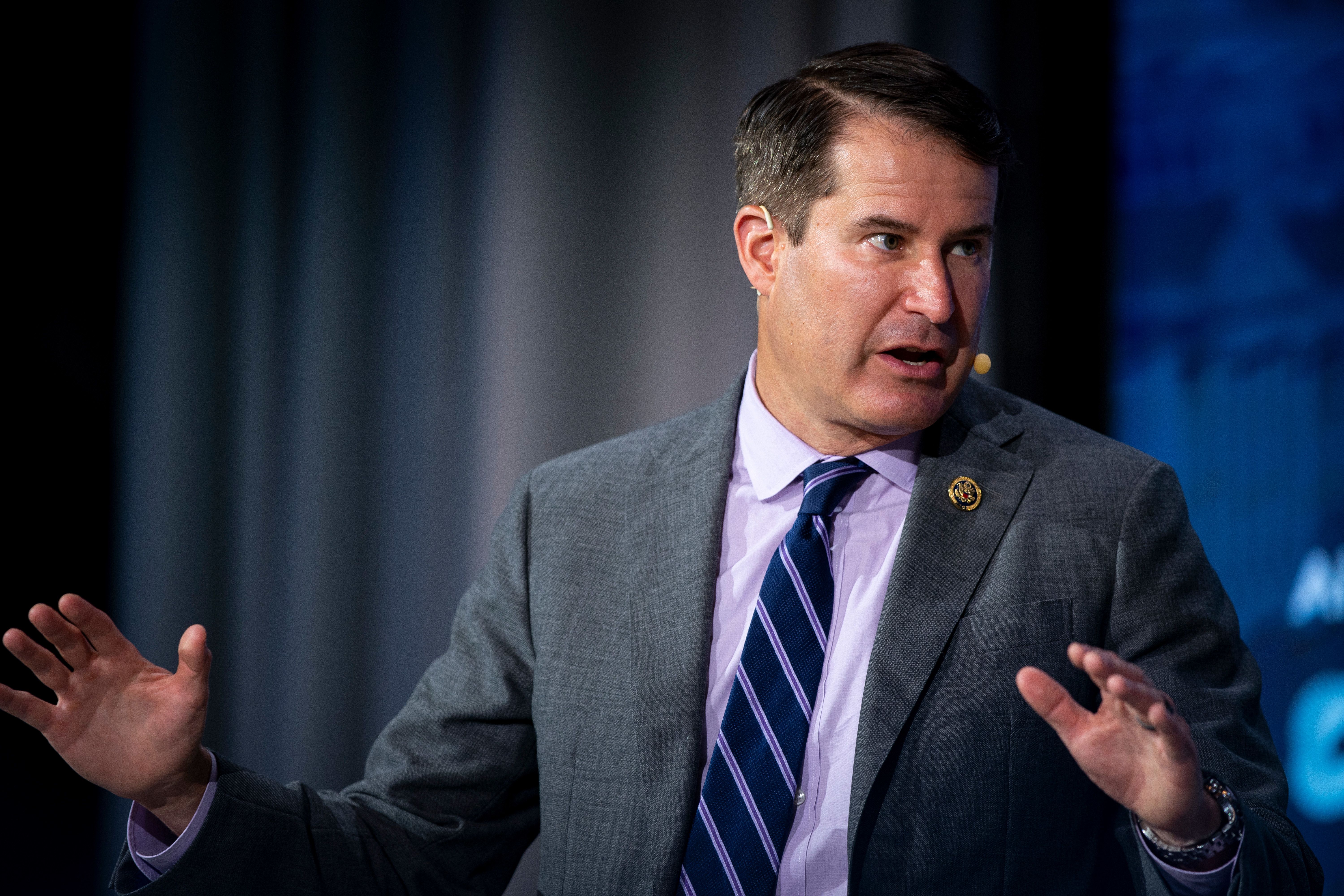
This week, one of those blunt instruments came back into the national vocabulary: court-packing. Rep. Seth Moulton of Massachusetts, reacting to a Supreme Court move in a Temporary Protected Status dispute involving Haitians, said the quiet part out loud: “Let’s talk about packing the court, let’s talk about expanding it, let’s talk about what we need to do to push back against the MAGA Republicans.”
His frustration was rooted in human consequences as he understands them. As Moulton put it, the Court is “basically saying that 350,000 people here should go back to a country that the State Department, under Marco Rubio, has said Americans can’t travel there because it’s so unsafe.” He warned of families torn apart, communities upended, classmates “ripped out of their schools,” and a hit to the health care workforce.
But the constitutional question is bigger than Haiti TPS. It is bigger than one ruling, or one administration, or one election cycle. The question is this: once expanding the Supreme Court becomes a normal response to decisions you hate, what happens to the balance of power in the American system?
Join the Discussion
What the Haiti TPS fight shows
TPS is one of those policies that sounds technical until you look at the lives attached to it. It is a legal designation that lets certain noncitizens stay and work in the United States when conditions in their home country make return dangerous or impracticable.
In this dispute, the danger point was not subtle in Moulton’s telling. He emphasized the contradiction as he sees it: the federal government warns Americans not to travel to Haiti because it is unsafe, while the Supreme Court’s action in the TPS case is, in his view, pointing toward a reality where people are sent back anyway. That tension is the emotional fuel behind proposals like court expansion, term limits, and ethics reforms.
Still, the TPS ruling is only the trigger for the argument he is making. The bigger conflict is about who gets the last word when fundamental policy questions get pulled into courts and framed as questions of law.
What court-packing is
“Court-packing” is the political phrase for a simple statutory move: Congress passes a law changing the number of justices on the Supreme Court, and the President fills the new seats through the normal appointment process.
Three basic clarifications matter:
- The Constitution does not fix the number at nine. Article III creates “one supreme Court,” but it does not specify how many justices sit on it.
- Congress can change the size by ordinary legislation. That means it takes a bill passed by both chambers and signed by the President, or enacted over a veto.
- “Packing” is about purpose, not mechanics. Expanding the Court is court-packing when the intent is to quickly change outcomes by changing personnel.
So is it “constitutional”? In the narrow legal sense, yes, it can be. But that is not the end of the inquiry. In civics, legality is the floor, not the ceiling.
What it does to separation of powers
Separation of powers depends on the idea that no branch can permanently dominate the others. Court-packing threatens that stability in two ways, one immediate and one long-term.
1) It turns Court size into a policy lever
If one Congress can add seats to get a desired result, the next Congress can add more to reverse it. Over time, the Court starts to look less like an independent check and more like a scoreboard that gets redesigned mid-game.
The practical effect is a Court that may still issue opinions, but carries less institutional authority because everyone knows the composition is contingent on the next political wave.
2) It shifts power toward the political branches, but not evenly
On paper, court expansion is a legislative act. In reality, it is a joint project between Congress and the President, because the President chooses nominees. That means court-packing can strengthen the President’s hand at the very moment we claim we are trying to “check” power.
If your theory is that the Court has become too political, the remedy of quickly adding seats is like trying to put out a grease fire with a cup of oil. You might change the shape of the flames. You do not remove the accelerant.
Independence: rule or habit?
We talk about judicial independence as if it were a constitutional switch that is either on or off. It is not. The independence of the Supreme Court has always been partly cultural, partly political, and partly built on restraint by the other branches.
That restraint is not guaranteed by the text. It is enforced by the fear of retaliation, the desire for stability, and the belief that some norms are worth preserving even when they are inconvenient.
Court-packing tests whether independence is something we actually value, or something we value only when it produces outcomes we like.
Term limits and ethics
Moulton paired his court-expansion comments with two reforms that often come up in the same breath: term limits and ethics rules.
These get lumped together in public debate, but they are structurally different:
- Ethics reform aims to regulate conduct and disclosure. It is about how power is exercised.
- Term limits would change tenure expectations. Depending on design, it might require legislation, constitutional amendment, or a contested legal theory about “good Behaviour” and life tenure.
- Court-packing changes outcomes by changing who sits on the Court right now, quickly.
If you are trying to lower the political temperature, term limits and ethics reform are at least aimed at legitimacy. Court-packing is aimed at leverage.
If it becomes normal
Here is the part that rarely makes it into the slogans: if one side expands the Court to get a preferred result, it establishes a tool the other side can use later, with the same legal justification and a different moral story.
In that world, separation of powers does not vanish. It changes shape. The Court becomes less a check on majorities and more a temporary extension of them. And once that happens, the losers of today stop viewing the Court as a place to persuade and start viewing it as a place to capture.
That is not an abstract fear. It is the logical endpoint of treating the size of the Supreme Court as a dial you spin until the decisions come out the way you want.
The Haiti TPS ruling may have been the trigger. The argument over court-packing is the opportunity it created. The constitutional damage, if it comes, will not arrive as a single dramatic moment. It will arrive as a new habit: “If we do not like the Court, we build a new Court.”