

In recent years, Justice Clarence Thomas has repeatedly become the center of a different kind of national argument: ethics, jurisprudence, or the Court’s legitimacy.
This time, the spark is not a new ruling or a new disclosure. It is a political reversal tied to an institutional proposal.
In remarks delivered on Aug. 31, 2024, at the Texas Tribune Festival, Rep. Jim Clyburn said he regretted the role he played in publicly supporting Thomas’s 1991 confirmation. In the same set of remarks, he urged Congress to expand the Supreme Court and pointed to adding four seats.
Join the Discussion
What Clyburn said

Clyburn’s message runs on two tracks: the personal and the structural.
First, he said he now views his public advocacy during the 1991 confirmation battle as a mistake. He was not a senator casting a floor vote, but he did use his platform at the time to defend or bolster Thomas’s nomination, and he now says he wishes he had not.
Second, he urged Congress to expand the Supreme Court. In his comments, he went further than a general endorsement and described a specific change: adding four seats.
Supporters of expansion argue it is a form of institutional repair, a way for Congress to respond to a Court they believe has moved too far from public expectations. Critics argue it is escalation, a step that turns Court size into a recurring partisan weapon.
1991 in brief
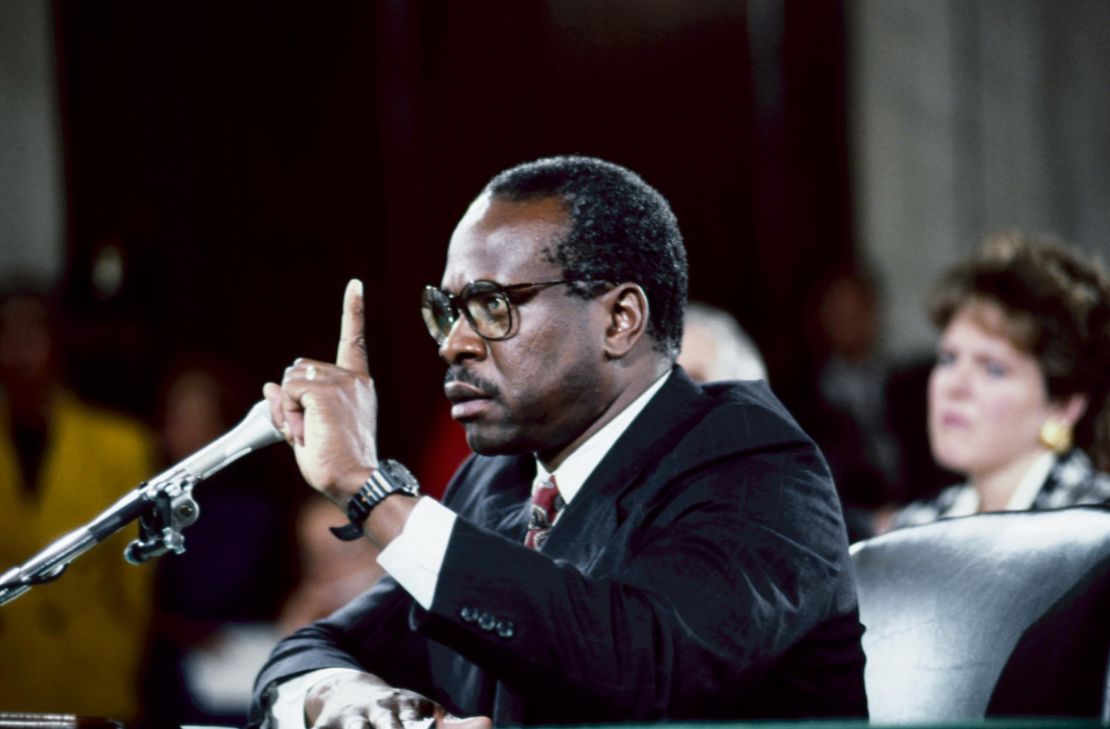
Thomas was nominated to replace Justice Thurgood Marshall, a fact that made the fight instantly symbolic. Marshall was not just a justice. He was a civil rights icon and a living bridge between the Warren Court and modern constitutional law.
Then came Anita Hill’s allegations of sexual harassment. The hearings and their aftermath became a national argument about credibility, race, gender, institutional power, and what “fitness” for high office should mean. Thomas was confirmed anyway.
Clyburn’s regret is aimed at the position he took in that moment, when representation and symbolism competed with the seriousness of the allegations and the country’s sense that something larger than one nomination was on trial.
Why this is back
Court expansion has returned to the political conversation for a simple reason: many Americans now experience Supreme Court power as more immediate and more openly contested than it was a generation ago.
Landmark, closely watched decisions, a steady drumbeat of ethics controversies, and public debates about legitimacy have combined to make structural reforms feel less abstract. Expansion is not the only reform on the table, but it is one of the most direct changes Congress can enact by statute.
Does the Constitution set size?

The Constitution creates “one supreme Court,” but it does not specify the number of justices. The size of the Court is set by Congress by statute.
That is why changing the number of seats does not require a constitutional amendment. It requires the ordinary lawmaking process: passage in the House and Senate and the president’s signature, or a veto override.
Congress has changed the Court’s size several times by statute, notably in 1807, 1837, 1863, 1866, and 1869. The number has been set at nine since 1869.
Court packing and legality
“Court packing” is a political accusation, not a constitutional category. The legal question is straightforward: Congress can add seats. The harder question is institutional: whether doing so strengthens legitimacy or damages it by making the Court feel like a prize to be resized after each election. That is also why the term “court packing” tends to appear whenever expansion is framed as an immediate response to recent rulings or confirmation fights.
Why four seats
Clyburn’s call to add four seats has clear political logic. Adding several seats can change outcomes quickly if the appointing president and confirming Senate are aligned.
It is also not the only number that shows up in reform debates. Other proposals would expand the Court to 11 or 13 justices, including ideas that track the number of federal circuits. The common thread is the same: expand enough to matter, but not so much that the change looks unlimited.
That same math is why the proposal is combustible. Once one Congress expands the Court for an immediate political goal, a later Congress can respond in kind. Expansion is relatively easy to do and easy to repeat, which is the cycle critics fear.
Other reforms often discussed alongside expansion include 18-year term limits with regularized appointments and stronger ethics and transparency rules for the justices. Expansion is different because it changes the voting pool right away.
How it would happen
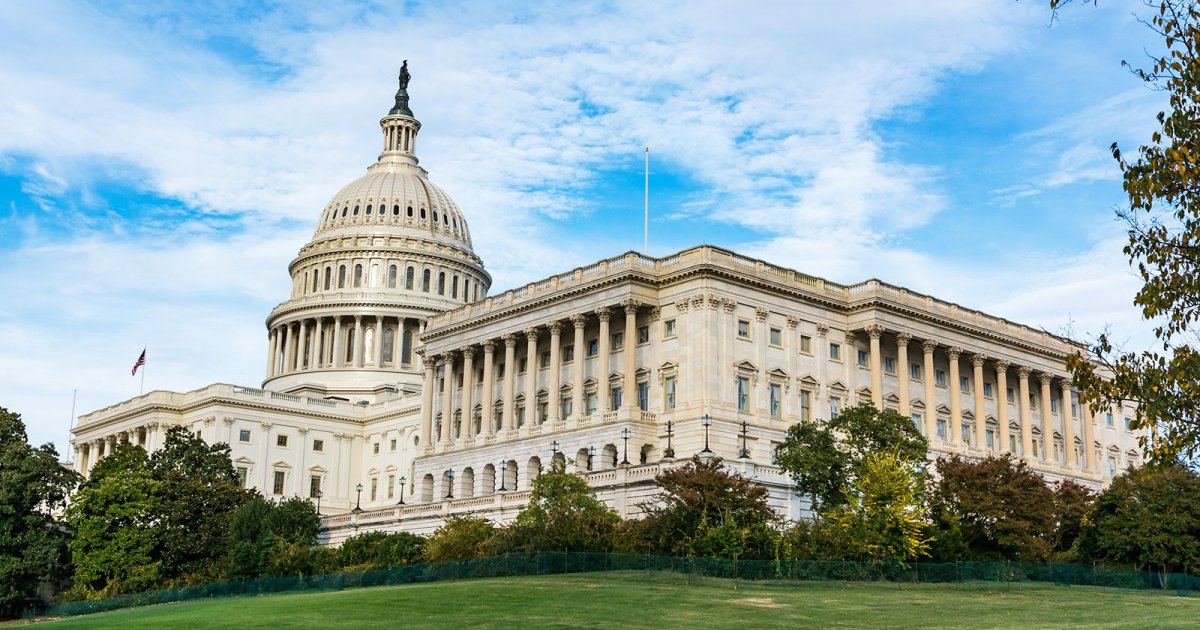
Expanding the Supreme Court would start with a bill changing the number of justices in federal statute. Like other major judiciary bills, it would move through committee and then to floor votes in the House and Senate.
The Senate is the practical choke point. Even if a simple majority supports expansion, the filibuster can effectively require 60 votes to advance most legislation unless Senate rules change. It also is not an obvious fit for budget reconciliation, and any reconciliation attempt would likely face Byrd Rule challenges and parliamentarian scrutiny.
If a bill passes both chambers, the president can sign it into law or veto it. New seats would then be filled the usual way: nominations by the president and advice and consent by the Senate.
That is the basic reason expansion is politically difficult in the modern era. It is legally available but usually blocked by today’s Senate math unless one party controls the chambers, the presidency, and the procedural path.
What expansion changes
Changing the size of the Court changes more than the headline ideological ratio. It can change how the institution functions and how the public experiences it.
- Precedent becomes easier to revisit or entrench. A new majority can reshape doctrine quickly, especially in areas that hinge on narrow coalitions.
- Case selection can shift. Through discretionary certiorari, a different Court can choose to hear different kinds of disputes and avoid others.
- Public authority can rise or fall. Some Americans would view expansion as democratic repair. Others would view it as an arms race. Both reactions matter because the Court relies on compliance.
In practical terms, expansion can touch everyday controversies that regularly reach the Court, including disputes over voting rules, abortion restrictions, gun regulations, and the authority of federal agencies.
Arguments for it
Pro-expansion arguments tend to fall into three buckets.
- Democratic responsiveness. Supporters argue Congress has the constitutional authority to structure the Court and should use it when the Court’s direction diverges sharply from national electoral outcomes.
- Legitimacy and ethics. Some supporters argue that ethics controversies and perceived conflicts of interest have weakened confidence, and that structural change is warranted alongside new ethics rules.
- Correction after hardball politics. Others frame expansion as a response to prior confirmation battles and procedural tactics, arguing that restoring balance requires a structural counterweight.
Arguments against it
The strongest counterargument is strategic rather than procedural. If one party expands the Court to change outcomes, the other party can respond later with another expansion. Over time, the Court risks becoming a rotating prize rather than a stabilizing institution.
Franklin D. Roosevelt’s 1937 court-expansion plan is the standard historical warning. Even when a move is lawful, the perception that it is designed to secure immediate political wins can trigger backlash and complicate the Court’s standing for years.
Why Thomas is central

Thomas is not just any justice. He has become a symbol of a broader conservative legal project, especially on questions of administrative power, federalism, and the reach of substantive due process.
So when Clyburn ties his 1991 support to today’s Court, he is making a claim about long-term consequences: that one confirmation fight helped shape a judicial era, and that the effects of that era are now visible in doctrine and governance.
It is also a civics point that often gets lost: lifetime appointments mean every confirmation is a bet on the future, not a verdict on the present. In 1991, the argument was about Thomas the nominee. In 2024, Clyburn is arguing about Thomas the institution-shaper.
The core question
If you strip away the personalities, Clyburn’s shift points to the real national argument: Is the Supreme Court a neutral interpreter that must be insulated from politics, or is it a governing institution whose design must be periodically renegotiated?
The Constitution gives the country a Court, but it leaves Congress wide latitude to structure it. That flexibility is not cost-free. Any structural fix can become a precedent for the next one, until the Court is not insulated from politics but regularly pulled into it.
Clyburn’s proposal forces the country to look straight at that trade, not because he is the first to suggest expansion, but because he is tying it to a moment in modern history that many Americans remember viscerally, even if they do not remember the vote count.
Quick FAQ
Can Congress add justices by normal law?
Yes. The Constitution does not set the number of justices. Congress can change the Court’s size by statute through the normal lawmaking process.
What did Clyburn propose?
In remarks on Aug. 31, 2024, at the Texas Tribune Festival, he said he regrets his past public support for Clarence Thomas’s 1991 confirmation and urged Congress to expand the Supreme Court. In the same remarks, he pointed to adding four seats.
Would adding seats change outcomes?
Potentially, yes. It depends on who appoints the new justices, how quickly seats are filled, and how the reconstituted Court approaches precedent and case selection.
How fast could new seats be filled?
It depends on the Senate. Confirmations can move quickly when the majority is aligned and chooses to prioritize them, or they can slow down if the chamber is divided or the process becomes a procedural fight.