
There is a particular kind of Supreme Court power that does not show up in oral argument transcripts or in the tally at the bottom of an opinion. It is the power of simply being there, term after term, long enough for your “dissent” to become the next generation’s baseline.
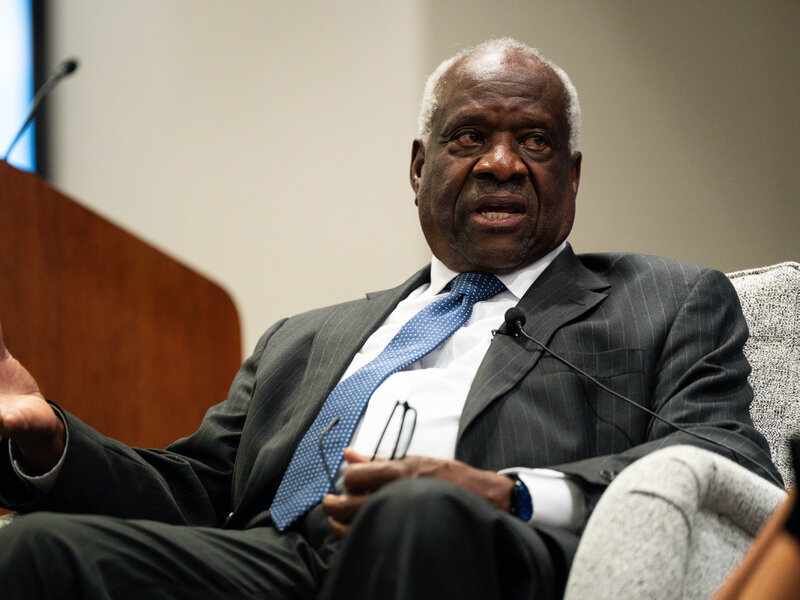
Last week, Justice Clarence Thomas hit a milestone that sounds like trivia until you remember what the Court is: nine life-tenured officials whose influence compounds over time.
Join the Discussion
The record Thomas just set
Clarence Thomas is now the second-longest serving justice in the history of the U.S. Supreme Court.
If he remains on the bench through 2028, he will surpass Justice William O. Douglas, becoming the longest-serving justice in the Court’s history.
Those facts do not tell you how to feel about Thomas’ jurisprudence. They do tell you something concrete about how the institution works. Seniority is not a ceremonial ribbon. It is a structural advantage that shapes the Court’s internal gravity.
Why longevity matters
The Constitution gives federal judges life tenure during “good Behaviour,” and for Supreme Court justices that usually means decades. The Framers’ bet was that independence would follow from security. But time has its own consequences: the longer a justice serves, the more chances they have to do three things that shift the Court’s balance of power.
1) Turn the fringe into the familiar
The Court’s most important changes are often slow. A justice writes separately, year after year, pushing a constitutional theory that starts as a lonely position and ends up as a default assumption for newer colleagues. You can watch that dynamic in real time in American legal history.
Thomas has spent much of his career advancing views that were once dissents or concurrences and are now reflected in majorities across multiple hot-button areas, including guns, abortion, and affirmative action. When that happens, the vote count is only the last step. The earlier step is intellectual: persuading the institution that a different “common sense” is possible.
2) Shape the agenda
The public sees Supreme Court power as a series of final answers. Internally, it is also a series of choices: which cases to take, how broadly to write, which questions to decide now versus later, and how to frame a dispute so that lower courts will read it a certain way.
A long-serving justice accumulates informal authority in those choices. Not because colleagues must defer, but because colleagues learn the justice’s jurisprudential “map” and adjust their own strategies around it. Seniority does not automatically win arguments, but it does make you a fixed landmark.
3) Outlast coalitions
The Supreme Court is not one Court. It is a succession of Courts with different lineups, different instincts, and different political moments. A justice who serves long enough becomes a bridge between eras. That is especially consequential now, when constitutional doctrine is moving quickly and precedent is being reweighed in public view.
Power is not just ideology
When people talk about the Court’s “balance,” they often mean a simple left-right spectrum. That is real, but incomplete. There is also an internal balance between:
- Institutionalists who prefer narrow rulings and incremental change, even when they have the votes for more.
- Maximalists who see doctrine as needing correction, even if the correction is disruptive.
- Textual and historical method versus more open-ended approaches to liberty and equality.
- Skepticism of federal power versus deference to national solutions.
Thomas’ influence operates across all of those axes. He is not merely a vote. He is a consistent theory of constitutional meaning, pressed for decades, and now increasingly embedded in the Court’s output.
The Stephen Field parallel
Thomas now sits ahead of an older name on the longevity list: Justice Stephen Field, appointed by Abraham Lincoln. Field is useful as a reminder that Supreme Court history is not a straight line.
Field spent much of his tenure in dissent, only to see key parts of his constitutional vision later absorbed by majorities long after the original battles seemed “settled.” The lesson is simple and uncomfortable: the Supreme Court can treat yesterday’s stability as today’s mistake.
Whether you cheer or fear the modern Court’s direction, you should take that historical pattern seriously. Longevity increases the chance that a justice’s long-term project will eventually meet the right lineup and the right case.
What the record signals
Thomas becoming the second-longest serving justice is not just a personal milestone. It is a signal that the Court’s current center of gravity may remain stable longer than election cycles do.
If Thomas stays through 2028 and beyond, that does not guarantee any particular outcome in any particular case. But it does increase the odds that:
- the Court continues to be comfortable revisiting older doctrines,
- constitutional arguments once treated as marginal keep moving toward the middle, and
- the Court’s internal balance of power remains anchored by justices who have had decades to refine, repeat, and institutionalize their approach.
This is the quiet truth of the Supreme Court: the biggest decisions are made by votes, but the direction of constitutional law is often set by time.
A footnote on mythmaking
Supreme Court culture loves grand claims: unprecedented victories, impossible odds, the singular hero moment. Those stories travel well online, but they rarely survive contact with history.
That reflex was on display recently in a viral post by Supreme Court advocate Neal Katyal, who celebrated a 6-3 win against President Donald Trump’s tariffs and credited artificial intelligence as part of his preparation. In the same post, Katyal framed the victory in maximal terms: “Five months ago, I argued against the President's $4 trillion tariffs at the Supreme Court,” he wrote. “In 237 years, the Court had never struck down a sitting President's signature initiative. Legal scholars said it was impossible. Some of my own colleagues said it was impossible. We won. 6-3.”
The point here is not to litigate the performance of a single lawyer or the merits of a single case. It is to keep our historical bearings. The Supreme Court has, in fact, struck down a sitting president’s signature initiative before.
In 1935, the Court unanimously struck down the National Industrial Recovery Act in Schechter Poultry Co. v. United States. Passed in 1933, the National Industrial Recovery Act was the centerpiece of the New Deal, hailed by President Franklin Roosevelt himself as “the most important and far-reaching legislation ever enacted by the American Congress.”
So if you want a cleaner way to understand Thomas’ longevity record, start there. The Court is always in the business of puncturing certainties, including the ones we build about what it has never done. Longevity matters because it places one of the era’s most consequential constitutional actors in position to keep shaping which certainties survive.