
You can learn a lot about the Constitution by watching Congress fail to do simple things.
Take transparency. Almost everyone agrees with it in the abstract. Almost everyone loves it in campaign ads. But when it becomes a concrete vote that can embarrass an agency, inconvenience leadership, or split a party coalition, the House suddenly rediscovers the beauty of delay.
That is why Rep. Thomas Massie’s talk of using a discharge petition to force a House vote related to releasing additional Jeffrey Epstein-related records is not just another episode in the Epstein saga. It is a civics story about power. Specifically, who controls the House agenda when leadership would rather not.

Join the Discussion
Where this stands now
This is a fast-moving, paperwork-driven story. Before treating any claim about a “Massie discharge petition” as a settled fact, check the live record: the bill number and title, the sponsor, which committee it was referred to, whether a discharge petition has been filed with the Clerk, and the current signature count.
If those specifics are not available yet, the accurate framing is narrower: Massie has indicated support for using the discharge process as a strategy for forcing floor action tied to Epstein-related disclosure. Whether that strategy has matured into an active petition, and on what legislative vehicle, is something the Clerk’s public list will show.

What Massie is trying to do
In broad terms, the goal is to convert an argument that can otherwise linger in press conferences and letters into a visible scoreboard. How many House members will publicly sign to force action?
The procedural point matters as much as the policy point. A discharge petition is built for one specific moment: when a measure is stuck in committee and House leadership has little incentive to bring it up.
What “the files” can mean
One reason the Epstein-files fight never ends is that “release the files” can mean very different buckets of material, with very different legal constraints. In practical terms, people usually mean some mix of investigative records, interview summaries, warrants, charging and plea materials, and related correspondence and exhibits. Depending on what is being requested, it can also pull in items like travel records or logs that exist in private hands or in civil litigation, not just inside DOJ.
DOJ and FBI investigative records, which may be withheld or heavily redacted based on investigative sensitivities, sources and methods, or privacy concerns.
Grand jury material, which is typically protected by Federal Rule of Criminal Procedure 6(e). Disclosure, when it happens, generally requires a court-authorized exception. It is not something DOJ can simply post online on its own.
Sealed court records, which generally require court action to unseal, even if the government supports disclosure.
Civil discovery material, which may be governed by protective orders or settlement terms, not just executive-branch discretion.
Any serious disclosure mandate has to say which category it is targeting, what the redaction rules are, who decides, and what happens when legal barriers appear. Otherwise, the politics outrun the paperwork.
How the House agenda works
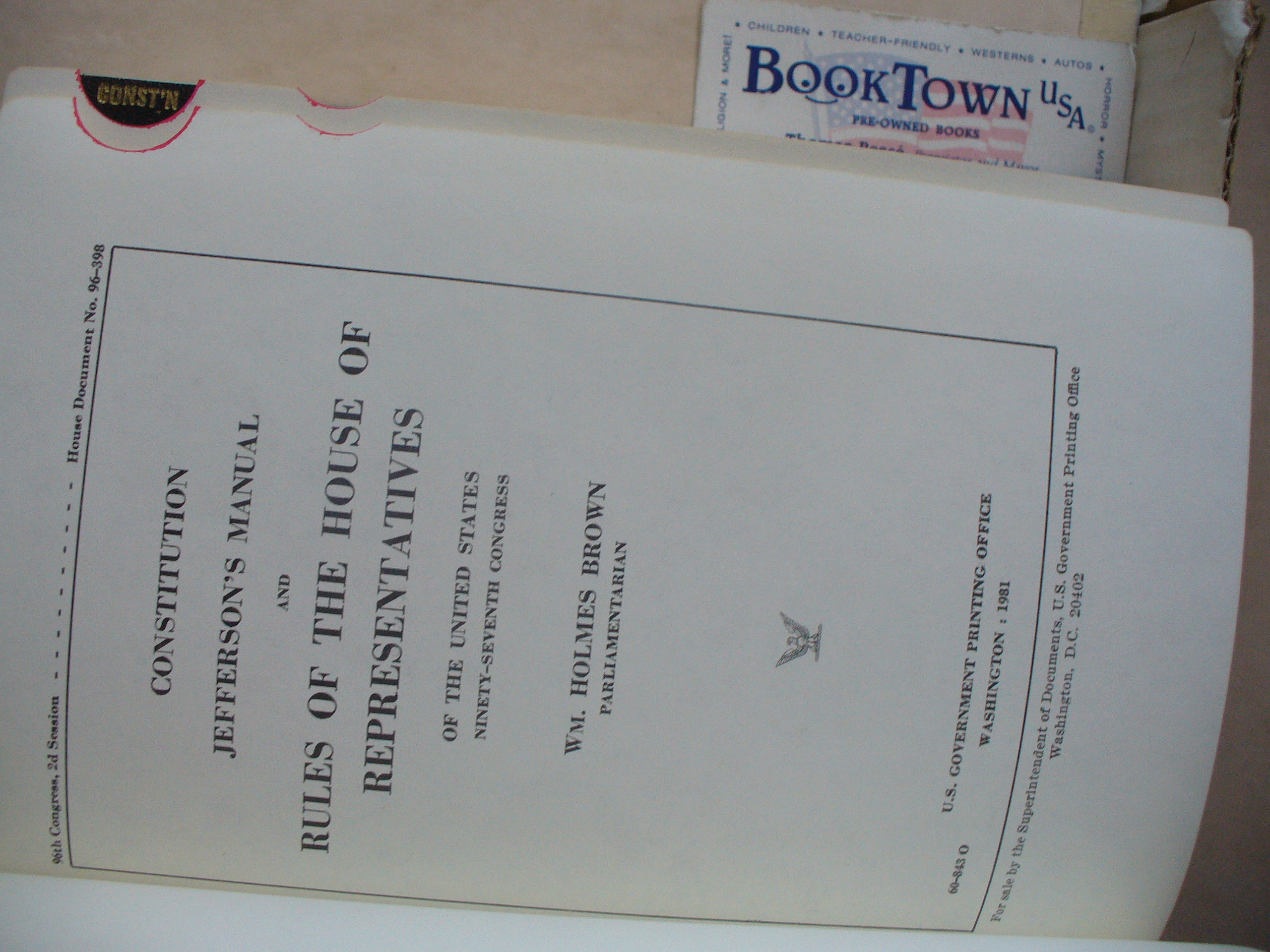
The Constitution gives each chamber power to set its own rules. In practice, the modern House runs on gatekeeping.
Committees decide whether most bills advance at all.
The Rules Committee often sets the terms for floor debate and, for most major legislation, whether a measure will get structured floor time.
Leadership controls the schedule and may prioritize party strategy, coalition management, and risk avoidance over a politically messy vote.
This is not accidental. The House is massive. Without agenda control, it becomes chaotic. But the cost of that order is that even a majority of members can want a vote and still not get one, unless they use one of the few pressure valves built into House procedure.
One common form of gatekeeping is simply not advancing a bill through the usual channels. For many high-stakes measures, if the Rules Committee does not report a special rule, the bill typically does not reach the floor under the standard path, even if lots of members say they “support” it on television. There are exceptions, including suspension of the rules, unanimous consent, and certain privileged matters.

What a discharge petition is
A discharge petition is a mechanism that allows House members to try to bring a measure to the floor over the objections of the usual gatekeepers. Technically, it discharges the committee from further consideration, which can unlock a path to floor action under House rules.
The magic number is 218, an absolute majority of the full House membership. Vacancies do not reduce the requirement.
In plain English, it is an end run around the people who normally decide what counts as “ready.”
But it is not a magic wand. It is slow, rare, and politically expensive. Members have to put their names on a public document that signals they are willing to defy leadership and committee chairs.
Timing matters
The House also builds in waiting periods. In general, a bill must sit in committee for a minimum period before a discharge petition can ripen, and then additional legislative-day timing rules govern when a successful petition can translate into an actual floor attempt. The result is a marathon, not a viral sprint.
What happens after 218
Even with 218 signatures, members still have to navigate the next procedural steps to actually tee up floor action. The practical effect, though, is the same: a majority has put itself on record demanding movement, which changes the political pressure and narrows the places for opponents to hide.
Why petitions are rare
If discharge petitions are so powerful, why do we not see them every week?
They are a public act of defiance. Signing can invite retaliation, including loss of committee influence, fundraising support, or legislative priorities.
They require cross-party math. In most real-world scenarios, getting to 218 means peeling members away from leadership’s preferred plan and usually means building a coalition that includes both parties.
Leadership can offer off-ramps. Sometimes the mere threat of 218 is enough to get a bill scheduled, modified, or neutralized through a substitute.
Timing rules can be unforgiving. The calendar gives leadership room to wait people out.
That is why a Massie-aligned discharge effort is a test of more than transparency. It tests whether members will accept the personal cost of turning “release the files” from a slogan into a recorded procedural fight.
Why this keeps coming back
The Jeffrey Epstein story sits at the intersection of criminal justice, institutional trust, and elite impunity. That combination is why the files remain politically radioactive years after the central prosecutions and public reports.
Calls to release remaining records generally collide with the same set of realities:
Investigative sensitivities where agencies claim disclosure could compromise sources, methods, or related cases.
Privacy and due-process concerns involving victims, witnesses, and people named in records who were never charged.
Institutional self-protection where agencies are reluctant to reveal errors, internal debates, or decisions that might invite accountability.
Those tensions are real, and in some contexts they are legitimate. They are also convenient, because they let the executive branch say “not now” indefinitely and let Congress demand transparency without setting a clear legal standard for what must be released, when, and under what redactions.

The constitutional stakes
When Congress demands documents from the Justice Department, it is not just asking politely. It is asserting its constitutional role.
Congress’s investigative and oversight powers are not spelled out in one neat clause. They are inferred from the structure of Article I and from Congress’s need to legislate intelligently and check the other branches. Courts have repeatedly recognized congressional investigatory power as an implied attribute of legislative power, including in cases such as McGrain v. Daugherty, Watkins v. United States, and Eastland v. U.S. Servicemen’s Fund.
The executive branch, meanwhile, has its own constitutional and legal arguments. It can invoke law-enforcement privilege, deliberative-process concerns, and broader executive-branch confidentiality interests tied to Article II responsibilities. Some of these claims are legitimate. Some are strategies. Many are both.
A forced House vote on a disclosure mandate therefore becomes a separation-of-powers moment: does Congress have the will to use its tools to compel information, and does it have the discipline to define that compulsion in a way that survives legal challenge and public scrutiny?
If the effort reaches 218
If a petition gathers 218 signatures, it can create a path to bring the underlying measure to the floor over the objections of committee and House leadership. That is the headline version.
The real-world version is more complex. Floor consideration can still be procedurally constrained, and leadership still has bargaining tools. But the core effect remains: a majority of the House has publicly stated it wants the House to act.
At that point, members who would rather avoid a recorded position lose a key escape hatch. They have to choose between the substance of disclosure and the optics of opposing the attempt to force action.
Why Massie fits
Massie has built a brand around institutional skepticism: distrust of concentrated power, discomfort with secrecy, and a willingness to break with party leadership. That posture sometimes puts him in unusual coalitions, including moments of overlap with figures on the left who share specific civil-liberties or anti-establishment concerns.
That cross-aisle possibility is exactly what a discharge petition usually needs. It is rarely a purely partisan instrument, because it is designed to bypass partisan control points.
Three things to watch
1) Will members sign publicly?
The signature count is the story because signatures are accountability. Anonymous “support” does not move a discharge petition.
2) Will leadership offer another path?
Leadership sometimes neutralizes a discharge effort by scheduling a different vote, offering limited releases, or creating a procedural alternative that drains signatures while preserving control.
3) What does “release” mean on paper?
The hardest part of transparency is specificity. Does the bill require release by a date certain? Does it mandate redactions to protect victims and sensitive witness information? Does it address grand jury and sealed material realistically, including court petitions where necessary? Does it create any mechanism for review if DOJ refuses? A disclosure mandate that is vague can become symbolic. A mandate that is too rigid can become legally vulnerable.

A civics lesson inside a scandal
The Epstein-files issue is emotionally charged for obvious reasons, but the mechanism Massie is pointing to highlights a broader democratic problem: most Americans assume Congress works by majority rule. The House often does not.
For long stretches, it works by permission structures: committee chokepoints, leadership scheduling decisions, and procedural timing rules. And when those structures hold, even popular demands can evaporate into “ongoing review.”
A discharge petition is one of the few ways a majority can try to force action over leadership resistance, in writing, with names attached.
FAQ
Does a discharge petition guarantee the files will be released?
No. It can force a floor attempt on legislation that orders or compels release. Even if the House passes it, the Senate must act and the President must sign it, or Congress would need to override a veto. Implementation can also trigger court fights over privilege, privacy, grand jury secrecy, and sealed records.
Can House leadership stop it?
Leadership cannot erase a valid petition, but it can apply intense pressure to prevent members from signing, offer alternative votes, or steer the House toward a different vehicle that changes the bill’s scope.
Why is 218 the number?
It is an absolute majority of the full House membership: 218. Vacancies do not reduce the signature requirement.
What counts as “Epstein-related files” in practice?
Usually it means some mix of FBI and DOJ investigative records (interviews, memos, warrants, exhibits), court filings and sealed materials where a judge controls access, and any related records governed by protective orders in civil cases. Exactly what can be released, and how fast, depends on which bucket a document falls into.