
Redistricting lawsuits always sound like geometry fights dressed up as politics. But the Constitution treats them as something more basic: a question about how a state may use race, and when federal courts should step in to stop it.
That is why the Supreme Court’s Alexander v. South Carolina State Conference of the NAACP ruling matters. It did not outlaw map challenges. It did not repeal the Voting Rights Act. What it did is harder to summarize and more consequential in practice: it reaffirmed and applied more strictly the proof rules for plaintiffs who claim a map is illegal because of race, especially where race and party are closely correlated.
If you are trying to understand why challenges to Georgia’s congressional map are being described as an uphill battle under “new Supreme Court rules,” Alexander is the reason people point to. (By contrast, Landry v. Callais, the Louisiana case people mention in the same breath, has not produced a merits decision. The Court’s involvement there was an emergency stay that let Louisiana’s map be used for the 2024 elections.)
Alexander sits at the intersection of three things that do not always cooperate: the Equal Protection Clause, Section 2 of the Voting Rights Act, and the Court’s modern discomfort with race-based line drawing, even when the goal is compliance with federal law.
Join the Discussion
The two tracks
Most readers lump everything into “racial gerrymandering.” In court, that label hides distinct legal theories that run on different tracks.
1) Equal Protection
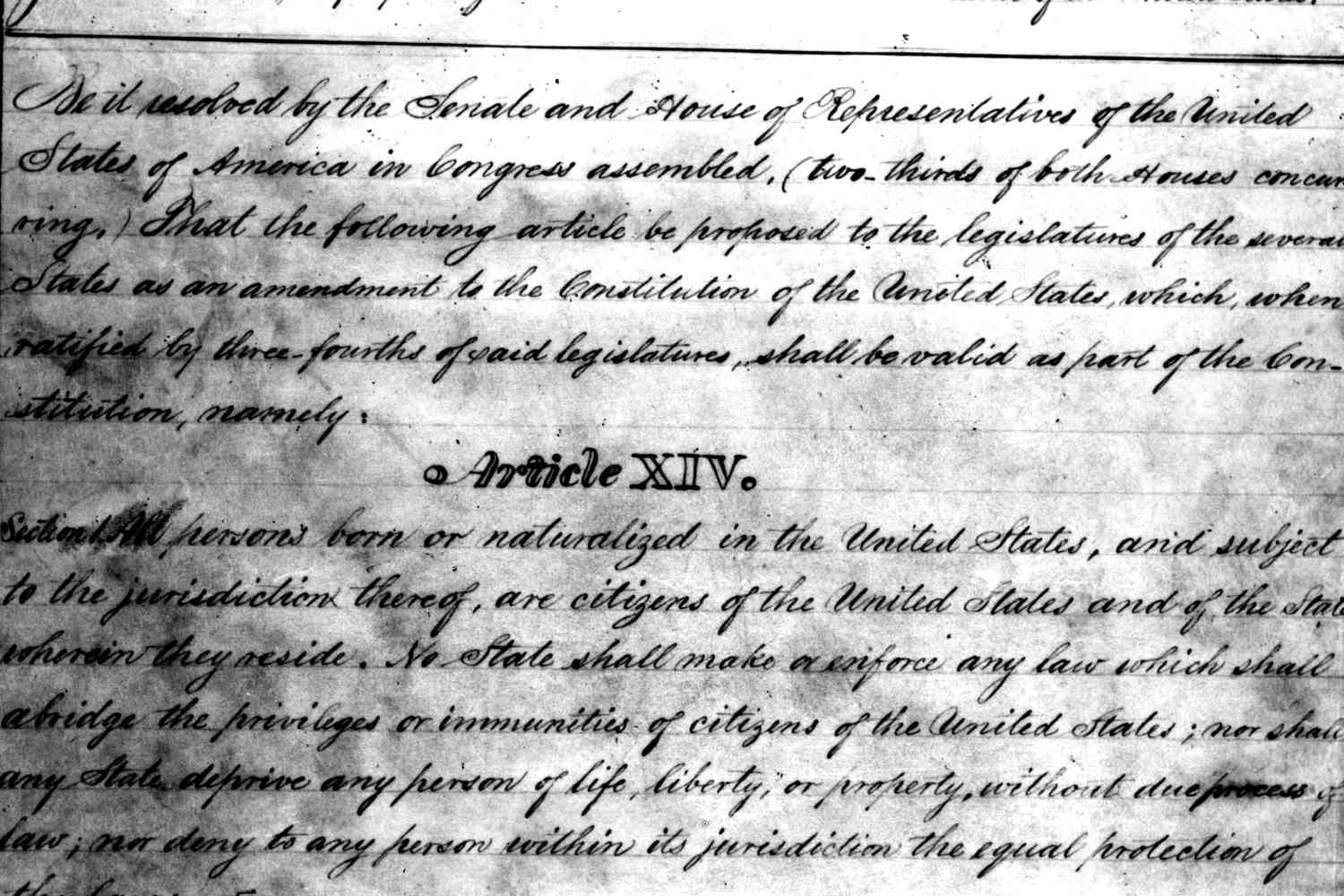
Under the Fourteenth Amendment’s Equal Protection Clause, a state cannot make race the predominant reason it drew district lines unless it can satisfy strict scrutiny. In plain English: if race drove the map, the state must show a compelling interest and that its race-based choices were narrowly tailored.
This line of cases includes decisions like Shaw v. Reno and Miller v. Johnson, which treat race-based districting as constitutionally suspect even when done with benign motives. The Court’s core worry is not just discrimination. It is governmental decision-making that treats citizens primarily as members of racial groups.
2) Voting Rights Act Section 2
Section 2 of the Voting Rights Act is not a constitutional provision. It is a statute. It prohibits voting practices, including district maps, that result in minority voters having less opportunity than others to elect candidates of their choice.
For redistricting claims, Section 2 cases are often litigated under the framework associated with Thornburg v. Gingles. The basic idea is that, in some circumstances, a state may be required to draw an additional district where minority voters can meaningfully elect their preferred candidates, but only if the Gingles preconditions and the “totality of circumstances” support that remedy.
And there is the tension: the Constitution is suspicious of race-based districting, while the Voting Rights Act can sometimes require race-conscious remedies.
What Alexander emphasized
Alexander is best understood as a decision about proof and inference. More than inventing a brand-new test, it reinforced how demanding the racial-gerrymandering inquiry is supposed to be. It pushes courts to be cautious about leaping from outcomes to motives, and it highlights how hard it can be to disentangle race from politics in jurisdictions where the two overlap.
In practice, the ruling funnels map challengers into a more exacting path:
- You have to isolate race as the driver. It is not enough to show that a district is oddly shaped or that race was discussed. Plaintiffs must show that race predominated over traditional districting criteria like contiguity, compactness, equal population, respecting political subdivisions, and keeping communities of interest together.
- You have to separate correlation from causation. In states with racially polarized voting, partisan targets can produce racially skewed results. After Alexander, courts are more skeptical of arguments that treat a racially polarized outcome, standing alone, as proof that the legislature was racially sorting voters.
- You have to overcome the presumption that legislatures act in good faith. Alexander stresses that courts should not casually assume bad intent or treat the mere availability of a different map as enough to infer an unconstitutional racial purpose.
- You have to confront the “VRA compliance” explanation head on. If the state claims it used race only to avoid a Section 2 violation, plaintiffs must be prepared to show that this compliance rationale is not supported, or that the state’s use of race went further than the statute reasonably required.
Think of Alexander as the Court insisting on a cleaner chain of reasoning: what was the state’s objective, what evidence shows that objective, and what alternative explanation is more plausible. That shift matters because redistricting cases are built from inference. You almost never get a signed confession that says, “We drew this district to dilute minority votes.”
Why Georgia cases feel harder
Georgia is a predictable flashpoint because it combines fast demographic change with intensely polarized elections. That combination invites lawsuits from multiple directions: some argue the map unlawfully dilutes minority voting strength under Section 2; others argue particular districts were drawn with race as the predominant factor in violation of Equal Protection.
Under the Alexander approach, plaintiffs challenging Georgia’s map often run into two recurring hurdles.
Hurdle one: predominance
If political advantage is a plausible explanation for the lines, plaintiffs generally have to do more work to show that race, not party, did the real driving. This is not just a rhetorical point. It shapes what evidence matters: expert analyses, alternative maps, legislative emails and transcripts, demographic overlays, and whether the state ignored traditional criteria in ways that only make sense as racial sorting.
In Georgia, “traditional criteria” arguments often sound concrete: county and city lines, maintaining cores of prior districts, protecting incumbents, and claims about keeping recognized communities together. The more a challenger can show those priorities were sidelined in targeted places, the stronger the predominance theory becomes.
Hurdle two: the compliance needle
This is the tight needle modern doctrine asks courts to thread. A state can defend itself by saying it paid attention to race to comply with the Voting Rights Act. But the Constitution still demands narrow tailoring. If Georgia says, “We were avoiding a Section 2 violation,” challengers must be ready to argue that Section 2 did not actually require what Georgia did, or that Georgia’s choices were broader than necessary.
That becomes an expert-driven fight about feasibility: Could an additional minority opportunity district be drawn that is compact and respects real communities? Would minority voters be sufficiently numerous and politically cohesive? Would white bloc voting usually defeat the minority-preferred candidate absent the remedy? In other words, the lawsuit starts to look less like a moral indictment and more like an engineering dispute under federal standards.
Sorting out “dilution” claims
One reason these cases confuse people is that “vote dilution” gets used as a general complaint, while courts treat it as different legal claims.
- Section 2 (results) claims ask whether the map’s effects, under the Gingles framework and the totality of circumstances, deny minority voters equal opportunity.
- Equal Protection racial predominance claims ask a different question: whether the state used race as the predominant line-drawing tool, triggering strict scrutiny, even if the state insists it was pursuing ordinary political goals.
- Intent-based constitutional claims under the Fourteenth or Fifteenth Amendments focus on purposeful discrimination. Those are not the same as a Shaw/Miller predominance case, and they are not the same as a Section 2 results case either.
Keeping those boxes separate helps explain why a map can feel unfair to voters and still be hard to beat in federal court under a particular theory.
Where Equal Protection bites
The Equal Protection Clause does not forbid every awareness of race. It forbids racial classifications that cannot survive strict scrutiny. In districting, the Court often treats race as a classification when the legislature makes it the predominant factor.
After Alexander, the key question becomes: what does the evidence show the mapmakers were optimizing for?
- If the state prioritized race, the court asks whether the use of race was narrowly tailored to comply with federal law or some other compelling interest.
- If the state prioritized politics or other traditional criteria, Equal Protection is harder to trigger even if the map has clear racial effects.
This is why heated historical rhetoric can obscure the legal test. In court, the case usually turns less on how offensive a map sounds and more on doctrinal thresholds and burdens of proof.
What it does not do
It is just as important to say what Alexander did not do.
- It did not eliminate Section 2 lawsuits. The Voting Rights Act remains the primary tool used to challenge maps that allegedly dilute minority voting strength. (Courts have long allowed Section 2 claims to be brought by private plaintiffs, although the issue has been contested in some litigation.)
- It did not make gerrymandering generally unconstitutional. The Supreme Court has held that claims of partisan gerrymandering present political questions beyond federal courts in cases like Rucho v. Common Cause. That baseline remains.
- It did not hand states unlimited freedom to use race. If evidence shows race predominated, strict scrutiny still applies. States still lose racial gerrymandering cases when the record supports it.
The durable takeaway is narrower: Alexander makes courts more demanding about how plaintiffs prove racial predominance and more attentive to the possibility that politics, geography, and incumbency explain the same outcomes.
What challengers must show
Because “new test” language can sound mysterious, it helps to translate the practical checklist a plaintiff team now has to build.
For Equal Protection claims
- Race predominated. The legislature subordinated traditional districting criteria to racial targets.
- The evidence is specific. Not just disparate impact, but record evidence, map analytics, and credible alternatives showing the state could have achieved its stated goals without the racial sorting.
- The state cannot satisfy strict scrutiny. Either there was no compelling interest (often framed as no real Section 2 necessity), or the means were not narrowly tailored.
For Section 2 vote dilution
- A workable remedy exists. Plaintiffs typically must show a reasonably compact additional district can be drawn where minority voters would have an opportunity to elect.
- Voting is racially polarized. Minority voters are politically cohesive and white bloc voting usually defeats minority-preferred candidates absent the remedy.
- Totality of circumstances supports liability. Courts consider broader context, including history and ongoing political realities, not just one election cycle.
The bigger story
The Supreme Court has spent decades trying to do something that might be impossible: require states to avoid racial discrimination in voting while also warning them not to treat race as the default organizing principle of politics.
Alexander fits a pattern. The Court is not saying race never matters. It is saying that when race matters, litigants must be precise about why, how much, and what alternative the law would allow.
That precision is why cases like Georgia’s can become harder immediately after a decision like this. The map may look the same. The political stakes may feel the same. But the Court’s demanded level of proof can be applied more strictly, and that changes what survives a motion to dismiss, what earns an injunction, and what ultimately wins.
Quick FAQ
Is racial gerrymandering unconstitutional?
It can be. If race is the predominant factor in drawing districts, the map is subject to strict scrutiny under the Equal Protection Clause. The state must show a compelling interest and narrow tailoring.
Can a state consider race to comply with the Voting Rights Act?
Sometimes. Courts have allowed race-conscious districting when it is genuinely necessary to comply with Section 2, but the state still has to use race in a narrowly tailored way.
Why not just challenge partisan gerrymandering instead?
In federal court, partisan gerrymandering claims are generally nonjusticiable after Rucho v. Common Cause. Many partisan-gerrymandering fights now happen in state courts under state constitutions.
Does Alexander mean Georgia’s map is legal?
No. It means the Equal Protection pathway is more evidence-intensive where politics is a plausible alternative explanation. Whether a particular map is lawful depends on the record, the specific districts challenged, and which theory is being litigated.