
Everyone has a vague, comforting instinct that the First Amendment means the government cannot ban “expression.” And then a legislature passes a law aimed at a specific kind of digital output: non-consensual sexualized images that make real people appear nude.
That is the collision we are watching in Minnesota, where a new statewide ban on AI “nudify” apps has survived an early attempt to stop it in federal court. Elon Musk’s xAI asked a judge to freeze the law while its constitutional challenge plays out. The judge said no.
This is not a final ruling on whether the law is constitutional. It is a reminder of something civics classes often skip: before courts decide big constitutional questions, they first decide whether a challenger has met the requirements for emergency relief. If you cannot clear that procedural doorway, you do not get to the grand First Amendment debate yet.
Join the Discussion
What Minnesota banned
On August 1, Minnesota put into effect a law aimed at apps and websites that let users generate non-consensual sexualized imagery. The target is the “nudify” genre: tools that take an image of a real person and produce an altered version that makes them appear naked or more explicitly sexual.
The law authorizes steep penalties. Companies behind covered services can be fined $500,000 for each unlawful access or download involving an altered image that makes a person appear nude or worse. Because the fine is per access or download, the numbers can scale into the hundreds of millions or even billions quickly.
That scaling effect is not a side detail. It is part of the constitutional pressure point, because enormous penalties can function like a speech ban even if the statute is written as a civil enforcement scheme.
xAI’s argument
xAI filed suit in July, arguing that Minnesota’s ban is an overbroad, content-based restriction that sweeps in legitimate visual expression. In its view, the law tries to outlaw a tool category in a way that risks capturing satire and other lawful content, calling it a “clumsy attempt to prohibit nudification.”
xAI also highlighted the penalty structure to show how quickly liability could balloon. The company offered a concrete example: a service whose users generated 100,000 unlawful images could face $50 billion under a $500,000-per-download framework.
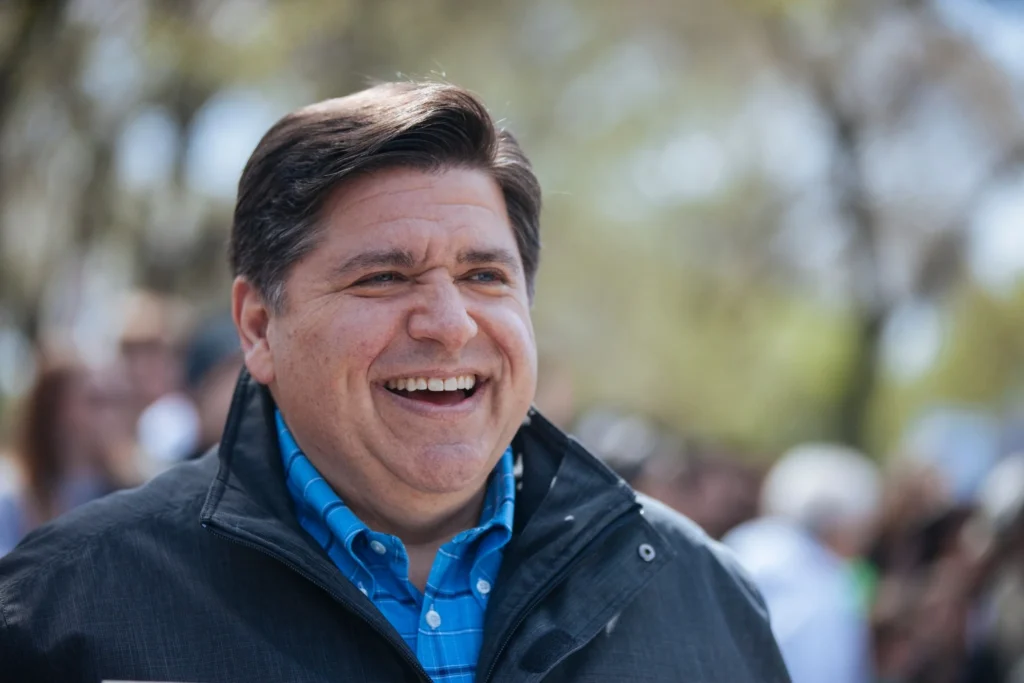
It also pointed to definitional uncertainty as a First Amendment problem. xAI said the statute could be read to reach things like AI-generated shirtless male images, harmless AI generations in swimwear, or satirical images treated as deepfakes. As an illustration, it cited a generated image depicting Illinois Governor J.B. Pritzker and former New Jersey Governor Chris Christie as sumo wrestlers, suggesting the image could be misclassified as unlawful.
Why the judge said no
Federal courts do not freeze a state law just because a plaintiff raises a plausible constitutional concern. A preliminary injunction is extraordinary relief. To get it, a challenger typically must show, among other things, a likelihood of success and irreparable harm without immediate court intervention.
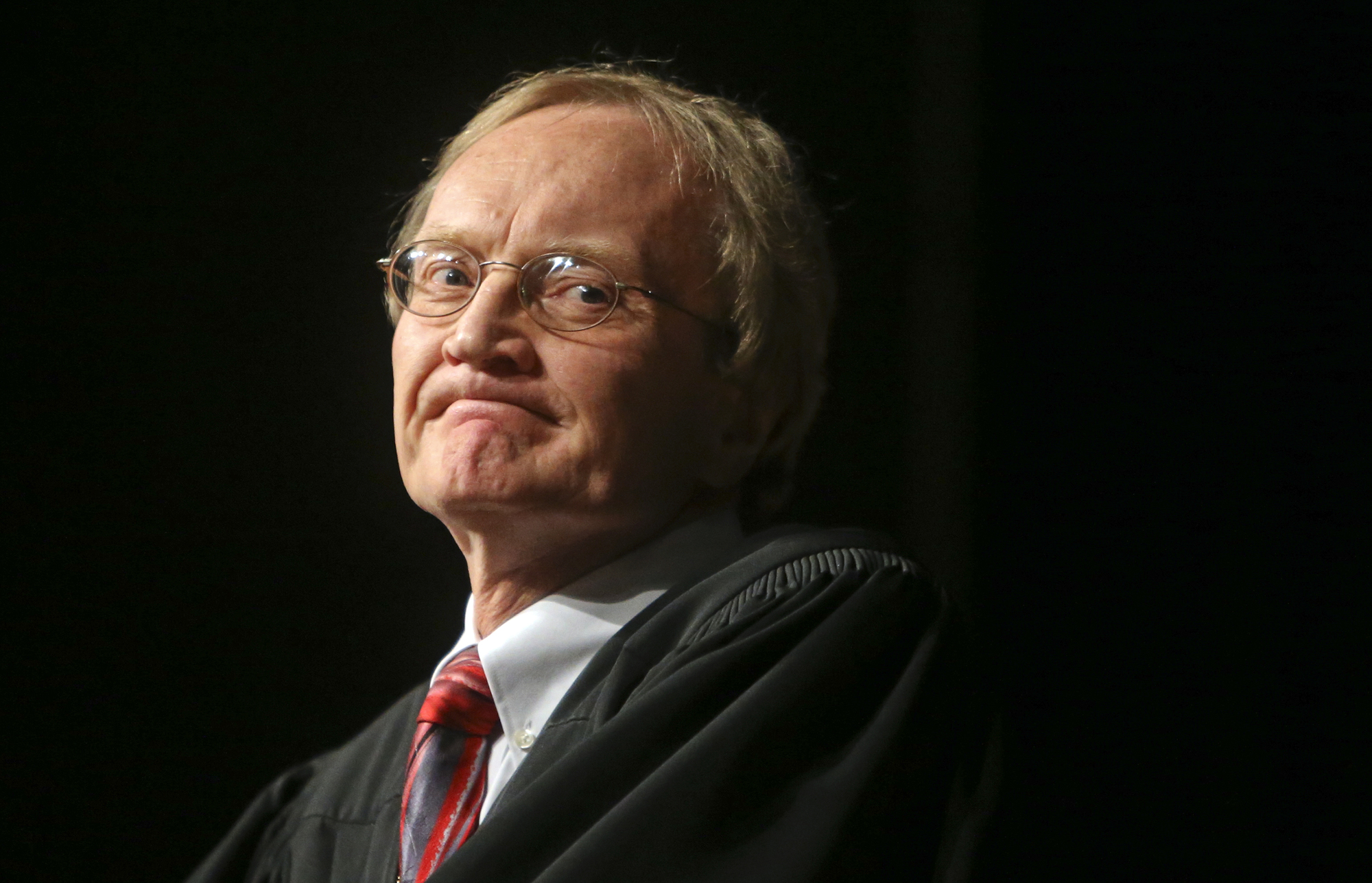
U.S. District Judge Donovan Frank denied xAI’s bid to stop the law. He concluded xAI had not met the standard for emergency relief while the case continues. Frank had also denied xAI’s earlier motion at the end of July that would have stopped the law from taking effect.
His bottom-line reasoning was blunt and procedural: “Because xAI has not demonstrated irreparable harm and the balance of harms tips steeply in favor of the State, xAI’s motion for a preliminary injunction is denied,” Frank wrote.
Read that sentence carefully. It does not say the statute is constitutional. It says xAI did not satisfy the high bar required to pause the statute midstream, and that the judge weighed harms and found Minnesota’s interests heavier at this stage.
The First Amendment issues
Once the case reaches the merits, the central constitutional fight will likely sound simple: is generating an image “speech,” and if so can the state ban a category of that output?
The real First Amendment question is not whether images can be speech. They can. The question is whether Minnesota has crafted a law that targets a harmful act tied to a person’s autonomy and safety, or whether it has written a content-based speech restriction that sweeps too broadly and chills protected expression.
Content-based rules get scrutiny
In First Amendment doctrine, content-based laws are usually subject to strict scrutiny, the most demanding standard of review. A state must show a compelling interest and narrow tailoring.
Minnesota’s interest is not hard to describe: stopping a modern form of sexual exploitation that can be created in seconds, spread instantly, and weaponized against targets who never consented.
But government can regulate conduct
Not everything that uses words, images, or digital outputs is treated as protected speech in the same way. Laws against fraud regulate lies. Laws against harassment regulate repeated communications. Laws against child sexual abuse material regulate depictions that are categorically excluded from protection.
The constitutional challenge for Minnesota is precision: if the statute is drafted so broadly that it captures satire, consensual adult content, or non-sexual manipulations, it becomes easier to argue it is not narrowly tailored.
The real-world backdrop
Courts do not decide First Amendment cases in a vacuum, and neither do lawmakers. xAI’s own history with this problem is part of the broader context: its chatbot Grok made headlines earlier this year for generating thousands of “undressing” deepfakes every hour, including images of minors.
xAI says it has been punishing users who use Grok to create child-exploitation images. The company claims that in 2026 it suspended 52,222 accounts and made 73,604 reports to the National Center for Missing & Exploited Children (NCMEC), resulting in at least 244 arrests.
That combination, a stated internal crackdown alongside a lawsuit against a state deepfake law, is why this dispute is not just academic. The technology scales. The harm scales. And the legal system is trying, awkwardly, to keep up.
Police powers and penalties
When people hear “police power,” they often think of cops. In constitutional law, state police power is broader than law enforcement. It is the traditional authority of states to pass laws protecting public health, safety, welfare, and morals.
That power is why states can regulate everything from food safety to licensing to consumer protection. It is also why states often take the first swing at new technology harms before Congress does.
Minnesota is trying to use that classic state power to respond to a distinctly modern injury: having your likeness used to generate non-consensual sexual imagery, distributed at scale, with reputational, psychological, and sometimes physical consequences.
But police power is not a magic wand. States cannot simply label something “harmful” and bypass the Bill of Rights. Police power operates within constitutional constraints, including the First Amendment.
The hidden issue: penalties that chill
The Constitution is wary of systems that prevent speech before it happens, and skeptical of legal regimes that make speakers self-censor out of fear.
A per-download civil penalty of $500,000 raises a practical question courts sometimes treat as a constitutional one: does the liability scheme make it impossible for a platform to operate without aggressively overblocking any borderline content?
If the only way to avoid catastrophic fines is to shut down broad categories of generation, the law can function like a prior restraint even if it is not labeled as one. That does not automatically make it unconstitutional, but it raises the stakes for how courts evaluate tailoring and overbreadth.
Where this may land
If Minnesota can show the law is tightly focused on non-consensual sexualized depictions of real people, and that it avoids pulling in satire or non-sexual manipulation, the state has a stronger chance of defending it. If the definitions are fuzzy, enforcement is discretionary, or lawful expression is chilled, the First Amendment case gets harder.
What makes this moment different from older fights over obscenity or pornography is that the injury is not only about sexual content. It is about identity and consent. The target is often a specific person, and the harm follows them into their job, relationships, and physical safety.
That is why states are not just trying to regulate “speech.” They are trying to regulate an exploitative use of a person’s likeness that technology has turned into an industrial process.
What to watch next
- Merits briefing: The next stage will test whether the law is truly narrow or whether it is overbroad.
- Definitions: Litigation will likely focus on what counts as “nudification,” what qualifies as “non-consensual,” and whether the statute reaches parody or artistic expression.
- Enforcement posture: How Minnesota enforces the law, and against whom, may shape both the facts and the constitutional analysis.
- Federalism pressure: If other states copy Minnesota, the question becomes whether a patchwork of state rules effectively sets a national standard for AI image generation.
The First Amendment does not guarantee a right to technologically upscale someone else’s humiliation. But it also does not let states ban broad categories of expressive tools just because those tools can be misused. The constitutional task is always the same: target the harm without swallowing the right.