
The headline is unsettling for a reason: Supreme Court precedent often constrains how far lawmakers can go in criminalizing at least some computer-generated or AI-generated child sexual abuse material (CSAM), especially where the government cannot prove a real child was involved.
That is not because judges are indifferent to harm. It is because the First Amendment forces courts to ask a question that feels almost obscene to say out loud: what exactly is being criminalized? The abuse and exploitation of a real child, or the possession of an image that looks like abuse but may not be tied to a real child at all?
Once you understand the Supreme Court’s map of “unprotected” speech, the claim that lower courts have “no choice” starts to make sense, even if you hate the destination.
Join the Discussion
The issue in one sentence
Under current Supreme Court doctrine, child pornography depicting real minors is generally outside First Amendment protection because it is intrinsically linked to the sexual exploitation of real children in its production and distribution. But purely computer-generated images that do not involve real children can be protected expression unless the government proves they fall into some other historically recognized unprotected category, or within a narrowly drawn statute that survives First Amendment review.
That distinction is the core of the “hands tied” explanation. The First Amendment does not allow Congress or a state to declare a new category of speech unprotected simply by saying the speech is morally disgusting. The Court has repeatedly insisted that the list of unprotected categories is narrow.
One practical upshot worth flagging early: the law often treats possession differently from receipt, distribution, or solicitation. Even when mere possession is constitutionally harder to punish, transactional conduct around the material is frequently easier to reach.
The Supreme Court boxes
Ferber (1982)
In New York v. Ferber, the Supreme Court upheld laws banning child pornography, even when the material would not qualify as “obscene” under the usual obscenity test. The justification was not prudishness. It was prevention.
The Court reasoned that the market for these images is inseparable from the underlying exploitation of children. Criminalizing distribution and possession can help extinguish demand, and the government’s interest in protecting children is compelling. That said, prosecutions still live or die on statutory elements and proof, including proof that the material depicts an actual minor when the statute requires that.
Ashcroft (2002)
Then came the case that keeps resurfacing in today’s AI era: Ashcroft v. Free Speech Coalition. Congress had tried to ban “virtual” child pornography, including computer-generated images and adults made to look like minors. The Supreme Court struck major parts of that law down.
The key logic was brutally simple: if no actual child is used to make the image, the central rationale from Ferber does not apply in the same way. The government can still punish real abuse, and it can still punish obscenity, and it can still punish offers, transactions, and solicitation. But it cannot criminalize protected speech merely because it resembles illegal material.
PROTECT Act and Williams (2008)
Ashcroft was not the end of the story. Congress responded with the PROTECT Act of 2003, including an effort to address certain realistic depictions that are “indistinguishable” from images of real minors, while still navigating the Constitution’s demand for narrow tailoring. In United States v. Williams (2008) the Supreme Court upheld key provisions aimed at pandering and solicitation, including promoting material as child pornography in a way that proposes an illegal transaction.
That matters because the modern framework is not simply “virtual equals protected.” It is closer to this: mere possession of purely synthetic images is constitutionally harder to criminalize when the government cannot prove a real minor was involved, but distribution, solicitation, and transactional speech around purported CSAM can be punished more readily, so long as the statute is properly drawn and the government proves what it must prove.
Why AI raises the stakes
In 2002, “virtual” mostly meant CGI or compositing. Today, “virtual” can mean a highly realistic image generated from a text prompt, trained on oceans of data, and tailored to imitate a specific look, age range, or even a specific person.
That raises two different legal fears at once:
- Harm-without-a-victim production: Even if no identifiable child was abused to make a specific image, the image may still normalize abuse, feed compulsion, and create an incentive structure for offenders.
- Hidden real-victim production: The “AI-generated” label can be a laundering mechanism. Some images marketed as synthetic may actually be real, or may be created by altering real photos of actual minors.
Those are policy alarms. But the First Amendment question is narrower: what can the government prove in court, beyond a reasonable doubt, about what the image is and how it was made?
How courts sort the cases
Courts tend to sort these cases into a few doctrinal boxes. The outcome often turns on which box the government can fit the conduct into.
1) Real-child CSAM
If the government can prove the material depicts a real minor engaged in sexually explicit conduct, Ferber and related cases make the First Amendment hurdle far lower. That is the traditional CSAM framework. It is not automatic, though. The government still has to satisfy the statute it charged and prove the “real minor” element when that is required.
In an AI world, that proof fight is becoming its own front: prosecutors may rely on more than a visual impression, including metadata, device and account evidence, series matching, victim identification databases, and expert testimony about whether an image appears to be generated, altered, or sourced from a real photograph.
2) Obscenity
Obscenity under Miller v. California is also unprotected, but it requires applying a specific three-part test tied to community standards and “serious value.” As a practical matter, obscenity prosecutions are comparatively rare and can be difficult to litigate.
Some jurisdictions also use separate statutes aimed at sexually explicit material involving minors or material treated as such under state definitions. Even then, constitutional constraints still apply, and how a statute is written can determine whether it survives review.
3) Transactional speech and conduct
Even if an image were arguably “virtual,” other conduct around it can be criminal: trading, advertising, requesting, grooming, or conspiring. Williams is the Supreme Court’s reminder that the First Amendment does not protect proposals for illegal transactions simply because they involve words or pictures.
4) Overbreadth
A recurring reason these laws fail is not that the Court loves the speech. It is that a statute can be written so broadly that it sweeps in protected material, like adult actors who appear youthful, literary depictions, medical or educational content, or lawful pornography that is not tied to minors.
When a law is overbroad, the First Amendment often punishes it harshly, because the Constitution is wary of rules that make lawful speakers self-censor to avoid prison.
A non-graphic example
Here is how the boxes can diverge without changing the moral stakes:
- Scenario A (fully synthetic): A person saves a hyper-realistic text-to-image output that appears to depict a minor, but the government cannot prove any real child was used or depicted. Under Ashcroft, criminalizing mere possession is constitutionally fraught unless another doctrine applies (for example, obscenity) or the law is narrowly crafted to fit within existing limits.
- Scenario B (AI-altered real photo): A person uses AI to “morph” or manipulate a real child’s photo into a sexualized image. The presence of an identifiable real minor as source material can change the analysis because the harm rationale looks more like Ferber.
- Scenario C (image plus trading): A person uses chat logs to solicit or offer “real” CSAM for trade and sends samples, whether or not the samples are later claimed to be synthetic. Williams makes it easier for the government to target the transactional conduct if the statute and proof fit.
Why courts say their hands are tied
Because under the Supreme Court’s current framework, a broad ban on mere possession of imagery that is not proven to involve a real child can look like a content-based restriction on speech. And content-based restrictions are presumptively unconstitutional unless they fit within a historically recognized exception or survive the most demanding forms of judicial review.
When an appellate panel says the Supreme Court left it no choice, it is describing a hierarchy:
- The Supreme Court decides what the First Amendment permits.
- Federal courts of appeals apply that doctrine even when the result feels morally unbearable.
- If the doctrine is outdated, the fix is either a new Supreme Court decision or a new law that is narrowly drafted to meet the existing doctrine.
Federal vs. state law
One reason readers get whiplash here is that “AI-generated CSAM” is not one thing legally or factually.
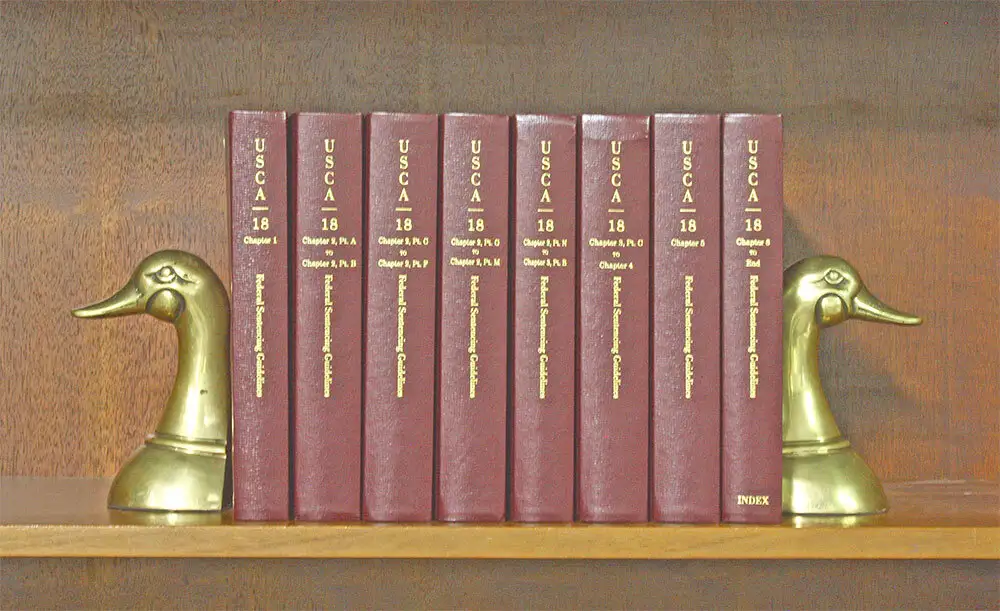
- Federal law includes multiple statutes and definitions, including provisions commonly charged under 18 U.S.C. §§ 2252 and 2252A, and it separately targets possession, receipt, distribution, production, and certain forms of pandering and solicitation.
- State laws vary, including on how “child pornography” is defined and whether particular “virtual” depictions are addressed, and those differences can shape what gets prosecuted and what gets challenged.
- “AI-generated” can mean fully synthetic output, an AI-altered image based on a real child, or a mixture of sources. The legal analysis often turns on that distinction, plus what the government can actually prove.
What Congress can do
Congress has real room to legislate here, but it has to legislate with constitutional precision. In practice, that means writing laws that can survive review, and building evidentiary pathways prosecutors can actually use in court.
What is safer
- Target conduct, not just content: laws focused on production involving minors, solicitation, distribution networks, or conspiracy.
- Criminalize morphed images of real children: when an actual minor’s image is used as raw material, the harm rationale looks more like Ferber.
- Draft narrow rules for certain “indistinguishable” depictions: Congress has tried variations before, including in the PROTECT Act, and courts scrutinize the details. Narrow tailoring matters.
- Strengthen tools aimed at underlying abuse: the First Amendment does not restrict laws aimed at the abuse itself.
What is not easy
Congress cannot simply declare “AI-generated CSAM is unprotected speech” and expect courts to salute. The Supreme Court has rejected the idea that legislatures can create new First Amendment exceptions by fiat.
Lawmakers also need to be careful about proposals that sound like “fraud” in ordinary language but do not map cleanly onto established legal categories. Misrepresenting an image as synthetic might matter as evidence of intent, concealment, or participation in an illegal scheme, but it is not automatically a freestanding First Amendment carveout unless it is tied to a defined crime (for example, obstruction, conspiracy, or a true fraud theory with the required elements).
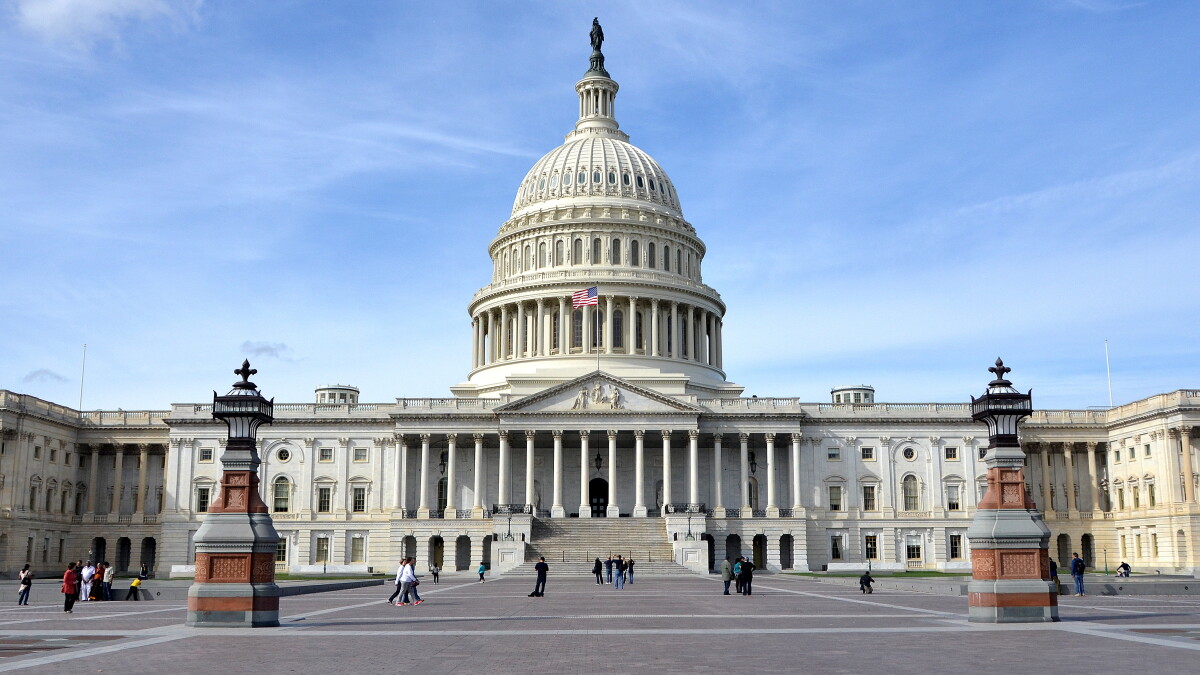
When Congress acts, it acts from Washington, D.C., including through votes and committee work at the United States Capitol. That concrete reality matters here mainly as a reminder that the fix, if there is one, starts with careful drafting rather than slogans.
Could the Court update doctrine
Yes, but the path is narrow.
The Court could revisit how it conceptualizes harm in “virtual” CSAM cases, especially if Congress crafts a statute that generates a clean test case and a strong factual record. It could also distinguish modern AI realism from the technology at issue in 2002.
But there is a built-in tension: the more the government argues “realism itself is harm,” the closer it gets to punishing speech for its content and emotional impact, the very thing the First Amendment is designed to resist.
Analysis, not a promise: courts may prove more receptive to rules keyed to identifiability (a real victim), criminal conduct (transactions and solicitation), or narrow, evidence-based definitions than to a sweeping possession ban untethered from proof of victimization.
What to watch
- How prosecutors prove “real child” in an AI world: expect litigation over forensic methods, expert testimony, metadata, and burdens of proof.
- Whether legislatures narrow statutes to focus on identifiable minors and morphed content: that is the most constitutionally stable route.
- Whether the Supreme Court takes an AI-CSAM First Amendment case: a circuit split or a sharply written opinion inviting review can accelerate that.
The unsettling part of this story is not that the First Amendment “protects child abuse.” It does not. The unsettling part is that our doctrine has been built around a factual predicate that used to be easier to assume: if you saw it, a child was harmed to make it.
AI breaks that shortcut. And when a shortcut disappears, constitutional law forces us back onto the long road: proof, definitions, narrow tailoring, and the uncomfortable discipline of punishing conduct without giving the government a roving license to ban images simply because they are horrifying.
Quick FAQ
Is child pornography protected by the First Amendment?
Material depicting the sexual exploitation of a real minor is generally not protected. The Supreme Court has treated it as a special category because of the direct link between the images and the exploitation required to create them, though prosecutions still require meeting statutory elements and proving the facts.
Why would AI-generated CSAM be treated differently?
If the government cannot prove a real child was involved in creating the image, Supreme Court precedent has said the core justification for banning child pornography does not automatically apply. The image may still be illegal for other reasons, but the Constitution makes a broad possession ban harder to sustain without careful tailoring.
Does this mean AI-generated CSAM is legal everywhere?
No. Many laws target related conduct such as distribution, receipt, solicitation, pandering, or morphed images involving real minors. The legal fights are often about the breadth of a specific statute and what prosecutors must prove.