
Americans tend to talk about federal research the way we talk about weather. It is always happening somewhere above us, funded by some invisible system, and controlled by people whose names we do not know.
Then a White House memo lands, and suddenly the question becomes intensely constitutional: can President Donald Trump actually move annual research money around in his second term?
The honest answer is both yes and no, depending on what you mean by “redirect,” what kind of research dollars we are talking about, and whether Congress already told agencies exactly where the money must go.
Join the Discussion
The memo
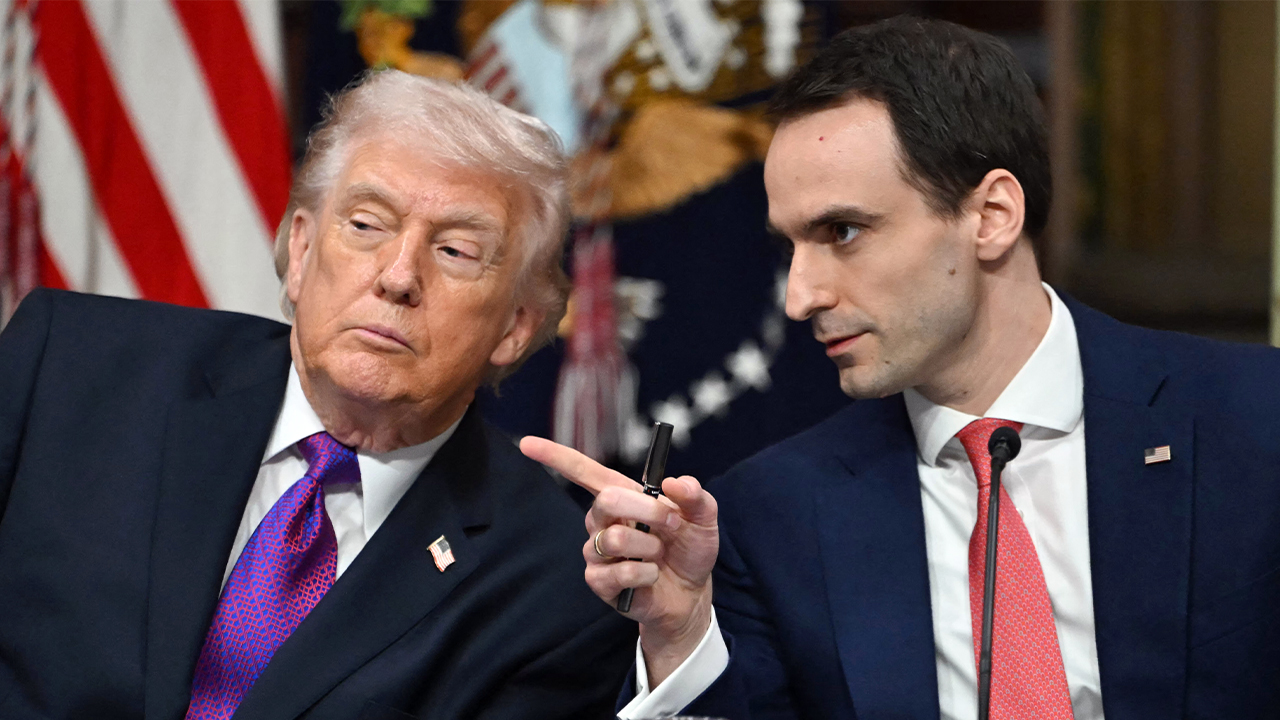
In a new report and memo released Tuesday, the White House Office of Science and Technology Policy (OSTP), led by director Michael Kratsios, argues the federal government should support more individual scientists and the use of artificial intelligence rather than universities.
OSTP’s stated case is practical: individual scientists, the office argues, can help the nation move faster to use AI in scientific research.
The stated aim is speed, accelerating technological discovery, with an explicit geopolitical motivation of competing with China.
The memo and report are intended to help shape a roughly $200 billion annual federal research and development budget across the government for the rest of President Trump’s second term.
The basic rule
The Constitution does not treat federal spending as a shared hobby. Article I gives Congress the power of the purse, and the modern federal budget is built around that idea: agencies spend money because Congress appropriates it.
That means a president cannot simply wake up and decide that money Congress appropriated for a specific purpose will now flow somewhere else, if the statute does not permit it.
Even when a president has a strong policy case, the constitutional architecture remains stubborn. The executive branch executes the laws. It does not rewrite them.
What a president can do
President Trump has substantial power to shape federal research policy without “moving money” in the crude, checkbook sense. In practice, that influence typically runs through a few familiar channels, but only where Congress has left discretion inside agency accounts.
1) Set priorities
A president can often instruct executive agencies to treat some research areas as urgent and others as lower priority, especially when Congress has funded a broad category and left agencies room to choose among competing projects.
Guidance from OSTP can matter here because it is designed to coordinate policy across the executive branch, even though OSTP itself does not award grants.
2) Use flexibility Congress already allowed
Appropriations laws are not all written with the same level of precision. Some are tight, earmarking dollars for named programs, institutions, or purposes. Others are looser, giving an agency a pot of money for a general category like “research” or “scientific activities.”
Where Congress writes a broad appropriation, agencies can often adjust solicitations, evaluation criteria, and program emphasis within statutory boundaries. Presidential direction can be influential in those spaces, but it does not create new legal authority.
3) Influence how funds are awarded
Even if the top line stays the same, the executive branch can often influence how dollars are distributed within an account that already permits choice. That can include emphasizing different kinds of awardees or different timelines, as agencies decide how to carry out their missions.
This is where the memo’s universities-versus-individuals argument could translate into practice, but only when the underlying statutes and appropriations language leave room for that kind of shift.
The limit
Here is the boundary that tends to get blurred in public debate: influence is not the same thing as legal authority.
If Congress appropriates money for a defined purpose, the executive branch generally must spend it for that purpose and follow the conditions Congress attached. A president can push for a different approach. A president can ask Congress to change the law. But the executive branch does not get to treat appropriations language as optional.
So when people talk about “redirecting” research funds, the real question is often narrower than it sounds: is this a lawful reorientation inside a broad account, or an attempt to spend money on a purpose Congress did not authorize?
Where OSTP fits
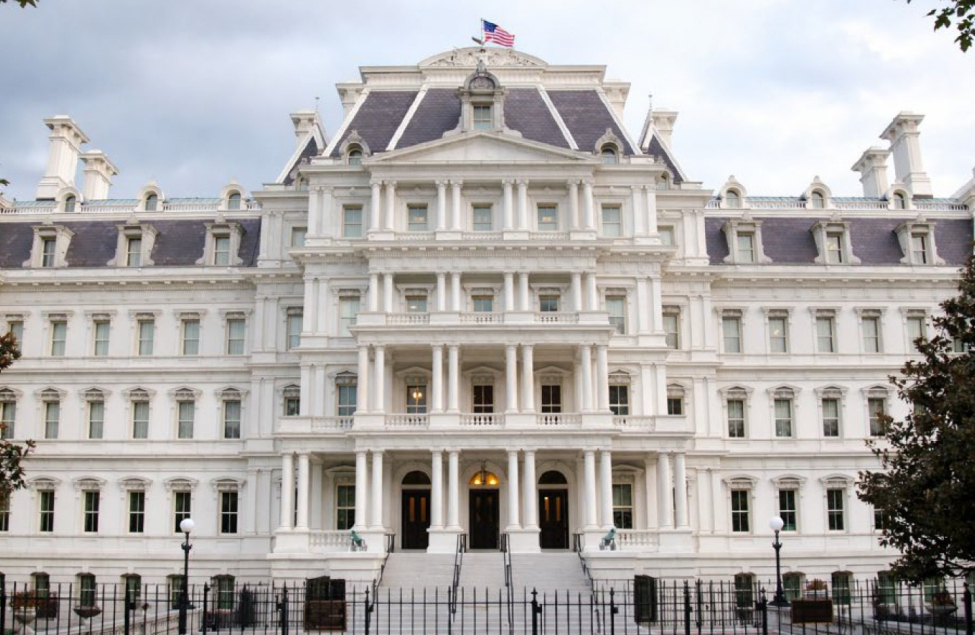
OSTP is not a funding agency. It does not write checks. It is, instead, a coordinating center inside the executive branch.
When OSTP issues a strategy document, memo, or directive, it can shape how agencies frame priorities and organize research portfolios, especially in areas where statutes call for judgment rather than rigid formulas.
But OSTP cannot, by memo alone, overwrite the text Congress enacted. If Congress required that a portion of funds go to certain programs, categories, or institutions, the executive branch must comply unless Congress changes the law.
Universities and scientists
Current debates about the structure of federal research often sound like a management argument: should the government fund universities as institutions, or should it channel more money directly to individual researchers?
The OSTP memo plants a flag on one side of that argument, urging more support for individual scientists and AI-driven research methods as a way to move faster, including moving faster to use AI in scientific research.
That is a real policy question. But it also raises a legal one.
If Congress appropriates funds with language that effectively presumes an institutional pipeline, President Trump cannot simply decide that the pipeline is now individual-only. Conversely, if Congress appropriates money broadly for scientific research and leaves distribution mechanics to the agency, Trump can often steer that distribution through appointments, priority setting, and administrative guidance.
In other words: the president can change the shape of research funding when Congress has left room. The president cannot change the terms of funding when Congress has spoken clearly.
AI as the test
Artificial intelligence is a useful case study for the difference between steering and rerouting.
When Congress gives agencies broad authority to support scientific research, the executive branch can often encourage agencies to prioritize certain tools and methods, including AI, through program design choices that stay within the statute.
That is a different claim than saying the president can personally transfer dollars between accounts. The memo’s practical effect will turn on how much discretion Congress has already granted in the accounts agencies use to fund research.
What to watch
If you want to know whether President Trump can legally “redirect” annual research funding in a specific instance, look for three things.
1) The text
Broad accounts create flexibility. Narrow accounts create constraint. The statutory text is not background noise. It is the rulebook.
2) The discretion
Agencies can have real room to maneuver in how they run competitions, define priorities, and structure awards, but only inside the authority Congress granted.
3) The next cycle
Even a legally permissible reorientation can provoke congressional pushback in the next appropriations cycle. Congress can tighten language, add conditions, or earmark funds more explicitly. The power of the purse is not a one-time event. It is annual leverage.
Bottom line
President Trump can direct the executive branch to pursue certain research priorities and to favor certain models of funding, including a stronger emphasis on individual scientists and AI-enabled research methods.
But Trump cannot unilaterally reprogram money Congress has appropriated for a specific purpose or with specific conditions. That would cross the constitutional line between executing the law and rewriting it.
So the real civics lesson is not whether presidents “control” research funding. It is that federal science policy is a living example of separation of powers. Congress writes the check. The president decides how to spend it only to the extent Congress left space to decide.