
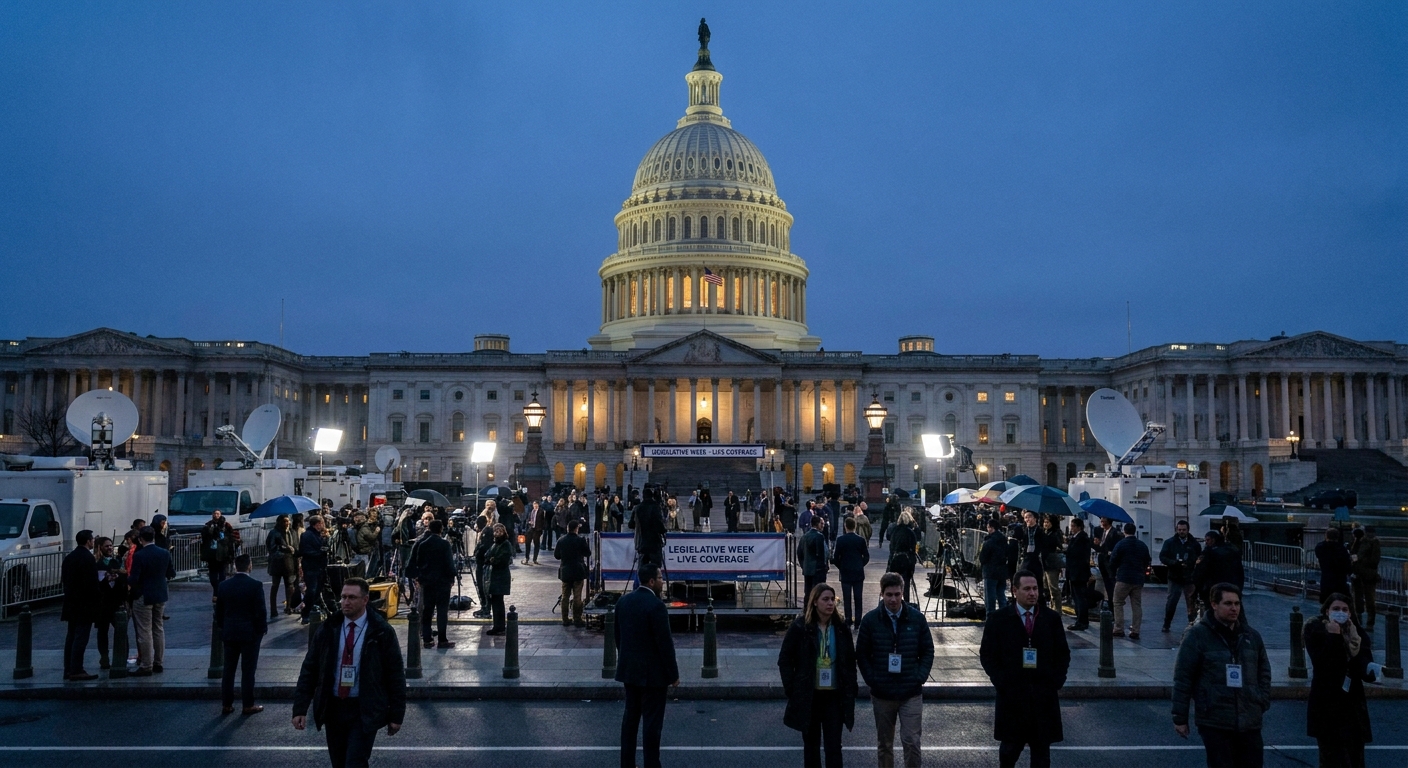
Congress writes the checkbook for the federal government. But most years, it does not write twelve tidy checks. It writes one enormous one, at the last minute, under bright lights, and calls it an omnibus.
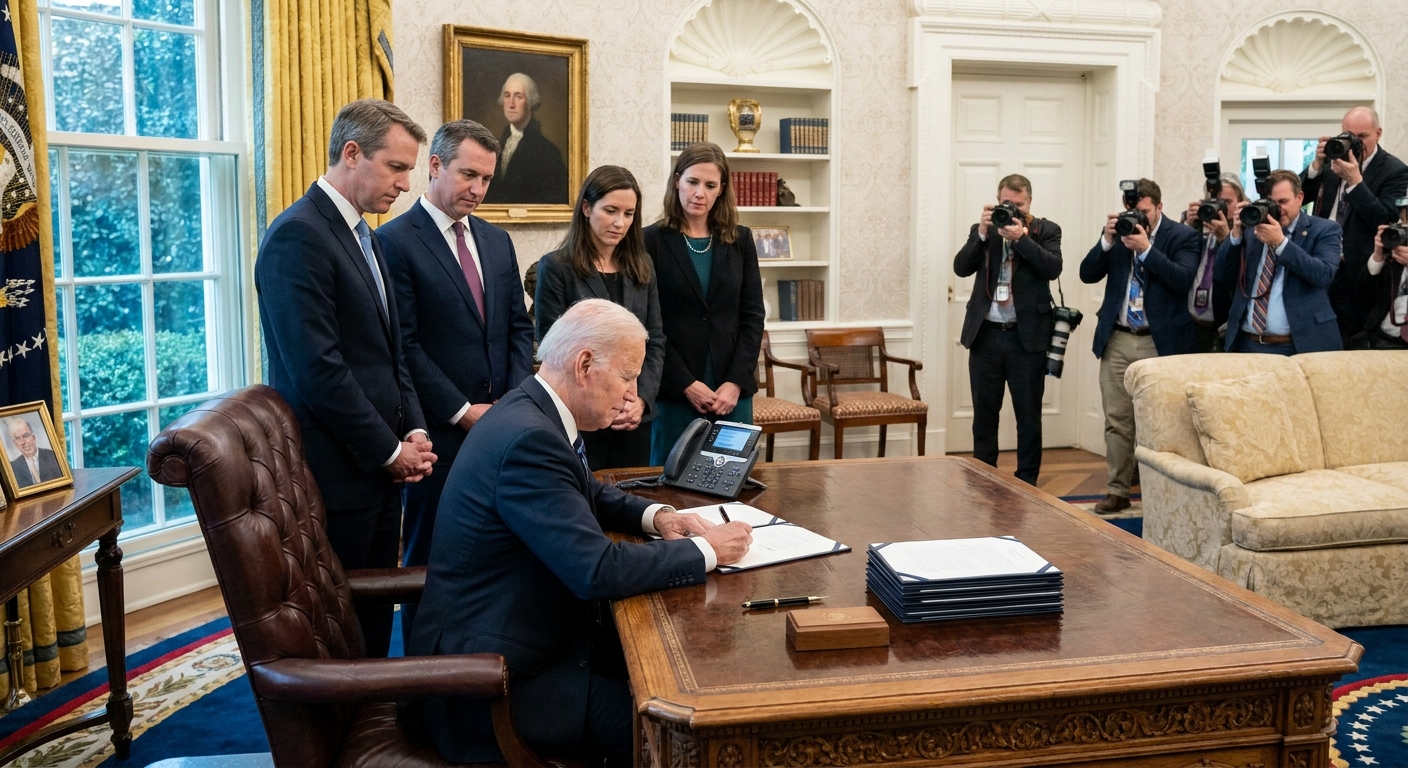
(And, like every federal law, that check only clears once the president signs it, or Congress overrides a veto.)
An omnibus spending bill is a single package that funds many parts of the government at once, usually combining multiple appropriations bills that were supposed to move separately. It is not mysterious because it is complicated. It is mysterious because it often arrives as a finished product when the deadline is hours away.
Join the Discussion
What is an omnibus spending bill?
An omnibus is a large appropriations law that bundles together funding for many federal departments and agencies into one bill. In a typical year, Congress is supposed to pass twelve separate appropriations bills, covering areas like Defense, Homeland Security, Labor and Health and Human Services, and so on. That twelve-bill structure is the standard “regular order,” not a constitutional requirement.
When Congress cannot finish those twelve bills on time, lawmakers often combine several or all of them into a single must-pass package. That package is the omnibus.
What an omnibus is not
- Not the annual budget resolution: The budget resolution sets broad spending and revenue targets. It does not fund agencies by itself.
- Not a continuing resolution (CR): A CR temporarily extends funding, often at existing levels, to avoid a shutdown while negotiations continue.
- Not “reconciliation”: Budget reconciliation is a special process for certain tax and spending laws that can pass the Senate with a simple majority. Omnibus appropriations still face the Senate filibuster threshold in most cases.
Why Congress bundles spending into megabills
Omnibuses exist because deadlines are real and governing is hard.
Under the Constitution, Congress controls federal spending. Article I gives Congress the power of the purse, and agencies generally cannot obligate money without appropriations. If appropriations lapse, many federal operations must stop, with limited exceptions for emergency and other legally protected activities. That is the pressure that turns unfinished work into a giant package.
The practical reasons
- Time: Moving twelve bills through both chambers takes floor time Congress often does not want to spend.
- Leverage: Combining bills creates a “you need this too” dynamic that can bring reluctant factions along.
- Shutdown avoidance: If the choice is one huge deal or a shutdown, leaders frequently choose the deal.
- Negotiation reality: Many disputes are not resolved committee-by-committee. They are resolved leader-to-leader at the end.
The political reasons
- Cover: A controversial provision is harder to isolate when it is embedded in a bill that funds the military, airports, food safety, and veterans programs.
- Coalition building: A large package can include wins for many members and both parties, which is often necessary to reach the vote totals required in the Senate.
- Message control: Leadership can frame the final product as “keeping the government open,” not “voting for each individual line item.”
How an omnibus differs from a standard bill
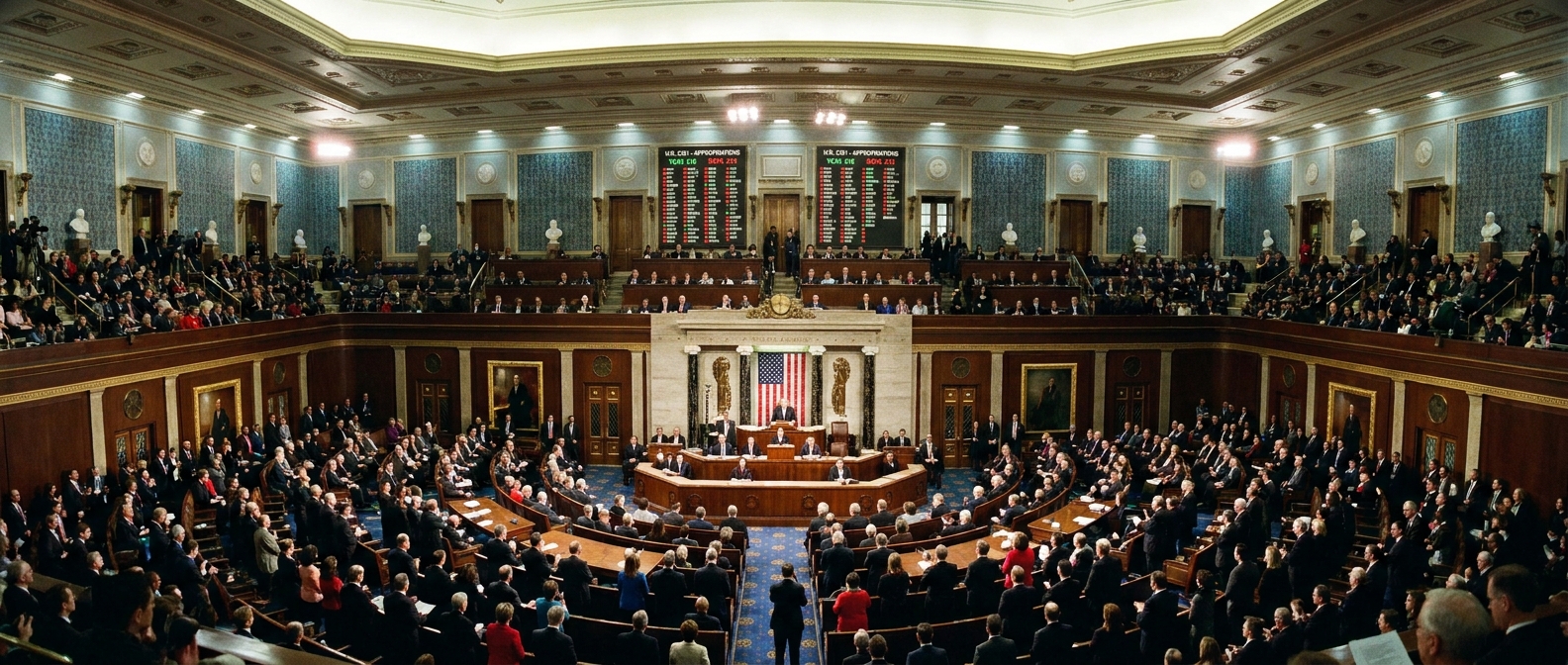
A standard appropriations bill funds a slice of government. An omnibus funds many slices at once. The mechanics are similar, but the incentives and the consequences change when everything is tied together.
Size and readability
Single-subject appropriations bills can still be long, but an omnibus can run thousands of pages. That scale affects who can realistically review it, and how quickly.
Process and amendments
In theory, appropriations bills move through committees, receive debate, and can be amended. In practice, omnibuses are often negotiated by leadership and top appropriators, then brought to the floor under restrictive rules that limit amendments.
Policy riders
Appropriations bills can include riders, which are policy directives attached to funding. Riders can restrict how agencies use money, block enforcement of certain regulations, or mandate reports and oversight conditions.
Riders are not automatically “sneaky.” Congress legitimately uses them to steer the executive branch. But when riders are inserted late into a megabill, lawmakers and the public have less time to notice what changed. A simple example is a one-year provision that says an agency may not use any funds to implement a specific rule until it submits a report to Congress.
What is inside an omnibus
Think of an omnibus as a binder full of mini-bills, each one funding a different part of government. The binder usually includes:
- Division-by-division appropriations text for multiple departments and agencies
- Explanatory statements that function like committee report language, guiding agencies on priorities
- Policy riders with temporary or sometimes enduring impact
- Emergency designations or special budget treatments where applicable
Most of the real choices are not philosophical. They are line-item choices: how many air traffic controllers, how many port inspectors, how much grant money, what procurement authority, what reporting requirements, and what restrictions on implementation.
One term you might hear in the same season is anomalies. That is mainly CR vocabulary. Because a continuing resolution extends prior funding formulas, it often needs anomalies, targeted exceptions, to prevent obvious problems. By contrast, an omnibus writes new funding levels directly, so it generally does not “need” anomalies in the same way.
The tradeoffs
Omnibuses are not simply “good” or “bad.” They are a trade: Congress buys certainty of funding with a loss of granular scrutiny.
What omnibuses do well
- They keep the government operating: Agencies can plan, hire, and contract with less chaos than a string of short-term CRs.
- They reduce hostage dynamics: When everything is packaged, it can be harder for one faction to stop one bill at a time.
- They can prevent rolling crises: A full-year deal can stabilize markets, state grant planning, and defense procurement.
What omnibuses do poorly
- They weaken oversight: Fewer stand-alone votes means fewer chances to debate and amend specific funding choices.
- They concentrate power: Leadership and top negotiators have more influence than rank-and-file members and committees.
- They invite surprise provisions: Massive bills are easier places to bury controversial riders, contracting authorities, or carve-outs.
- They normalize deadline governing: The more Congress relies on last-minute packages, the less incentive there is to return to regular order.
The shutdown connection
Omnibuses are often a response to shutdown risk, but they can also increase it in a different way. When leaders bundle everything, a disagreement over one issue can threaten funding for everything. That turns negotiations into a single high-stakes cliff instead of twelve smaller ones.
Simple timeline
In civics terms, there is the process Congress is supposed to follow and the process it often follows. Here is the plain version that captures both.
1) The president proposes a budget (winter to early spring)
The White House submits a budget request outlining priorities. Congress is not required to adopt it, but it shapes negotiations and agency expectations.
2) Congress sets top-line numbers (spring to summer)
Congress may pass a budget resolution or otherwise negotiate overall spending targets. Appropriators use those targets to allocate totals among the twelve subcommittees.
3) Subcommittees draft bills (late spring to summer)
House and Senate Appropriations subcommittees write and mark up bills. This is where testimony, hearings, and line-item decisions are supposed to happen.
4) Some bills pass, others stall (summer to early fall)
Ideally all twelve move. In reality, some pass one chamber and die in the other. Disputes accumulate.
5) The fiscal year hits (October 1)
October 1 is the start of the federal fiscal year. If full-year appropriations are not done by then, Congress must pass a stopgap or risk a shutdown.
6) Stopgaps and staggered deadlines (fall)
To buy time, Congress often uses a continuing resolution. Sometimes it uses staggered CR deadlines for different agencies or sets up a laddered sequence of deadlines that keeps pressure on negotiations.
7) Leaders negotiate an omnibus (fall to winter)
Differences between House and Senate bills are resolved in negotiations that increasingly happen outside public committee work, especially when time is short.
8) The omnibus moves fast (often days, sometimes hours)
The final text is filed. Rules can limit amendments. Members vote under deadline pressure, often with a shutdown looming.
9) Final passage and signature
Once both chambers pass the same bill, it goes to the president. If signed, the government has full-year funding for the covered agencies. If vetoed, or if Congress fails to act in time, shutdown risk returns immediately.
Related endgame bills
An omnibus is not the only way Congress tries to land the plane.
- Full-year CR: Instead of negotiating a full omnibus, Congress can extend prior-year funding for most of the year (sometimes the entire year). This can reduce negotiation drama, but it can also lock in outdated priorities and squeeze programs that need adjustments.
- Supplemental appropriations: Separate funding bills for emergencies or unexpected needs, such as disasters or wars. Supplementals are often paired with, or attached to, bigger funding vehicles when leaders are assembling must-pass packages.
Why regular order loses
In theory, the appropriations process is Congress at its most accountable: hearings, markups, amendments, conference committees, recorded votes. That is regular order.
So why does it fail so often? Because it requires something modern Congress frequently lacks: time, trust, and predictable majorities. When the chambers and parties are closely divided, leadership tends to prefer one negotiable package over twelve separate fights that can each become a symbolic referendum.
The irony is that omnibuses are a symptom of Congress trying to do its core job, but doing it in the least deliberative way possible.
Quick FAQs
Is an omnibus constitutional?
Yes. The Constitution does not require appropriations to be passed in twelve separate bills. It requires that money be drawn from the Treasury only as a result of appropriations made by law. Congress chooses the packaging.
Can an omnibus include unrelated policy changes?
It can include policy conditions on spending and other provisions that ride along with funding. Whether a provision is truly “unrelated” is often political language rather than a formal category. House and Senate rules, and points of order, can constrain some non-germane additions, but in endgame moments leaders often structure the process to avoid or waive obstacles. The more practical question is whether members have time to evaluate what was added.
Does an omnibus need 60 votes in the Senate?
In practice, often yes, because most big appropriations bills need 60 votes to invoke cloture and end debate. Final passage can be by a simple majority, but you typically cannot get there without clearing the cloture hurdle, unless the Senate agrees to move faster by unanimous consent or a time agreement.
What is the difference between an omnibus and a minibus?
A minibus is a smaller bundle that packages a few appropriations bills together. It is the same concept, just not the entire government in one shot.
The takeaway
Omnibus spending bills are Congress admitting, out loud, that deadlines force decisions. They are how the legislative branch avoids running out of legal authority to keep the government it created operating.
But they also blur accountability. When a lawmaker votes on a 2,000-page package to keep the lights on, you learn less about what they actually support than you would from twelve focused votes. That is the trade: stability purchased with opacity.
Next time a shutdown countdown hits the news, look for the tell. If leaders start saying “the only path is a package,” you are watching an omnibus being born.