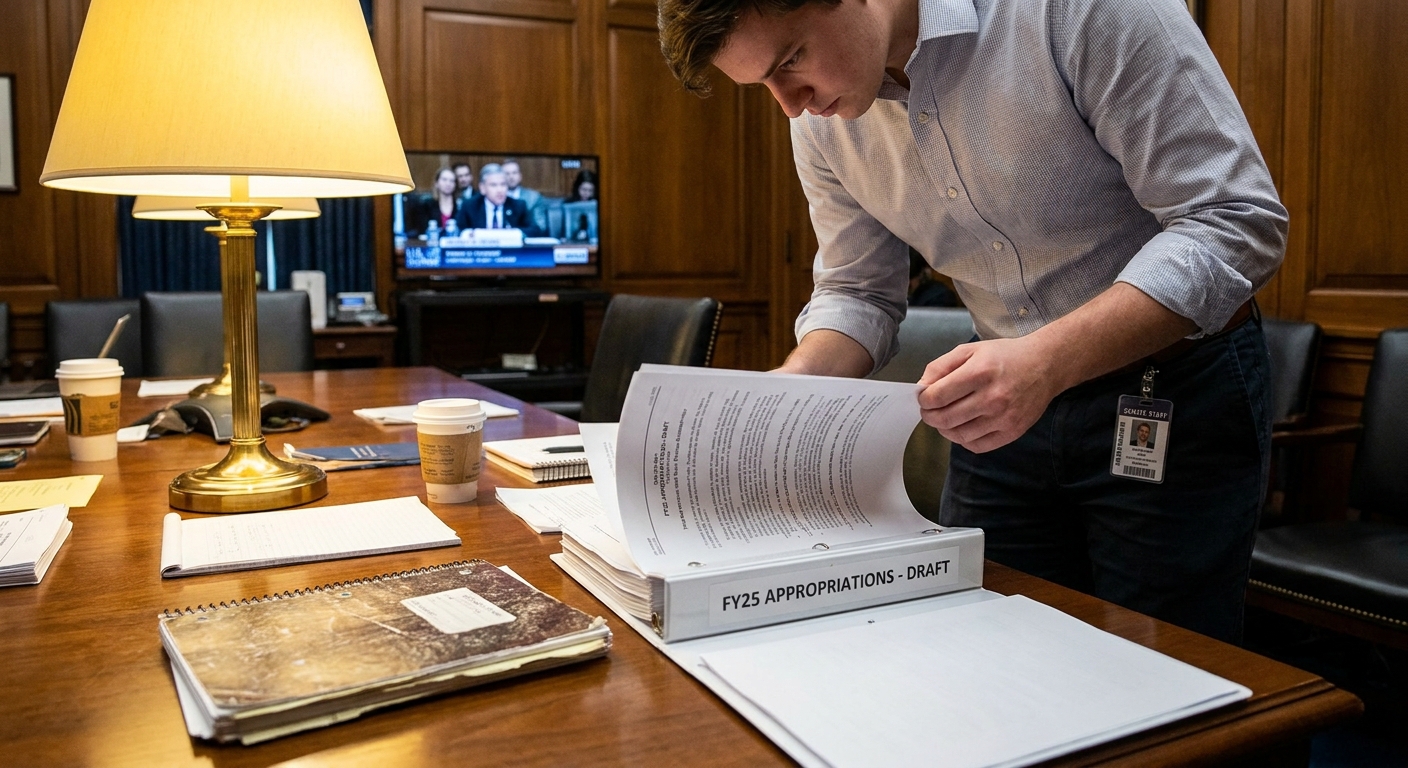
People talk about earmarks the way they talk about a bad habit. Congress swore it off, avoided them for a while, then quietly reached for them again when the budget got complicated.
But an earmark is not a synonym for corruption. It is a tool. Like any tool, it can be used transparently or used to hide a favor in the fine print. The real question is not whether Congress will shape spending. Congress ultimately sets the parameters for federal spending, and sometimes directs specific allocations. The question is whether it will do it in the open, with guardrails, or through back channels that are harder to see and harder to challenge.
Join the Discussion
What an earmark is, and what it is not
An earmark is a provision in a funding bill that directs money to a specific recipient or a specific project, often in a particular location, that would not necessarily be selected through an agency’s normal competitive or formula-based process.
In Congress’s current vocabulary, you will also see phrases like:
- Directed spending (a broader term for lawmakers steering funds toward a target)
- Community Project Funding (the House term since 2021)
- Congressionally Directed Spending (the Senate term since 2021)
Programmatic spending is different. It funds a program category and lets the agency decide which specific projects win grants or contracts, based on statutory criteria, regulations, and application processes.
A quick example
Programmatic: Congress gives the Department of Transportation money for a bridge repair grant program and sets eligibility rules. State and local governments apply. DOT scores applications and awards grants.
Earmark or directed spending: Congress writes language that sets aside $8 million for a particular bridge replacement in a named county, or directs funds to a named local authority for that project.
That difference matters because it changes who makes the final call. Programmatic spending delegates choice to the executive branch. Earmarks pull the choice back into Congress.
Where earmarks come from in the Constitution
The constitutional foundation is straightforward. The messy part is politics.
Two provisions do most of the work:
- Article I, Section 9, Clause 7 (the Appropriations Clause): “No Money shall be drawn from the Treasury, but in Consequence of Appropriations made by Law.” In plain terms, federal spending requires an act of Congress.
- Article I, Section 8 (Taxing and Spending, and enumerated powers): Congress may tax and spend for the “general Welfare” as interpreted in modern doctrine, and it legislates in specific policy areas. Appropriations bills are one way Congress executes those powers.
Earmarks are not a separate power. They are a particular use of Congress’s appropriations power. If Congress can appropriate money to an agency for a purpose, it can often specify more detail about where that money goes, as long as it stays within constitutional and statutory limits.
Congress also builds earmark rules through internal governance:
- House and Senate rules (what members must disclose, what is prohibited)
- Committee rules (how requests are submitted and reviewed)
- Statutory guardrails in certain cases (for example, when Congress prohibits earmarks in a particular program or requires reporting)
The 2011 moratoria that did not end directed spending
The modern “earmark ban” is usually dated to 2011. After the 2010 elections and a wave of anti-earmark sentiment, House Republicans adopted a moratorium, and Senate Democrats also moved to restrict earmarks through caucus policy and committee practice. For roughly a decade, leadership treated earmarks as politically radioactive.
But money did not stop being steered. It just moved into less visible channels.
How directed spending survived
- Agency discretion with congressional nudges: Members could pressure agencies informally about grant awards or priorities.
- Report language: Even when the statutory text avoided a named recipient, committee reports could “encourage” agencies to spend in certain ways. Report language is not law, but agencies often treat it seriously because committees control future funding. In practice, agencies routinely respond to committee “direction” in report language to preserve relationships and avoid retaliation in the next appropriations cycle.
- Competitive grant design: Congress can design a grant program so narrowly that only a handful of applicants can realistically qualify, which is not labeled an earmark but can feel like one in effect.
The moratoria did reduce one thing: the ability of individual members to claim credit for a line item with their name attached. That is the transparency paradox of the earmark era. Formal earmarks can be criticized as pork, but they are at least easier to find.
Why earmarks came back
The most important reason earmarks returned is not nostalgia. It is leverage.
Congress, especially in an era of partisan polarization, struggles to pass appropriations bills on time. Leadership often relies on big, stitched-together packages that can attract enough votes to clear both chambers. Earmarks are a bargaining chip that helps build that coalition.
The reintroduction began in 2021, when both chambers restarted earmark processes for FY2022 appropriations under new branding and new rules:
- House: Community Project Funding
- Senate: Congressionally Directed Spending
Members argue that this is a reassertion of Congress’s “power of the purse” against an executive branch that otherwise decides too much about which towns, ports, labs, or flood projects get funded.
Critics argue that it is still pork, just modernized, and that it invites favoritism even with disclosure rules.
Both arguments can be true at the same time, which is why earmarks keep cycling between “reform” and “ban” and back again.

Omnibus bills: where earmarks thrive
If you want to understand earmarks, you have to understand where they thrive.
An omnibus appropriations bill packages multiple funding bills into one massive vote. It becomes the legislative equivalent of a group project completed at the last minute. Members who would never vote for one part can be persuaded by another part, and leadership can offer targeted benefits to secure the necessary coalition.
Earmarks fit that logic because they are:
- Concrete: a water system, a research facility, a rail crossing
- Local: members can point to direct benefits back home
- Budget flexible inside a huge package: easier to include when the overall bill is already enormous
This is also why earmarks reappear most visibly in end-of-year negotiations. When a shutdown deadline looms, time is short, and the bill is too big for ordinary scrutiny, members push hardest for the projects they can defend to constituents.
Transparency rules: what reforms try to fix
The post-2021 earmark system is built on an admission: if earmarks exist, they should be traceable. Reform has focused on disclosure, conflict screening, and public access.
Common guardrails
Rules evolve, and they vary by chamber and by year, but modern earmark reforms tend to include requirements like these:
- Member disclosure: the requesting lawmaker’s name is made public, often with a written justification.
- No financial interest certification: members must certify they and their immediate family have no financial interest in the earmark.
- Eligible recipients: many earmarks are limited to state, local, tribal, or nonprofit entities, with restrictions on for-profit recipients. In House Community Project Funding, for example, earmarks generally go to government entities and nonprofits rather than for-profit companies.
- Public posting: committees publish lists of requests and or approved items.
- Caps: totals are typically capped as a share of discretionary spending. A commonly cited benchmark in the post-2021 system is roughly 1 percent of discretionary spending, alongside limits on how many requests a member may submit.
These reforms do not guarantee perfect outcomes. They do change the incentives. When a member has to put their name next to a project, small-bore favors become harder to justify.
Transparency databases: where to look
If you are trying to track earmarks today, you do not need a leak. You need patience and the right links.
Good starting points include:
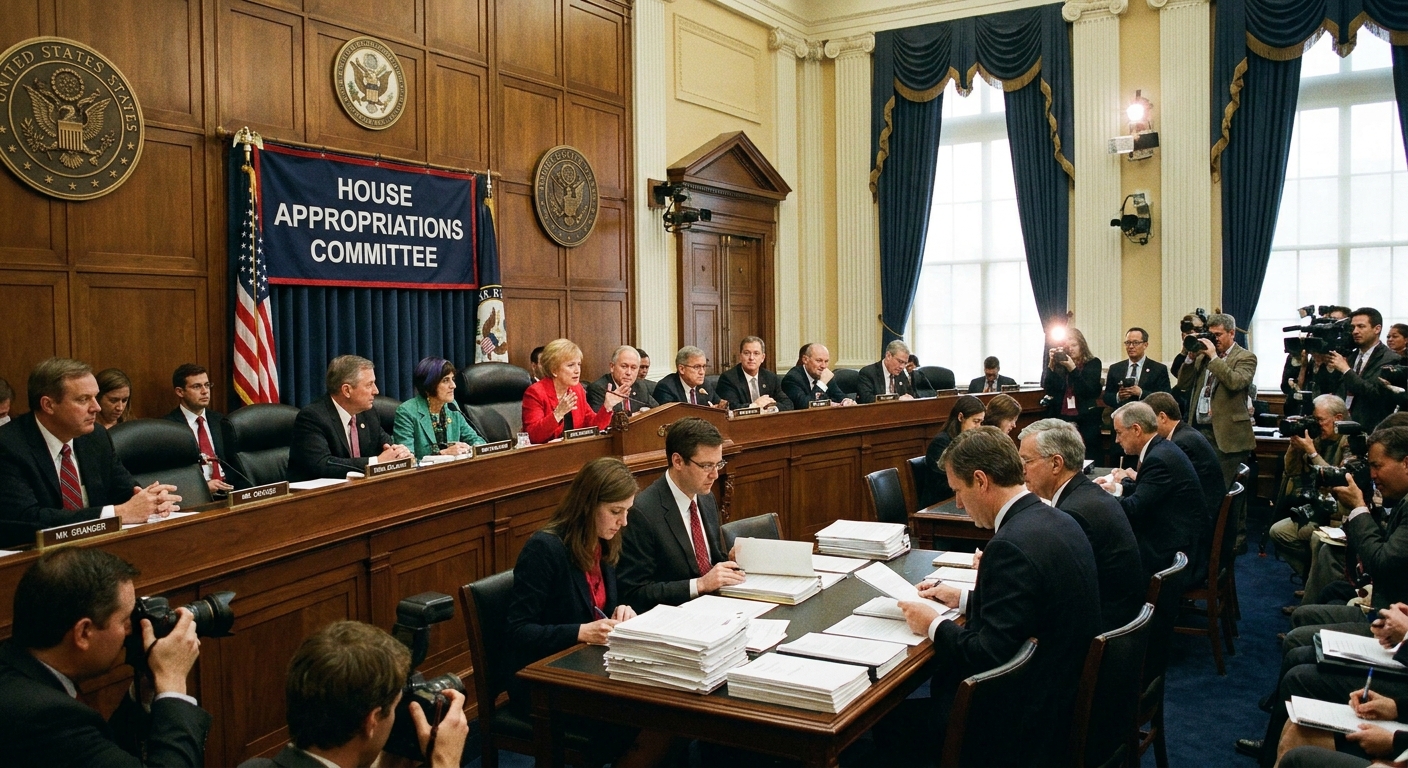
- House Appropriations Committee disclosures: the House posts Community Project Funding requests and final project lists by fiscal year.
- Senate Appropriations Committee disclosures: the Senate posts Congressionally Directed Spending items and supporting documentation.
- USAspending.gov: not an earmark database by itself, but useful for confirming where money ultimately went once awarded through grants or contracts.
- Agency award databases: some agencies provide searchable grant award records that can be cross-checked against earmark lists.
One caution: an earmark line item and the eventual federal outlay are not always the same thing. Some projects take years to obligate and spend. Some are re-scoped. Some never move because local matching funds or permitting falls apart. Transparency is necessary, but it does not make implementation simple.
If you want a concrete way to use these lists, pick one item, copy the recipient name, then cross-check it on USAspending.gov to see when funds were obligated and whether the award description matches the stated project.
Earmarks vs. “pork”: the line voters care about
“Pork barrel spending” is a political label, not a legal category. It usually means spending that looks parochial, indulgent, or suspiciously timed for an election.
Earmarks can be pork. They can also be the opposite: funding for projects that are obviously public-serving but too small, too local, or too unglamorous to win a national grant competition.
The constitutional tension is not whether Congress may appropriate money for local needs. It can. The tension is whether lawmakers are using national funds for genuinely national purposes, or using the Treasury as a reelection toolkit.
Two questions that cut through the noise
- Would this project survive sunlight? If it is defensible, it should be easy to explain plainly: who gets the money, what it builds, and why it matters.
- Is there a fair process? A transparent earmark with conflict checks may be cleaner than a “programmatic” grant shaped so narrowly that only one favored applicant can qualify.
How earmarks fit separation of powers
Earmarks sit at the intersection of two American instincts that are constantly at war.
Instinct one: Congress should control spending, because the Constitution puts the purse in the hands of the branch closest to the people.
Instinct two: spending should be administered neutrally, because the executive branch is supposed to apply law through consistent standards, not through political horse-trading and legislative micromanagement. Agencies also have subject-matter expertise and on-the-ground information that broad legislative language cannot always capture.
When Congress avoids earmarks, more practical power shifts to agencies. When Congress embraces earmarks, it reasserts control but risks politicizing individual awards. The system toggles based on which risk feels worse in a given decade.
Authorizing vs appropriations earmarks
Most earmarks people argue about show up in appropriations, because that is where Congress writes the annual checks. But Congress can also steer outcomes in authorizing laws by creating narrow eligibility rules, setting set-asides, or requiring particular activities, even when the final award is still administered by an agency.
This is another reason the debate can get slippery. “No earmarks” in one narrow sense does not automatically mean “no directed outcomes” in the broader sense.
What to watch in the next budget fight
Earmarks are unlikely to disappear again, but the rules around them can tighten or loosen quickly.
Watch for:
- Changes to caps and eligibility: leadership can expand or restrict the pool of permissible recipients, including how strictly for-profit recipients are barred.
- Enforcement of conflict rules: disclosure is only as strong as the consequences for violating it.
- Omnibus reliance: the more Congress governs by mega-bill, the more members will treat directed spending as the price of admission.
- Oversight and investigations: while earmarks are primarily a legislative process issue, watchdog reporting and congressional ethics investigations can reshape future reforms.
If you want a healthy civic reflex here, it is not “earmarks are always evil” or “earmarks are always good.” It is: show me the list. Who asked for it, who gets it, what it does, and what rule allowed it.
Because the Constitution does not just empower Congress to spend. It also depends on the public to watch how that power is used.