
Join the Discussion
The short constitutional answer
The Constitution puts the power to impose tariffs in Congress, not the President. Article I gives Congress authority to “lay and collect Taxes, Duties, Imposts and Excises” and to “regulate Commerce with foreign Nations.” In the founding design, tariffs were supposed to be a legislative choice because they are both tax policy and trade policy.
So how can presidents announce or threaten sweeping tariffs anyway, including talk of a 50% tariff on Canadian cars, auto parts, and steel?
One key clarification: unless an administration has formally proposed this with a specific legal basis and process, treat “50% on Canada” as a hypothetical example used to test the limits of presidential tariff authority.
Because over the last century, Congress has delegated chunks of its tariff power to the executive branch through statutes. Those statutes come with triggers, procedures, and limits. Whether a President can lawfully impose a 50% tariff depends less on raw constitutional text and more on which statute the White House uses and whether it follows that statute’s rules.
Where the tariff power lives
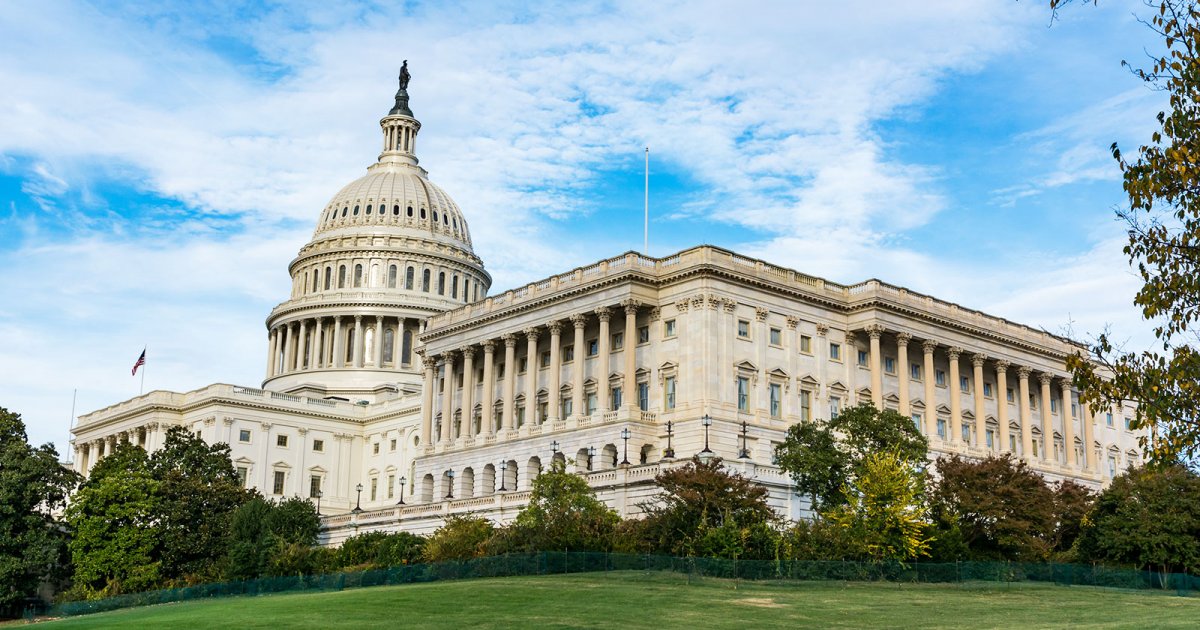
The Constitution assigns most tariff authority to Congress. The President executes the laws Congress passes.
- Article I, Section 8: Congress regulates foreign commerce and lays duties and imposts.
- Article I, Section 7: revenue measures must pass Congress. Tariffs function as a revenue tool even when their main purpose is leverage.
- Article II: the President directs foreign policy and diplomacy and executes the laws, but does not receive an explicit “tariff power.”
At the founding, tariffs were one of the federal government’s main funding mechanisms. That history matters because it helps explain why the Framers treated tariff-setting as a representative, vote-in-public kind of power.
Modern tariff fights feel like pure foreign policy. Constitutionally, they are also domestic taxation. That is why the separation-of-powers question never really goes away.
How presidents impose tariffs
Presidential tariffs usually rest on one of several delegations Congress has enacted. The details matter because a President typically cannot just announce a rate and flip a switch. The authority has to be tied to a statutory finding like national security, unfair trade, or a declared emergency.
1) Section 232 (national security)
Under Section 232 of the Trade Expansion Act of 1962, the President may adjust imports if the Commerce Department finds that specific imports threaten to impair national security. In recent high-profile use, this is the tool that has been used for steel and aluminum tariffs.
Key point: Section 232 is not a blank check to punish any country for any reason. It is supposed to be tied to a national security rationale and a defined investigative process.
2) Section 301 (unfair trade practices)
Section 301 of the Trade Act of 1974 authorizes the United States Trade Representative (USTR), under presidential direction, to respond to certain unfair foreign trade practices. That can include tariffs.
Section 301 is often framed as a retaliation tool. But even retaliation has legal shape: it normally relies on findings about policies that burden U.S. commerce, and it can trigger disputes under trade agreements.
3) IEEPA (emergency powers) and the tariff question
The International Emergency Economic Powers Act (IEEPA) gives presidents broad powers once a national emergency is declared regarding an “unusual and extraordinary threat” with a foreign source.
IEEPA is extremely broad, but it is not written as a tariff statute. Its text focuses on regulating or prohibiting certain transactions and blocking property interests, not setting customs duty rates. That is why efforts to use IEEPA as the main legal basis for sweeping, tariff-like measures tend to be treated as an open and contested legal question that can invite a sharper separation-of-powers fight.
4) Other trade tools you will hear about
Congress has also created narrower authorities for particular circumstances:
- Section 201 safeguards (Trade Act of 1974), used when an import surge seriously injures a domestic industry. This is typically driven by an investigation and recommendations, not a simple presidential dial.
- Section 122 (Trade Act of 1974), a temporary, time-limited “surcharge” style tool tied to balance-of-payments problems. It is a historical example of a tariff-like mechanism Congress wrote into statute.
- Anti-dumping and countervailing duties (AD/CVD), which are usually not “presidential tariffs” at all. They are quasi-adjudicative agency determinations (with Commerce and the ITC) that can result in additional duties through a procedural record.
These tools exist, but they are less like a presidential dial and more like a procedural machine: agency petitions, investigations, comment periods, reports, and documented findings.
Could a President set 50% on Canada?
Possibly, but not simply because the President wants it. A 50% tariff across categories like cars, auto parts, and steel would raise four practical legal questions.
1) What statutory hook is being used?
The Constitution does not supply the hook. The statute does. A 50% tariff might be attempted under Section 232 (especially for steel), or under Section 301 (if tied to an unfair practice finding), or through other specialized provisions. But none of these are instant options: each one has defined triggers and required steps.
2) Was the required process followed?
Many trade delegations require investigations, reports, consultations, timelines, and a record explaining why the chosen remedy fits the finding. For example, Section 232 turns on a Commerce investigation and report; Section 301 turns on USTR findings and procedural requirements. When tariffs get challenged, the fight often turns on whether the executive complied with the statute’s steps.
3) Is the rationale plausible under the statute?
“National security” and “unfair trade” are flexible concepts, but they are not infinitely flexible. If the factual rationale looks untethered, courts may become more willing to treat the tariff as beyond the statute’s scope.
4) Does it collide with trade commitments?
Trade agreements like USMCA do not override the Constitution, but they can shape the legal and diplomatic terrain. A tariff can spark dispute settlement proceedings, retaliation, and domestic litigation by affected industries. Even if the President has a statutory path, clashing with agreement commitments can make the policy harder to sustain.
What can stop it?

In practice, three forces can stop or reshape a major tariff program: courts, Congress, and the market consequences that provoke political blowback.
Courts: trade litigation and judicial review
Major tariffs often end up in litigation. The venue can include the U.S. Court of International Trade, and appeals can go to the U.S. Court of Appeals for the Federal Circuit. Depending on the legal theory and statute, some challenges may also arise in other federal courts, but duty and customs disputes are commonly funneled into the specialized trade courts.
The legal theories tend to cluster around:
- Statutory overreach: the tariff exceeds what the statute authorizes.
- Procedural failure: missed deadlines, inadequate findings, defective investigations, or lack of required consultations.
- Constitutional nondelegation: an argument that Congress delegated too much tariff authority without an “intelligible principle.” (This is hard to win under modern precedent, but it is part of the ongoing constitutional pressure.)
Congress: it can narrow or revoke delegations
The cleanest constitutional answer is also the most politically difficult: Congress can change the law. If lawmakers believe presidents of either party are using tariff delegations as an end run around Article I, Congress can narrow statutory triggers, require affirmative votes, impose automatic sunsets, or cut off funding for implementation.
Congress can also pass a law reversing a tariff policy, although that usually means getting a bill through both chambers and past a presidential veto or over it.
Retaliation and domestic pressure
Tariffs are not just legal acts. They are economic shocks. Canada can retaliate. Supply chains can reprice. Industries dependent on cross-border parts and inputs can sue, lobby, and demand carve-outs. Those pressures do not answer the constitutional question, but they often determine whether a tariff regime holds together long enough to become normal.
“Treat Canada like a state”
Rhetoric about treating Canada “like a state” collides with basic constitutional structure.
- States are part of the United States. Trade between states is not “foreign commerce.” It is governed by the Constitution’s rules against state-level trade barriers and by Congress’s commerce power.
- Canada is a sovereign foreign nation. Tariffs against Canada are the textbook example of regulating “Commerce with foreign Nations.”
So there is no constitutional mechanism by which a President can unilaterally reclassify Canada for tariff purposes. What can happen is narrower and more bureaucratic: statutes may treat certain partners differently through agreements, exemptions, quotas, or sector-specific arrangements. But “like a state” is a political line, not a constitutional category.
Why this is about power
Every time a president threatens sweeping tariffs, we are watching a long-running constitutional compromise.
Congress has the tariff power on paper, but it has repeatedly handed presidents tools that look and feel like independent tariff authority. The justification is speed and expertise. Trade moves quickly. Diplomacy requires leverage. Congress is slow.
The cost is that a policy lever that was meant to require legislation can sometimes be pulled through executive action, with Congress reacting after the fact.
The deeper constitutional question is not whether tariffs are good policy. It is whether tariff-making has become another example of lawmaking by delegation, where the President’s most important power is not what the Constitution grants directly, but what Congress has pre-authorized through broad statutes.
FAQ
Can the President impose tariffs without Congress?
Not from the Constitution alone. But yes in practice, if Congress has already delegated authority by statute and the President stays within that statute’s requirements.
Is a 50% tariff legally different from a 10% tariff?
The Constitution does not set a percentage limit. The legal vulnerability comes from the statute and the record: whether the chosen rate can be justified as a permitted “adjustment” or “action” under the relevant law, and whether the required steps were followed.
Could Congress block a future tariff plan before it starts?
Yes. Congress can revise the underlying delegations, add approval requirements, shorten timelines, or impose sunsets. That is the Article I answer: if Congress does not like how a delegated power is being used, it can rewrite the delegation.
Where would lawsuits be filed?
Many challenges to tariffs and customs actions are filed in the U.S. Court of International Trade, with appeals typically going to the Federal Circuit.