
When a memo or whistleblower story claims the National Security Agency sat on election-threat reporting, the instinctive question is personal: Who decided that, and are they allowed to do it?
But the real answer is structural. The NSA lives inside a constitutional machine with three kinds of constraints: the Fourth Amendment’s limits on searches, statutes like FISA that set procedures for intelligence collection, and Article II plus congressional oversight laws that determine who the agency answers to and how intelligence is shared.
That machine is not built to be simple. It is built to keep secrets and keep the secret-keepers accountable. Those goals collide most visibly when the intelligence involves elections, where the stakes are political but the job is supposed to remain governmental and nonpartisan.
Join the Discussion
What the NSA does and does not do
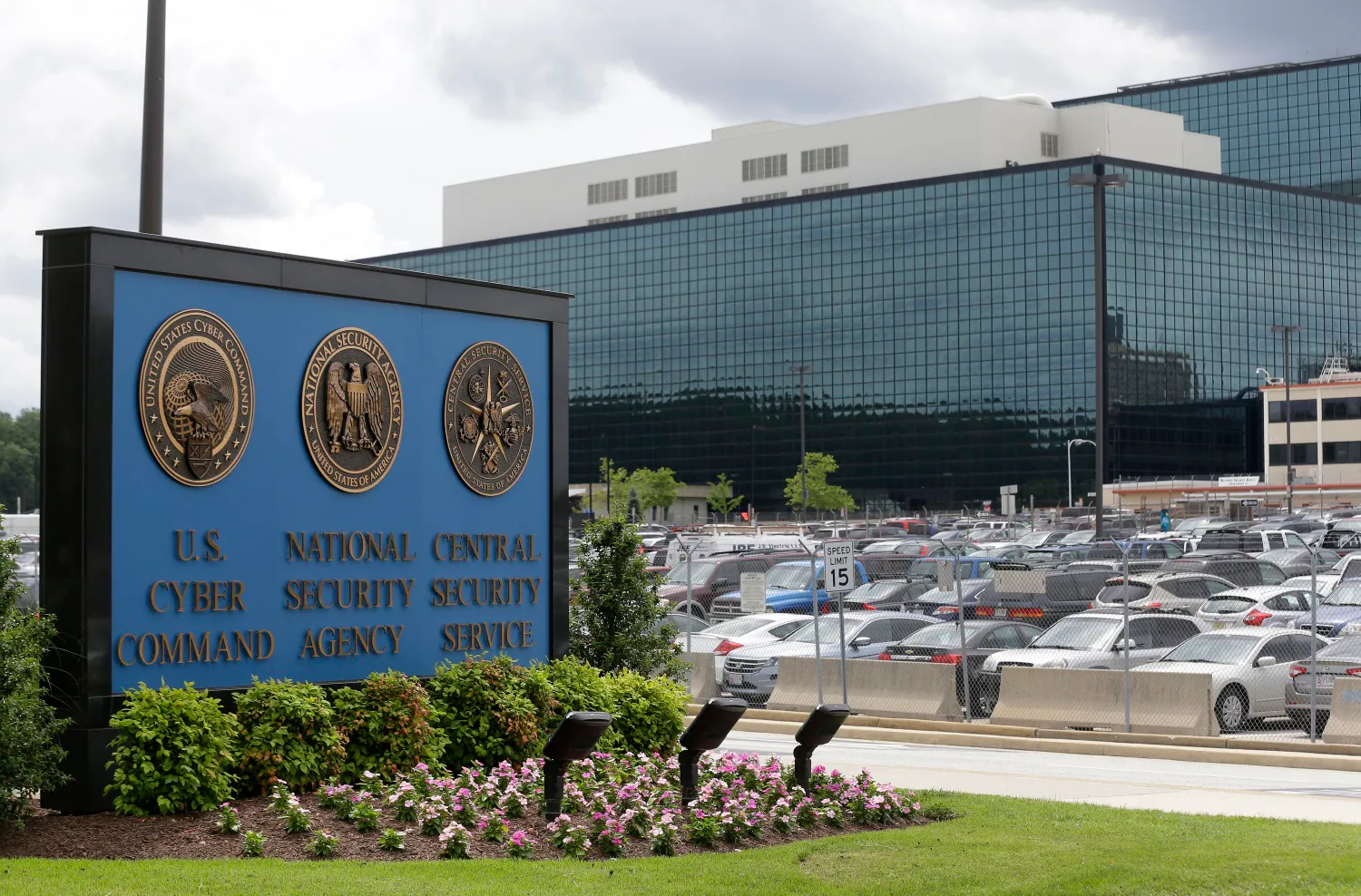
The NSA’s core mission is foreign signals intelligence and cybersecurity for national security systems. In plain terms, it intercepts and analyzes electronic signals that matter to national security, and it helps protect U.S. government communications and networks. It is also the National Manager for National Security Systems, a role that reflects its long-standing defensive mission alongside collection.
Two clarifications matter because they shape the legal boundaries.
- The NSA is not a domestic police force. It does not prosecute crimes, and it is not supposed to target Americans as its mission.
- The NSA can touch U.S. person information anyway. That happens when Americans communicate with foreign targets, when foreign communications transit U.S. infrastructure, or when collection is aimed at foreign actors but sweeps in incidental U.S. person data.
This is where most misunderstandings start. The public debate often treats “surveillance” as one bucket. In U.S. law it is several buckets, each with different rules, paperwork, oversight, and constitutional arguments.
The Fourth Amendment
The Fourth Amendment prohibits unreasonable searches and seizures. In ordinary criminal investigations, that often means warrants supported by probable cause. But the Constitution’s central test is reasonableness, and courts have recognized exceptions and different operational realities in national security contexts.
Intelligence surveillance often does not look like a traditional warrant, for two reasons.
1) Foreign intelligence surveillance uses special procedures
National security surveillance is largely governed by the Foreign Intelligence Surveillance Act (FISA) for certain kinds of collection, especially where the activity touches U.S. persons or occurs in the United States. FISA created the Foreign Intelligence Surveillance Court (FISC), a specialized federal court that reviews applications for certain types of intelligence collection. The central idea was to replace informal executive surveillance with a legal process and a paper trail.
2) “Reasonableness” is argued differently in national security
Foreign intelligence creates different operational realities than ordinary criminal investigations. That does not erase the Fourth Amendment, but it changes how “reasonable” is litigated and how Congress structures procedures.
The constitutional tension is permanent: surveillance is easiest when it is broad and quiet, and liberty is safest when government must specify, justify, and minimize.
The main legal lanes
To understand what the NSA can collect, you need to separate targeted surveillance from programmatic collection and from overseas collection under executive authority. All are regulated. All have oversight. And all raise different concerns.
Targeted collection under traditional FISA
When the government wants to surveil a particular target for foreign intelligence purposes, FISA often requires an application that goes to the FISC. Depending on the category, the government must show things like probable cause that the target is a foreign power or an agent of a foreign power, and it must follow minimization procedures that limit retention and dissemination of U.S. person information.
This lane looks more like a warrant model, even though it is national security rather than criminal prosecution.
Section 702
Section 702 of FISA is one of the most important and most controversial tools in modern intelligence. It authorizes collection targeting non-U.S. persons located abroad to acquire foreign intelligence information, under court-approved programmatic procedures rather than individualized warrants for each target.
If a foreign target communicates with an American, the American’s side of the conversation can be swept in. That is not an accident. It is the predictable byproduct of targeting foreigners in a networked world.
The legal fights tend to focus on what happens next:
- How strictly agencies minimize, mask, and restrict U.S. person identifiers
- When and how analysts can query collected data using U.S. person terms, sometimes called “backdoor searches” in public debate
- What gets shared with the FBI or other agencies, and for what purposes
Even if your immediate concern is “elections,” these mechanics matter, because election interference is often foreign-origin and digital. It is the kind of problem Section 702 was built to help detect.
Executive Order 12333
A major share of NSA signals intelligence collection occurs under Executive Order 12333, which governs intelligence activities conducted largely overseas and outside the FISA court order framework. EO 12333 does not mean “no rules.” It means different rules: executive-branch procedures, Attorney General approved guidelines, and internal compliance requirements that still include limits on the handling of U.S. person information.
Practically, EO 12333 is part of why “FISA” is not the whole story of NSA collection. If you only think in FISA lanes, you can misunderstand how overseas collection is authorized and how incidental U.S. person data can arise in foreign-intelligence work.
Elections are domestic, interference is foreign
Foreign interference in U.S. elections can be a foreign intelligence issue and a counterintelligence issue at the same time. The NSA may have visibility into foreign cyber operations, command-and-control infrastructure, or communications among foreign actors.
But elections are run in a constitutional space where the federal government’s role is limited.
States run elections, Congress can regulate the rules
Under Article I, Section 4 (the Elections Clause), states set the rules for congressional elections, but Congress can alter or make those rules. Separate constitutional provisions and federal statutes also govern presidential elections, electors, and the counting of votes.
So you get a layered system:
- States administer elections and control most election infrastructure.
- The federal government investigates foreign threats, coordinates national security response, and can set certain nationwide election rules.
- Intelligence agencies can collect foreign intelligence about foreign actors, but they are not supposed to become domestic political referees.
That last point is why election intelligence is uniquely sensitive. A warning about a foreign operation can be essential. A poorly framed warning can look like the intelligence community taking sides in a domestic fight.
Who oversees the NSA?
Oversight is not one lever. It is a stack of levers designed to make it hard for any single person or institution to control the entire story.
1) The President and the Executive Branch
The NSA sits within the Department of Defense. Ultimately, it is part of the Executive Branch and subject to presidential direction through the chain of command. Article II makes the President the Commander in Chief and vests the executive power in the President, which is why intelligence agencies are executive agencies.
But “the President oversees the NSA” does not mean “the President personally reads raw intercepts.” In practice, intelligence is filtered, summarized, compartmented, and shared through formal channels. That is partly about security and partly about relevance.
2) Congress
Congress oversees intelligence through:
- Authorization statutes (including FISA and its renewals)
- Appropriations (funding is oversight with teeth)
- Committees, especially the House and Senate intelligence committees
- Reporting requirements written into law
Congress cannot run an agency day to day. That would collide with separation of powers. But Congress can demand compliance with the legal framework it created, and it can cut money or change the rules when it thinks the Executive has drifted.
3) The courts
Where FISA requires court approval, the FISC reviews applications and procedures. That is oversight of legality, not policymaking. It is also typically secret, which is why public trust is always fragile here.
4) Inspectors general and compliance
Inspectors general inside agencies investigate misconduct and compliance failures. They can be some of the most important oversight actors because they have access and subpoena power within the Executive Branch ecosystem.
5) The PCLOB
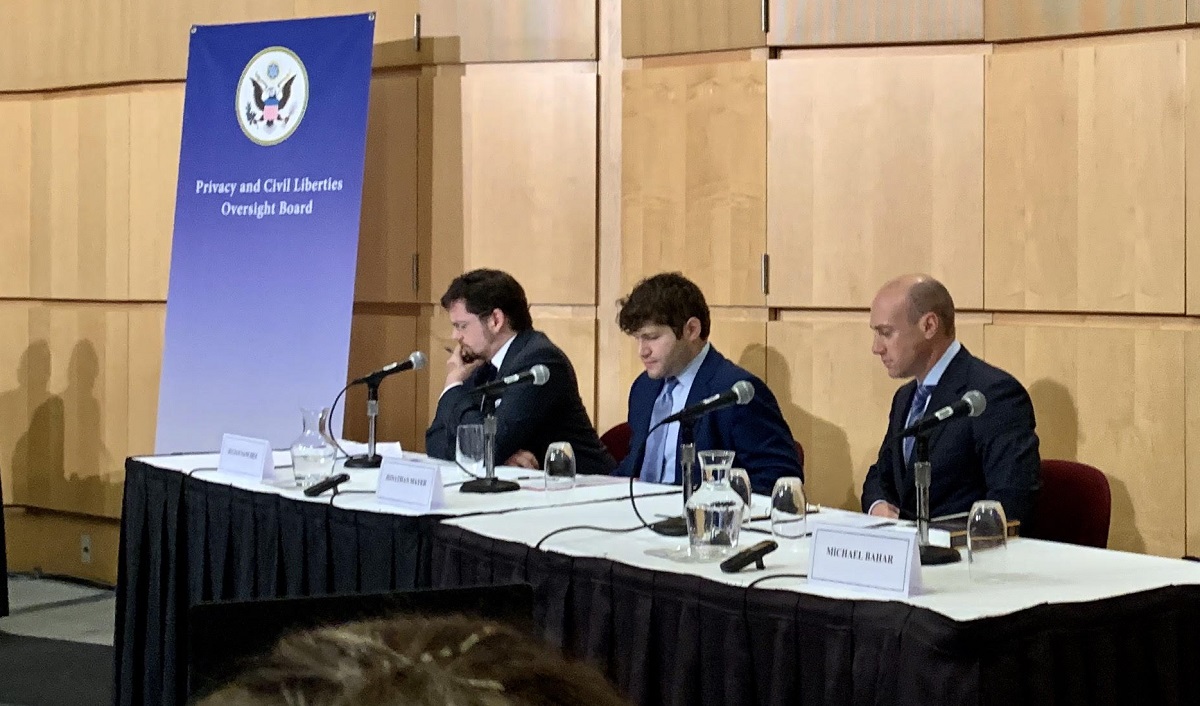
The Privacy and Civil Liberties Oversight Board (PCLOB) is an independent oversight body that reviews national security programs for privacy and civil liberties impacts. Much of its most visible work has centered on surveillance authorities and counterterrorism, including Section 702, but its mandate is not limited to a single mission set.
Can the NSA withhold intelligence from the President?
This is the question that drives a lot of “deep state” narratives, and it deserves a careful answer because the truth is more bureaucratic and more constitutional than people expect.
The President has broad authority over executive agencies
As a constitutional matter, the President sits at the top of the Executive Branch. If the President lawfully orders information to be provided, the agency generally must comply. If a subordinate refuses, the usual consequences are administrative: discipline, reassignment, removal, or an inspector general or Department of Justice review depending on what happened and why.
But intelligence is not delivered as raw feed by default
In practice, intelligence reaches the President through structured products: the President’s Daily Brief, National Security Council processes, and classified briefings tailored to priorities and security protocols. Those pipelines involve judgment calls about:
- What is credible versus preliminary
- What can be corroborated without burning sources and methods
- What must be shared broadly versus held in a compartment
The real risk is misusing the system
If reporting is delayed or restricted for legitimate classification reasons, that can be lawful. If reporting is delayed to manipulate domestic politics, to retaliate, to evade statutory reporting duties, or to hide a compliance problem, that is where oversight mechanisms are supposed to bite. Criminal exposure is fact-specific and tends to arise when there is something like unlawful destruction, concealment, mishandling of classified information, or false statements, not simply a bureaucratic dispute over who gets briefed when.
In other words, “withholding” can describe both:
- a lawful classification and vetting process, and
- an improper effort to steer outcomes.
The Constitution does not solve that ambiguity for you. It sets up competing institutions so the ambiguity can be tested.
How election threat intelligence moves
When foreign actors target an election, you can imagine three audiences for the intelligence.
1) Policymakers inside the Executive Branch
This includes the President, the National Security Council, DHS, CISA, the FBI, and other relevant agencies. Sharing here is constrained by classification and by the need to avoid exposing sensitive sources and methods. It is also shaped by how intelligence and law enforcement work differ, which is one reason some material is shared in finished intelligence form rather than as raw collection.
2) Congress
Congress may receive briefings, reports, and notifications depending on the program and the nature of the threat. Intelligence committees exist precisely because full transparency to the public is often impossible, and someone still has to ask hard questions and follow up on compliance.
3) The public
Public warnings about election threats are politically radioactive. If the government speaks too early, it can look like it is shaping an election. If it speaks too late, it can look like it was hiding the ball.
That is why election-related intelligence is often routed through interagency frameworks and why public statements tend to be cautious, sanitized, and frustratingly non-specific. ODNI, DHS, and CISA have frequently been part of this public-facing lane, especially when the government is trying to attribute foreign activity while avoiding operational detail.
The “why won’t they just tell us everything” complaint is understandable. But in practice, classified systems are designed in part to prevent inadvertent disclosure that would compromise collection or put people at risk.
The constitutional bottom line
The NSA’s authority is not found in a single constitutional clause that says “there shall be an agency that collects signals.” It exists because Congress created statutory frameworks and funds programs, and because the Executive Branch executes national security functions under Article II. A great deal of the operational detail comes from named authorities like FISA, Section 702, and Executive Order 12333.
But that authority is hemmed in by procedures that attempt to keep intelligence from becoming a general domestic surveillance power.
- Fourth Amendment: sets the reasonableness boundary and the cultural expectation that surveillance needs justification.
- FISA and related statutes: create the how, who, and when of collection and querying.
- Oversight and separation of powers: force multiple institutions to share responsibility for secrets.
If you want a durable takeaway, it is this: the United States does not rely on trust alone. It relies on friction. Paperwork, courts, reporting requirements, inspectors general, committees, and appropriations are not bureaucratic clutter. They are constitutional guardrails disguised as process.
Quick FAQ
Does the NSA need a warrant to spy on Americans?
The NSA is generally not supposed to target U.S. persons without a legal process. Some authorities involve individualized court orders. Others, like Section 702, target foreigners abroad but can incidentally collect Americans’ communications. The legality then turns on minimization rules, querying limits, and oversight compliance.
Who can investigate the NSA if something goes wrong?
Multiple actors: agency inspectors general, the Department of Justice, the FISC in matters under its jurisdiction, the PCLOB, and congressional committees. In some cases, courts can also adjudicate constitutional claims when plaintiffs can establish standing and litigable facts.
Can the NSA collect election information?
It can collect foreign intelligence related to foreign actors who may be interfering with elections, under applicable legal authorities. It is not supposed to act as a domestic political actor or target Americans for their political activity.