
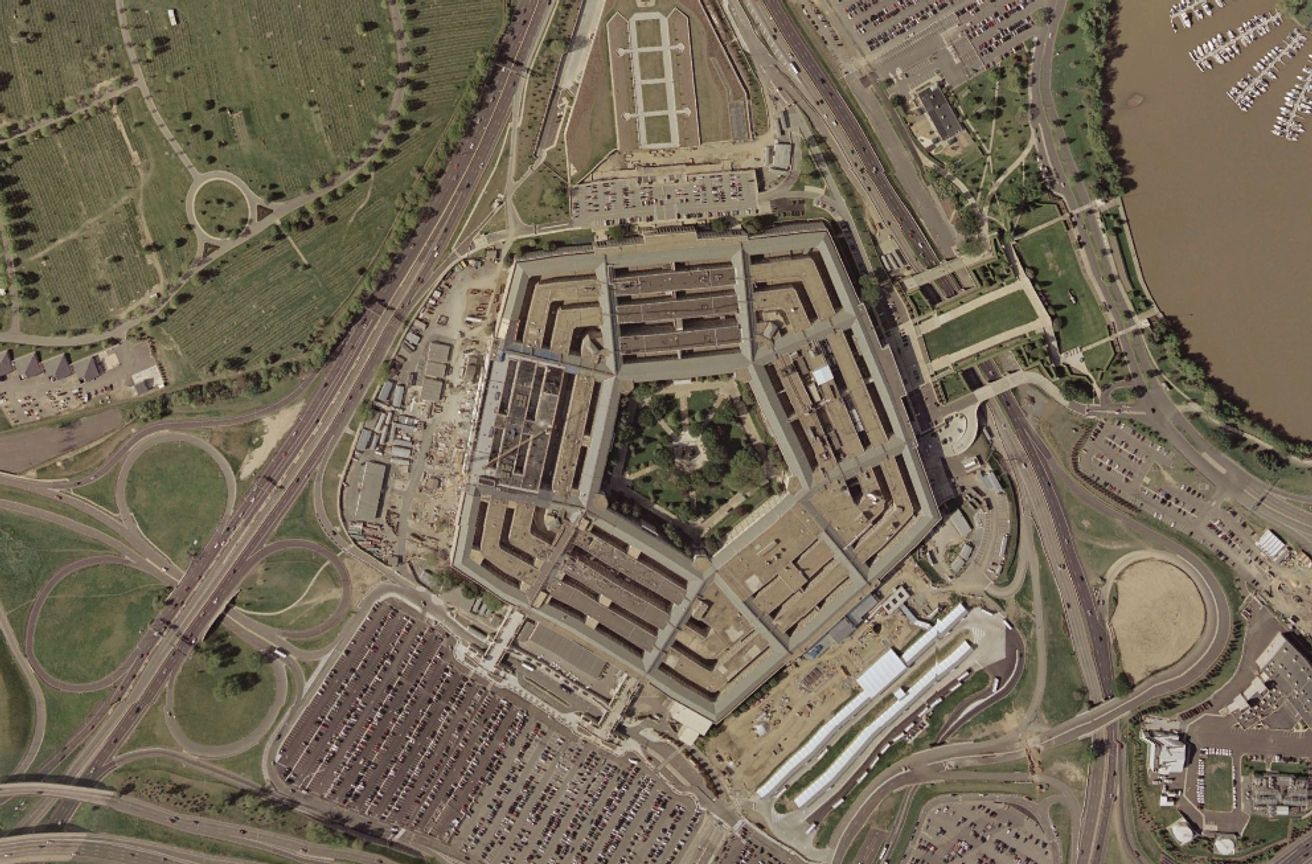
When the Pentagon fires the top leaders of a newspaper that exists to serve American service members, it is tempting to reach for a single tidy headline: censorship. But the harder question is the constitutional one. What does the First Amendment actually protect inside a newsroom where the government pays much of the budget and the journalists are treated as federal employees?
On Aug. 21, the Defense Department terminated Stars and Stripes publisher Max Lederer Jr., editor in chief Erik Slavin, and Middle East reporter Lara Korte. Stars and Stripes announced the actions, and the outgoing staffers publicly defended the idea that the publication must remain independent of Pentagon preferences. A Navy captain, William Urban, newly installed as military deputy to the publisher, also issued an open letter the same day describing a new direction for the organization.
That cluster of facts is not just workplace drama. It is a stress test of two American instincts that do not always get along: civilian control of the military and a free press that can embarrass the powerful.
Join the Discussion
What happened

Stars and Stripes is not a private newspaper. It is a congressionally authorized publication created to serve troops and their families with news and information. Yet it also has a long tradition of reporting that is sometimes inconvenient for commanders, civilian appointees, and the Department of Defense itself.
The three terminations landed with particular force because of timing and context. The firings happened on a Friday and just hours after Lederer announced plans to retire.
- Max Lederer Jr. had recently told staff he planned to retire, citing what he described as “fundamental” differences with Defense Department leadership over the outlet’s mission and direction. He had worked at Stars and Stripes since 1992 and served as publisher since 2007. He had been expected to depart on Sept. 30, on his own timeline. Lederer has also been described as only the second full-time civilian to hold the publisher role.
- Erik Slavin, a longtime staffer who became editor in chief in 2025 after first joining in 2005, received a notice of proposed separation and said he was reviewing it. A Pentagon official confirmed the separation notice. In a prior interview, Slavin defended the paper’s “editorial independence” and rejected the idea of not “kowtowing” to a Pentagon agenda or control.
- Lara Korte, hired in December 2024, said she was hired to cover the military community, not to report what Defense Department leadership “wants to hear.” She described it as a “great privilege” to live alongside service members at the newspaper’s European headquarters in Kaiserslautern, Germany, and said she was proud of her coverage of the Iran War. She called the firings “a shame for the institution and service members, who swore to defend the Constitution and deserve the right to a free and independent press.”
The firings also follow an earlier termination of the paper’s ombudsman, Jacqueline Smith, whose job included safeguarding editorial independence. After her ouster, Smith wrote: “No one should be surprised that they’re kicking out the one person charged by Congress with protecting Stars and Stripes’ editorial independence.”
The First Amendment angle
The First Amendment does not say, “Congress shall make no law… abridging the freedom of the press, except for press outlets the government funds.” So if you are a reader, your gut reaction is understandable: How can the government fire journalists at a paper that is supposed to be independent?
But the Constitution forces a more technical question first: whose rights are we talking about?
The First Amendment is typically framed as a shield against government punishment of private speakers. A government-funded newsroom scrambles the wiring because the government is not only regulating speech. It is also acting as employer, funder, and, in a practical sense, institutional owner.
That does not mean “no First Amendment.” It means the dispute often turns on narrower questions that can implicate constitutional and statutory limits, depending on the facts.
- Retaliation for viewpoint: Personnel actions can raise First Amendment concerns if they function as punishment for disfavored viewpoints. Whether that is what happened in any specific firing is a factual question, not an assumption.
- Government speech: When the government is the speaker, it generally has more leeway to choose its message. That can collide with an institution that is designed to operate like a newsroom.
- Special statutory protections: Congress can create enforceable independence rules that bind the executive branch. In this setting, those guardrails may matter as much as broad First Amendment rhetoric.
The result can be unsatisfying but real: the First Amendment is not an automatic switch that converts a government publication into a private one. If Americans want a government-funded outlet to operate with meaningful editorial independence, the cleanest tool is a governance structure that makes that independence enforceable.
Who has power
Start with the uncomfortable truth: the Pentagon can fire employees. Stars and Stripes staff are counted as Defense Department employees, and the publication receives roughly 65% of its budget from the Department of Defense. Those facts alone create leverage, even when leaders emphasize editorial independence.
But there is an equally important counterpoint: employment power is not supposed to become a substitute for editorial control in a publication whose mission statement describes it as editorially independent and “governed by the principles of the First Amendment.” Whether that line was crossed here would depend on evidence, process, and the reasons given for the personnel actions.
Here is the clean way to think about the categories.
What officials generally can do
- Set workplace rules that apply to federal employees, including performance expectations, security protocols, and lawful conduct requirements.
- Make management changes to carry out their understanding of a congressionally authorized mission, so long as they act within the legal framework Congress created.
- Speak for themselves through official communications, including rebutting coverage through their own channels.
What could raise legal concerns
- Using personnel actions as viewpoint punishment, especially where Congress has built an explicit independence framework.
- Pressuring a newsroom toward an official editorial line in a publication whose mission describes itself as independent, if the facts show the staffing moves were aimed at shaping coverage rather than managing employment.
- Using funding dependence as leverage in ways that undermine the structure Congress set up, if the record shows money was used to condition what journalism is safe to publish.
This is why Korte’s line matters even if you disagree with her politics or her coverage: “These firings are a shame for the institution and service members… and deserve the right to a free and independent press.” If Stars and Stripes were to become a place where only one kind of reporting is safe, the injury would not be merely to three careers. It would be to the idea that troops are citizens in uniform, not an audience that must be managed.
Congress is the lever
If you want to know who can actually change the trajectory here, do not start with a court. Start with Congress.
Stars and Stripes operates under an independence framework put in place in 1994. It describes itself as editorially independent and “governed by the principles of the First Amendment.” That framework is Congress doing what Congress is built to do: creating an institution and setting the terms under which executive branch officials may run it.
Oversight is not just public scolding. It is a constitutional tool kit that Congress can use, if it chooses.
- Hearings and subpoenas to force sworn explanations for the firings, the asserted mission change, and any communications that might suggest viewpoint-based interference.
- Appropriations language that conditions funding on compliance with editorial independence rules, staffing protections, or an ombudsman structure that cannot be removed at will.
- Statutory design that clarifies the chain of command, the role of military deputies in a newsroom, and the circumstances under which leadership can be removed.
There is not yet a public record here, in this set of facts, of Congress deciding to lean in or stand back. And here is the civics lesson people often dislike: congressional oversight is only as strong as Congress’s willingness to use it. The Constitution gives Congress the tools. It does not force Congress to pick them up.
No contradiction
Americans are used to thinking of “the press” as something outside government. Historically, that is the safest arrangement. Independence is easier when your paycheck does not come from the institution you cover.
But Stars and Stripes has long been a deliberate exception, built on a practical idea: service members stationed far from home deserve robust reporting aimed at their lives, not just official bulletins. That mission only works if the newsroom can publish inconvenient stories without checking whether they flatter leadership.
So the real question is not whether the Pentagon is allowed to have opinions. Of course it is. The question is whether those opinions become controlling in practice, through hiring, firing, and management decisions that shape what journalism is safe to do.
If that happens, the First Amendment is not formally repealed. It is sidelined through ordinary administrative power.
What to watch
- Whether Congress demands documents about the terminations and any claimed “new direction” for the paper.
- Whether the 1994 framework is reinforced with clearer protections for editorial leadership and an ombudsman or similar safeguard.
- Whether service members lose trust in Stars and Stripes as a source that tells them the truth even when it is awkward for the chain of command.
In a civics classroom, I used to ask students: What is the point of a right that only exists when it is convenient? That question is now sitting inside a government-funded newsroom, wearing a press badge, and waiting to see whether Congress decides to use the tools it already has.