
Every election cycle produces the same jolt of confusion: a headline about a noncitizen accused of voting, followed by a wave of questions about whether the law actually forbids it, how anyone gets caught, and who has the power to prosecute.
The short answer is straightforward. A green card holder is a lawful permanent resident, but not a U.S. citizen. In federal elections, that means they cannot vote. In state and local elections, the rule is almost always the same, though a small number of municipalities have carved out limited, local-only exceptions.
Join the Discussion
Green card holder vs. citizen
A green card grants lawful permanent residence. It allows someone to live and work in the United States indefinitely, travel in and out under rules, and eventually apply for naturalization if they qualify.
But a green card is not citizenship. It does not automatically include political rights tied to citizenship, most importantly the right to vote in federal elections.
That basic line is why noncitizen voting allegations get attention. Many people assume the rule sits in a single, simple constitutional sentence. In reality, election eligibility is built through a shared structure of state-administered elections and federal constitutional limits.
Does the Constitution limit voting to citizens?
Not in one clean sentence.
The Constitution does not include a single master clause that reads “only citizens may vote.” Instead, it sets up (1) state control over voter qualifications as a starting point and (2) constitutional amendments that restrict how states can draw those lines.
States set the baseline
Article I, Section 2 ties voting for the U.S. House to whoever can vote for the “most numerous Branch of the State Legislature.” In plain terms: states set the baseline qualifications for their own elections, and that baseline largely carries over into federal House elections.
For Senators, the Seventeenth Amendment uses a similar approach: Senators are elected by the people, and the electorate is defined by state voter qualifications, subject to constitutional constraints.
For President, states appoint electors (Article II), and state law controls how those electors are chosen, again subject to federal constitutional and statutory limits.
The amendments mostly tell states what they cannot do
The Constitution’s voting amendments are largely written as prohibitions:
- 15th Amendment: states cannot deny or abridge the right to vote on account of race.
- 19th Amendment: states cannot deny or abridge the right to vote on account of sex.
- 24th Amendment: no poll tax in federal elections.
- 26th Amendment: the right of citizens 18 and older cannot be denied or abridged on account of age.
Notice the pattern. The Constitution repeatedly speaks in the language of “cannot deny,” not “here is the full list of who may vote.” And while the overall structure leaves much of election administration to states, several modern voting-rights provisions are written in terms of protecting the rights of “citizens,” including the Twenty-Sixth Amendment.
Federal law: noncitizens cannot vote in federal elections
Even if the Constitution is more structural than blunt, federal statutes are blunt.
Under federal law, it is generally illegal for a noncitizen to vote in a federal election (President, Vice President, U.S. Senate, U.S. House). A key statute is 18 U.S.C. § 611, which prohibits noncitizens from voting in federal elections. The statute includes narrow, specific exceptions, and real-world applicability can be fact-dependent.
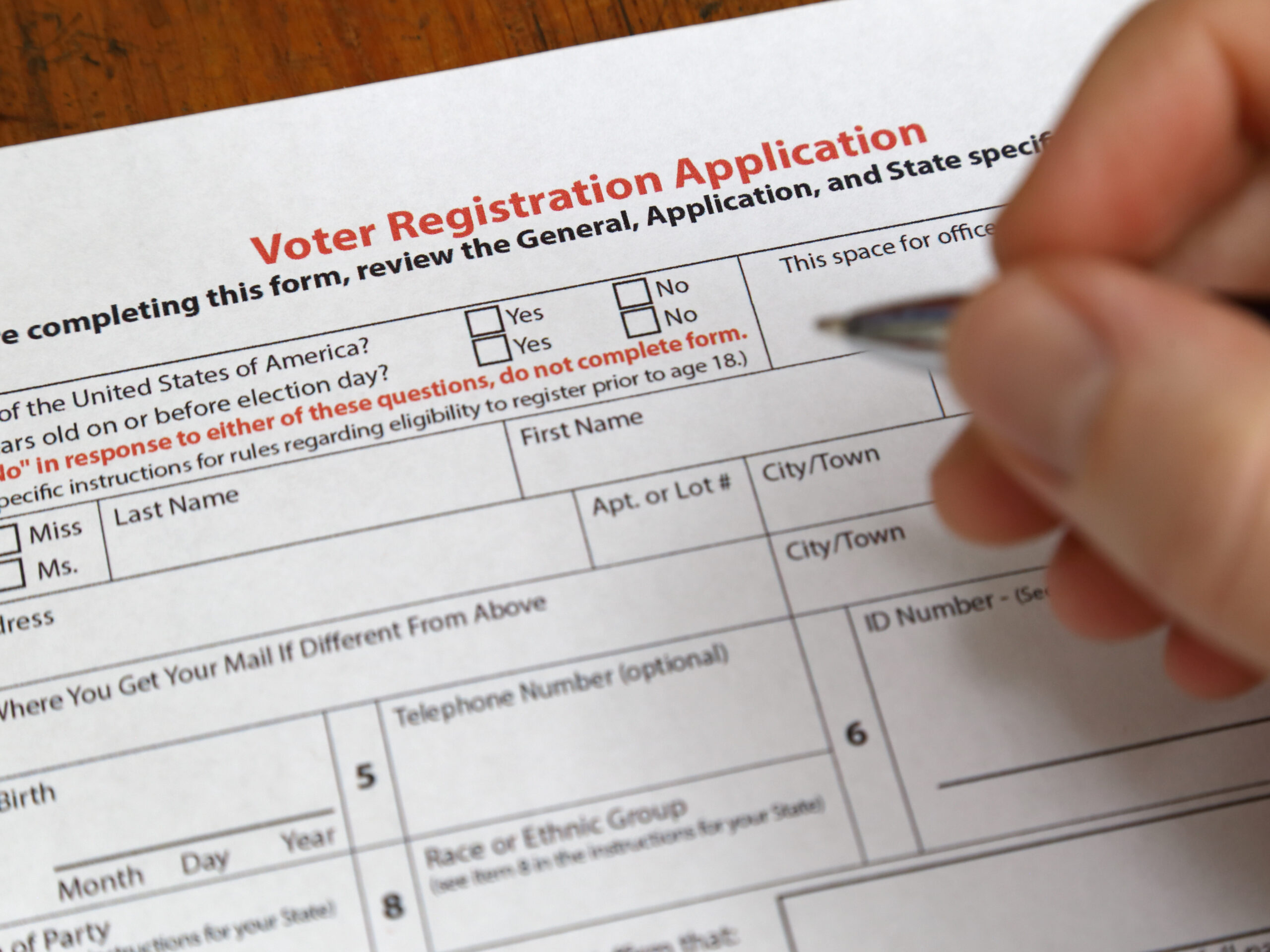
There is also a second major layer: the federal voter registration form used under the National Voter Registration Act. The U.S. Election Assistance Commission (EAC) National Mail Voter Registration Form requires the applicant to attest, under penalty of perjury, that they are a U.S. citizen. Submitting paperwork that falsely claims citizenship, or otherwise includes false statements, can create additional criminal exposure depending on the facts and the statute.
State and local law: usually no, with limited local exceptions
Most states restrict voting to U.S. citizens for state and local elections as well. State constitutions and election codes commonly use language like “every citizen” who meets age and residency requirements may vote, which in practice excludes noncitizens.
However, there is a narrow and often misunderstood exception category: some municipalities, such as San Francisco (in certain school board elections) or several towns in Maryland (in some local contests), have allowed noncitizens to vote in certain local-only elections. These rules tend to be limited by subject matter (for example, a school board race) and eligibility (for example, requiring a lawful local resident), and they can be politically contested or changed over time.
Where a city creates a local-only voting rule, administrators still must ensure noncitizen voters cannot receive a ballot that includes federal offices. In practice that can mean separate election dates, separate ballot styles, or eligibility-based ballot assignment.

What counts as illegal voting for a noncitizen?
Illegal voting is not a single act with a single definition. It is a family of actions that can trigger different statutes.
Common fact patterns
- Registering to vote while not a citizen, especially when the registration includes a signed citizenship attestation.
- Voting in a federal election as a noncitizen, whether knowingly or through confusion about eligibility.
- Voting in the wrong jurisdiction (for example, using an old address), which can be a separate offense regardless of citizenship.
- Double voting, such as voting in two states or voting by mail and in person.
A crucial legal detail is mens rea, meaning the required state of mind. Some offenses require proof that the person acted knowingly and willfully. Others can turn on whether a false statement was made, whether an oath was signed, or whether the statute is written more strictly. Intent can matter a great deal, but it depends on the particular charge.
How “mistakes” happen varies. Some people are offered voter registration during routine DMV workflows and do not understand that the eligibility question is a citizenship question. Some are handed a combined packet at a government office and sign where they are told to sign. In rarer cases, third-party registration efforts also contribute to confusion if the eligibility screen or form is not carefully explained. In places with local-only rules, confusion can also arise if someone assumes that eligibility for a municipal contest carries over to state or federal contests. Those misunderstandings do not automatically make voting legal, but they can matter to what prosecutors must prove.
Penalties: criminal and immigration consequences
The consequences can be serious, and they come in two categories that do not always move together: criminal penalties and immigration consequences.
Criminal exposure
Federal law can impose fines and potential imprisonment for illegal voting in federal elections. States can also prosecute election crimes under state statutes, especially if the conduct involves state or local races, false registration under state forms, or other state-defined election offenses.
Immigration consequences can be bigger
For lawful permanent residents, voting-related conduct can trigger immigration problems that go beyond the criminal case. It also helps to separate two different triggers that are often conflated: unlawful voting and a false claim to U.S. citizenship. They can overlap, but they are not the same issue, and immigration law can treat a false claim to citizenship as especially severe.
Immigration consequences can arise even without a criminal conviction, depending on the forum and the evidence. For example, an immigration adjudication may focus on the underlying conduct, signed attestations, or admissions, not just on whether a criminal case was brought or won.
Unlawful voting and related allegations can also affect naturalization. For example, conduct that leads to findings of unlawful voting, false statements, or related criminal issues can create obstacles when an applicant must show eligibility and good moral character.
If you are a lawful permanent resident and you believe you were mistakenly registered, or you voted without understanding the rule, get competent legal advice quickly. The facts and the paperwork matter.
What to do if you discover you are registered
If you are not a U.S. citizen and you discover you are registered to vote, treat it as a serious issue and move carefully:
- Do not vote in any election that includes federal offices, and do not assume a local rule applies statewide.
- Contact your local election office and ask how to cancel or correct the registration.
- Document what happened, including any forms you signed and any notices you received.
- Consult an immigration attorney if there is any chance you signed a citizenship attestation, voted, or were told by an official that you were eligible.
This is general information, not legal advice for any particular case.
Who enforces election crimes?
Both states and the federal government can play a role. This overlap is part of how American elections are built.
States run elections day to day
States set most of the rules that decide where you register, what ballot you get, how absentee voting works, and how local officials maintain voter rolls. Counties and municipalities do the on-the-ground administration: poll workers, equipment, signature checks, and precinct lists.
The federal government protects federal elections and civil rights
Congress has constitutional authority to regulate the “Times, Places and Manner” of congressional elections (Article I, Section 4). Federal agencies also enforce federal criminal law, including statutes that cover voting in federal elections, fraud on federal forms, and certain civil rights violations connected to voting.
In practice, election-related cases can be investigated by federal law enforcement and prosecuted by the Department of Justice, while separate state cases can proceed under state law. Sometimes only one system acts. Sometimes both do.
How alleged noncitizen voting is discovered
Despite popular assumptions, most cases are not found through a single magical database sweep. They are often discovered through ordinary administrative friction:
- Voter roll maintenance that flags records for follow-up.
- DMV and other agency interactions where citizenship questions are asked and data is compared.
- Jury duty returns in some jurisdictions, when someone responds that they are not a citizen.
- Tips and referrals from local election officials or other agencies.
- Immigration status checks that become relevant after an unrelated matter brings someone into contact with the system.
It is also worth saying plainly: some allegations involve a person who appears to have been registered through a process they did not fully understand, or who received incorrect guidance. That does not automatically make the conduct legal. But it can become central to whether prosecutors can prove the required intent for a particular charge.
Why this is constitutional
Voting sits at the intersection of two kinds of American power.
On one side: the states, which conduct elections and define qualifications in broad strokes. On the other: the federal government, which has the authority to protect federal elections, enforce civil rights, and criminalize certain conduct that undermines the integrity of national offices.
That division is why the rules can feel confusing. It is also why a single allegation can produce arguments that talk past each other. One person may be arguing about what a city allows in a local race. Another may be arguing about what federal law forbids in a federal race. Both can be correct in their own lane.
The practical takeaway is simple: citizenship is the gatekeeper for voting in federal elections, and federal law draws a bright line around that rule.
Quick answers
Can a green card holder vote for President?
No. Voting for President is part of a federal election, and federal law generally prohibits noncitizens, including lawful permanent residents, from voting.
Can a green card holder vote in state elections?
In almost all states, no. A few local jurisdictions have carved out limited municipal voting rules for some noncitizens, but those do not extend to federal races and are not the norm.
What if a noncitizen voted by mistake?
It depends on the statute and the facts. Some charges require proof the person knowingly voted unlawfully. Others can be triggered by signing false attestations or other paperwork. Separately, immigration consequences can follow even when the criminal case is complicated.
Is illegal voting common?
Verified cases exist, and they are prosecuted, but they are not typically the dominant source of election error or dispute. Each allegation is fact-specific: what election, what ballot, what forms were signed, and what the person knew.
The bottom line
A green card holder is not a U.S. citizen, and citizenship is the gatekeeper for voting in federal elections. That line is enforced through federal criminal statutes, state election administration, and, for many lawful permanent residents, the immigration consequences that can follow.
When you see a headline about a lawful permanent resident accused of voting, the most useful question is not “how could this happen?” It is “what election was it, what did the person sign, and which legal system is enforcing the rule?” That is where the Constitution’s structure shows up in real life.