
Arrest video tied to alleged non-citizen voting has a way of triggering the same argument on repeat: one side insists it is widespread, the other insists it is impossible. The Constitution does not settle the debate as neatly as either side suggests. It does not contain a single sentence that simply says who may vote in all elections.
Instead, the rules live in a layered system: state control over voter qualifications, constitutional amendments that prohibit certain exclusions, and federal statutes that make it a crime for non-citizens to vote in federal elections. If you want to understand what an arrest like this can and cannot prove, you have to understand that structure first.
One definition up front: a “federal election” is any election where the ballot includes federal offices such as President, U.S. House, or U.S. Senate, even if it is administered by a state or county.
Join the Discussion
Does the Constitution require citizenship?
Not in the way most people assume. The original Constitution largely left voter qualifications to the states. Article I, Section 2 ties voting for the U.S. House to the qualifications for the “most numerous Branch” of a state legislature. In plain English: if your state lets you vote for its lower legislative chamber, you can vote for the House too. The Seventeenth Amendment later used the same approach for U.S. Senate elections.
Then the Constitution adds guardrails, mostly in the form of amendments that say states cannot deny or abridge the vote for certain reasons:
- Fifteenth Amendment: race.
- Nineteenth Amendment: sex.
- Twenty-Fourth Amendment: poll taxes in federal elections.
- Twenty-Sixth Amendment: age for citizens 18 and older.
Notice what is missing: an explicit, universal “citizens only” voting clause for all elections. Citizenship shows up indirectly (for example, the Twenty-Sixth Amendment is written in terms of “citizens”), but the day-to-day eligibility rules are mostly implemented by state election codes plus federal statutes.

Can non-citizens vote?
For federal elections (President, U.S. House, U.S. Senate): federal law makes non-citizen voting illegal. You can argue about how often it happens, but the rule itself is straightforward.
For state and local elections: the Constitution generally leaves it to states (and sometimes local governments, if state law allows) to decide who may vote. As a practical matter, states overwhelmingly require citizenship for state elections today, and many states also criminalize unlawful voting or unlawful registration under state law.
A small number of jurisdictions have experimented with non-citizen voting in limited local contests, typically municipal elections and typically only where state law permits it. Examples often cited include certain towns in Vermont that have authorized non-citizen voting in some local elections, and places like New York City that have adopted local measures that became the subject of state-court litigation. These local policies do not legalize voting for President or Congress, and they can be constrained or banned by state law.
That split is one reason “non-citizen voting” arguments often talk past each other. Someone might be talking about a city election rule while another person is talking about a federal crime tied to a ballot that included congressional candidates. Same phrase, very different legal universe.
The key federal laws
The central prohibition is federal statute: 18 U.S.C. § 611, which makes it illegal for non-citizens to vote in an election that is held solely or in part for federal candidates. The statute includes a narrow exception that can apply in certain mixed elections where (1) state or local law affirmatively authorizes non-citizen voting for non-federal offices and (2) procedures ensure the voter does not vote for any federal candidate. This is technical and fact-specific, and it is not a general loophole for a non-citizen to cast a ballot that includes President or Congress.
Separate from the act of voting itself, federal law can also come into play when someone registers or makes false statements about citizenship. That matters because registration typically involves a citizenship attestation. For example, the federal voter registration form requires applicants to affirm that they are U.S. citizens and to sign under penalty of perjury.
- 18 U.S.C. § 1015(f): a criminal false-statement provision that can apply to knowingly making a false claim of U.S. citizenship in connection with registering to vote or voting in a federal election. This is distinct from separate immigration-law rules that impose civil immigration consequences for false claims of citizenship.
- 52 U.S.C. § 20511 (National Voter Registration Act): criminal penalties for knowingly and willfully submitting materially false voter registration information or engaging in certain other election-related misconduct tied to registration and federal election administration.
- 18 U.S.C. § 1001: false statements in matters within federal jurisdiction, which can be relevant depending on the setting and the paperwork or interview.
In other words, a case may be charged as “illegal voting,” but it may also be charged as a false claim of citizenship or a false registration statement case. The paperwork matters because different statutes attach to different moments: the registration form, an eligibility affidavit, the ballot, or an interview with federal agents.
Who investigates?
Election administration is mostly state and local. Election crime enforcement is shared. When a case involves federal elections or federal crimes, it can involve federal agencies and federal prosecutors. When it involves state or local contests, it may be investigated and prosecuted under state law by local prosecutors, state attorneys general, or specialized state election units.
Federal actors you may see
- U.S. Department of Justice (DOJ), including the Public Integrity Section and U.S. Attorneys’ Offices, is the primary federal prosecutor for election crimes.
- FBI often investigates election-related federal crimes, especially where there are broader fraud allegations.
- Department of Homeland Security (DHS) components can be involved when the case intersects with immigration enforcement or identity and document issues.
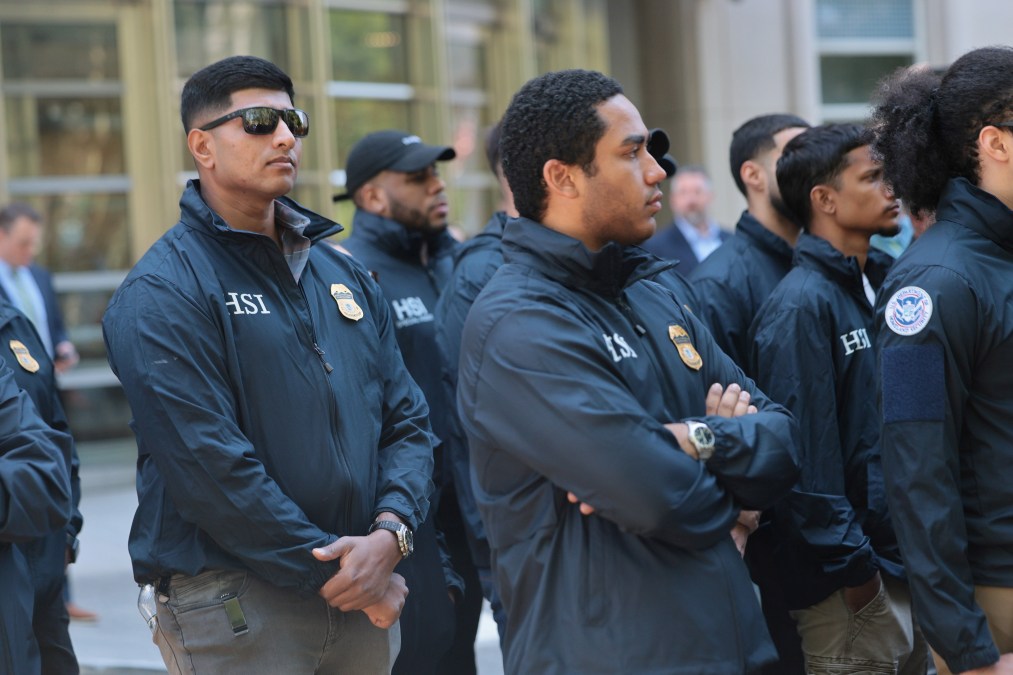
- Homeland Security Investigations (HSI), part of ICE, may be involved when allegations include identity fraud, document fraud, or immigration-related violations linked to unlawful voting or registration.
That last point is why some arrest coverage emphasizes HSI. HSI is not an “election agency,” but election-related cases can overlap with the kinds of identity, document, and immigration-related offenses that HSI routinely investigates.
State and federal power
The Constitution splits election authority in a way that can feel contradictory until you see the logic.
States run elections. They set most voter qualifications for state contests, they keep voter rolls, and they operate polling places. Under the Elections Clause (Article I, Section 4), states also set the “Times, Places and Manner” of congressional elections, subject to congressional override. That is why Congress can standardize certain election procedures, but states still do the hands-on work.
The federal government can criminalize certain conduct connected to federal elections. That includes non-citizen voting in federal elections and certain false-statement or fraud conduct tied to federal registration systems.
This is also where constitutional limits matter. The federal government does not have a general police power. It has to tie criminal enforcement to enumerated authority, such as regulating federal elections, protecting federal functions, or enforcing constitutional amendments.
What an arrest proves
An arrest for alleged non-citizen voting can mean several different things. It might mean a person cast a ballot in a federal election as a non-citizen. It might mean a person attempted to register and made a false claim of citizenship. It might mean the government believes the person used false identity documents. Each scenario can trigger different statutes and different proof requirements.
Two practical realities also matter:
- Mental state varies by charge. Some offenses require proof the person acted knowingly, some require willfully, and some can turn on whether a statement was materially false. Illegal voting, false statements, and identity or document fraud are not one-size-fits-all on intent.
- Ballot secrecy limits what investigators can see. Because the system prioritizes secret ballots, investigations often rely on registration records, eligibility checks, and voting history rather than the contents of any particular ballot. Cases tend to be document-heavy, not ballot-heavy.
That is why a single headline or a single clip can never answer the big question of scale. It can show that enforcement happened. It cannot, by itself, show prevalence across millions of ballots. The legal question is simpler than the political one: if the person was not a citizen and voted in a federal election outside the narrow statutory exception, it is illegal.
Penalties and fallout
Federal penalties vary by statute and facts, and sentencing depends on guidelines and charging decisions. But the legal risk in these cases is not only jail time.
For non-citizens, immigration consequences can be severe. Unlawful voting or a false claim to U.S. citizenship can create grounds for removal and can also trigger bars to future immigration benefits. In many cases, the false claim of citizenship issue is the highest-stakes problem because immigration law treats it with exceptional harshness.
That is one reason these cases are legally high-stakes even when the number of disputed ballots is small. In election terms, it may be “one vote.” In immigration terms, it can be life-altering.
Quick answers
Can non-citizens vote for President?
No. Presidential elections are federal elections, and federal law prohibits non-citizen voting in elections that include federal candidates.
Can non-citizens vote in local elections?
Sometimes, but only where state law allows it and local law provides for it, and it generally applies to specific municipal elections. It does not authorize voting for federal offices.
Why would HSI be involved?
Because allegations can overlap with immigration enforcement and identity or document fraud investigations, which are within HSI’s ordinary lane.
Is there one right-to-vote clause?
Not a single comprehensive one. The Constitution largely leaves qualifications to the states and then uses amendments to block certain kinds of discrimination or interference.
The bottom line
The American election system is built like a patchwork by design. States decide most voter qualifications and run the machinery. The Constitution limits how states can exclude people, and Congress can regulate and protect federal elections. On top of that, federal criminal law makes non-citizen voting in federal elections illegal.
So when you see an arrest tied to alleged non-citizen voting, the first question is not “is this allowed?” It is “what election was involved, and what exactly is the alleged act?” The legality hinges on those details, and the Constitution, for once, is not the mysterious part. The paperwork is.