
Ballots are not meant to verify anyone’s identity. They are administrative tools, designed to record votes and present eligible candidates in a standardized way.
That is why the question at the center of recent Alaska conversation is both simpler and messier than it sounds: Can someone run under the same name as an incumbent? In many cases, yes, if that is the person’s legal name. The harder question is what Alaska can do about it without turning ballot administration into unconstitutional gatekeeping.
If this topic feels newly urgent, it is usually because of a familiar pattern: a report or rumor that a filer may share, or may be trying to adopt, a name that voters already associate with a sitting officeholder. The law’s response, however, depends less on the internet discourse and more on what Alaska’s statutes and election officials actually require at filing and on the ballot.
Join the Discussion
Is it legal to run with the same name?
Usually, yes. If two people share the same name, election law does not treat that fact by itself as disqualifying. States generally start from a basic premise: if you are eligible for the office and you meet the filing requirements, you get on the ballot.
A state can regulate how your name appears, but it cannot invent extra qualifications for federal office. For U.S. Senate, the constitutional qualifications are fixed: age, citizenship duration, and inhabitancy at the time of election. Alaska cannot add a “must have a unique name” requirement any more than it can add “must own property.”
So if a challenger’s legal name matches an incumbent’s legal name, the law typically treats it as an administrative problem to manage, not a reason to bar the candidate.
Who runs elections, constitutionally?
Two constitutional principles do most of the work here.
Elections Clause: states run the machinery
Article I, Section 4 gives state legislatures primary authority over the “Times, Places and Manner” of holding elections for Congress, subject to Congress’s power to “make or alter” those regulations. That includes ballot design, candidate filing procedures, and rules for how candidate names are printed.
Qualifications Clauses: states cannot add hurdles
For federal offices, states cannot impose additional substantive qualifications beyond those in the Constitution. That line matters because a state responding to “confusing” candidates must do so in a way that looks like ballot administration, not candidate exclusion.
Two frequently cited anchors in this area are U.S. Term Limits, Inc. v. Thornton (states cannot add qualifications for members of Congress) and Cook v. Gralike (states cannot use ballot labels as a form of state-authored advocacy in federal elections).
What Alaska can do to reduce confusion
Because Alaska controls ballot format and filing rules, it has tools that can reduce same-name confusion without banning anyone. The key is that courts tend to be more comfortable with rules that are neutral, clear, and applied evenhandedly.
- Legal-name and consistency rules: States often require that the name on the ballot match the candidate’s legal name as reflected in filing documents, and that it be used consistently across required paperwork.
- Middle names or initials: Some states require use of a middle name or initial when it is part of the legal name on file, especially if doing so distinguishes candidates.
- Ballot order methods: States commonly use neutral systems such as alphabetical order, random draw (lottery), or rotation. No method is perfectly “advantage-free,” but the legal question is usually whether the method is neutral and justified rather than tailored to help or hurt a particular candidate.
- Voter education materials: Sample ballots, official candidate lists, and voter pamphlets can clarify identities and reduce confusion, so long as they are administered neutrally.
Some ideas people assume are easy fixes can be legally and practically hard. For example, adding descriptive labels on the ballot can slide from “identifying” into “editorializing,” which is exactly where constitutional trouble starts.
What Alaska ballots show, specifically
This is the part that deserves precision. Many ballot details are not dictated by the Constitution. They are set by state statutes, regulations, and administrative practice, and they can vary by office and election type.
Because Alaska is often discussed here as if it were a national template, it helps to separate two questions:
- What Alaska law currently prints on ballots for federal races (for example, whether party is listed, whether an incumbency marker is used, and whether any additional identifiers appear).
- What Alaska could plausibly adopt as a neutral rule if the legislature authorized it and it was administered evenhandedly.
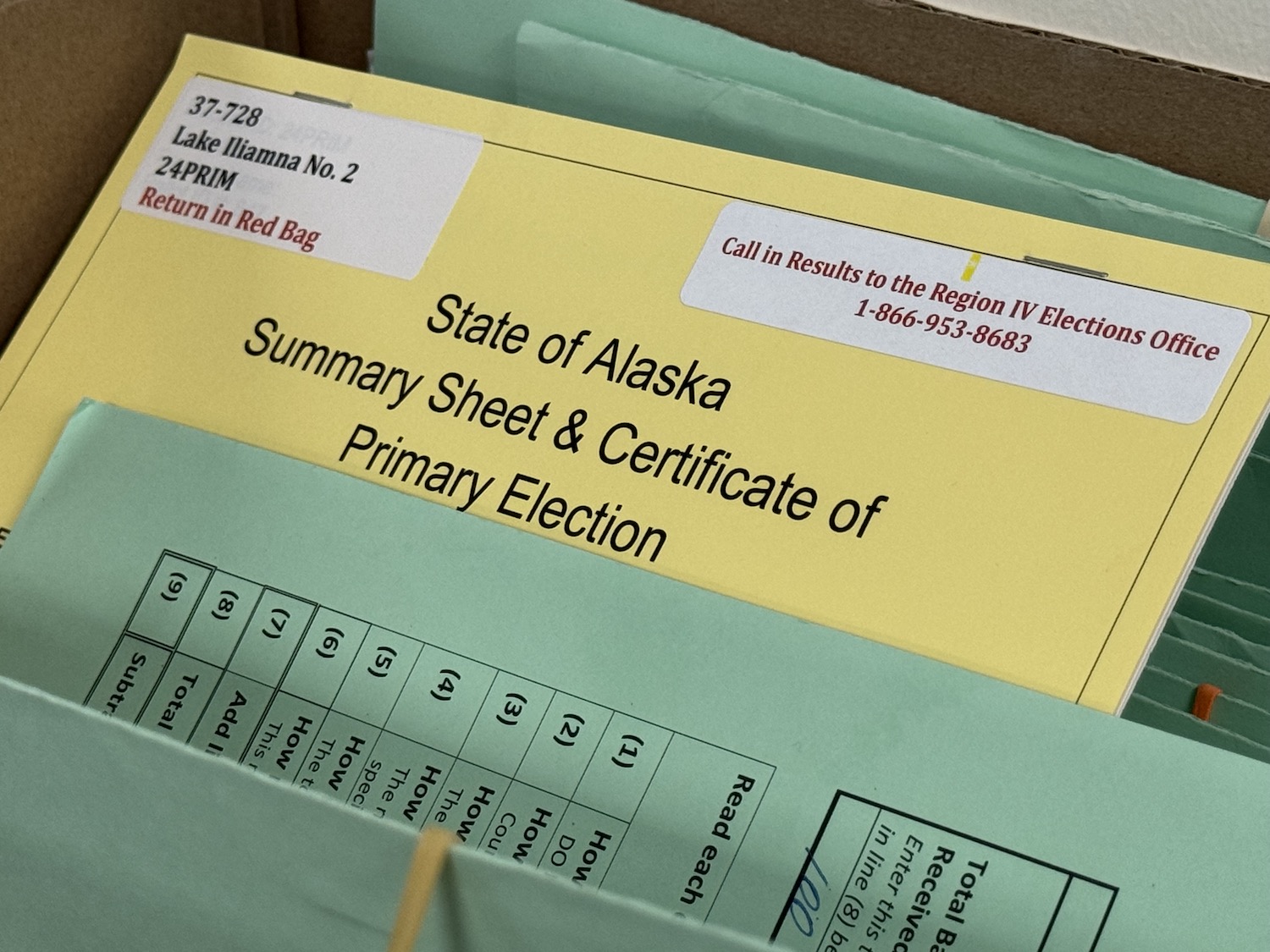
As written, this article focuses on constitutional boundaries and common administrative approaches. If you are trying to answer the narrower question of what Alaska prints right now, the safest source is the Alaska Division of Elections: check the current cycle’s official candidate list and a sample ballot, because those documents reflect the rules actually being applied.
Do ballots mark who the incumbent is?
Many voters assume ballots are supposed to explain a candidate’s biography. Most are not. Whether Alaska prints an “incumbent” designation is a state policy choice, and it varies widely across the country.
When a public figure urges voters to look for an incumbency marker, that is not necessarily a claim about constitutional law. It is usually a claim about ballot design rules and what information Alaska elections officials choose or are authorized to display.
The key legal point is this: if Alaska uses an incumbency designation, it must do it in a viewpoint-neutral, rule-driven way. If it does not use one, Alaska generally is not constitutionally required to start, so long as the overall ballot system is neutral and not unduly burdensome.
When does a same-name run become illegal?
Sharing a name is not fraud. Impersonation conduct can be.
Election fraud and related offenses typically require deceptive acts beyond merely filing as a candidate. Examples that can cross legal lines include:
- False statements in candidate filings (for example, lying under oath about eligibility or required disclosures).
- Forgery or misuse of another person’s identity in paperwork, fundraising, or campaign communications.
- Misleading campaign conduct that is independently unlawful, such as violating disclaimer rules or making provably false factual representations in contexts where a specific state statute validly applies.
It is worth being careful with the popular accusation “they are pretending to be the incumbent.” In many contexts, vague political bragging is protected speech. Legal exposure is more likely when there is a concrete false statement tied to a filing, a regulated communication, or a provable fraud scheme, and even then the First Amendment can limit how far a state can go.
What courts look for in confusion cases
When these disputes reach courts, the fight often becomes less about motives and more about burdens and neutrality.
1) Is the rule neutral and clear?
Rules that require a candidate’s legal name, or require consistency across filing documents, tend to fare better than ad hoc decisions by officials who believe voters might be confused.
2) Does it burden access or choice?
Under modern election-law doctrine, courts often weigh the character and magnitude of the burden against the state’s interests in orderly administration and preventing confusion. A modest requirement to list a middle initial is different from a rule that effectively blocks a candidate from appearing on the ballot.
3) Is the state treating candidates equally?
If two candidates share a name, the state has to be careful that any distinguishing requirement applies evenhandedly. If only one candidate is forced into extra modifiers while the other gets the clean name line, equal-treatment concerns start to surface.
What Alaska voters can do
There is a practical civics answer that does not require anyone to be a lawyer.
- Use the official candidate list from the Alaska Division of Elections, not social media posts.
- Check the sample ballot to see exactly how names and any identifiers will appear.
- Use official voter guides if available, especially where they include candidate statements or links to campaign information.
- If you believe there is actual impersonation or filing fraud, report it to Alaska election authorities with specifics and documents, not just suspicion.
The deeper lesson is constitutional: the ballot is supposed to be a neutral instrument. When we demand that it also become a biography, a warning label, and a lie detector, we push states toward roles that the First Amendment and the Elections Clause make difficult to perform fairly.
FAQ
Can someone change their name to match an incumbent and run?
Name changes can be legal and routine. But if someone changes a name as part of a plan to deceive voters, that can trigger scrutiny under state election laws and general fraud statutes. Whether it is actionable depends on the specific conduct and the specific law.
Is it ballot fraud if two candidates have the same name?
Not by itself. Fraud usually requires deception in filings, identity misuse, or other provable misconduct. A same-name candidacy can be strategic or cynical without automatically being illegal.
Can Alaska add “(Incumbent)” next to the sitting senator?
Potentially, if Alaska law authorizes it and it is applied neutrally. States have flexibility in ballot format, but they must avoid rules that amount to state-sponsored advocacy or unequal treatment.
Can a court remove a same-name candidate from the ballot?
Courts can remove candidates who fail to meet legal requirements or who violate election statutes. But “too confusing” is not always enough, especially in federal races where states cannot add extra qualifications.