
Every generation gets its own version of a familiar question: Who gets to define what the military is, and who gets to belong in it?
This week, a divided federal appeals court in Washington, D.C. stepped into that question and came down, at least partly, against President Donald Trump’s push to remove transgender people from military service. The court said the administration’s policy likely violates the Constitution’s promise of equal protection, and it largely left in place a lower-court order preventing the government from expelling transgender troops who are already serving.
But the decision also carried an important limitation. The panel narrowed the injunction as it relates to people who want to enlist, allowing the administration more room to block transgender recruits while the case continues.
Join the Discussion
The policy: an executive order, then a Pentagon directive
The legal fight traces back to one of the early actions of Trump’s second term. On January 27, 2025, he signed an executive order titled “Prioritizing Military Excellence and Readiness.” The order framed transgender identity as incompatible with military service, arguing that the armed forces had been influenced by what it called “radical gender ideology.”
The order included a blunt formulation from the president: “A man’s assertion that he is a woman, and his requirement that others honor this falsehood, is not consistent with the humility and selflessness required of a service member,” Trump wrote.
In February 2025, the Defense Department issued a 13-page memorandum under Defense Secretary Pete Hegseth that operationalized the order. The memo stated that any service member with “symptoms” of gender dysphoria, or who has undergone hormone therapy or surgery to affirm their gender, would be “disqualified from military service.”
What the appeals court did, and what it would not do
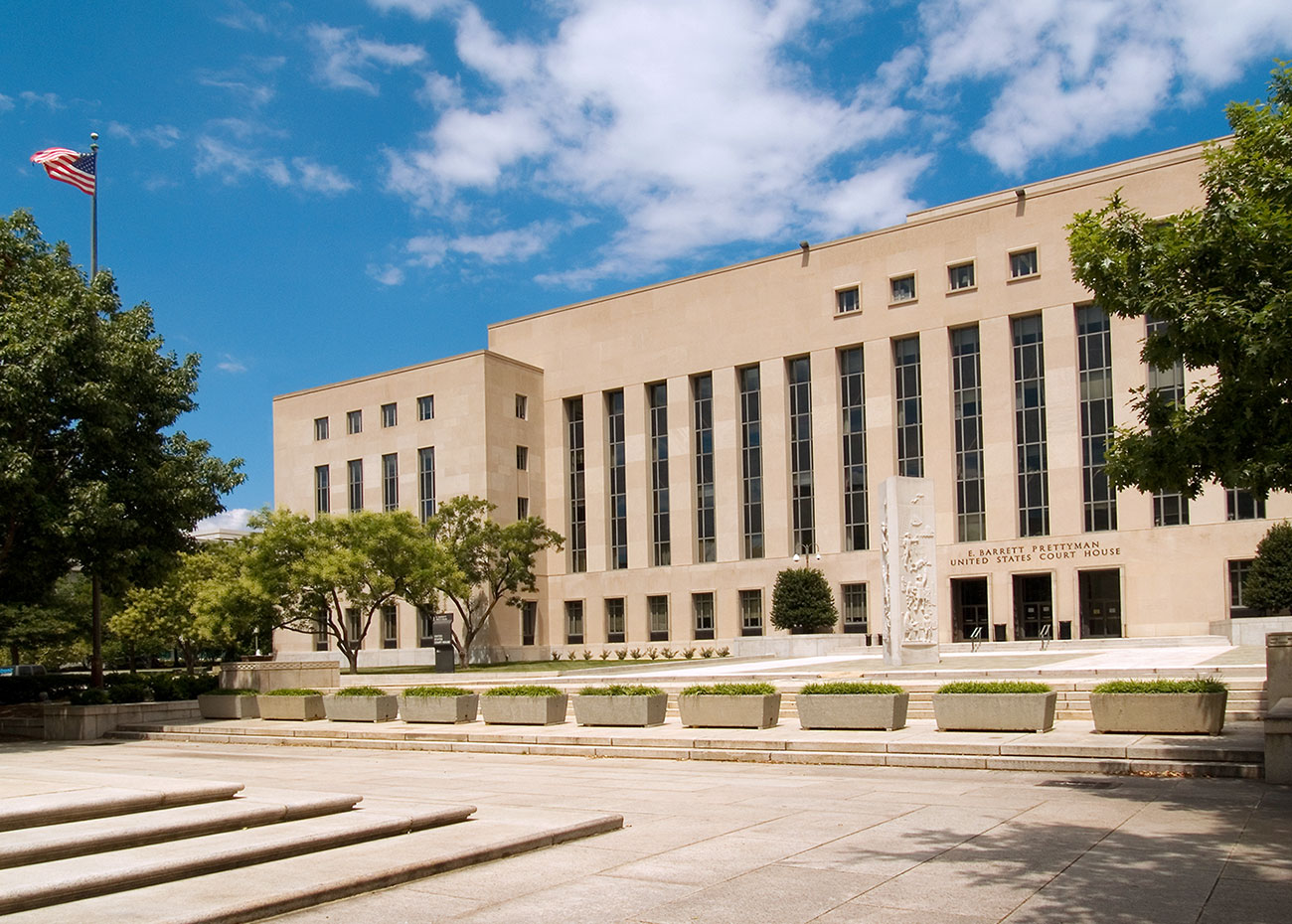
The ruling came from a three-judge panel of the U.S. Court of Appeals for the D.C. Circuit. The panel was fractured, and the split matters because it shows exactly where the constitutional pressure points are.
Judge Robert Wilkins, writing for the controlling opinion, agreed that the policy is likely unconstitutional as applied to those already serving. He concluded it violates the “constitutional right to equal protection of the law.” He described the government’s approach as something more like a targeted punishment than a readiness rule, writing that it “appears to be driven by the bare desire to harm a politically unpopular group: persons who identify as transgender.”
Wilkins also pointed to the president’s own language in the executive order, noting that it painted transgender people as “dishonorable, undisciplined, arrogant, selfish liars.”
Still, Wilkins drew a line. He would not extend the same judicial protection as strongly to those seeking to enlist, reasoning that the harms in that context are different. As a result, the panel’s decision trimmed the lower court’s injunction to allow the administration to continue barring transgender applicants from joining, even while it blocks expulsions of current service members.
The internal split: equal protection versus deference
Judge Judith Rogers agreed with Wilkins on the constitutional problem, but rejected his enlistment carve-out. Her view was straightforward: excluding transgender recruits is not a small, abstract harm. It directly costs the military “qualified personnel who have proven their ability to serve,” a point she emphasized by citing testimony in the record.
Judge Justin Walker dissented, arguing the court was stepping beyond its proper role. In his view, the Constitution gives the political branches, not judges, the core authority to decide who can be in the armed forces. “We have neither the expertise nor the authority to decide whether the military can exclude the plaintiffs from its ranks,” Walker wrote. “The Constitution assigns that authority to Congress and the Commander in Chief.”
This is the tension that never goes away in constitutional law. Equal protection asks whether the government is drawing lines based on stigma or stereotype. Military deference asks whether courts should keep their hands off decisions tied to national defense. The harder question is what happens when both claims show up in the same case.
The record that haunted the government’s argument
Courts do not decide equal protection cases in a vacuum. They look at what the government did, what it said, and what the evidence shows.
Wilkins highlighted a detail that undercuts the administration’s posture as a neutral defender of readiness: the plaintiffs who challenged the policy are not hypothetical. They are service members with a combined 130 years of military service and more than 80 commendations.
That kind of record makes it harder for the government to argue this is about performance rather than identity. Wilkins concluded the administration had “forfeited any argument” that “retaining these service members will harm national security.”
In plain English, the court is saying: If you claim you are protecting readiness, you still have to show your work.
Why this is a separation-of-powers fight disguised as a personnel policy
The public debate tends to center on the policy’s moral stakes, and those are real. But the constitutional stakes are institutional.
- The presidency claims broad authority as Commander in Chief to shape the armed forces.
- Congress holds enumerated powers to raise, support, regulate, and fund the military.
- The courts are tasked with enforcing constitutional limits, including equal protection principles that restrain the federal government through the Fifth Amendment’s Due Process Clause.
Walker’s dissent essentially elevates institutional competence and democratic accountability: let elected branches decide. Wilkins’ approach puts constitutional equality at the center: even the military cannot be used as a vehicle for class-based punishment.
For civics students, this is the key lesson. The separation of powers is not a diagram. It is a tug-of-war that shows up when the government is most tempted to treat rights as optional.
What happens next: the Supreme Court is already in the story
This decision is not the last word. The appeals court has stayed Judge Ana Reyes’ preliminary injunction while litigation continues, which means the practical, immediate effects are limited.
The Supreme Court has also already intervened in a related posture. Last year, it halted an injunction against the administration’s anti-transgender policy in United States v. Shilling.
Hegseth signaled where the administration wants this to end. In a brief social media post, he wrote: “See you at SCOTUS.”
Democratic officials and LGBTQ+ advocates, meanwhile, framed the ruling as a rebuke of discrimination. Representative John Larson of Connecticut said, “No one who is qualified and answers the call to serve should be denied that opportunity because of who they are,” adding, “Trump’s trans military ban is discrimination — plain and simple. We’ll keep fighting these attacks on our troops and all transgender Americans.”
The question the Constitution forces us to ask
The Constitution does not promise that every case will be easy. It promises that power will be answerable.
So here is the uncomfortable question this decision puts on the table: When a president uses the language of honor and readiness to single out a politically vulnerable group, is that military judgment, or is it a constitutional injury?
The D.C. Circuit’s split is a snapshot of our current moment. One side sees discrimination dressed up as policy. Another sees judges trespassing into war powers. And somewhere between them is the living fact of service members who have already worn the uniform, done the job, earned the commendations, and are now being told that the country they served does not recognize them as fit to serve.