
A “criminal referral” sounds like a verdict. It isn’t. It is closer to a knock on the government’s door that says: you should look at this.
That distinction matters, especially when the person named is a former federal prosecutor. Prosecutors are representatives of the United States, and the legitimacy of the criminal system depends on the public believing the government plays by its own rules.
In the current news cycle, a criminal investigation referral sent to the Justice Department asks federal authorities to look into whether former federal prosecutor Jina Choi misled federal agents about her role in a federal investigation involving IRL, a social-media startup co-founded by Abraham Shafi. Choi has not been charged with any crime or disciplined for professional misconduct in connection with the Shafi prosecution.
Join the Discussion
What this referral is
This referral was sent on Tuesday by a lawyer Shafi retained separately from his defense. It asks the Justice Department to investigate whether Choi made false statements to FBI agents during an interview about her role in the IRL investigation.
The Justice Department generally has no obligation to respond to referrals like this.
Why it stands out
Cully Stimson, acting director of the Heritage Foundation’s Legal Policy Center and a former federal prosecutor, said that while it is common for defense teams to attack prosecutors, resorting to a criminal investigation referral is rare.
The referral also raises a familiar but high-stakes question inside prosecutors’ offices: if a lawyer was supposed to be screened from a matter, did that screen hold.
Choi’s role and the screening dispute
Choi joined the U.S. Attorney’s Office for the Northern District of California in late 2023. Shortly after that, Biden-appointed U.S. Attorney Ismail Ramsey tapped her to lead its Corporate and Securities Fraud Section, which handles major corporate and securities cases across the Bay Area, including Silicon Valley.
Before she joined the office, Choi had represented IRL as outside counsel, according to court filings. The federal investigation into IRL predated Choi’s arrival at the U.S. Attorney’s Office. Prosecutors have said she was screened, or walled off, from the IRL matter because of her prior representation of the company.
Shafi’s lawyer now alleges that internal communications and an FBI interview report show Choi remained involved in the IRL investigation after joining the office, despite that screen.
The FBI interview and the false-statement claim
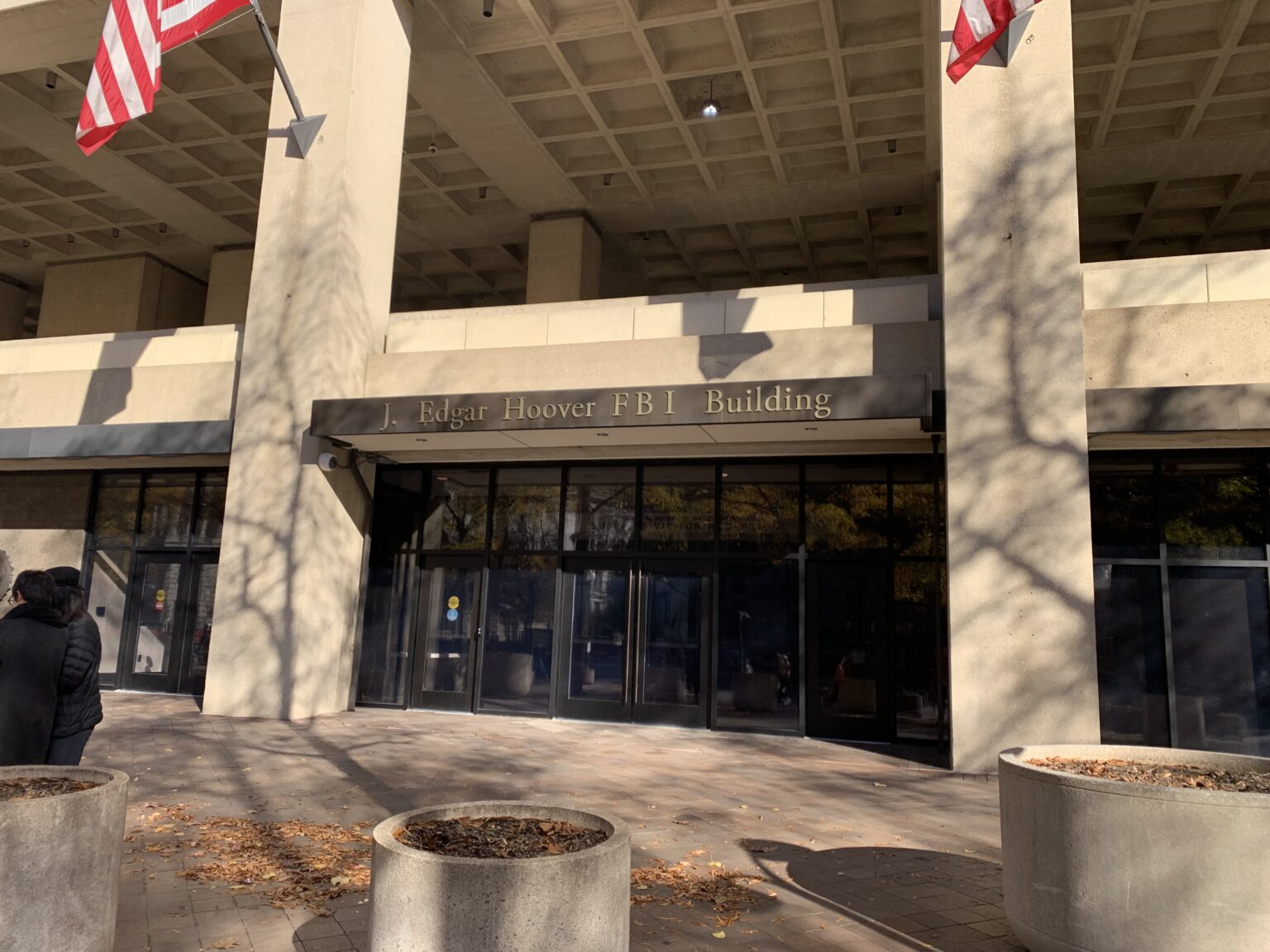
The FBI, which was investigating the Shafi case, interviewed Choi in July and questioned her about her role in the IRL investigation, according to the referral. Choi allegedly told agents that she did “not have any kind of role in the investigation.”
Shafi’s lawyer also claims that at one point in the FBI interview, Choi said she was not aware “who was assigned to the case team.”
What the defense says it has
Shafi’s defense claims to have obtained internal emails sent by Choi as well as FBI interview memoranda recounting a conversation she had with federal agents from the prosecution. Shafi’s lawyer argues the documents contradict Choi’s account to agents.
An internal message purportedly obtained by the defense quotes her as saying, “I talked to [her predecessor] and I wanted to see if it would be ok to add [him] to the IRL team to help move it along.”
In other instances, documents obtained by the defense allegedly show that she inquired about the name of the FBI agent working on the IRL case and that she sent press coverage of the case against Shafi to other prosecutors.
According to the criminal investigation referral, Choi “admitted keeping a written case tracker on which ‘the SHAFI investigation was listed.’” The defense claims the U.S. Attorney’s Office refused to turn over the case tracker by describing it as a “privileged and internal work product.”
While Choi’s communications are quoted or described in public court filings, the government filed the underlying email exhibits under seal or as sealed exhibit slipsheets. As a result, the public cannot independently inspect the original documents or assess their full context.
IRL and the underlying criminal case
IRL was built around organizing and connecting people through events. IRL shut down in 2023 after a board-directed investigation concluded that 95% of its users were likely bots, a finding Shafi disputed. Shafi was later indicted in 2025 on federal fraud and obstruction charges.
Shafi was charged with wire fraud, securities fraud and obstruction a few months after Choi left the U.S. Attorney’s Office. The charges stem from allegations that he misled investors by misrepresenting user growth on his platform. Prosecutors allege that he used paid advertising to attract people to IRL, then passed off the resulting growth as organic while raising about $170 million from investors.
He also stands accused of misusing investors’ funds for clothing, home furnishings, travel, hotels and wedding-related costs.
Conflict claims and what a judge has not decided
The tech founder’s defense argues that Choi’s prior representation of IRL created a conflict of interest and that her alleged false statements to federal agents, coupled with that background, taint the charges against Shafi.
During the time Choi worked for IRL as outside counsel, Shafi’s defense alleged in its motion to dismiss that she attempted to get federal authorities to target Shafi to shield other stakeholders at the firm. The government denied this characterization, acknowledging that she advocated that the firm itself not be targeted, but disputing that she wanted the government to go after Shafi.
As of publishing, no ruling has been made finding that Choi operated under a conflict of interest that warrants dismissal.
What “spillage” could mean
Stimson said the defense allegations are serious if true because they could create “spillage.”
“Here, the defense's allegations are troubling if true, because if their allegations end up being true, there was spillage,” Stimson said. “And that would mean some other members of that office are therefore conflicted, and it could result in the entire office being conflicted if a judge found that the taint was so bad that it permeated the whole office.”
Stimson also said that, in his experience, individual U.S. Attorneys’ Offices generally operate with significant independence on casework, cautioning against attributing Choi’s alleged conduct to the Biden administration more broadly.
What not to assume
- A referral is not a charge. As of publishing, Choi has not been charged with any crime in connection with these allegations.
- A sealed record is a partial record. The underlying exhibits were filed under seal or as sealed exhibit slipsheets, limiting what the public can evaluate.
- No conflict ruling is still a fact. As of publishing, there has been no ruling finding that Choi operated under a conflict of interest that warrants dismissal.
- DOJ does not have to respond. The Justice Department generally has no obligation to respond to referrals like this.
The core civics takeaway is simple: a referral is an accusation delivered in a formal way, not an outcome. What happens next depends on what prosecutors and judges do with the record, and what that record ultimately shows.