
The Supreme Court declined to take up a case that presents a question many Americans assume has a simple answer. If a police officer’s actions during a stop are allegedly driven by a person’s race, does that turn the encounter into an unconstitutional seizure?
That question was presented in Weaver v. United States, a federal criminal case arising from a Syracuse Police Department traffic stop and a split, en banc decision in the U.S. Court of Appeals for the Second Circuit. Weaver asked the Supreme Court to review the case. The Supreme Court denied certiorari on May 16, 2022, in No. 21-825, leaving the Second Circuit’s judgment in place.
Why the case mattered: Weaver framed the issue as whether alleged racial profiling can be considered as part of Fourth Amendment reasonableness in a suppression motion, even when police can point to an objective traffic basis for the stop. In practical terms, Weaver sought to suppress the drugs found during the frisk.
Weaver sits at the intersection of two bodies of law that often talk past each other. The Fourth Amendment typically asks objective questions about justification and the reasonableness of what officers do during a seizure. Claims about race-based policing often fit more naturally under equal protection doctrine, which demands proof of discriminatory intent and effect.
Join the Discussion
What a cert denial means
When the Court denies cert, it declines to grant certiorari, the process by which it agrees to review a lower court decision. Each term, the Court receives thousands of petitions and grants review in only a small share.
Three takeaways
- No merits decision. A cert denial is not approval of the lower court’s reasoning. It is simply a refusal to review it.
- The judgment stands. The winner below stays the winner. A precedential opinion remains controlling within that circuit.
- The issue can return. The Court may wait for a clearer circuit split, a cleaner record, or a better vehicle for the question presented.
What happened in Weaver
Weaver v. United States grew out of a city traffic stop by the Syracuse Police Department, with Weaver riding as a passenger.
The stop. Officers stopped the car because the driver failed to signal a turn. That objective traffic violation supplied the legal basis to initiate the stop under ordinary Fourth Amendment doctrine.
What came next. The litigation focused on what officers did during the stop and why. The record in the Second Circuit centered on Weaver being ordered out of the car after officers testified they observed unusual movements from the passenger seat: Weaver was slouching, shifting, and using both hands to push down on his pelvic area.
The search and the drugs. The key search was a Terry frisk of Weaver’s person. The frisk led to the discovery of cocaine and cocaine base concealed in Weaver’s pants, forming the basis for Weaver’s suppression motion and the federal prosecution.
What the Second Circuit did. In an en banc decision, the Second Circuit affirmed the denial of suppression by a 9-6 vote. The decision was issued on August 16, 2021, and authored by Judge William Nardini. The majority analyzed the Fourth Amendment through the Supreme Court’s familiar objective lens. It treated allegations of racial targeting as serious, but concluded that an objectively supported stop and seizure do not become an unreasonable Fourth Amendment seizure solely because the defendant alleges a racially discriminatory motive.
The dissents argued that constitutional doctrine should not treat alleged racial targeting as irrelevant to Fourth Amendment reasonableness when it is bound up with how the seizure was carried out. In their view, the officer’s claimed safety rationale and the decision to frisk could not be cleanly separated from allegations of racial profiling.

Stops and the Fourth Amendment
The Fourth Amendment bars unreasonable searches and seizures. A traffic stop counts as a seizure because the occupants are not free to leave, and the Supreme Court has said the same is true for passengers. See Brendlin v. California (2007).
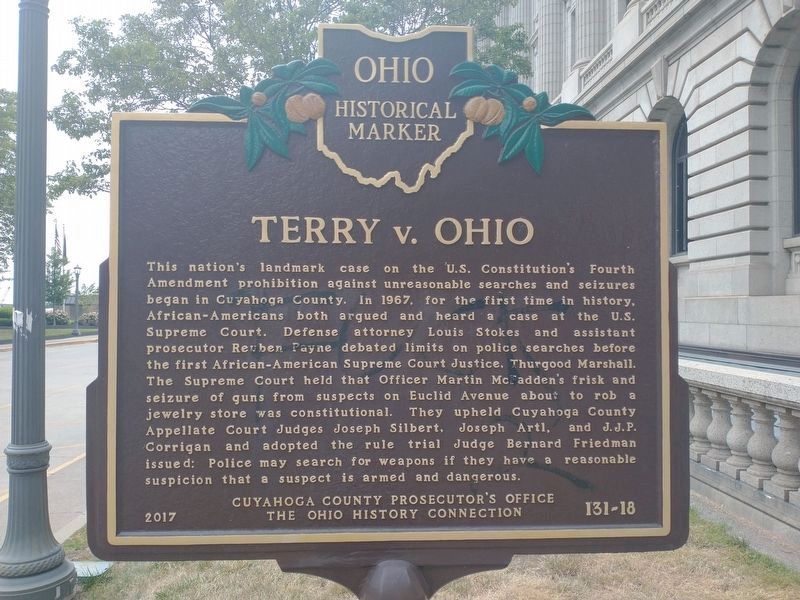
Modern stop doctrine grows out of Terry v. Ohio (1968) and its application to vehicles. Stops must be justified at the start and reasonably related in scope to the reason for the stop. Officers may also take certain safety steps during a stop, but the Fourth Amendment still asks whether what happened was reasonable.
Three legal tracks
It helps to separate three related but distinct claims that show up in traffic stop litigation:
- Frisk and officer safety (Fourth Amendment): if officers frisk a person during a stop, did they have a lawful basis under Terry to believe the person was armed and dangerous?
- Pretext at inception (Fourth Amendment under Whren): if there was an objective traffic basis, an officer’s subjective motive usually does not invalidate the stop.
- Selective enforcement (Equal Protection): was the person targeted or treated differently because of race, and what proof is required to establish that?
Two core questions
1) Was the stop lawful at the start?
If an officer has an objective legal basis, such as observing a traffic violation, the stop is generally lawful at inception under current Fourth Amendment doctrine.
The Supreme Court has held that an officer’s subjective motive usually does not invalidate a stop that is objectively supported by a traffic violation. See Whren v. United States (1996). Whren also points readers toward equal protection as the more direct constitutional home for claims of racially selective enforcement.
2) Was the frisk or other search lawful?
Even when a stop is valid, the next steps still must be justified. Under Terry, a protective frisk is permitted only when officers can point to specific facts supporting a reasonable suspicion that the person is armed and dangerous.
Weaver put that second question front and center: whether the frisk was supported by articulable safety facts on the totality of the circumstances, and whether allegations that race shaped the officers’ perceptions should affect the Fourth Amendment reasonableness analysis at the suppression stage.
Where race fits
There is a widespread intuition that racial targeting should automatically make a stop unconstitutional. Constitutional doctrine often separates the analysis into different tracks, and those tracks come with different tests and remedies.
Fourth Amendment
Fourth Amendment analysis tends to focus on objective facts. Was there reasonable suspicion or probable cause? Was the search justified? Were the police actions reasonable in light of the stop’s mission and officer safety?
This is also where a key nuance belongs. Weaver is commonly understood not as a claim that race can never matter to Fourth Amendment analysis, but as a rejection of race as a stand-alone Fourth Amendment reason to suppress evidence where the government can establish objective justification under existing stop-and-frisk doctrine. Fourth Amendment arguments about the frisk itself still turn on whether the specific, articulable facts actually support a reasonable suspicion that the person was armed and dangerous.
Equal Protection
Claims of race-based policing frequently travel under equal protection principles. For state and local actors, that framework is typically described through the Fourteenth Amendment’s Equal Protection Clause. In a federal criminal case, equal protection constraints enter through the Fifth Amendment’s Due Process Clause, which the Supreme Court has long read to include equal protection requirements for the federal government.
Equal protection challenges to enforcement typically require proof of discriminatory intent and discriminatory effect. In practice, that commonly means evidence that similarly situated people of a different race were not stopped or searched, along with proof of intent. Depending on the claim and the available record, statistical evidence may play a role, but courts often look for comparators as the clearest way to show effect.
Courts also disagree about how demanding the threshold should be before a defendant gets discovery on a selective enforcement theory. United States v. Armstrong (1996) is a selective prosecution case with a stringent discovery framework, and courts are not uniform about whether and how that threshold applies to selective enforcement claims involving police stops.
Remedies
These tracks can lead to different outcomes. Fourth Amendment violations commonly trigger suppression of evidence in criminal cases.
Equal protection claims more often appear in civil litigation, commonly under 42 U.S.C. § 1983 against state and local actors. In federal officer settings, the path is different, and remedies are more limited, with Bivens-type claims constrained by modern Supreme Court doctrine.
That remedial mismatch is part of the practical problem defendants point to when arguing that race-based policing should matter more in suppression litigation.
What the Second Circuit said
The Second Circuit’s en banc decision kept the Fourth Amendment inquiry anchored in objectivity. In that framework, an objectively justified traffic stop does not become an unreasonable seizure solely because the person stopped plausibly alleges a racially discriminatory motive. The court treated race-based decisionmaking as a serious constitutional allegation, but one that generally belongs in equal protection analysis rather than as a stand-alone Fourth Amendment trigger for suppression.
That said, Weaver did not erase the Fourth Amendment questions that defendants commonly litigate in stop-and-frisk cases. The core Fourth Amendment dispute on these facts still runs through Terry: whether the officers had sufficient, articulable reasons to frisk a passenger during a traffic stop based on the totality of the circumstances.
Did anything change?
No. A cert denial does not create a new national precedent. It does not overrule existing Supreme Court cases on traffic stops, Terry frisks, reasonable suspicion, or how courts assess police motive under Whren.
What it does mean is that the Second Circuit’s judgment remains in place. Within that circuit, its published en banc decision continues to bind lower courts. Elsewhere, it may be persuasive, especially in courts confronting the same Fourth Amendment and equal protection boundary line.
What this means in practice
Fourth Amendment disputes still tend to turn on objective facts: whether there was a traffic basis for the stop, whether the frisk or other search was supported by the required level of suspicion, and whether the government can justify each step of the encounter under existing doctrine.
- Basis matters. A minor traffic violation can still justify a stop at the start.
- Safety steps matter. Ordering a passenger out and frisking them are not automatic. Courts ask for specific, articulable facts.
- Proof and remedy matter. Allegations of racial targeting may be easier to make than to prove, and the available remedy may depend on whether the claim is treated as Fourth Amendment suppression or equal protection discrimination.
This is practical information, not legal advice. In court, the controlling details are the record, the governing circuit precedent, and how a judge applies Whren, Terry, and related cases to the stop and frisk.
What to watch
If the Supreme Court eventually takes a case like this, it will likely be to answer one or more of these questions:
- Race and the Fourth Amendment. Can race ever convert an otherwise lawful seizure into an unreasonable one, and under what facts?
- A workable standard. How should courts handle claims that require motive inquiries without turning suppression hearings into broad-ranging investigations?
- The right doctrine. When a stop is objectively justified but allegedly discriminatory, what constitutional provision does the work, and what remedies follow?
The bottom line
The Fourth Amendment’s promise is simple: the government cannot seize you unreasonably. Traffic stops are seizures, including for passengers, and what officers do next still must meet constitutional standards.
The hard part is where constitutional law often lives, in the boundary lines. What facts justify a Terry frisk? How much weight should courts give to claimed safety perceptions that may be shaped by bias? And when race is part of the story, does it change the Fourth Amendment analysis, or does it belong primarily to equal protection doctrine?
The Supreme Court does not answer those questions by denying review. But by leaving a lower court ruling in place, it can keep pressure on the doctrine and on the courts that apply it every day.