
You can feel the public assumption in any controversy about a big Washington monument: surely someone just “takes care of it.” Surely there is a checkbook somewhere. Surely a president can just order it fixed.
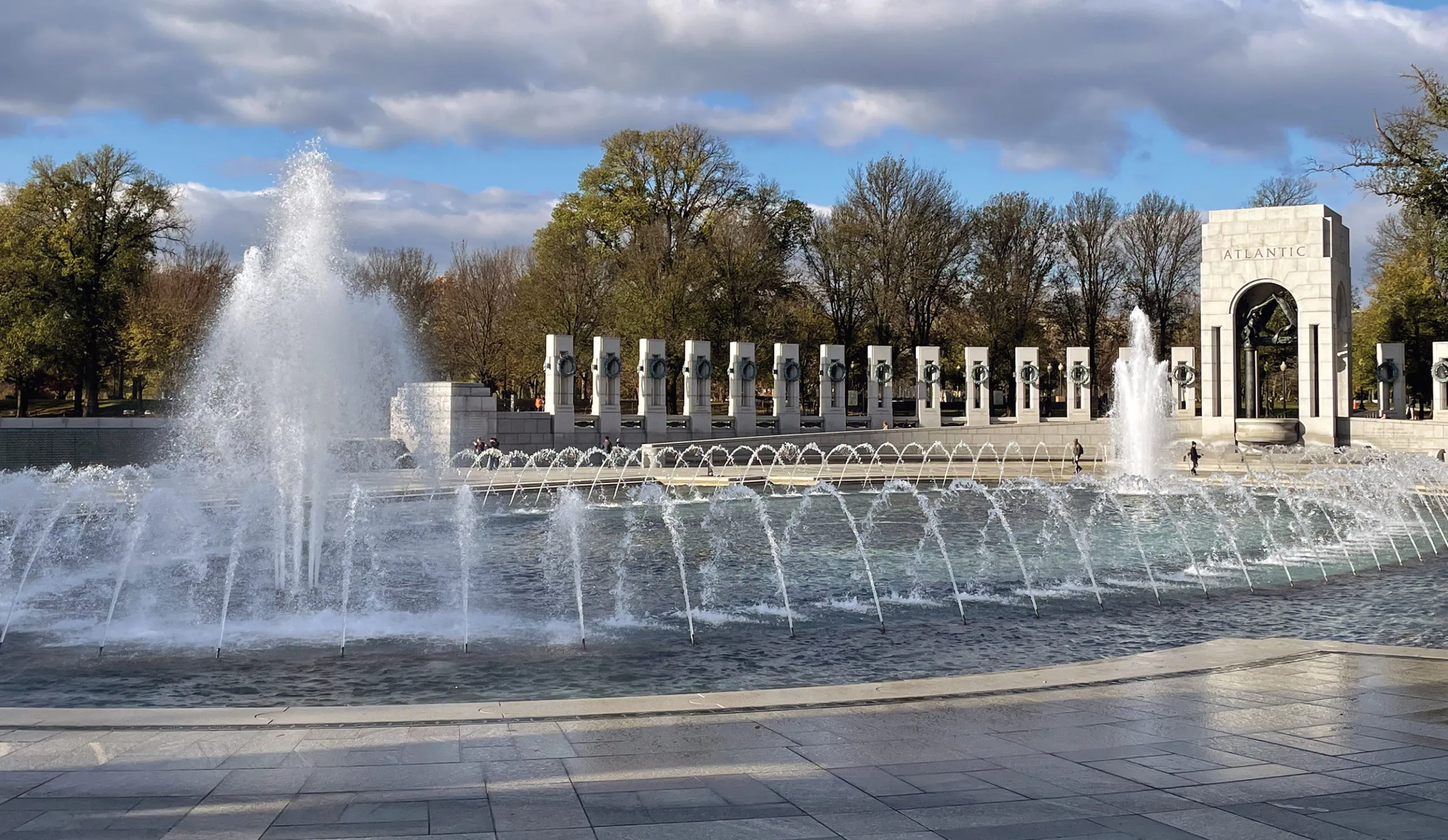
The World War II Memorial on the National Mall sits at the intersection of those instincts and the Constitution’s actual machinery. Federal property stewardship, congressional spending power, and agency law all show up once you move past the surface of the stone and water.
So who pays to fix the WWII Memorial? The short civics answer is: the National Park Service manages it, Congress funds it, and the rules for what counts as “repair” versus “change” can be stricter than people expect.
Join the Discussion
Who runs it
The World War II Memorial is federal property. It is administered by the National Park Service (NPS), an agency within the U.S. Department of the Interior.
In day-to-day practice, the memorial is managed within NPS’s National Mall and Memorial Parks, the park unit responsible for many of the best-known sites on the National Mall. That matters because “maintenance” is not a vague promise. It is an assigned job inside the executive branch.
Interior and NPS have authority to operate, repair, and preserve park assets, including memorial infrastructure like fountains, pumps, filtration systems, electrical controls, drainage, and the public-facing stone and bronze.
If an underground mechanical space is failing, that is still part of the memorial. The fact that most visitors never see it does not make it any less federal property.
What NPS has said
NPS has been publicly candid in National Mall facility planning documents and project submissions about a recurring theme: water features are expensive to keep operational, and the hardest problems are often under the surface. In plain terms, the hidden parts fail first and cost the most to reach.
For the WWII Memorial specifically, NPS has described water intrusion affecting below-grade mechanical areas that support the fountain systems in materials prepared for federal design review. Project packets and meeting materials can shift as designs evolve, so readers who want to verify the details should consult the relevant CFA agenda item and attachments for the World War II Memorial Fountain and Plaza Rehabilitation project and confirm the date, title, and the exact wording used in the “project need” description.
The operational stakes are not mysterious. When water gets into mechanical and electrical spaces, it can accelerate corrosion, shorten equipment life, and turn a maintenance problem into a reliability and safety issue. A fountain can look fine one day and be shut off the next because the systems that make it run are compromised out of sight.
Who pays
For a federal memorial, the money ultimately comes from Congress. The Constitution puts the spending power in legislative hands: “No Money shall be drawn from the Treasury, but in Consequence of Appropriations made by Law.” That is Article I, Section 9, Clause 7, often called the Appropriations Clause.
- The president can direct attention and priorities, but cannot spend funds Congress has not appropriated.
- Interior and NPS can plan and execute projects, but they do so within budgets Congress has enacted.
- Shifting funds has limits. Agencies may have some flexibility within an account, but transfers and larger reprogramming are controlled by statute, appropriations language, and oversight practices. They can require notification and, in some cases, statutory approval requirements.
In practice, repairs at a memorial like this are typically funded in one of two ways:
- Within existing NPS appropriations: NPS can pay for work out of the accounts Congress already provided, such as operations and maintenance and repair and rehabilitation, so long as the project fits the account purpose and meets any thresholds and controls that apply.
- With additional direction or money from Congress: Congress can increase funding broadly, press priorities through oversight and report language, or sometimes provide more specific direction for capital work on high-visibility sites.
A dedicated line item for a single memorial is not always the mechanism. Often, the real constraint is whether NPS has enough room inside its existing accounts to do the work soon, at the scale needed, and without displacing other urgent repairs.
A large fountain renewal also collides with a nationwide deferred maintenance backlog. Even when everyone agrees the WWII Memorial should be kept in top condition, its needs still compete with thousands of other federally owned assets.
There are authorized donation and partnership mechanisms in the parks world, but core infrastructure repair at a signature federal memorial typically relies on federal appropriations and federal contracting. Even when outside money is involved, federal design, procurement, and preservation rules still govern what can be done and how it must be done.
Can a president order it fixed
A president can direct the executive branch, including Interior, about priorities on federal land. That is real authority. The executive branch is hierarchical.
But a directive does not magically create money or waive the rules that govern federal work. If the needed scope is larger than what existing appropriations can cover, the project either waits, shrinks, or depends on Congress for more funding. And even when funds exist, the work still has to comply with procurement, safety, and preservation requirements.
That is why some monument controversies become slow fights. It is not always about unwillingness. Sometimes it is the legal difference between fixing what exists and changing what exists.
Repair vs. change
When people hear “fix the fountains,” they picture straightforward plumbing. And some of it is. Replace corroded wiring. Repair leaking pipes. Update pumps and controls. Stabilize failing drainage. Those are classic maintenance actions.
At the WWII Memorial, a practical dividing line often looks like this:
- Repair: rebuilding or replacing pumps, valves, filters, electrical panels, waterproofing in-kind, and fixing leakage and drainage issues so the fountain system works as designed.
- Change: altering visible stone finishes, adding a new treatment that changes appearance or sheen, changing water effects or lighting in a way visitors experience as a redesign, or adding new interpretive or commemorative elements to the structure.
Coatings are a good example of why “simple” fixes can turn contentious. Preservation professionals tend to ask a few stubborn questions before putting a new treatment on historic stone:
- Reversibility: Can it be removed later without damaging the stone or locking future managers into the same system?
- Breathability: Does it trap moisture, change vapor permeability, or push water into new paths that cause staining or spalling?
- Appearance: Does it change color, reflectivity, or texture in a way that alters the memorial’s character?
Federal memorials are not just big objects. They are legally managed cultural resources.
What laws apply
Several overlapping legal regimes tend to govern work on iconic federal sites. Which ones apply depends on the specifics of the project and, in preservation law, whether the resource is treated as a “historic property” for the purpose of the undertaking and its area of potential effects. On the Mall, that is often a question agencies document rather than assume.
NPS Organic Act and policy
NPS’s mission is conservation and public enjoyment. That mission is implemented through statutes, regulations, and NPS management policies that generally aim to preserve resources “unimpaired” for future generations. Even without a courtroom fight, that standard influences what NPS will approve as appropriate treatment for a memorial’s materials and features.
NHPA Section 106
Many actions on the National Mall implicate federal historic preservation review. Section 106 of the National Historic Preservation Act requires federal agencies to consider effects on historic properties and consult with stakeholders when an “undertaking” may affect them.
Section 106 does not automatically prohibit change. It is a process requirement. But it can slow a timeline, require documentation, and produce modifications to a plan to reduce harm.
NEPA review
Federal actions can also trigger review under the National Environmental Policy Act (NEPA). Routine maintenance sometimes fits within agency categorical exclusions, but whether that is available is action-specific. More significant changes can require written analysis.
Design review bodies
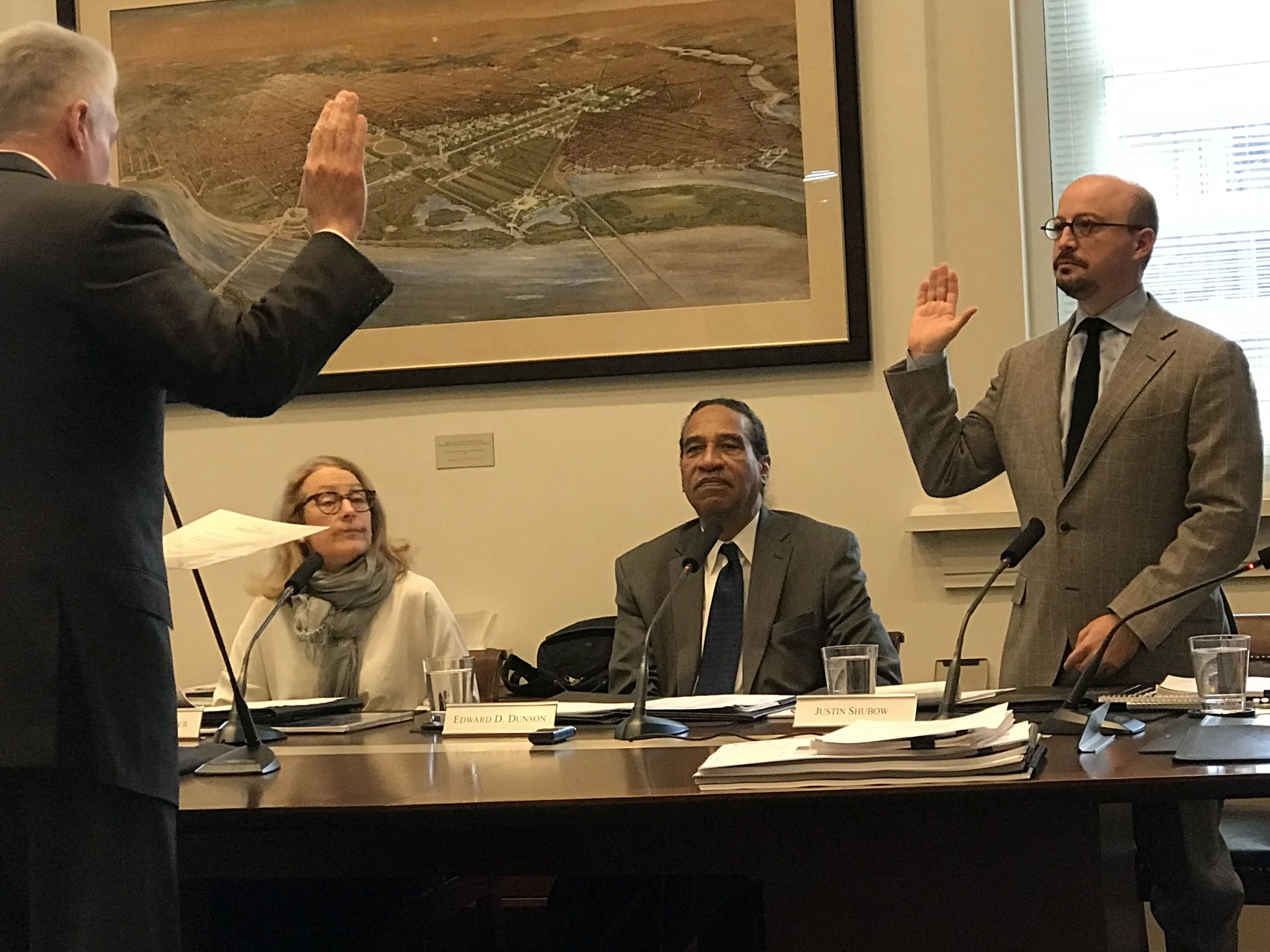
For high-profile work on the National Mall, design and planning review can involve the U.S. Commission of Fine Arts and the National Capital Planning Commission, depending on the nature of the proposal. These bodies are about the design and planning of the national capital, not about writing the check.
Commemorative Works Act (sometimes)
The Commemorative Works Act is best known for governing authorization, placement, and design standards for new commemorative works in the capital area. It is not the everyday rulebook for replacing pumps and pipes.
It can become relevant during a rehabilitation if a proposal would be treated as adding a new commemorative work, relocating elements, or making modifications that the statute treats as covered changes to a commemorative work. In other words, it is a boundary line for commemorative meaning and siting, not a general permit for maintenance.
How to check the record
Readers who want to see what is proposed, and what agencies said they needed, can usually find a paper trail in a few public places:
- CFA: meeting agendas, staff reports, and project submissions for National Mall items.
- NCPC: project filings and action items for capital planning and design review in the region.
- NPS: project pages, planning documents, and park unit updates for National Mall and Memorial Parks.
Those documents are also where you can confirm dates, project titles, and the precise phrasing of statements about conditions like water intrusion, waterproofing needs, or mechanical space deficiencies.
What happens next
Most major federal repairs follow a recognizable sequence, even when the public only sees the last stage.
- Assessment: engineers and preservation staff document the failure and its causes.
- Scope and design: NPS develops a plan that distinguishes immediate stabilization from full rehabilitation.
- Required reviews: preservation consultation and, where applicable, environmental and design reviews (often including CFA and NCPC for Mall projects).
- Funding and contracting: the project is aligned with available appropriations, then bid and awarded under federal procurement rules.
- Construction and commissioning: work is performed, systems are tested, and the feature returns to service.
If you ever wonder why the conversation feels disconnected from the speed of a private repair job, this is why. A memorial is both a physical place and a legal status.
Can NPS move fast
Yes, within limits. If electrical components are exposed to water, if a confined mechanical space is hazardous, or if a system poses risks to visitors or staff, NPS can take operational actions quickly: shutting down a feature, restricting access, and performing emergency stabilization.
What tends to take longer is a full rehabilitation project that involves design decisions, contracting, sourcing materials, and coordinating around a high-visibility public space. Major fountain system renewals in civic spaces are rarely a weekend job, even when everyone agrees they are necessary.
Day to day, that work is usually a chain of responsibility inside the agency: the park unit leadership and facility staff, NPS regional support, Interior oversight, and federal contracting officers. The more complex the project, the longer and more formal that chain becomes.
Why this is constitutional
Modern federal government can seem like it runs on press releases and executive orders. Messaging is real, and executive direction is real. But the durable mechanisms that keep places like the WWII Memorial running are older and less dramatic: property stewardship and appropriations.
Property stewardship is Congress creating an agency (NPS), giving it jurisdiction over land and resources, and expecting it to manage those resources under law. That is the quiet power behind every inspection report and repair schedule.
Appropriations is Congress telling the executive branch how much it may spend and for what purposes. That is why “someone should fix it” eventually turns into a budget question and a legal question, not just a technical one.
Common questions
Is the WWII Memorial run by Washington, DC
No. It is federally administered by the National Park Service.
Can private donations pay for repairs
Donations and partnerships can support parks in some ways, often through authorized nonprofit partners and gift mechanisms. But major infrastructure repair for a federal memorial typically relies on federal funds and federal contracting. Even when outside money is involved, federal rules still govern how work is approved and performed on federal property.
Who decides materials and coatings
NPS decision-making is shaped by preservation standards, safety requirements, engineering realities, and any applicable review processes under preservation and environmental law. Direction from above can set a goal, but technical and legal approvals still matter.
What if Congress does not fund enough
Then agencies triage. They keep systems functioning as best they can, defer noncritical projects, and sometimes run features in reduced modes. Deferred maintenance is not just a buzzword. It is what happens when the checkbook and the physical world drift out of sync.
Bottom line
The World War II Memorial is not maintained by tradition alone. It is maintained through federal property law, agency authority, and money appropriated by Congress. Presidential direction can change attention and priorities. It cannot bypass constitutional spending rules or the legal guardrails that exist to keep national memorials from being casually altered in the name of “fixing” them.
In a republic, even a fountain has separation of powers built into it.