
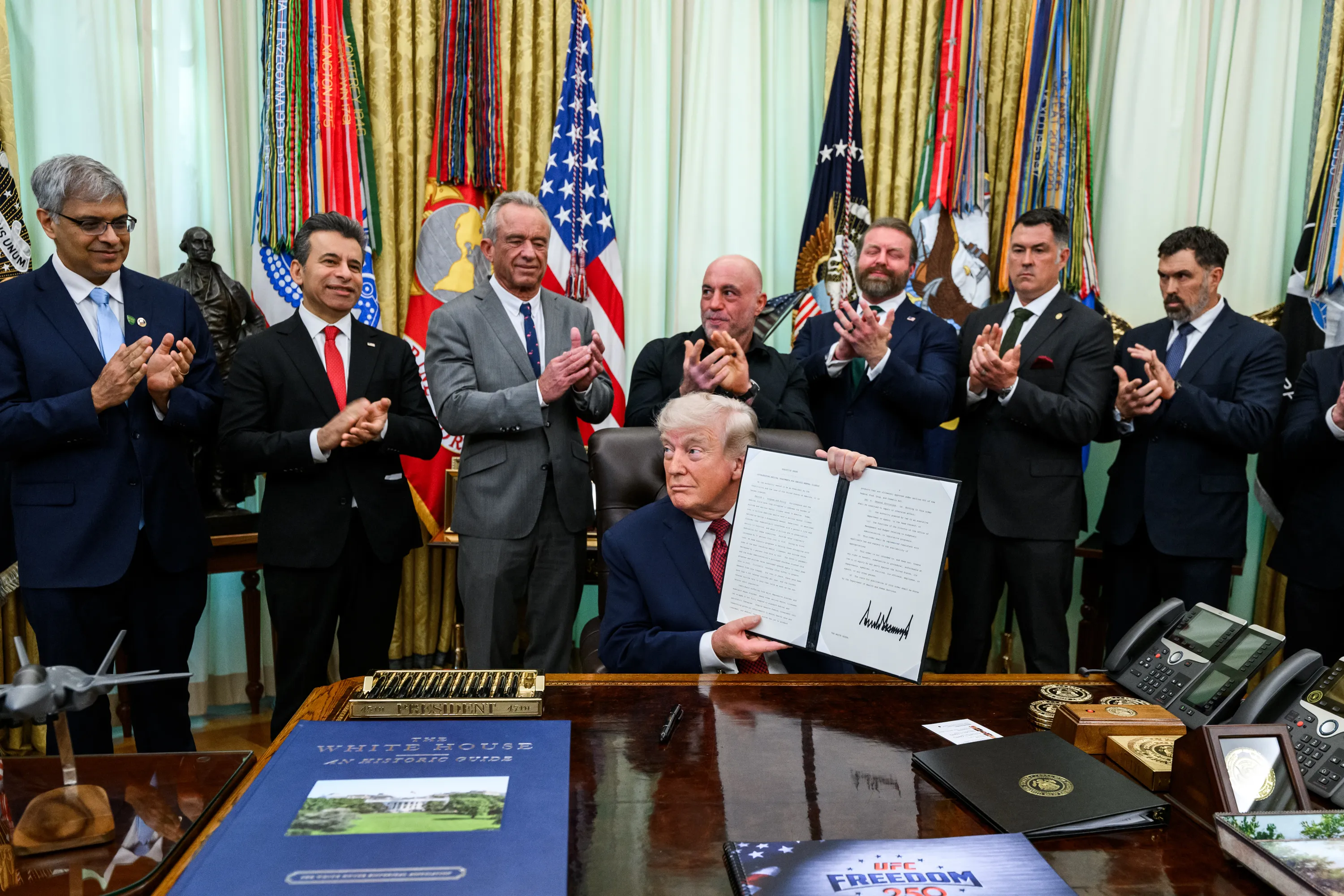
A president can do many things with a pen. The President can direct agencies to revisit grants, to rewrite guidance, to change how the executive branch purchases expertise, and to prompt agencies to consider whether suspension or debarment proceedings are warranted against entities that do business with the federal government.
What the President cannot constitutionally do is reach into an Article III courtroom and tell a federal judge what science is allowed to exist inside the record.
That is the constitutional tension behind recent reporting about an unverified draft presidential directive. The draft has been described as accusing the National Academy of Sciences and the broader National Academies of Sciences, Engineering, and Medicine of producing “fraudulent, biased, and misleading” climate-related materials, and as urging federal suspension and debarment officials to review the organization’s conduct. Neither the directive nor its precise language has been published as a final, official order.
The immediate hook is climate litigation. The lasting civics question is simpler: who controls what courts can consider as evidence, and how far can the executive branch go when it dislikes the scientific materials judges and litigants have cited?
Join the Discussion
What NAS materials are
The National Academy of Sciences (NAS) is part of the National Academies of Sciences, Engineering, and Medicine (NASEM). Together they are commonly called the National Academies. They are a congressionally chartered nonprofit that has long produced reports and reference materials used by federal agencies, researchers, and courts.
Two categories matter in this debate:
- Court-facing references, especially the National Academies’ Reference Manual on Scientific Evidence, which judges and lawyers use as a general guide to scientific methods and concepts in litigation.
- Substantive climate reports that synthesize the state of climate science. These are not “court manuals,” but they can show up in litigation through expert reports, briefing, and citations in judicial opinions.
These materials are not statutes. They are not binding regulations. And they are not “law” in the constitutional sense. They function more like a map: a way for judges and lawyers to orient themselves in complex domains like epidemiology, toxicology, statistics, or climate modeling when those subjects appear in a case.
How they show up in court
National Academies materials typically appear in federal cases in a few concrete ways:
- Cited in briefing as background support for why a methodology is mainstream or how a concept is defined.
- Relied on by experts as part of forming opinions, explaining methods, or defending assumptions.
- Referenced in opinions when a court explains, at a high level, what kinds of scientific reasoning it is evaluating.
One crisp distinction helps: a court may cite the National Academies as background, but an expert may rely on National Academies work as part of the expert’s methodology. Those are different uses, and they are tested in different ways.
Also, a court citing background science in an opinion is not the same thing as admitting that publication into evidence. Evidence is supposed to come through the record the parties make, under the rules of evidence and due process constraints.
A specific case
For a concrete example, consider Juliana v. United States (D. Or. and the Ninth Circuit). The parties submitted extensive expert declarations and reports addressing core climate-science concepts. Like other high-profile climate cases, the point was not that a particular National Academies publication “controlled” the outcome. It was that climate science entered through the adversarial process, and judges decided what to credit and what to exclude under ordinary evidentiary and procedural rules, alongside threshold questions about jurisdiction and justiciability.
Separately, federal courts cite the National Academies’ Reference Manual on Scientific Evidence in expert-testimony disputes as a general reference when applying Rule 702 and Daubert . For example, the Supreme Court itself cited the Manual in Matrixx Initiatives, Inc. v. Siracusano (2011) when discussing statistical significance in the context of scientific proof. If a party leans on the Manual (or any treatise) to bolster an expert’s reliability, the other side can challenge that use through motions, voir dire of the expert, and cross-examination.
The constitutional line
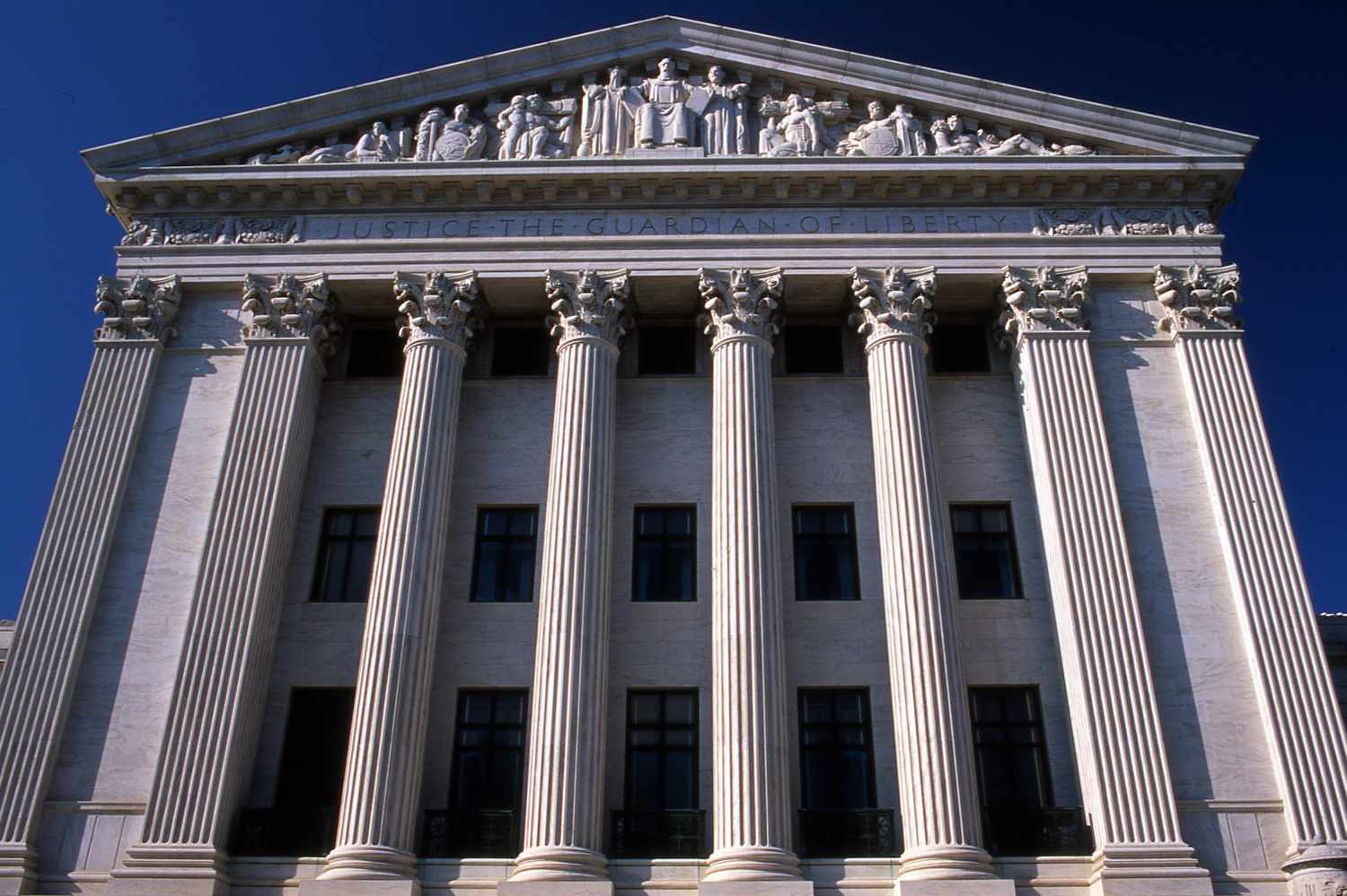
Article III of the Constitution vests the “judicial Power” in the federal courts. That is not just authority over outcomes. It is also independence in how judges perform the judicial function.
The executive branch may litigate, investigate, and advocate. It may take positions about what science is credible. But it cannot directly issue an order that functions as a rule of decision in pending cases or command judges to accept or reject evidence because the President says it is “true” or “fraud.” A commonly cited separation-of-powers warning sign here is United States v. Klein, often invoked for the principle that the political branches cannot dictate case outcomes by prescribing how courts must treat evidence or legal conclusions, even if the case law’s precise boundaries are debated.
In practice, if the government believes a scientific reference is flawed, the ordinary route is to argue it the normal way: through briefs, expert witnesses, cross-examination, and evidentiary motions. Courts may be persuaded. They just cannot be ordered.
Who decides admissibility
Admissibility is mostly evidence law, not constitutional law, but it sits downstream of Article III independence.
1) The Federal Rules of Evidence
Most federal cases use the Federal Rules of Evidence. The Rules were developed under the Rules Enabling Act process, promulgated by the Supreme Court, and took effect subject to congressional review. Congress can also amend evidentiary rules by statute. Scientific proof usually comes in through expert testimony under Rule 702.
(There are exceptions and special contexts, including some administrative proceedings. This article is focused on Article III federal courts.)
2) Daubert gatekeeping
Under Daubert v. Merrell Dow Pharmaceuticals, Inc. (and later cases like Kumho Tire), federal judges act as gatekeepers who screen expert testimony for reliability and relevance. That screening often turns on questions like:
- Is the method testable?
- Has it been peer-reviewed?
- What is the known or potential error rate?
- Is it generally accepted in the relevant scientific community?
Notice what is missing: a role for the White House. The President can influence what agencies fund and publish, and the President can change the executive branch’s litigation posture. But the admissibility call belongs to the judge applying evidence law to the record made by the parties.
3) Judicial notice is narrow
Some readers hear “courts rely on science” and assume judges can simply notice climate conclusions as fact. Rule 201 allows judicial notice only for facts “not subject to reasonable dispute.” Courts are typically cautious about using judicial notice for contested scientific propositions at the core of a live dispute.
4) Learned treatises and background reading
Courts more commonly encounter scientific references as learned treatises used through an expert (Rule 803(18)) or as non-evidentiary background in understanding testimony. Under Rule 803(18), statements from a reliable authority can be read into evidence, but the publication itself is generally not received as an exhibit. If a judge relies on outside reading for a contested proposition that matters to the outcome, parties can argue they were denied a fair chance to respond. The safer route is to require the science to come in through witnesses and exhibits subject to adversarial testing.
NAS as party vs source
One more distinction helps. The National Academies are rarely a party to climate litigation. The typical pattern is that National Academies materials appear as secondary authorities used by parties and experts. That means the real fights are usually about the expert’s methods and the fit to the case, not about whether a particular institution is “allowed.”
What a directive can do
The legally meaningful phrase in the reported directive is not “judges” or “manuals.” It is suspension and debarment. Those officials exist across federal agencies to protect the government from doing business with entities deemed nonresponsible.
Suspension and debarment are not criminal punishment. They are tools the government uses to decide who may receive federal business.
There are also two related regimes worth distinguishing:
- Procurement debarment, primarily under the Federal Acquisition Regulation (FAR Subpart 9.4), which affects contracts and subcontracts.
- Nonprocurement suspension and debarment, which can affect federal assistance and related transactions under government-wide rules (commonly implemented through 2 CFR Part 180 and cross-referenced in agency assistance regulations).
How it typically works
- Authority: grounded in procurement and assistance regulations and agency rules, not a single constitutional clause.
- Triggers: can include fraud convictions, serious performance failures, or other conduct showing a lack of present responsibility and integrity.
- Process: notice and an opportunity to respond are central. Disputes can play out in different forums depending on posture, including agency processes, bid protest style litigation in certain contracting contexts, and district court review in some cases. Judicial review, when available, often resembles APA-style arbitrary-and-capricious review and due process analysis.
If the executive branch concludes that specific National Academies work involved misconduct connected to federal funds, it can review grants and contracts, tighten future terms, or pursue administrative remedies. That is executive power over executive spending.
There are also legal constraints worth acknowledging. Even when the government acts through funding and contracting, it is still bound by due process rules and statutory limits. And any attempt to use contracting tools as a disguised punishment for protected expression or viewpoint invites constitutional and administrative law challenges, especially given the National Academies’ unusual public charter and role in government advising.
What it cannot do
Even if you assume the strongest version of the directive’s accusations, the remedy is not presidential veto power over judicial reasoning or the existing court record.
Here is what actually changes an outcome in federal court:
- Appeal to a higher court arguing legal error.
- Post-judgment relief in narrow circumstances, such as newly discovered evidence or proven fraud on the court.
- New litigation that develops a different evidentiary record.
Federal courts already have tools for screening weak or unreliable science. The constitutional design assigns those tools to the judiciary, with each side given a fair chance to contest the proof.
Can a President block a manual
Not directly. A President cannot issue a binding rule telling Article III judges what sources they may consult when deciding cases. That collides with separation of powers and judicial independence.
There are, however, indirect levers that can affect what shows up in court:
- Agency litigation positions: the Department of Justice can change the arguments the government makes and the experts it sponsors.
- Funding and commissioning: the executive branch can decide what research it funds and what reports it commissions, within statutory limits.
- Regulatory findings: agencies can revise scientific findings used in rulemaking, subject to administrative law constraints. Those findings often become relevant later, especially in APA review of agency action.
- Privilege and classification: in some contexts, executive branch privileges, classification rules, and related doctrines can limit what information is available to litigants. That is not a power to command judicial belief, but it can affect what evidence gets produced.
Those moves can reshape the ecosystem of federal science. They still do not convert into a power to command evidentiary rulings in a specific case.
What Congress can do
Congress has more formal tools than the President here, but it also faces constitutional boundaries.
- Congress can change evidentiary standards prospectively through statutes and through its role in the federal rules framework.
- Congress cannot dictate outcomes in particular cases without triggering separation-of-powers problems.
- Congress can control appropriations, which can affect federal funding for certain research and advisory activities.
Even then, under current law, the admissibility of expert testimony remains a core judicial task: judges apply Rule 702 and the Daubert line to the record in front of them.
Why climate cases matter
Climate litigation often depends on expert-driven questions that are hard for lay factfinders to evaluate without scaffolding: attribution science, damages modeling, risk projections, and causal chains spanning decades. That creates two competing pressures:
- The need for expertise, which pushes courts toward respected scientific syntheses.
- The need for neutrality, which pushes courts to insist on adversarial testing rather than deference to any single institution.
When a President attacks a scientific body whose work has appeared in litigation, the constitutional risk is not that judges will instantly comply. It is that the public starts to imagine courts are supposed to take scientific instructions from the political branches. That is not how the system is built.
Common questions
Can the President stop a judge from admitting climate expert testimony?
No. Judges apply the Federal Rules of Evidence and Daubert. The executive can argue, but it cannot command.
Can the President punish the National Academies for what they publish?
The executive branch can review whether federal money was used in ways that violate grant terms, procurement rules, or fraud laws. Any penalty still has to follow suspension and debarment procedures and is subject to administrative and judicial review when available. There are also constitutional and statutory limits when government pressure looks like viewpoint discrimination rather than a genuine responsibility determination.
Does this undo past climate judgments?
Not by itself. Past judgments change through appeals or narrow post-judgment processes, not through executive statements.
Could courts stop using National Academies references anyway?
Yes, but that would be a judicial choice driven by the record in future cases. If parties show a resource is unreliable, judges can discount it, exclude related testimony, or require stronger support.
The bottom line
The Constitution does not give the President a “delete” button for the science used in federal courts. Article III judges decide cases based on law and evidence, and evidence is filtered through adversarial testing and judicial gatekeeping, not executive preference.
What a President can do is use executive branch control over contracts, grants, and agency positions to reshape what science the federal government funds, commissions, and endorses. That is powerful. It just is not the same thing as controlling what a federal judge may consider once the dispute is inside an independent court.