
A new Attorney General being sworn in tends to trigger the same wave of questions: Who is this person? What power do they actually have? And who, exactly, is the nation’s “top law enforcement officer” supposed to answer to?
The Constitution gives us the outline in broad strokes. The details live in statutes, tradition, and the constant tug of war between independence and accountability. When a new Attorney General takes the oath, the bigger civics lesson is not the biography. It is the architecture of the office itself.
Join the Discussion
The job is not in the Constitution
Start with the surprise: the Constitution never mentions an “Attorney General.” What it does create is the executive branch and a president who must “take Care that the Laws be faithfully executed.” That is Article II’s core promise, and it is the constitutional foundation for the Department of Justice’s work.
Congress created the position and later the modern Department of Justice by statute. The Attorney General is therefore a principal officer in the constitutional sense: a senior executive official who is nominated by the president and confirmed by the Senate under the Appointments Clause.
That distinction matters because when the Constitution is silent, the rules come from a blend of:
- Statutes that create offices and assign duties.
- Executive control because prosecution is an executive function.
- Norms about impartiality that are powerful politically, but not self-enforcing legally.
How the Attorney General is chosen
The Attorney General is appointed through the Constitution’s appointments process, which is one of the cleanest examples of separation of powers working in plain view.
1) The president nominates
Under the Appointments Clause (Article II, Section 2), the president nominates principal officers. The Attorney General fits that category because the job leads an executive department and exercises significant authority on the government’s behalf.
2) The Senate gives advice and consent
The nominee does not become Attorney General until the Senate confirms. That confirmation vote is not a courtesy call. It is the legislature’s constitutional lever on who gets to wield federal prosecutorial power.
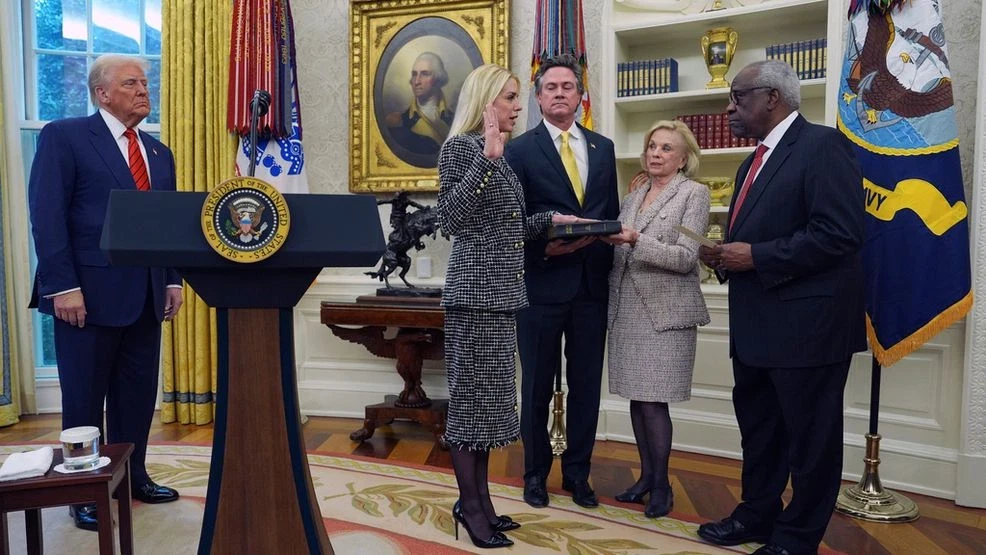
3) The AG is sworn in and takes over DOJ
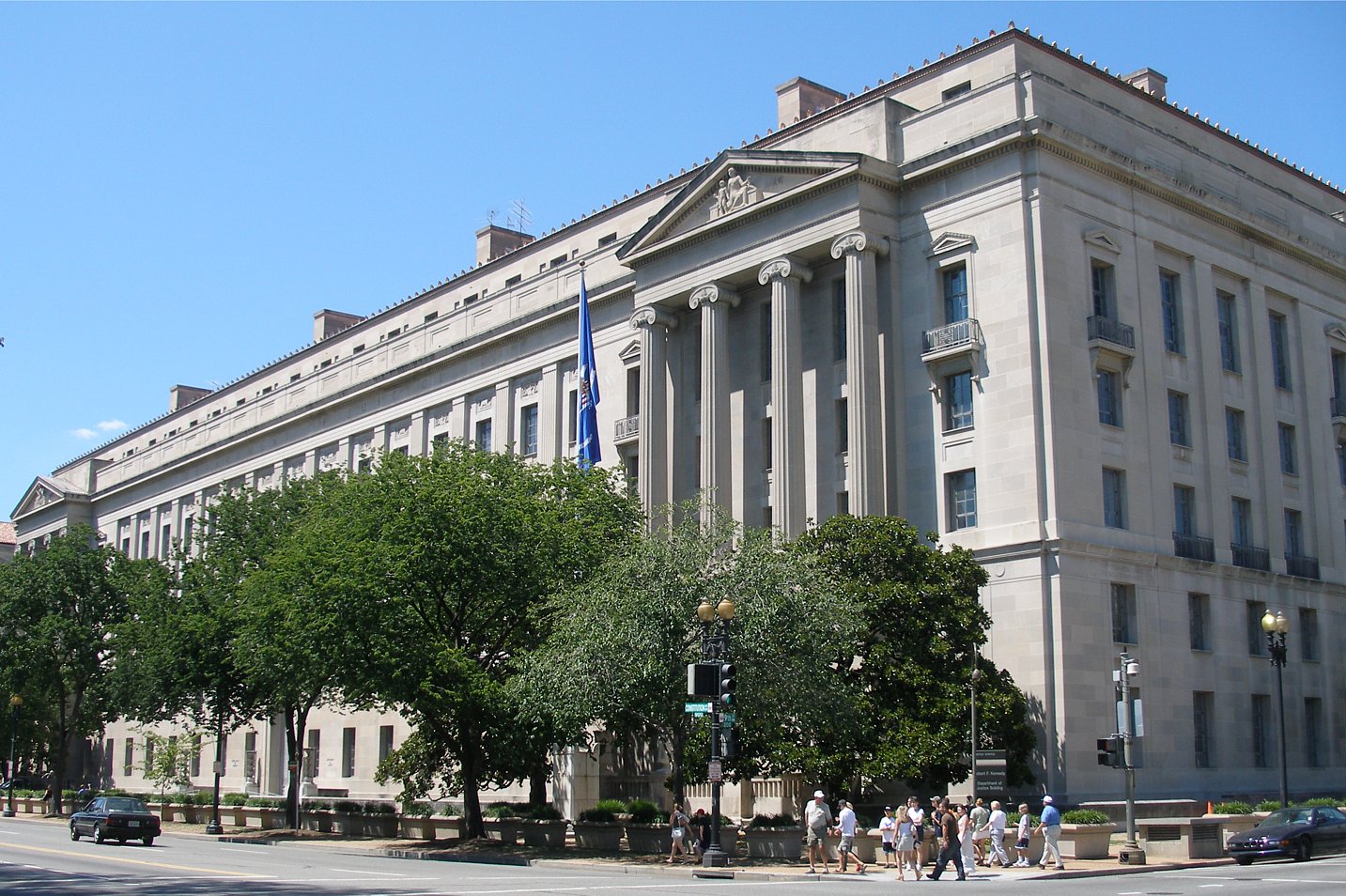
Once confirmed, the Attorney General takes the oath of office and assumes authority over the Department of Justice, including its major components like the FBI, the U.S. Marshals Service, the Bureau of Prisons, and the network of U.S. Attorneys who prosecute federal cases around the country.
What the Attorney General does
The simplest accurate description is this: the Attorney General is the president’s chief legal officer and the head of the Department of Justice. In practice, that means three overlapping roles.
1) Supervises federal law enforcement and prosecutions
The DOJ prosecutes federal crimes, represents the United States in court, and coordinates national law enforcement priorities. The Attorney General sets policy, issues directives, and exercises department-wide supervision.
2) Represents the United States in major litigation
The Solicitor General, who argues the government’s cases at the Supreme Court, is part of DOJ and reports up through the Attorney General. When the federal government takes a position on what the Constitution means, that position is usually shaped within the Attorney General’s department.
3) Advises the president and executive agencies on law
DOJ’s Office of Legal Counsel issues formal legal opinions that guide what the executive branch believes it may do under the Constitution and federal law. Those opinions can shape policy for years, sometimes across administrations, because they become the internal “case law” of the executive branch.
Is the Attorney General independent?
Legally, the Attorney General is part of the executive branch and generally serves at the president’s pleasure. That is the starting point. The president is the constitutional head of the executive branch, and federal prosecution is an executive power.
But there is a second reality Americans expect from DOJ: that prosecutions are not supposed to be political favors or political punishments. That expectation is not trivial. It is one of the cultural guardrails that keeps a republic from sliding into a spoils system where law is just another campaign tool.
What the Constitution guarantees
- Due process for defendants.
- Equal protection constraints on discriminatory enforcement.
- Judicial supervision through courts that can suppress evidence, limit unlawful investigative methods, and dismiss cases for legal insufficiency or constitutional violations.
What the Constitution does not guarantee
- A constitutional requirement that DOJ be “independent” of presidential influence.
- A constitutional ban on the president communicating priorities to an Attorney General.
So “independence” is best understood as a normative commitment, reinforced by political costs, professional ethics, internal DOJ rules, inspector general oversight, and congressional scrutiny. It is real, but it is not a force field.
Recusal and special arrangements
In especially sensitive matters, the practical guardrails often include recusal for conflicts of interest and, in some cases, the use of special counsel regulations or other internal arrangements to distance day-to-day decisions from political leadership. These tools are not magic either, but they are part of how DOJ tries to preserve credibility when the stakes are high.
Checks on the Attorney General
The office is powerful, but not sovereign. The constraints come from multiple directions.
Courts
Judges can limit investigations and prosecutions through constitutional rulings, evidentiary rules, and remedies for misconduct. Prosecutors decide what to charge, but courts decide whether a case can proceed under the law.
Congress
- Appropriations: DOJ cannot operate without funding.
- Oversight: hearings, subpoenas, and inspector general investigations and complaint channels.
- Statutes: Congress defines federal crimes, investigative authorities, and penalties, within constitutional limits.
Internal law and ethics
DOJ is bound by its own regulations and by professional rules governing attorneys, as well as long-standing policies meant to reduce political influence in sensitive matters. These are not always judicially enforceable, but violations can trigger inspector general findings, discipline, and public fallout.
How policy meets practice
The Attorney General can set priorities and issue nationwide guidance, but federal prosecution is also decentralized. U.S. Attorneys and line prosecutors exercise day-to-day discretion, within DOJ policy and the limits of the law. That mix of hierarchy and professional judgment is one reason DOJ can be both responsive to elections and resistant to raw political demands.
Removal and acting leadership
Because the Attorney General is a principal executive officer, the president can generally remove the AG. As a practical matter, removal is typically at-will, although Congress sometimes tests the boundaries of removal rules through statutes and litigation, and the constitutional limits of any such constraints can be contested.
If an Attorney General resigns or is removed, the department does not go dark. Federal law and internal succession rules govern who serves in an acting capacity, and vacancies are often filled temporarily under the Federal Vacancies Reform Act while a new nominee moves through Senate confirmation.
Why the appointment process matters
The Attorney General sits at the meeting point of two American instincts that are often in tension.
- We want democratic accountability. The executive branch should reflect an elected president’s lawful priorities.
- We want even-handed justice. Law enforcement should not become a partisan weapon.
The Constitution’s answer is not “trust the president” or “trust the lawyers.” It is a structural compromise: presidential nomination plus Senate consent, followed by constant oversight from courts, Congress, and the public.
That is why a swearing-in is not just a personnel update. It is the constitutional system putting one of its most consequential levers into a new set of hands.
Quick FAQ
Is the Attorney General in the president’s Cabinet?
Yes. The Attorney General is a Cabinet-level official as a matter of practice and executive organization.
Does the Attorney General control the FBI?
The FBI is a component of DOJ. The FBI Director has day-to-day operational responsibilities, but the bureau sits under the Attorney General’s departmental authority.
Can the Attorney General change federal law?
No. Only Congress can enact federal statutes. The Attorney General can set enforcement priorities, issue legal interpretations within the executive branch, and pursue litigation positions that influence how courts interpret the law.
Is the Attorney General the same thing as a state attorney general?
No. Every state has its own attorney general chosen under state law. The U.S. Attorney General is a federal executive officer leading the national Department of Justice.