
The SAVE Act is one of those bills that sounds simple in headlines and gets complicated the moment you ask a constitutional question: Who gets to set the rules for federal elections?
Right now, the news hook is procedural and political. The bill’s prospects shift when individual senators are absent, and it is being discussed alongside big-ticket must-pass items like defense spending. But the durable issue is structural: Congress has real power over federal election mechanics, states have primary responsibility for running elections, and the Senate has its own internal rule that often decides what “can pass” in practice.
This explainer covers what the SAVE Act (Safeguard American Voter Eligibility Act) is generally understood to target, why the filibuster blocks it even when a simple majority might support it, and what the Constitution says about voter qualifications, election administration, and federal authority.
Join the Discussion
What the SAVE Act does
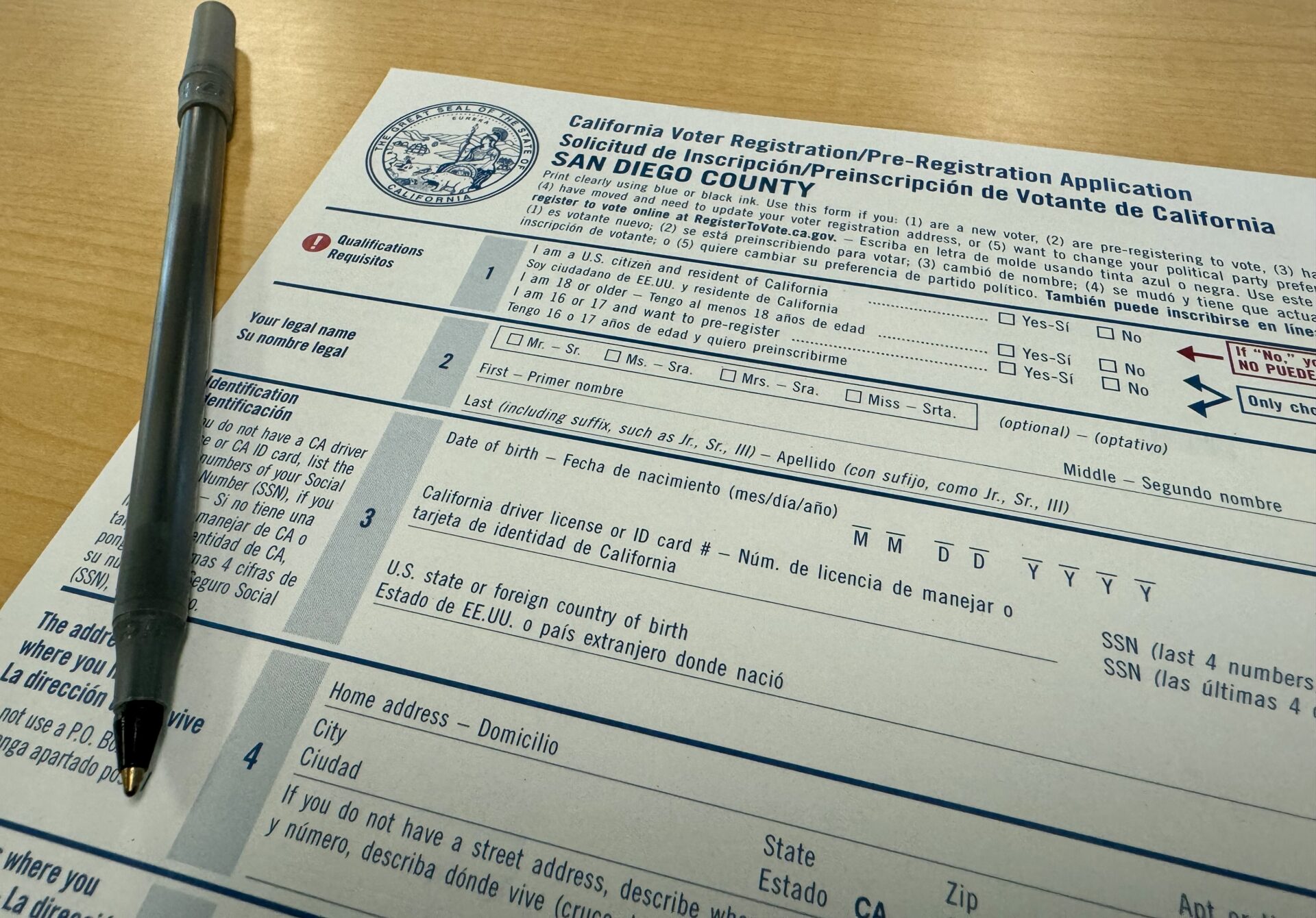
In current public debate, the SAVE Act is framed as a nationwide election-integrity measure focused on proof of citizenship in the voter registration process for federal elections. Depending on the version and the final text, related proposals in this space sometimes also reach beyond registration into list maintenance and how election officials verify eligibility.
Because the SAVE Act label has been used across multiple Congresses and bill text can change through amendments and substitute language, it helps to think in terms of policy targets that tend to appear in proposals like this, and then verify each detail against the specific bill text being debated:
- Proof of citizenship for voter registration for federal elections, usually by requiring documentary evidence (often listed forms include items such as a U.S. passport, a birth certificate, or naturalization documentation).
- Registration verification and list maintenance rules , meaning new duties for election officials to check eligibility information and maintain registration lists under federal standards.
- How the rule is implemented in practice, such as whether the proof must be presented when someone registers in person, by mail, or using a federal registration form, and whether voters can “cure” missing documentation within a set window.
- Enforcement mechanisms, such as conditions on federal election funding, private rights of action, or express federal preemption of conflicting state procedures.
It helps to keep one distinction in mind as you read claims about what the bill “does”: some election rules are about registration (getting on the rolls), others are about casting a ballot (what happens at the polling place or in absentee voting), and the legal analysis can look different depending on which step is regulated.
The key constitutional point is not whether any one of these ideas is “good” or “bad.” It is that each one presses on the same line: states run elections, but Congress can regulate the manner of federal elections.
Can Congress require voter ID?
Sometimes, and mainly for federal elections. The Constitution splits election authority into multiple compartments, and it also treats presidential elections differently than congressional ones.
The Elections Clause
Article I, Section 4 contains the Elections Clause. In part, it provides:
“The Times, Places and Manner of holding Elections for Senators and Representatives, shall be prescribed in each State by the Legislature thereof; but the Congress may at any time by Law make or alter such Regulations …”
That is the Constitution’s clearest grant of federal election-rule power. It means states set the default rules for congressional elections, but Congress can override or standardize many procedural mechanics for federal congressional elections.
That is the best constitutional hook for a federal voter ID or proof-of-citizenship regime tied to House and Senate contests, because ID and documentation rules can function as part of the manner of holding an election.
Presidential elections are different
The Elections Clause text is about “Senators and Representatives.” Presidential elections run through a different structure, centered on state control over appointing electors under Article II’s Electors Clause, plus Congress’s role in counting electoral votes and enforcing constitutional amendments. Congress still has significant power to regulate aspects of presidential elections through federal statutes and constitutional enforcement powers, but it is not the same textual hook as Article I, Section 4.
Qualifications are different
States have substantial authority over voter qualifications, and the Constitution also limits state discretion through specific amendments. Article I, Section 2 ties the voter qualifications for the U.S. House to the qualifications for the “most numerous Branch” of the state legislature. In practice, states set many baseline eligibility rules, while federal constitutional amendments, federal statutes, and court decisions constrain the outer boundaries.
- The 15th, 19th, 24th, and 26th Amendments prohibit denying or abridging the right to vote on account of race, sex, failure to pay a poll tax (in federal elections), and age for citizens 18 and older.
- The 14th Amendment (Equal Protection and Due Process) is the modern engine for many voting-rights challenges, particularly when a rule burdens voting unevenly or predictably excludes eligible voters.
- Congress has also enacted nationwide frameworks that shape registration and election administration for federal elections, which can matter when a new bill rewrites the rules.
This is why the question is not just “Can Congress require voter ID?” It is also “Is the requirement effectively creating a new qualification to vote, or is it a neutral procedure for verifying an existing qualification?” Courts may treat those differently, especially if the procedure functions like a gate that eligible voters cannot realistically clear.
Citizenship and voting
At the federal constitutional level, citizenship matters, but it matters in a particular way. The Constitution and amendments assume a baseline of political membership, then prohibit specific forms of exclusion and empower Congress to enforce those limits.
Two points often get blurred in online arguments:
- “Only citizens can vote” is not written as a single, simple sentence in the Constitution. Instead, citizenship connects to voting through state qualification systems, federal statutes, and constitutional amendments that protect citizens from certain kinds of disenfranchisement.
- The Constitution also contemplates federal enforcement. Many voting-related amendments include enforcement clauses giving Congress power to pass “appropriate legislation.” That matters when Congress tries to set uniform rules aimed at preventing non-citizen voting in federal elections.
So a proof-of-citizenship requirement is not obviously outside Congress’s orbit for federal elections. But whether a particular method is lawful can depend on burdens, exceptions, and implementation details. It also depends on how the rule fits with existing federal election statutes that already govern registration systems and federal forms.
Existing federal law still matters
Even without a deep dive, it is worth naming the kind of statutes that can become the battleground if Congress tries to impose new documentary requirements. The National Voter Registration Act (NVRA) is the best-known example of a federal framework that sets ground rules for voter registration for federal elections, including standardized processes that states must follow in certain contexts. A SAVE Act style requirement can raise questions about whether it amends those frameworks cleanly, conflicts with them, or tries to override them through preemption.
Why the filibuster blocks it
The filibuster is not in the Constitution. It is a Senate rule and a Senate tradition that grew into a supermajority requirement for most major legislation.
What 60 votes means
In modern practice, the Senate often operates as if it has two thresholds:
- A simple majority for final passage, which in a closely divided Senate can mean 50 senators plus the Vice President. That assumes the chamber is fully staffed and voting, and that the majority actually holds those votes.
- 60 votes to end debate and move to that final vote in most ordinary legislation.
That 60-vote step is called cloture , and it is the functional reason a bill can have majority support and still never reach a final vote.
There are exceptions and side doors. Nominations have different cloture rules than ordinary bills. Budget reconciliation can move certain fiscal legislation with a simple majority, subject to strict limits. But for a standalone election bill, the 60-vote reality is usually the central obstacle.
Absences change the story, not the math
News stories often focus on which individual “no” votes might flip, or who is absent. That can matter if the bill is already near 60, or if the majority is trying to assemble a coalition large enough to cut off debate.
But the constitutional lesson is bigger than the headline: the Senate can effectively require a supermajority for ordinary legislation because it can require a supermajority to end debate under its rules. That is a separation-of-powers feature of sorts, not between branches, but within Congress. The House works on majorities. The Senate, by its own design, often does not.
Tying it to defense spending
This is where the conversation shifts from “Is it constitutional?” to “Is it legislatively realistic?”
Congress has broad power to fund the national defense, and it also has broad authority to legislate on federal elections. Combining unrelated issues into one bill is a common legislative tactic, especially when one issue is urgent and the other is stalled.
Constitutionally, bundling is usually not the problem. The hard constraints are political and procedural:
- Germaneness rules are limited in the Senate, but the Senate’s debate rules mean a controversial addition can trigger a filibuster and jeopardize the whole package.
- Must-pass leverage cuts both ways. If the “vehicle” is too important to fail, leaders may strip contentious provisions to ensure passage.
- Appropriations and authorization are different processes. Some defense measures move as authorizations, others as appropriations, and each pathway has different choke points.
So when you see a push to tie election legislation to large defense spending numbers, the constitutional story is not “that’s illegal.” It is “that’s a pressure tactic inside Congress, in a system where the Senate’s 60-vote cloture reality can veto the strategy.”
What courts would police
If the SAVE Act or anything like it moves, the litigation will likely focus on how the law interacts with three overlapping areas:
- The Elections Clause: Is the law a valid regulation of the manner of holding federal elections, and how does it interact with the different constitutional structure for presidential elections?
- Equal Protection and voting burdens: Does the rule impose uneven burdens that trigger heightened scrutiny or violate established voting-rights standards, especially for voters who lack easy access to documents?
- Federal preemption and conflicts with existing statutes: Does the new federal rule override state procedures cleanly, and does it conflict with earlier federal election laws such as the NVRA or other federal registration frameworks?
Courts do not decide these disputes in a vacuum. They look at the details: what counts as acceptable proof, how voters without documentation are treated, whether provisional ballots are available, what the cure process looks like, how long voters have to fix missing paperwork, how quickly states must comply, and whether the system creates predictable, preventable disenfranchisement.
What to watch
If you are tracking this because today’s news raised the bill’s odds, here are the durable checkpoints that matter more than any single day’s whip count:
- Which SAVE Act text are lawmakers debating? The acronym has appeared in different sessions. The details matter, and small drafting choices can drive both implementation and litigation.
- Is the bill framed as regulating federal election procedure or changing voter qualifications? The former fits more comfortably under the Elections Clause.
- Is there a filibuster strategy? Without 60 votes for cloture, the bill can stall regardless of majority support.
- Is it moving alone or on a must-pass vehicle? That choice affects not just passage odds but the final shape of the law.
- What would implementation look like? Who must show documents, at what step, what alternatives exist, and what the cure window is. Those mechanics often determine whether a law survives in court and in practice.
The Constitution gives Congress meaningful power over federal elections. It also gives states the first move. And it gives the Senate the ability, through its own rules, to make the whole fight hinge on one number that is nowhere in the founding document: 60.