
Videos of workers running from immigration agents are jarring because they collapse a big, abstract legal authority into a very small space: a kitchen doorway, a service window, a back parking lot. People watching usually ask the same questions in the same order. Can ICE just walk into a business? Do they need a warrant? Can they demand papers? What if you run? What happens after someone is taken?
The answers live at the intersection of federal immigration authority, the Fourth Amendment’s rules on searches and seizures, and the due process protections that apply to everyone on U.S. soil, including noncitizens. What follows is the durable framework that stays true whether the operation happens at a taqueria in Florida or a factory in the Midwest.
Join the Discussion
The baseline: federal power, constitutional limits
Immigration enforcement is primarily federal. Courts typically describe the constitutional basis as a mix of Congress’s Naturalization Clause authority, the federal government’s foreign affairs powers, and the national government’s inherent sovereign authority over borders and membership. However you describe the source, the day to day point is simpler: states cannot run their own immigration system, even if they cooperate in limited ways.
Federal power is not a blank check. When ICE agents enter private spaces, question people, detain them, or arrest them, they run into the same constitutional guardrails that constrain other law enforcement officers.
- Fourth Amendment: protects against unreasonable searches and seizures. It governs entry into nonpublic areas of a workplace, stops, detentions, and arrests.
- Fifth Amendment: guarantees due process at the federal level.
- Fourteenth Amendment: extends due process and equal protection principles to state action and supplies baseline fairness norms that courts often discuss.
One more reality matters. Many immigration arrests are not “criminal arrests.” Many are civil immigration arrests based on alleged removability. That changes the paperwork ICE uses, but it does not erase the Fourth Amendment.
Step one: where can agents be?
Workplaces have two different constitutional zones.
Public areas
ICE can enter spaces open to the general public the same way any member of the public can. That typically includes a dining area, a public counter, or a lobby during business hours. Being in a public area does not automatically let agents go deeper into the building, search storage rooms, or start opening doors.
Nonpublic areas
Kitchens, back offices, employee-only hallways, and storage areas are usually nonpublic. To enter those spaces without valid consent, agents generally need one of three things:
- Consent from someone with authority to give it (often management).
- A judicial warrant signed by a judge or magistrate.
- Exigent circumstances, meaning an emergency recognized in Fourth Amendment law (rare in workplace immigration settings).
This is why workplace operations often turn on a simple moment at a threshold: who opened the door, what did they say, and what document did ICE show?
Consent is also a pressure point. If consent is coerced, confused, or given by someone without real authority, it can be contested later. Businesses that want a clean rule often post and enforce “Employees Only” signage and designate one trained manager to handle law enforcement requests, precisely to avoid accidental consent by a line supervisor or front-of-house staffer.

The paperwork: administrative vs judicial
People use the word “warrant” like it only has one meaning. In immigration enforcement, it does not. Two other documents also get confused with warrants: detainers and subpoenas.
Administrative immigration warrants
ICE frequently uses administrative documents, commonly on DHS forms such as a Form I-200 (Warrant for Arrest of Alien) or Form I-205 (Warrant of Removal/Deportation). These are issued within the executive branch, not by a judge.
An administrative immigration warrant can authorize ICE to take a person into civil immigration custody. But it is usually not the same thing as a judicial search warrant that permits forced entry into nonpublic areas over an employer’s objection.
Stated plainly: if ICE does not have valid consent, a judge-signed warrant is usually the key document for entry into employee-only spaces. An administrative immigration warrant is common, but it is not automatically a premises search warrant.
Judicial warrants
A judicial search warrant (to search a place for items or records) or a judicial arrest warrant (to arrest a named person) is signed by a judge or magistrate.
- Search warrant: authorizes entry and search of specified areas for specified categories of evidence. It has scope limits and particularity requirements.
- Arrest warrant: authorizes arrest of the named person. It does not automatically authorize a broad search of a business for documents, phones, or other items.
Practical takeaway: The legal power changes dramatically depending on who signed the document and what it authorizes. A business that wants to comply with the law and protect its rights will typically ask to see the document and check (1) whether it is signed by a judge and (2) what locations, items, and people it actually covers.
Detainers and subpoenas (often misunderstood)
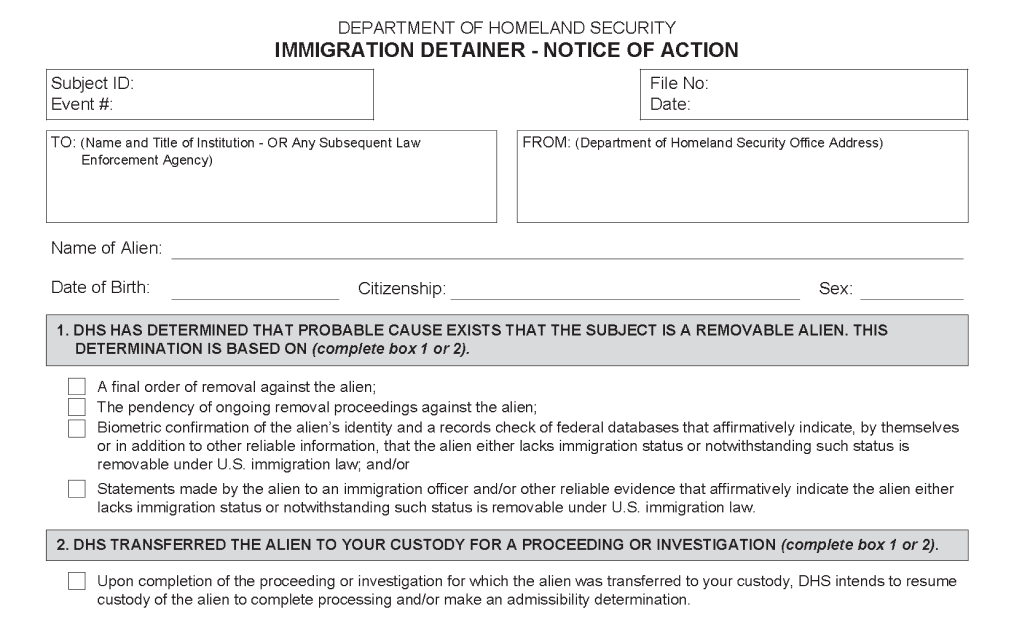
A detainer is typically a request to another law enforcement agency to hold someone already in custody, not a warrant to enter a workplace. A subpoena seeks documents or testimony, and it usually comes with deadlines and processes rather than on-the-spot entry authority. The label on the paper matters.
What happens in the moment
A workplace operation can involve several different kinds of encounters, and each has its own legal threshold.
1) Consensual questioning
Agents can approach people in a public area and ask questions. If a person is free to leave and the officer is not restricting movement, it is generally considered consensual.
But “free to leave” is a factual question. Multiple agents, blocked exits, commands, or physical positioning can turn an encounter into a detention even without handcuffs.
2) Detention, also called a stop
If ICE restrains someone’s freedom of movement, even briefly, that is a seizure under the Fourth Amendment. In the criminal context, this is the Terry stop standard: reasonable suspicion.
In immigration settings, ICE also has statutory authority to briefly detain a person for immigration inquiry in certain circumstances. Even so, the Fourth Amendment’s reasonableness requirement still constrains what officers can do, including the scope and duration of a detention.
3) Arrest
An arrest requires a higher level of justification. For a criminal arrest, the classic rule is probable cause. For civil immigration arrests, ICE relies on statutory authority to arrest and detain noncitizens believed removable. Even then, the Fourth Amendment’s reasonableness requirement still applies to the act of seizing a person.
Running away can create practical danger and can be used by officers to justify escalated tactics. It can also create separate legal exposure if someone obstructs or assaults an officer. Flight alone is not a magic confession, but it can change how an encounter unfolds.
Questions and papers
This is where constitutional rights and immigration law get tangled, especially for noncitizens. A few principles stay steady.
Silence and the Fifth Amendment
In the United States, people have a right against compelled self-incrimination. In immigration proceedings, the rules differ from criminal court, and silence can have consequences in certain contexts. Still, no one is required to guess, improvise, or sign statements they do not understand.
Identity and immigration documents
Federal law includes registration and document-carry rules that apply to many, but not all noncitizens, and the details are technical and exception-filled. Citizens are not required to carry proof of citizenship.
The most useful rule of thumb in the moment is this: ask if you are free to leave. If you are not free to leave, you are being detained. If you are being detained, you are in a Fourth Amendment event, not a casual conversation.
A short worker checklist
- Ask: “Am I free to leave?”
- Do not consent to a search of your phone, bag, or car if you do not want to.
- Ask for an interpreter if you do not understand what is being asked.
- Ask to speak to a lawyer if you are taken into custody.
This article is not individualized legal advice, and immigration status changes everything. But the constitutional instinct is the same as in any police encounter: clarify whether it is voluntary, and do not expand the encounter by consenting to searches you do not want.
Employer side: I-9 audits vs on-site actions
Many workplace enforcement actions are not surprise raids. They are paperwork cases.
I-9 audits
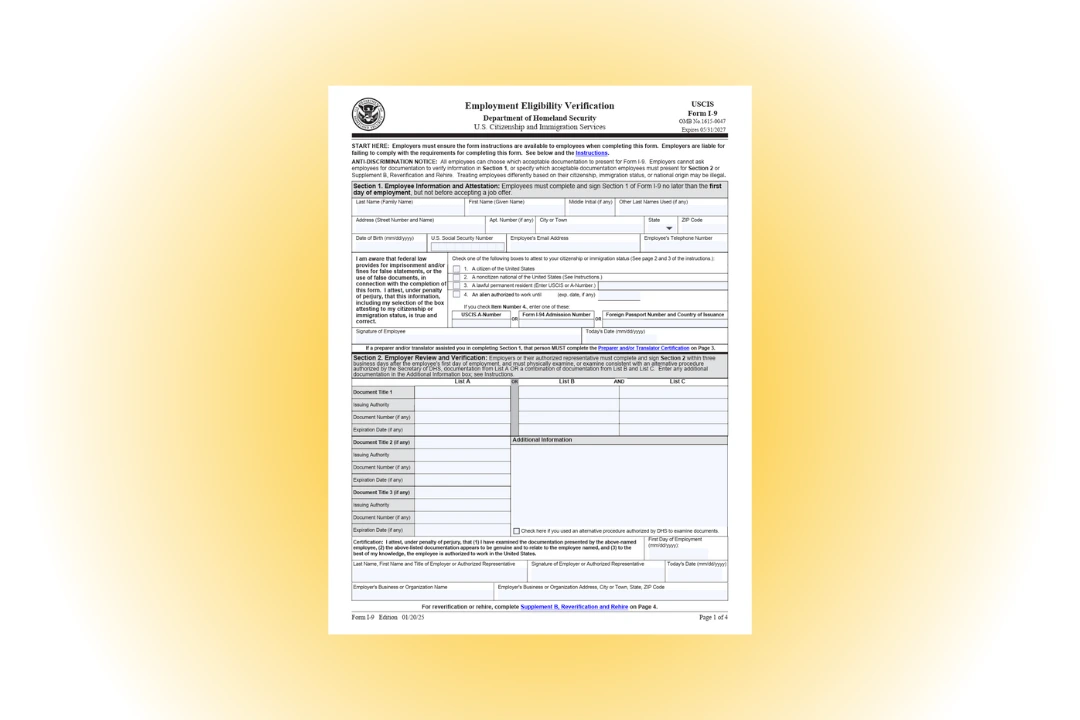
Employers must verify work authorization using the Form I-9. ICE can initiate an inspection process that involves notices and deadlines. These audits can lead to fines or to demands that an employer address unauthorized employment.
On-site enforcement
On-site actions can be based on criminal warrants (for example, allegations of document fraud or harboring) or civil immigration enforcement. The legal authority will affect what agents can do, where they can go, and what they can seize.
Employers often want a single rule: “Do we have to let them in?” The real rule is conditional. It depends on public versus nonpublic areas, consent, and whether ICE has a judicial warrant that authorizes entry or a search.
A practical consent pitfall is authority. A manager on duty may be able to consent to entry, but a line supervisor or employee often should not. That is why many businesses use a written response policy that routes all requests to one designated contact and instructs staff not to escort agents into employee-only areas unless that contact confirms the legal basis.
Who is ICE, and why HSI shows up
ICE is one agency with two big operational arms that sometimes appear together.
- ERO (Enforcement and Removal Operations): focuses on civil immigration enforcement, including arrests, detention, and removals.
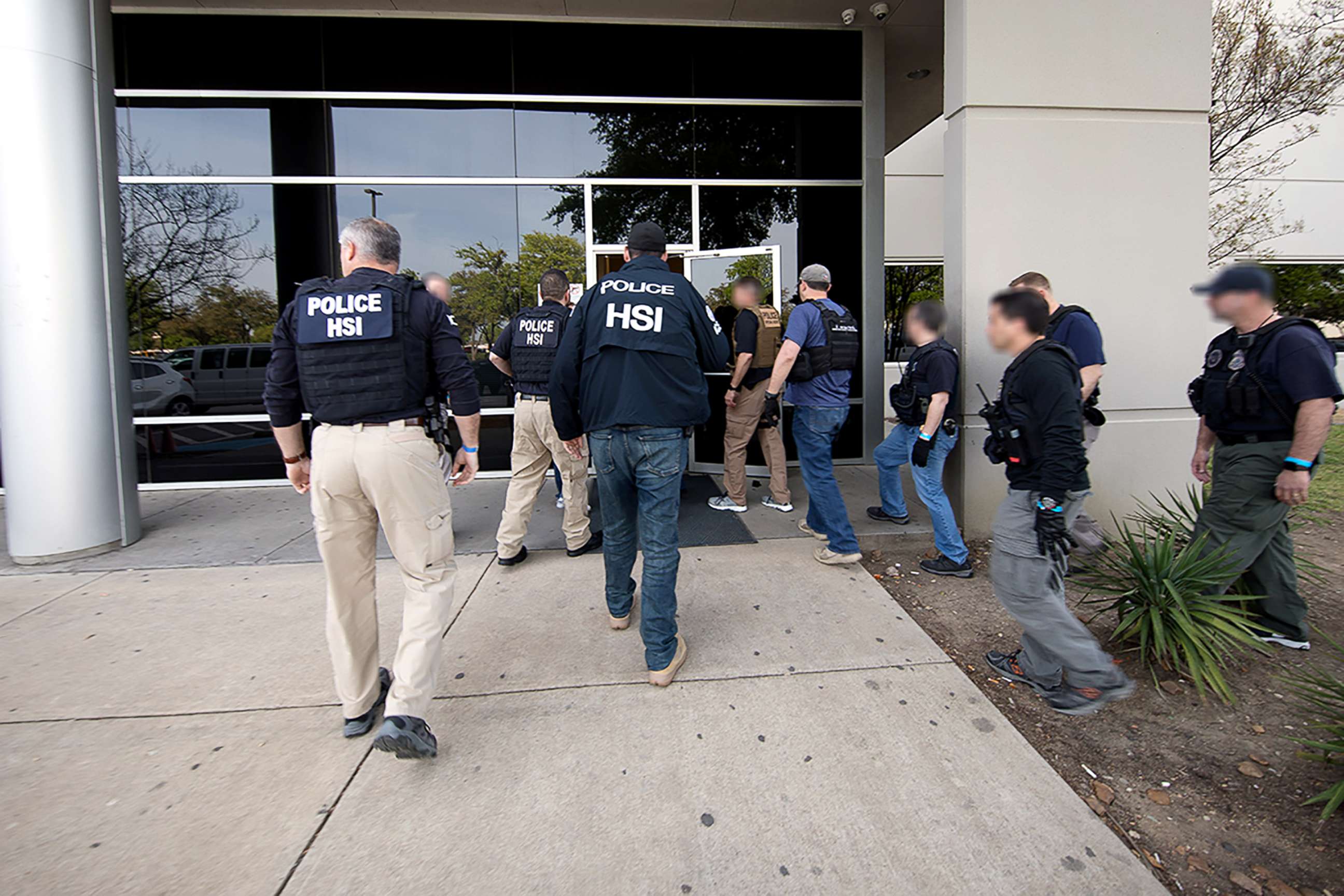
- HSI (Homeland Security Investigations): investigates federal crimes with a homeland security nexus, including document fraud, human smuggling, and some employment-related crimes.
That distinction matters because the paperwork, the goals, and the legal tools may differ. A civil ERO operation often centers on arrest authority and immigration process. An HSI-led operation more often involves criminal search warrants, seizures of records, and later prosecutions.
After someone is taken
“Due process” does not mean “you win.” It means the government must use fair procedures before it takes away liberty.
After a workplace arrest, a noncitizen can be:
- Processed and released on recognizance, bond, or supervision.
- Detained pending immigration proceedings.
- Placed into removal proceedings in immigration court, where the government must prove removability and the individual can seek relief if eligible.
Immigration court is part of the executive branch, not the judicial branch. Immigration judges work within the Department of Justice. That structure is one reason people find the system confusing. The courtroom looks like court, the stakes are as high as court, but it is not Article III federal court.
People also ask about remedies if something went wrong during a raid. In immigration proceedings, efforts to suppress evidence can be limited and legally complex, especially compared to criminal court. Separate civil claims can exist in some circumstances, but they are fact-intensive and not automatic. The practical point is that the legality of entry, consent, and detention often matters later, even if the remedy is not simple.
Quick answers
Can ICE raid a workplace?
ICE can conduct enforcement operations at workplaces, but its ability to enter nonpublic areas without permission generally depends on valid consent, a judicial warrant, or another recognized Fourth Amendment basis.
Do ICE agents need a warrant?
To stand in a public customer area, not necessarily. To enter employee-only areas without consent, a judicial warrant is often the key document. Administrative immigration warrants are common, but they do not automatically function as judge-signed search warrants for premises entry.
Can ICE arrest someone at a business?
Yes. ICE can arrest people during workplace operations under its civil immigration authority and, in some cases, under criminal warrants. The Fourth Amendment still governs whether the seizure is reasonable.
Can agents search backpacks, phones, or lockers?
Search authority depends on consent, warrants, and the scope of any judicial authorization. “We are ICE” is not, by itself, a search warrant.
What should an employer do in the moment?
Many employers train one manager to request identification, ask for the document authorizing entry, and limit access to nonpublic areas unless a judicial warrant requires otherwise. Because mistakes can create legal exposure on both sides, businesses often consult counsel and use written response policies.
Why it looks chaotic on video
Constitutional law is tidy on paper. Real enforcement is not. A workplace operation compresses multiple legal events into seconds: a threshold decision about entry, rapid questioning, detentions that may or may not be justified, and arrests that may be civil, criminal, or both.
That is why the most important constitutional questions are often the least cinematic: Who had authority to consent? Was there a judge-signed warrant? Was the person actually free to leave? Were nonpublic areas entered without legal authorization? Was the paper an actual warrant, or something else?
Those details determine whether an operation was lawful and what remedies, if any, exist later. They also show why “immigration enforcement” is not a single power. It is a stack of powers, each constrained differently, all tested in the same cramped spaces where people work.