
In moments like this, a familiar question pops up fast: can the government revoke someone’s citizenship?
The Constitution treats citizenship as a status with real gravity, not a license that can be canceled when politics turns ugly. That does not mean citizenship is untouchable. It means there are narrow legal doors, strict proof requirements, and one non-negotiable constitutional guardrail: due process.

Join the Discussion
Citizens at birth vs. naturalized
American law draws a sharp line between two categories:
- Citizens at birth: people who are citizens from birth, typically because they were born in the United States (under the Fourteenth Amendment) or because Congress has granted citizenship at birth to certain people born abroad to U.S. citizen parent(s) under federal statutes. You will often hear these described as “natural-born” in everyday conversation, even though that phrase is a constitutional term most commonly discussed in the context of presidential eligibility.
- Naturalized citizens: people who became citizens later through the naturalization process.
That distinction matters because the modern “revocation” conversation is almost always about denaturalization, meaning taking citizenship away from a person who obtained it through naturalization.
For citizens at birth, the government’s power to strip citizenship is extraordinarily limited. The Supreme Court has repeatedly rejected the idea that Congress or the executive can make citizenship a conditional privilege that can be taken away for disfavored views or general “badness” (see Afroyim v. Rusk; Vance v. Terrazas). The closest the law comes is in rare situations involving voluntary expatriation, like formally renouncing citizenship, not having it “revoked” by an administration.
Can a president revoke citizenship?
Not by proclamation. Not by executive order. Not by posting about it.
In the real legal world, denaturalization happens through structured legal processes, not executive fiat. The executive branch can investigate and can bring cases. But the executive branch does not get to cancel citizenship status on its own.
As a practical matter, taking away the legal status of U.S. citizenship happens through judicial denaturalization, meaning the Department of Justice files a case in federal court and a judge enters an order if the government meets its burden.
You may still see references to “administrative denaturalization,” but that framing is misleading in modern practice. What USCIS can do administratively in limited situations is cancel a physical Certificate of Naturalization as a document. That does not, by itself, strip the underlying citizenship status. Taking away the status requires a court order.
Also note a common point of confusion: some denaturalization efforts are connected to criminal investigations or convictions for naturalization-related fraud. But even then, the step that actually strips citizenship status still runs through a judge and a judicial order.
What denaturalization is
Denaturalization is the government’s claim that citizenship was never lawfully obtained because a legal requirement was not met or because material facts were concealed or misrepresented. That framing matters. The government is not supposed to be re-evaluating whether you are a “good American.” It is supposed to be proving that the naturalization grant was legally invalid under the rules Congress set.
Most denaturalization cases rely on federal statutes that allow citizenship to be revoked if it was:
- Illegally procured (meaning the person was not actually eligible under the law, even if they told the truth), or
- Procured by concealment of a material fact or by willful misrepresentation (meaning lies or omissions that mattered to eligibility).
This is one reason “high bar” is not just rhetoric. It is built into the legal theory. The government has to connect the alleged misconduct to eligibility for citizenship, not merely to public scandal.
Courts also describe denaturalization as an extraordinary remedy and typically require the government to prove its case by evidence that is clear, unequivocal, and convincing (see Schneiderman v. United States; Fedorenko v. United States).
Marriage fraud claims
The source story circulating now focuses on an allegation of marriage fraud. Set politics aside and treat that claim the way a court has to treat it: as a question of evidence, materiality, and legal causation.
Marriage fraud could matter to citizenship if, for example, the government proved that a person:
- obtained lawful permanent residence (a green card) through a sham marriage, and
- later naturalized based on that status, and
- made material misrepresentations during immigration or naturalization proceedings.
But even then, the government must clear multiple hurdles:
- Proof: denaturalization cases typically require strong, reliable evidence, not rumor or innuendo.
- Materiality: the alleged lie or concealment must have mattered to the decision. In plain English, courts ask whether the truth would have predictably led officials to deny the benefit or at least investigate a disqualifying fact (see Kungys v. United States).
- Procedural fairness: the person gets notice, an opportunity to respond, and the right to contest the government’s evidence.
In other words, “DHS is investigating” is not the same thing as “citizenship can be revoked,” and it is definitely not the same thing as “a president can do it personally.”
Who can take citizenship away?
1) DHS and USCIS
Department of Homeland Security agencies can investigate immigration fraud and gather records. USCIS maintains naturalization and immigration files and can refer cases for enforcement. DHS can also work with prosecutors when there is potential criminal conduct.
2) DOJ
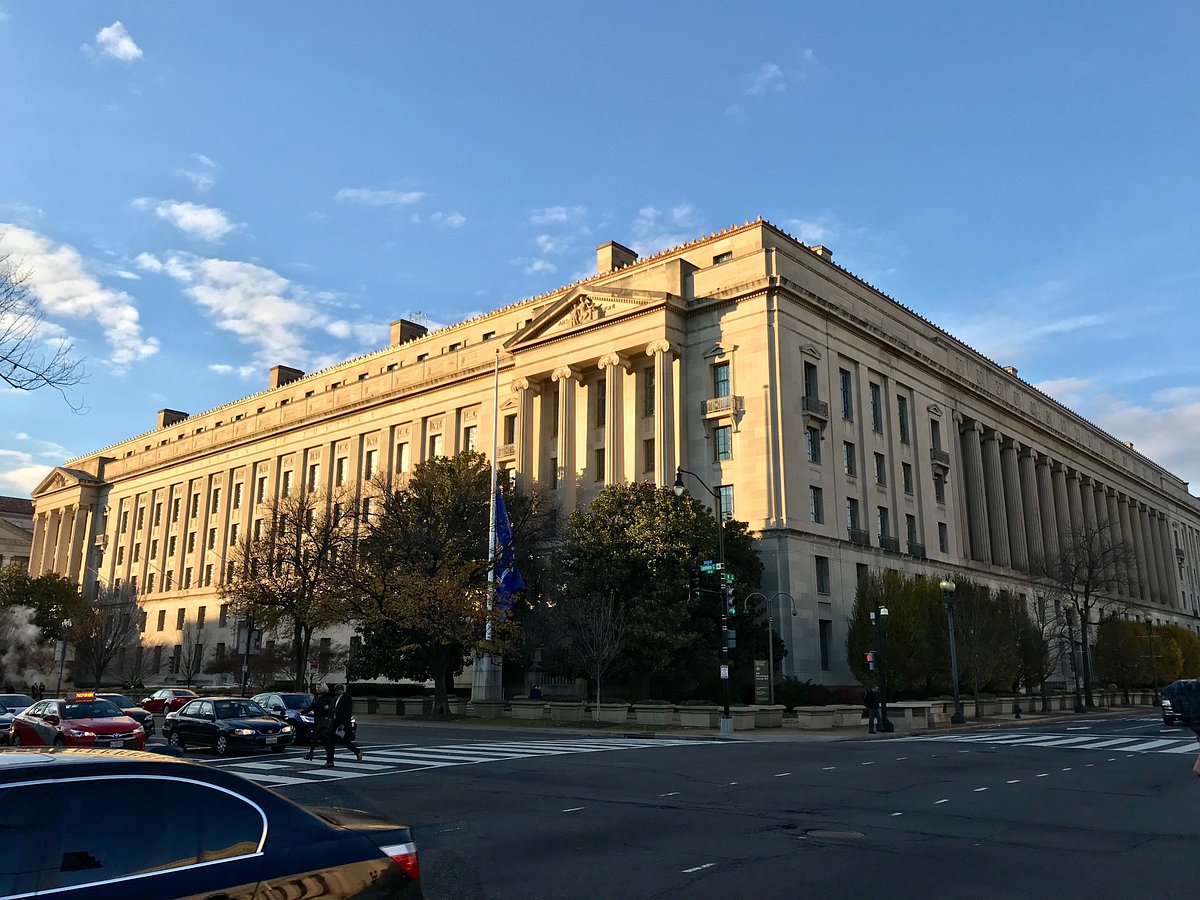
Denaturalization, in practice, is driven by the Department of Justice, which decides whether to file a civil denaturalization suit in federal court under the governing statute (commonly 8 U.S.C. § 1451). That choice is discretionary and often reflects enforcement priorities, but once in court, the executive branch must prove its case under judicial standards.
Relatedly, the government may also pursue criminal charges for naturalization fraud (commonly 18 U.S.C. § 1425). A criminal case is not the same thing as denaturalization, but it can overlap factually and can lead into a judicial denaturalization action.
3) Federal courts
If citizenship is revoked through denaturalization, it is done by a federal judge after litigation. That is a separation-of-powers feature, not a technicality. Citizenship is too consequential to be canceled by executive say-so.
4) Congress
Congress writes the immigration and naturalization statutes. It does not usually decide individual denaturalization outcomes. The Constitution prohibits bills of attainder, which is one reason Congress cannot simply pass a law declaring a named person stripped of citizenship as punishment.

Due process matters
When people ask if citizenship can be “revoked,” they are usually asking a deeper question: can the government do this quickly and unilaterally?
The Constitution’s answer runs through due process. For federal denaturalization, that protection is anchored in the Fifth Amendment’s command that the federal government cannot deprive a person of liberty without due process of law.
Citizenship is not merely a paperwork status. It is the legal foundation for voting eligibility, political membership, the right to remain in the country, and the ability to sponsor family. Removing it implicates profound liberty interests. That is why courts insist on meaningful procedure and demanding proof.
It is also why denaturalization is not supposed to function as an all-purpose political weapon. If it did, citizenship would stop being a stable constitutional identity and become a contingent favor.
After denaturalization
Denaturalization does not automatically equal deportation, but it can open that door.
- If the person has no other lawful immigration status after denaturalization, they may become removable under immigration law.
- If there is a criminal conviction tied to fraud, separate consequences can follow.
- If the person has derivative or related immigration benefits for family members, those can become complicated quickly, depending on the facts and the timing.
This is another reason courts treat denaturalization with seriousness. The downstream effects are often life-altering.
Members of Congress
Being in Congress does not create a special shield against denaturalization. A naturalized citizen who serves in Congress is still a naturalized citizen under the law.
But the inverse is also true: being a political target does not lower the government’s evidentiary burden. If the government cannot prove the legal elements, the person keeps citizenship, regardless of headlines.
Separately, the Constitution sets qualifications for House members, including that they be a citizen for seven years. If someone were denaturalized, they would no longer meet that constitutional qualification going forward. How Congress would respond in practice would raise its own procedural and constitutional questions, but the critical point is that the loss of citizenship would come first through lawful process, not through congressional disbelief or executive anger.

What to watch for
When a story suggests a prominent person could have citizenship taken away, you can usually cut through the noise by asking a few concrete questions:
- Was the person naturalized? If not, denaturalization is likely off the table.
- Is the claim about eligibility, or about disfavored speech or politics? Only the first category fits denaturalization law.
- Is there a court case? Real denaturalization means filings, judges, and a docket. In rare situations, some early filings or details may be sealed, but there should still be a real case moving through a real court.
- What is the alleged misrepresentation, and why was it material? Courts focus on that link.
- Is this civil denaturalization, criminal prosecution, or just an investigation? Those are different stages with different standards.
If those questions cannot be answered with specifics, you are likely looking at speculation rather than a viable legal path.
Bottom line
Citizenship can be revoked in the United States, but the mechanism is narrow and procedural. In modern practice, it is denaturalization, it is tethered to the legality of how citizenship was obtained, and it runs straight through due process and the courts.
A president can set enforcement priorities and direct agencies to investigate, but cannot personally cancel an American’s citizenship by decree. In a constitutional republic, the power to redefine who belongs has to be constrained. Otherwise, citizenship stops being a right of membership and becomes a leash.
Quick FAQ
Can a president revoke someone’s citizenship?
No president can revoke citizenship personally. The executive branch can investigate and bring a denaturalization case, but a lawful process and a federal court order are required to strip citizenship status.
Can DHS investigate citizenship fraud?
Yes. DHS can investigate immigration and naturalization-related fraud and refer matters to DOJ. An investigation alone does not change anyone’s citizenship status.
What are the grounds for denaturalization?
Most commonly: citizenship was illegally procured or was obtained through concealment or willful misrepresentation of a material fact (often litigated under 8 U.S.C. § 1451).
Can citizenship be revoked for marriage fraud?
Potentially, but only if the government can prove the fraud and show it was material to the person’s immigration and naturalization eligibility, using the required legal process in federal court.