
In immigration debates, one phrase shows up again and again: ICE detainer. It sounds like a formal order. It often functions like a hold. But in most places, it begins as something much more modest in legal terms: a request.
That gap between how a detainer feels on the ground and what it is on paper is where the constitutional tension lives. Detainers sit at the intersection of federal immigration enforcement, state and local jail operations, and the Fourth Amendment rule that government cannot restrain you without lawful authority.
Join the Discussion
What an ICE detainer is
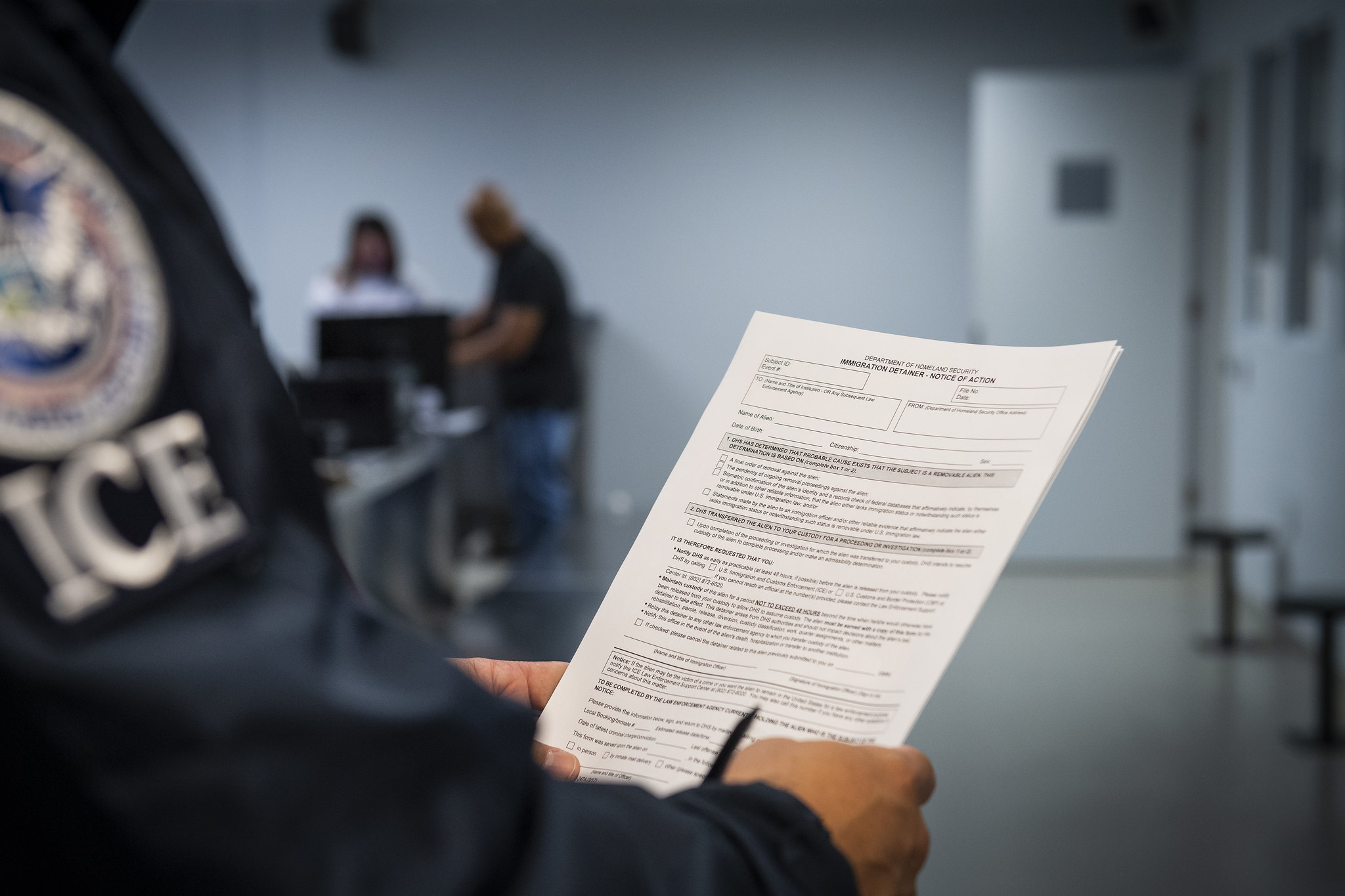
An ICE detainer, often called an immigration hold, is a written notice from U.S. Immigration and Customs Enforcement (ICE) to a state or local law enforcement agency. It typically asks the jail to do two things:
- Notify ICE before a person is released from local custody.
- Hold the person for a short period after they would otherwise be released, so ICE can take custody.
Detainers most commonly arise when someone is already in jail for a separate reason, for example after an arrest on a state charge or after serving a local sentence. The detainer is not the original basis for the person being in the jail. It is a request about what happens at the end of that local custody.
Detainer vs. warrant
In everyday conversation, detainers get described like warrants. Legally, they are not the same thing. One reason the debate stays heated is that different documents get lumped together under the single word “warrant.”
A judicial warrant
A criminal arrest warrant is generally issued by a judge (or magistrate) and is designed to satisfy Fourth Amendment expectations about neutral review and probable cause.
An ICE detainer
A detainer is typically issued within the executive branch as an immigration enforcement document. It is not automatically a judge-signed warrant. That distinction matters because local jails are state actors. When they keep someone in custody, they are performing a seizure that has to be justified under the Fourth Amendment.
So the legal question becomes: what authority does the local jail have to keep someone once the state basis for custody ends? ICE’s detainer is the mechanism ICE uses to request notice and, sometimes, continued custody. But many courts have treated detainers as requests that do not, by themselves, supply the necessary legal authority for continued detention.
Administrative warrants
Detainers are also often paired with administrative warrants, such as Form I-200 (warrant for arrest) or Form I-205 (warrant of removal or deportation). These are signed by ICE officers, not judges. They can be important in immigration proceedings, but they are not the same as a judicial warrant for Fourth Amendment purposes, and they do not automatically answer the question of what power a county jail has under state law to keep someone after local custody ends.
What a detainer asks a jail to do
Although the details can vary, the core mechanics are consistent.
1) Information sharing
ICE may ask the jail to share release dates and identifying information that the jail already collects. Some booking data, including fingerprints, may also be routed through broader federal and state information-sharing systems. In other words, not every data transfer is “because of a detainer,” and detainers are not the only pipeline. Many jurisdictions still see notice requests as operationally easier and legally less risky than physically holding someone longer.
2) A short additional hold
ICE may request that the jail keep the person for up to 48 hours after the person would otherwise be released, excluding weekends and holidays, to allow ICE time to arrive and take custody. This timeframe is referenced in federal regulation and appears on common detainer forms.
This is the moment where constitutional scrutiny usually intensifies. If the person has posted bail, had charges dropped, completed a sentence, or otherwise resolved the state basis for custody, then continued detention needs its own lawful foundation. The 48-hour clock matters because it is not “just paperwork” to the person who stays locked up.
The Fourth Amendment issue
The Fourth Amendment is not only about searches. It is also about seizures, including detaining a person.
When a jail holds someone longer than state law would otherwise permit, that extra time is a new restraint on liberty. The Fourth Amendment question becomes: is that extra detention reasonable, and is it supported by lawful authority such as probable cause and proper process?
This is where lawsuits happen. Plaintiffs have argued that:
- A detainer is not a judicial warrant and does not automatically justify a new seizure.
- Holding someone solely because ICE asked, after the local basis for custody ends, can be an unconstitutional seizure.
- Local agencies can face liability if they keep people confined without adequate legal authority.
It is also worth saying plainly: there is not one single nationwide Supreme Court rule that resolves every detainer scenario. Outcomes can vary by jurisdiction, by state authorization, and by what documentation exists beyond the detainer itself. Readers looking for landmarks often see cases like Galarza v. Szalczyk (3d Cir.) and Miranda-Olivares v. Clackamas County (D. Or.) cited in discussions of whether detainers are voluntary and what liability can follow when a jail holds someone without sufficient authority.

What ICE relies on
Detainers typically reflect ICE’s view that there is a basis to take the person into immigration custody. The asserted basis can include immigration record checks, database matches, prior removal orders, or other information suggesting the person is removable under immigration law.
In practice, the controversy is less about whether ICE can act and more about whether the local jail can keep holding the person in the interim, and what level of process and proof is required for that extra time behind bars.
Sanctuary policies
“Sanctuary city” is a political label, not a single legal status. In practice, sanctuary policies are policy choices about cooperation. They often focus on detainers because detainers are where local discretion is most visible.
Common features
- Declining to honor detainer hold requests without a judicial warrant or a clear legal basis under state law.
- Limiting notice of release unless required by law.
- Restricting how local resources are used, for example limiting when officers may assist with immigration enforcement.
What they usually do not mean
- They do not typically stop federal agents from enforcing federal law on their own.
- They do not “erase” immigration consequences for noncitizens.
- They do not necessarily prevent information from being shared where sharing is mandated by state law, court order, or specific federal programs.
The constitutional framing is often about who controls local officials. Federal agencies can enforce federal law, but the federal government generally cannot command state and local officials to carry out federal tasks. That principle is commonly discussed under the Tenth Amendment and the anti-commandeering doctrine, associated with cases like Printz v. United States and Murphy v. NCAA. It is one reason detainers are framed as requests and why jurisdictions can make different compliance choices.
Why compliance varies
Across the United States you will see a patchwork of approaches. Some jurisdictions honor most detainers. Others honor almost none. Many split the difference by setting conditions.
Common reasons for variation include:
- State law limits on when local officials may detain someone on federal civil immigration grounds.
- Local risk management after lawsuits alleging unconstitutional detention.
- Budget and staffing reality, since holding someone longer can require space, transport logistics, and paperwork.
- Policy priorities, including the relationship local leaders want with immigrant communities and with federal agencies.
Some jurisdictions also condition cooperation on extra assurances, for example requiring a judicial warrant, written confirmation of the legal basis for the hold, or clarity on who bears costs. These details vary widely, and they often show up in county policies even when the public debate stays abstract.
What happens next
If you strip away the slogans, the detainer process is a sequence of handoffs:
- Detainer issued while a person is already in local custody.
- Local case ends through bail, dismissal, time served, or another release trigger.
- ICE pickup or not during the requested hold window if the jurisdiction honors the request.
- Transfer to ICE custody, where ICE may issue charging paperwork (often a Notice to Appear) and make detention or release decisions under immigration law.
- Immigration proceedings follow, with outcomes depending on status, history, and available relief.
The constitutional conflict is concentrated in the narrow slice of time after local authority runs out and before federal custody begins, if local officials keep the person confined during that gap.
Legal limits in brief
Over the past decade, a recurring theme in court decisions and settlements has been that detaining someone solely on the basis of an ICE detainer can raise serious Fourth Amendment problems, especially after the local legal authority to keep that person has expired.
Because rulings differ across jurisdictions and fact patterns, the safest descriptive takeaway is this:
- Courts have often treated detainers as requests, not self-executing commands.
- When local agencies extend custody, they may need clear legal authority, often discussed in terms of warrants, probable cause, and state-law authorization.
- Agencies that hold people without adequate authority can face civil liability, which influences policy even where federal immigration enforcement remains politically popular.
This is why many jurisdictions write policies that sound technical, even when the politics are loud. The policy is not just about cooperation. It is also about what legal risk the county is willing to absorb when it keeps a person behind bars after the state case is done.
What detainers are not
To keep the civics picture clear, it helps to name the misconceptions directly.
- A detainer is not a new criminal charge. It is connected to immigration enforcement, which is often civil in form even when the consequences are severe.
- A detainer is not automatically a judge’s order. It may not carry the same process features people associate with warrants.
- An administrative warrant is not a judicial warrant. Many people hear “warrant” and assume a judge. Administrative immigration warrants are signed inside the executive branch.
- A detainer does not guarantee removal. It can lead to ICE custody and then to immigration proceedings, but outcomes depend on the person’s status, history, and available relief.
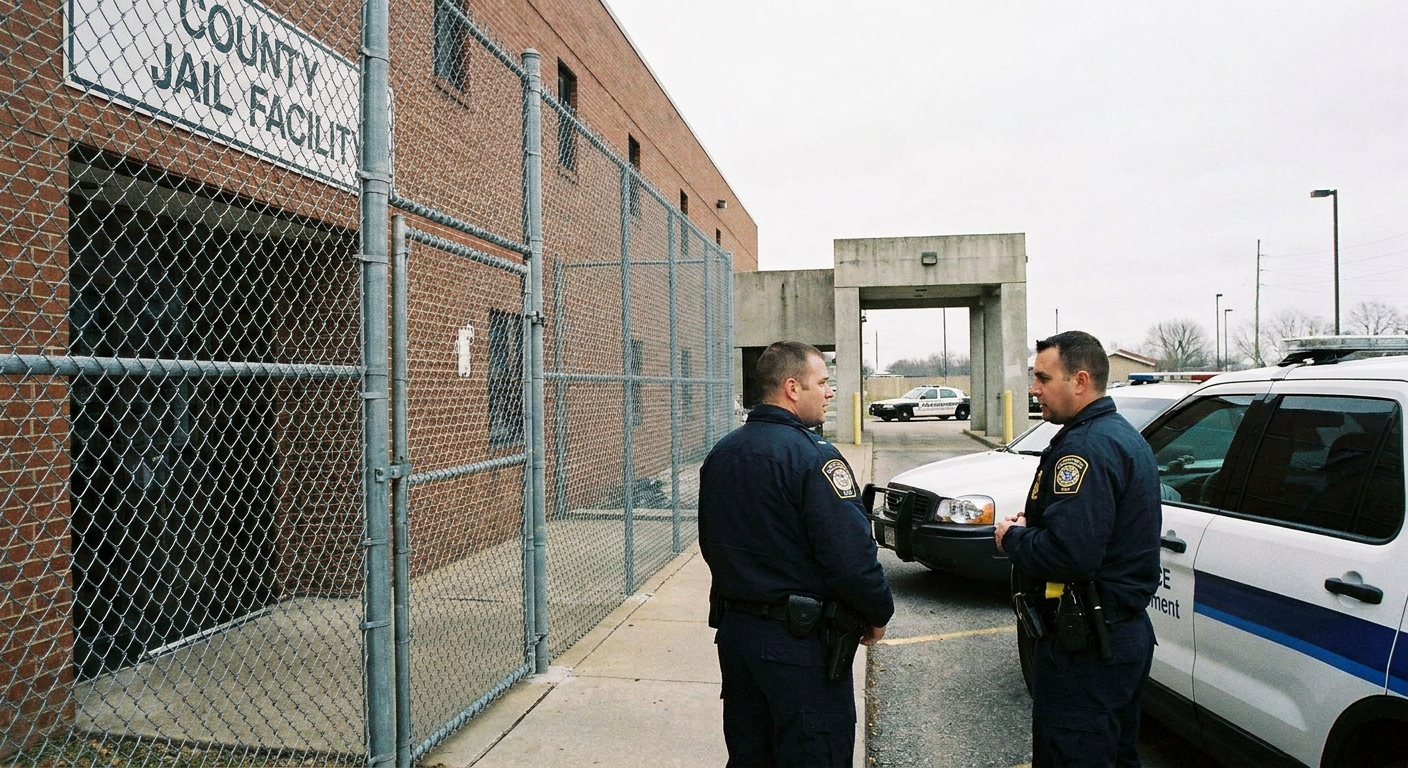
- A detainer is not the same as an ICE raid. It is a jail-to-federal handoff mechanism, not a street-level enforcement action.
Why this mechanism matters
Detainers are easy to miss because they look like paperwork. But they are a real-life test of a basic constitutional idea: liberty is the default, and confinement requires justification.
They are also a federalism pressure point. Immigration enforcement is federal. Jails are usually local. Detainers are the bridge, and bridges always force you to decide who carries the load.
If you take nothing else from the detainer debate, take this: a detainer is where constitutional structure becomes operational. Not in speeches, but in booking systems, release times, and the question that never stops being constitutional even when it is administrative: who has the legal authority to keep you?