
When a bill “passes Congress,” most Americans assume the hard part is over. The cameras move on, the headlines declare victory, and the president signs the thing like a ceremonial notary.
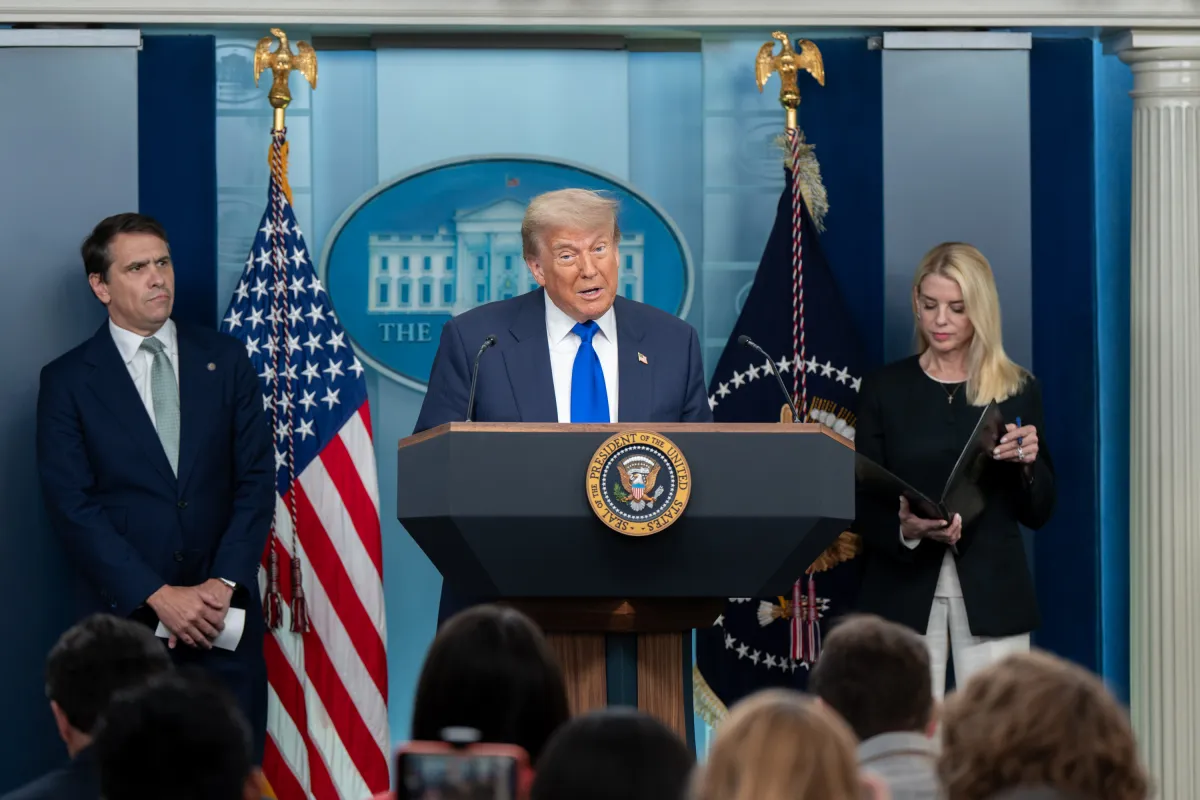
President Donald Trump is reminding everyone that the last step is not a formality. On July 10, 2026, he posted that he will not sign a housing bill that has already been approved by Congress and delivered to the White House, and he tied his refusal to a separate demand: Senate action on the SAVE America Act, a measure supporters link to stricter voter ID and election-integrity requirements.
The viral version of this story is simple: voter ID versus housing relief, with Trump “playing hardball.” The constitutional version is more interesting, because it forces a civics question most people never have to ask: what power does a president have when a bill is sitting on his desk, and what kind of leverage does that create?
Join the Discussion
What Trump actually said, and why it spread
The online trend clustered around one idea and one condition: Trump will withhold his signature on the housing bill unless the Senate advances the SAVE America Act.
In his own words, Trump framed the decision as protest and leverage. The quote ricocheting across social media repeated a version of: “I will not sign the Housing Bill, which has been fully approved by Congress and sent to the White House” unless the Senate passes the SAVE America Act.
This went viral for the same reason most procedural constitutional stories go viral: it feels like a cheat code. A bill is “done,” but the president acts like it is still negotiable, and people realize they are hazy on what the rules actually are.
The Constitution’s three doors: sign, veto, or wait
Article I, Section 7 of the Constitution gives the president a defined role once Congress sends a bill to the White House. It is not just “sign or veto,” even though that is how we usually talk about it.
- Sign it. The bill becomes law.
- Veto it. The bill goes back to Congress, which can try to override with a two-thirds vote in both chambers.
- Do nothing for 10 days (excluding Sundays). Then one of two things happens:
- If Congress is still in session and able to receive the bill back, it becomes law without the president’s signature.
- If Congress adjourns in a way that prevents return, the bill dies. That is the pocket veto.
That third option matters here. Trump’s post did not merely signal opposition. It signaled a willingness to use time and uncertainty as a bargaining tool, because delay is a real constitutional act even when it looks like inaction.
So can a president refuse to sign a bill “as leverage”?
Constitutionally, a president can decline to sign. The question is what that refusal is in legal terms.
If Trump issues a veto message, he is making a formal move that triggers a formal response: Congress either overrides or it does not. That is clean, trackable, and politically expensive.
If Trump simply withholds his signature, he is using the Constitution’s calendar. That can function as leverage in two different ways:
- Pressure through uncertainty. Agencies, states, builders, and renters do not know whether to plan for new programs or new rules until the bill’s status is settled.
- Pressure through timing. If Senate leaders want the housing bill to take effect on a particular schedule, delay can be a real cost even if the bill ultimately becomes law.
The key constitutional point is that the president’s “leverage” is not a magical power to rewrite legislation. It is the power to force Congress to live inside Article I’s closing sequence, where time, adjournment, and political will all matter.
Why the standoff is focused on the Senate
Trump’s condition is not “pass a new housing amendment” or “send me a revised bill.” It is “move a different bill.” That is why the Senate is the choke point in the viral narrative.
The House and Senate already completed the constitutional act that matters for the housing legislation itself: passage in identical form, followed by presentment to the president.
The SAVE America Act is a separate legislative track. If it has not cleared the Senate, the president cannot make it law by willpower, rhetoric, or executive order. Under Article I, it must pass both chambers and be presented just like any other bill.
So the pressure campaign is aimed at the only place left that can satisfy the condition: the Senate’s agenda and vote math.
Housing policy versus election policy is not a “trade” Congress voted on
It is tempting to describe this as a direct swap: “voter ID for housing.” But constitutionally, Congress did not vote on a package deal. Congress voted on a housing bill, and the president is now trying to attach an external political requirement after presentment.
That is not unconstitutional in the sense of being forbidden conduct. Presidents routinely use leverage across issues: “I will sign your bill if you move my priority,” “I will veto unless you change X,” “I will not negotiate until Y.”
But it is constitutionally revealing. It shows how the separation of powers often operates in practice: not as neat lanes, but as interlocking veto points where unrelated issues become bargaining chips because the process creates strategic moments of control.
What happens next if Trump keeps his promise
There are only a few realistic pathways forward, and they are all legible once you think in Article I timelines rather than social-media timelines.
1) Trump signs the housing bill after Senate movement on SAVE America
This is the outcome Trump is publicly inviting. The housing bill becomes law by signature, and the SAVE America Act either passes the Senate or advances enough to claim “progress.”
2) Trump vetoes the housing bill
This turns a viral standoff into a formal constitutional confrontation. Congress then chooses: override or accept the veto. An override requires two-thirds in each chamber, a high bar that is usually the end of the story.
3) Trump does nothing and the bill becomes law anyway
If Congress remains in session, the Constitution allows the bill to become law after the 10-day window without a signature. In that scenario, Trump’s refusal becomes symbolic, but the delay can still have practical effects.
4) Pocket veto (only if timing and adjournment align)
If Congress adjourns in a way that prevents the bill’s return during the 10-day period, the bill dies. Pocket veto disputes are famously technical and often political, because “adjournment” is not just a calendar word. It can be a constitutional weapon.
Why this is a civics story, not just a Trump story
The president is not a clerk in the legislative process. The Founders built presentment to force accountability at the end of the pipeline, precisely because they assumed Congress would sometimes pass bills that look popular in the abstract but become controversial in the details.
That design has a consequence Americans often dislike: it makes it rational to use the signing stage for leverage, because the system gives the president a genuine stop button.
Whether you view Trump’s tactic as principled pressure or hostage-taking depends on your politics. But the constitutional reality underneath is nonpartisan: if you want the president to stop using “the desk” as a bargaining table, you would have to redesign Article I itself.
The question voters should be asking
The most durable takeaway from this viral moment is not “who is right.” It is a clearer sense of where responsibility sits.
- If you want the housing bill to take effect quickly, your focus is the president’s decision and the congressional calendar.
- If you want the SAVE America Act to become law, your focus is the Senate and the coalition needed to pass it.
- If you want fewer standoffs like this, your focus is the structure of veto points the Constitution intentionally creates.
In a republic, procedure is policy. And right now, the procedure is the story.