
Americans talk about “divided government” like it is a temporary weather system: clear skies when one party wins everything, gridlock clouds when power splits.
But divided government is not a glitch. It is what you should expect from a constitutional design that intentionally divides power even before elections divide it further. Two chambers. Two electorates: district-based House seats and state-based Senate seats. Two-year House cycles. Six-year Senate cycles, staggered so roughly one-third of seats are up every two years. A separately elected president with a veto.
Once you see the structure, the headlines read differently. Not because conflict becomes noble, but because it becomes legible.
Join the Discussion
What divided government means
Unified vs divided at the federal level
Unified government means one party controls the presidency and both chambers of Congress.
Divided government means party control is split. That can happen in two common ways:
- President vs Congress: the president is from one party and at least one chamber of Congress is controlled by the other.
- Split Congress: one party controls the House while the other controls the Senate, regardless of who holds the presidency.
This is not a constitutional term. You will not find it in the Constitution. It is a political label for how the constitutional machine is staffed.
One more clarity point: parties are not constitutional actors. The Constitution creates offices and procedures. “Divided government” is about how modern party coalitions end up controlling those offices.
Unified vs divided at the state level
States mirror the same basic question: does one party control the governor’s office and both legislative chambers?
- Unified state government is governor plus both state legislative chambers under one party.
- Divided state government is any split between governor and legislature, or between the two legislative chambers.
Because state constitutions vary, divided control can matter differently in different states. Some governors have strong veto and appointment powers; others have boards and commissions that dilute executive control.
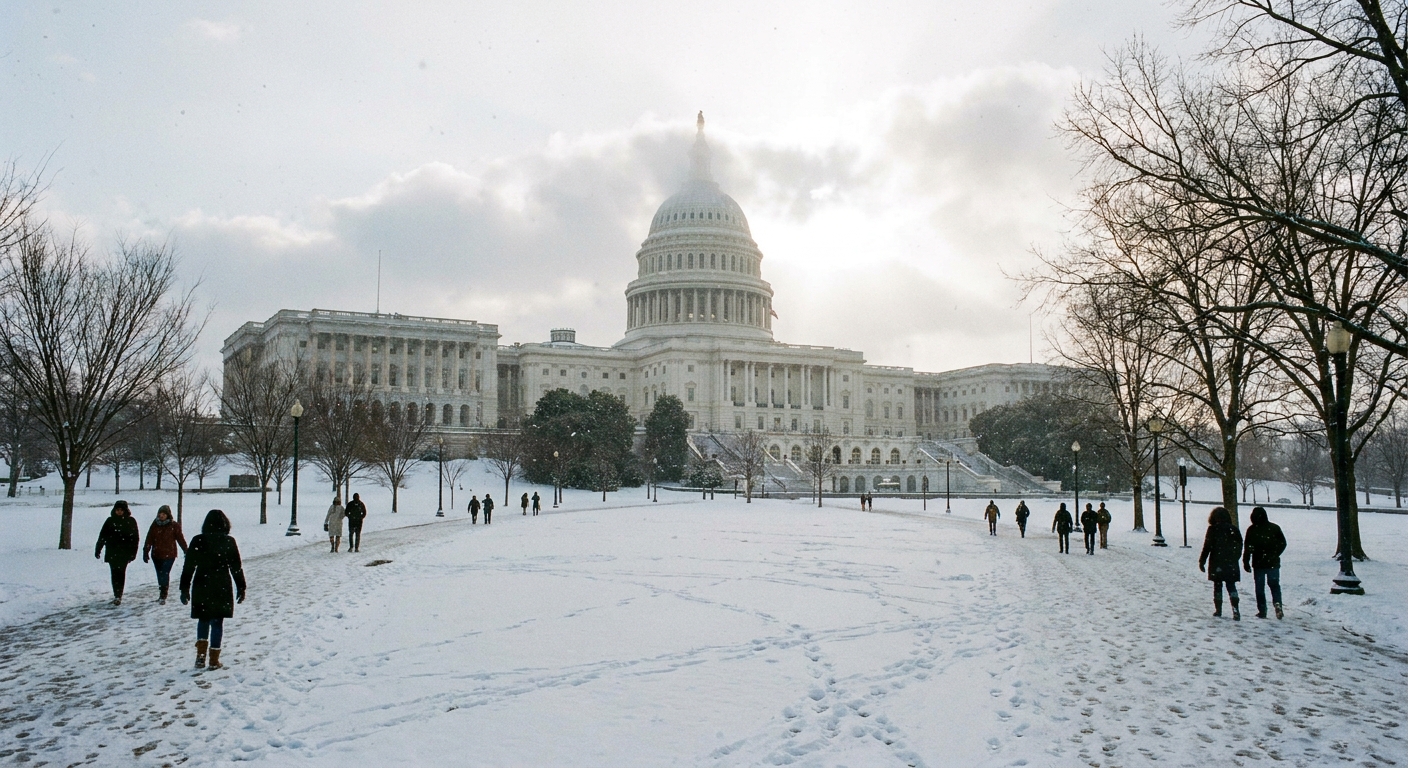
The constitutional anchors
Bicameralism makes agreement hard on purpose
The Constitution requires Congress to be bicameral: a House and a Senate. That is not just two rooms for the same debate. It is two institutions with different incentives.
- House (Article I, Section 2): elected every two years, closer to shifts in public opinion.
- Senate (Article I, Section 3): six-year terms, staggered for continuity, designed to be more stable and less reactive.
Even if one party “wins” an election, the chambers can pull apart because they are elected on different timelines and represent different electorates.
Separation of powers means the president is not Congress
Article I gives Congress legislative power. Article II gives the president executive power. The president participates in lawmaking mainly through the veto and through agenda setting, not through voting on the House floor.
That separation matters because it makes divided government possible by design. The system anticipates bargaining between independently elected branches, not a single parliamentary majority governing as one unit.
Presentment and veto are built into the pipeline
For a bill to become law, it must pass both chambers and be presented to the president (Article I, Section 7). The president can sign it or veto it. Congress can override with two-thirds of both chambers.
In unified government, the veto is often a background threat. In divided government, it becomes a central negotiating tool.
Lawmaking under a split
Bargaining replaces momentum
When party control is split, the default outcome is not sweeping legislation. The default is negotiation over what can survive every chokepoint:
- House passage
- Senate passage, including Senate rules like the filibuster and the cloture threshold
- Presidential signature, or veto-proof majorities
That does not automatically mean “nothing happens.” It often means that what happens is narrower, more technical, and more dependent on compromise coalitions.
It also means you should pay attention to margins and factions. Even under “unified” government, razor-thin control and internal party splits can recreate the feel of divided government, just inside the party rather than between parties.
Must-pass bills win
Divided government pushes lawmakers toward bills that cannot easily be skipped:
- Appropriations and government funding
- Debt limit and fiscal deadlines (when relevant)
- Disaster aid
- Defense and national security measures
- Major program reauthorizations
Big ideological packages become harder to move because they attract vetoes, fail in one chamber, or collapse under the weight of internal factions that no longer have to unify behind a single party agenda.
Negative power grows
The Constitution gives each institution tools to block the others. In divided government, those blocking tools often become the main story.
- A House majority can refuse to bring a bill to the floor.
- A Senate majority can refuse to take up House-passed legislation.
- A president can veto.
- Either chamber can slow or stop confirmations.
Civics translation: divided government turns the system into a contest over preventing change as much as creating it.
Appointments and leverage
Advice and consent
The Appointments Clause (Article II, Section 2) lets the president nominate ambassadors, federal judges, and other officers, with Senate confirmation.
In practice, that includes many of the most visible posts in government: Cabinet secretaries and top executive agency heads, along with U.S. attorneys and other senior officials.
Under divided government, confirmations can become leverage. The Senate can:
- Slow-walk nominees
- Reject nominees
- Leave vacancies open
- Use timing and floor access to seek concessions, sometimes explicitly and sometimes informally
Judges are the long game
Because federal judges have life tenure during “good Behaviour” (Article III), confirmations are not just staffing decisions. They are constitutional bets on how the law will be interpreted for decades.
That is why divided government tends to produce high-stakes fights over:
- Supreme Court seats
- Circuit court seats that shape most federal law
- District court seats that control trials and injunctions
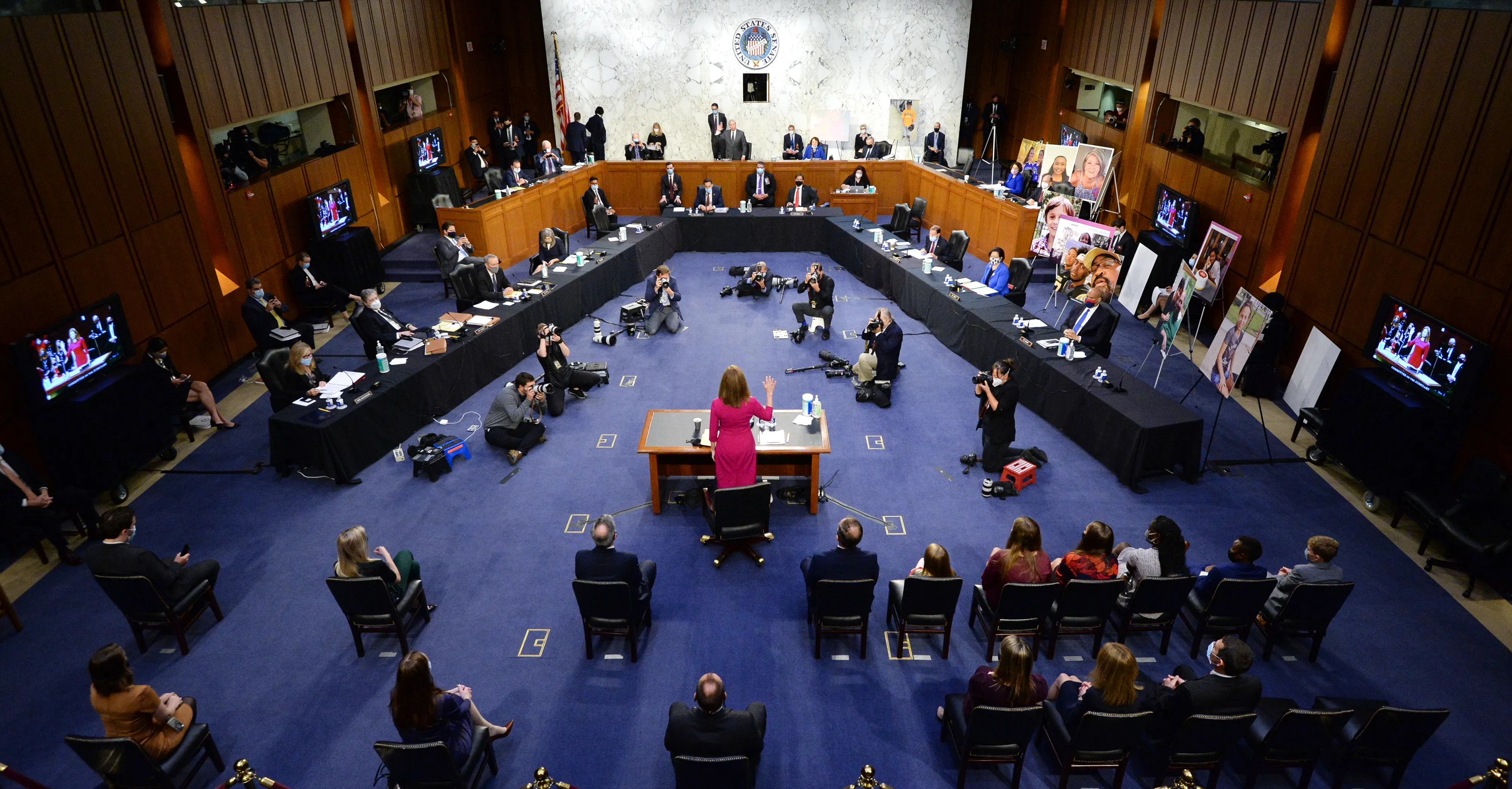
Budgeting and shutdowns
The purse is Congress’s
Even though the president proposes and negotiates, the constitutional starting point is congressional: “No Money shall be drawn from the Treasury, but in Consequence of Appropriations made by Law” (Article I, Section 9).
In divided government, that power becomes a pressure point because appropriations bills must still clear both chambers and survive the president’s signature or veto.
Shutdowns are a stress test
Government shutdowns are not required by the Constitution. They are the result of statutory funding lapses combined with political brinkmanship.
Divided government can make shutdowns more likely because:
- Each side can claim it is defending its voters against the other branch
- The veto threat and override math shape how far each side pushes
- Leaders sometimes benefit politically from confrontation, even when the institution suffers
The operational reality is not abstract: shutdowns can interrupt services, stall contracting and permits, and throw federal workers and families into uncertainty.
The constitutional lesson is not “the Framers wanted shutdowns.” It is that a system built to require agreement can become fragile when agreement is treated as surrender.
CRs and omnibus bills are the workaround
When regular appropriations stall, Congress often turns to:
- Continuing resolutions (CRs): temporary funding extensions
- Omnibus or minibus packages: bundled spending bills to gather enough votes
Divided government does not remove Congress’s power of the purse. It changes how that power is exercised: less orderly, more deadline-driven.
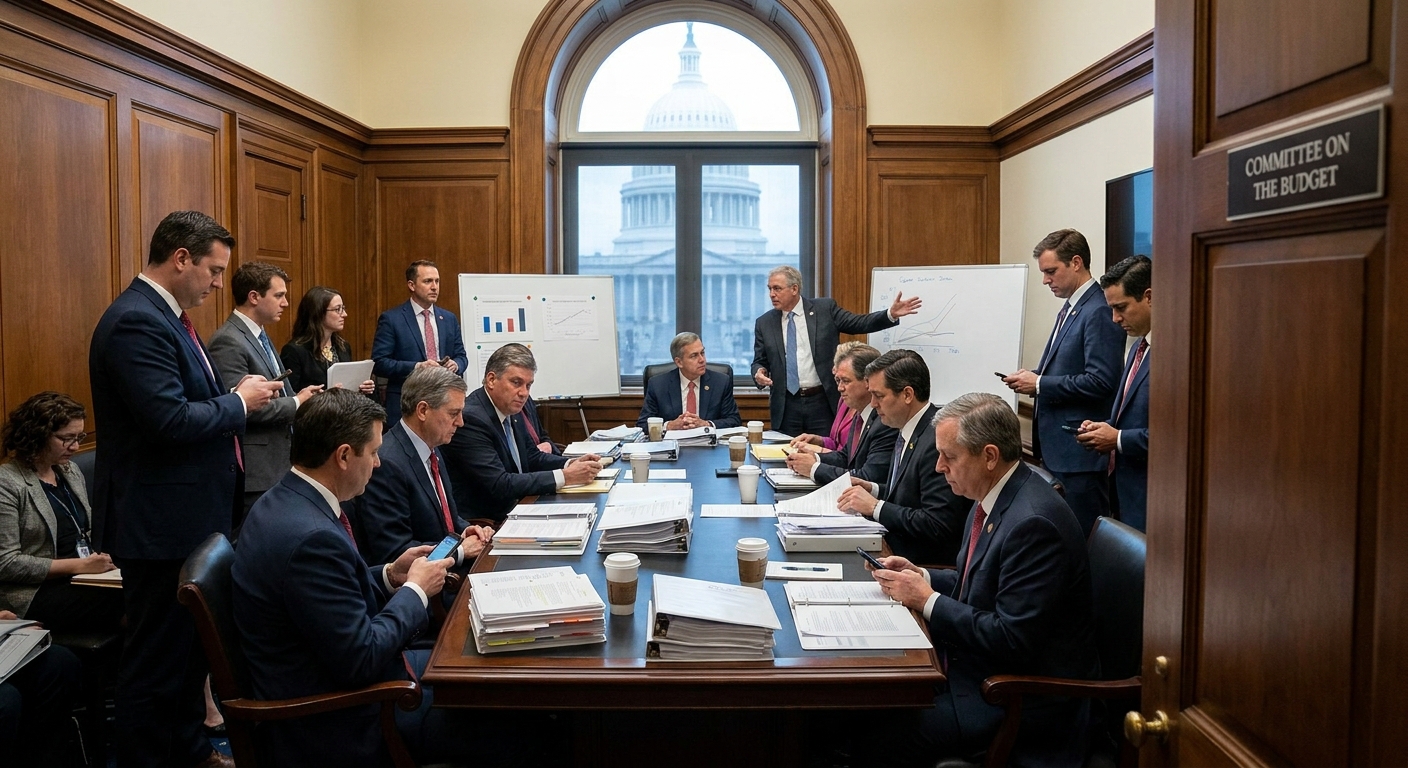
Oversight and investigations
Oversight fills the vacuum
When divided government blocks legislation, oversight often fills the vacuum. Congress’s investigative authority is not spelled out in one neat clause, but it has long been treated as an implied power connected to legislating and checking the executive branch.
Practically, that means hearings, subpoenas, reports, and public pressure.
Why it spikes under divided control
If Congress cannot easily pass laws that steer the executive branch, it can still:
- Expose mismanagement
- Shape public narrative
- Pressure agencies through appropriations and authorizations
- Signal priorities to courts, watchdogs, and future administrations
Divided government does not just produce gridlock. It often produces a parallel track where the main “output” is investigation rather than statutes.
Impeachment is more thinkable
The Constitution assigns impeachment powers to Congress: the House impeaches (Article I, Section 2) and the Senate tries impeachments (Article I, Section 3). Divided government can make impeachment politically attractive as a tool of confrontation, but it also makes conviction harder if party alignment in the Senate blocks the two-thirds threshold.
Veto politics
The veto is a bargaining position
Article I, Section 7 gives the president the power to veto bills. In divided government, veto threats shape bills before they ever reach the Oval Office.
Legislators write with the veto in mind, aiming for one of three outcomes:
- A bill the president will sign
- A bill designed to force the president to veto and take the political heat
- A bill crafted to attract veto-proof support, which is rare
Gridlock can empower the executive
Here is the paradox. The Constitution divides power to prevent overreach. But when Congress cannot act, presidents often rely more on:
- Executive orders
- Agency rulemaking
- Enforcement discretion
- Foreign policy and national security powers where the president has greater independent capacity
Those tools are not the same as statutes. They are usually easier to reverse by the next administration and more vulnerable to court challenges. But in divided government, they can become the main way policy moves.
States: same play, new rules
Governors are not presidents
Many states have separation of powers structures that resemble the federal model: a governor with veto power, a bicameral legislature, and courts that interpret state constitutions.
But states can differ in ways that make divided government feel more or less intense:
- Line-item veto: many governors can veto specific spending items without rejecting the whole bill
- Plural executive: some states elect attorneys general, secretaries of state, or treasurers separately, creating “divided executive” government even under one party
- Ballot initiatives and referenda: voters can sometimes bypass legislatures altogether
Maps can manufacture a split
Because legislative maps shape who can win seats, a state can have a governor from one party and a legislature controlled by the other for reasons that have less to do with the statewide popular vote and more to do with district design. Readers usually know the names for this: gerrymandering, and also geographic sorting where like-minded voters cluster together. Either way, divided state government can become a fight over rules, not just outcomes.
What divided government produces
Common outcomes
- More incremental lawmaking: narrower bills that can survive multiple veto points.
- More temporary solutions: short-term funding deals, extensions, and stopgaps.
- More messaging votes: bills passed to define party positions, not to become law.
- More courts: disputes often migrate to judges through lawsuits and injunctions.
- More oversight: hearings and investigations become the arena for conflict.
What it does not automatically mean
It does not always mean paralysis. Some of the most significant laws in American history have involved cross-party coalitions forged under split control, from major budget deals to landmark civil rights and welfare reforms.
But it does mean that the political system rewards patience, leverage, and timing as much as persuasion.
How to read the next headline
When you hear that government is divided, ask three questions:
- Where is the split? President vs Congress, or House vs Senate, or both?
- What is the veto math? Is any coalition anywhere near two-thirds in both chambers?
- What is must-pass this year? Funding deadlines, expiring programs, authorizations, emergencies.
Those questions turn drama into civics. They also reveal the deeper point: the Constitution does not promise easy action. It promises a process that forces power to justify itself across institutions.
Divided government is simply what that promise looks like when voters also divide.