
$5,000. Every adult citizen. A “dividend” for the country’s economic success.
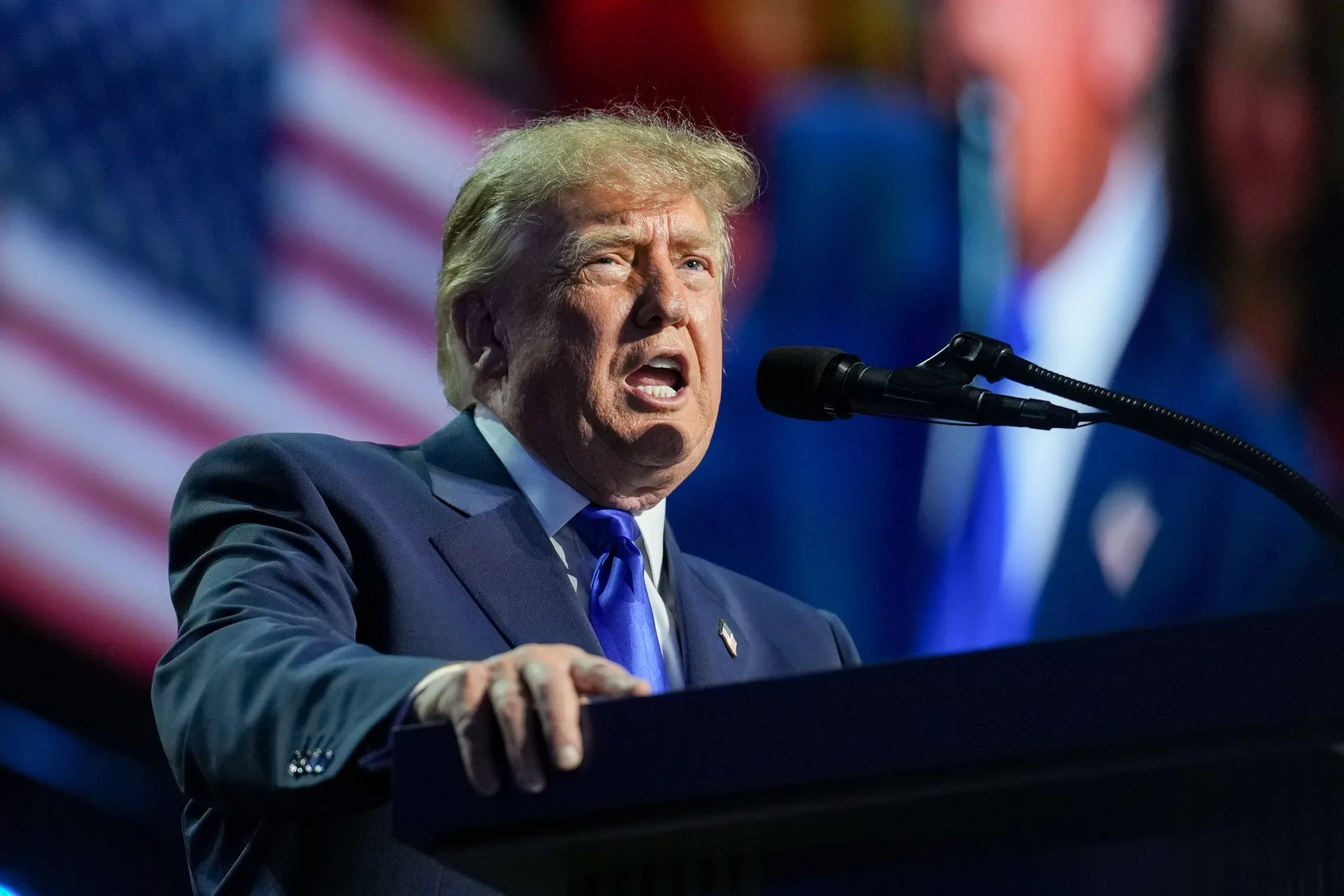
That is the promise President Donald Trump delivered Wednesday at the Republican midterm convention in Dallas, tying the payout explicitly to one political condition: Republicans must hold the House and the Senate after November.
“Here is my promise: if the Republicans win the House of Representatives and the United States Senate, both of them … because of our tremendous strength and success economically, I will issue a dividend to every adult citizen in the United States of America for $5,000,” Trump said.
It is an arresting pledge because it sounds like something a president can simply announce. In practice, the legal path for a payout this large is not self-executing, and Trump did not supply the details that would determine whether the idea is workable, lawful, or both.
Join the Discussion
What Trump says he will do
Trump framed the proposed payments as a reward for national prosperity, saying the administration could distribute the proposed “Trump dividends” “because we’ve done so well and because our country is making so much money.” He also added a restriction in broad strokes: the money should be spent in the United States, not abroad, quipping, “We don’t want you going to Canada to spend the money. We don’t want you going to China, to Germany.”
He did not lay out a statutory mechanism, a funding source, an implementing agency plan, or how an “in the U.S. only” spending rule would be enforced in practice.
He also tied the promise directly to partisan control of Congress. That is politically normal. Legally, it points to a practical reality: on big new federal spending, Congress is usually part of the story.
The first legal question
The legality of this kind of disbursal is unclear. The core tension is familiar: the Constitution gives Congress the power of the purse. Article I, Section 9 includes the Appropriations Clause: “No Money shall be drawn from the Treasury, but in Consequence of Appropriations made by Law.”
In plain English, federal money typically leaves the Treasury through authority Congress has enacted, not by presidential announcement alone. That said, the key word here is typically. Without details, it is hard to know whether an administration would argue it can rely on existing authority, or whether it would need Congress to create and fund a new program.
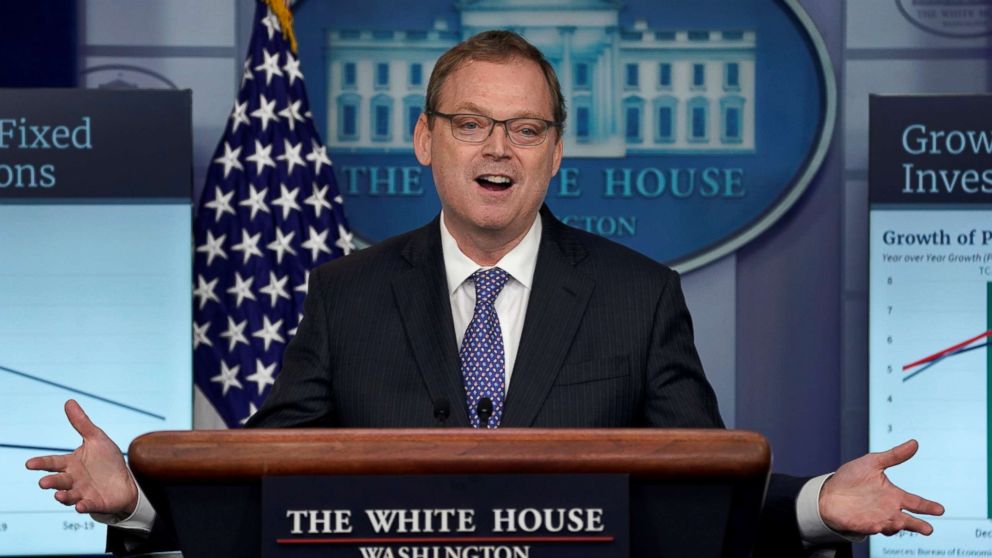
This is not a new ambiguity in Trump’s orbit. Last year, he promised to distribute $2,000 “tariff dividend” checks to Americans but was vague about specifics. Trump said he didn’t “believe” he needed congressional approval for the tariff checks, but National Economic Council Director Kevin Hassett later suggested Congress would have to be involved.
The price tag problem
There are about 270 million adults in the United States. At $5,000 each, the gross price tag is roughly $1.35 trillion before you even reach questions like eligibility, opt-outs, incarceration status, tax treatment, benefit offsets, or the cost of administration.
That scale forces the real question: Where would the legal authority come from, and where would the money come from?
Congress can fund large programs. But it would have to decide to do it, and it would have to do it through the legislative process. A promise is not an appropriation.
Domestic spending rule
Trump’s proposed spending limitation, the idea that recipients could only use the money in the U.S., comes with immediate, unresolved implementation questions. Trump offered the restriction as a concept, but no blueprint.
- What is the instrument? A check? Direct deposit? A debit card? A tax credit?
- What does “in the U.S.” mean? U.S.-based merchants only? U.S.-headquartered companies? Purchases physically made on U.S. soil? Online purchases routed through foreign processors?
- Who would police it, if anyone? Treasury? The IRS? Another agency? And under what statutory authority?
Congress can, in theory, create restricted-use benefits. But the more a program begins to look like a tightly controlled voucher rather than cash, the more administrative infrastructure it tends to require, and the more political pushback it can generate.
Is it legal?
Here is the cleanest way to think about the legality question based on what is known and what is not.
Could Congress pass a law authorizing a nationwide payment to citizens? Yes. Congress has broad taxing and spending authority, and it has used that authority for direct payments before in different contexts.
Could a president do it unilaterally, without Congress? That is where things are uncertain. A straightforward reading of the Appropriations Clause suggests most large, new cash outlays sit on Congress’s side of the ledger. But without knowing what legal hook the administration might cite, it is hard to say how the argument would be framed, or how strong it would be.
If an administration attempted to fund a universal payment without new legislation, it could draw scrutiny over whether the executive branch is spending without a valid appropriation or repurposing money Congress did not authorize for this use. Whether that turns into a courtroom fight would depend on the specific mechanism and who challenges it.
What would need to happen
If you strip the politics out and focus on the civics, a workable roadmap would likely look like this:
- A bill would need to be introduced spelling out eligibility (Trump said “every adult citizen”), timing, payment method, and whether the dividend is taxable income.
- Congress would need to authorize the spending through an appropriation or another form of budget authority.
- Congress would have to identify funding, whether through borrowing, new revenue, reallocated spending, or some combination.
- An agency would have to administer it, likely through Treasury mechanisms, and build any compliance rules for a domestic-use restriction.
- The president would sign it, or veto it. If vetoed, Congress would need the votes to override.
That is not cynicism. It is the system: Congress controls the money, and the executive branch executes what the law actually says.
Why it lands
Cash proposals thrive in American politics because they treat government like a single actor. The Constitution intentionally splits it into competing actors.
When a president promises money if Congress stays in one party’s hands, it is not just campaign leverage. It is also a nod to reality: big fiscal moves usually require Congress to act.
That separation of powers can feel like a brake pedal. That is the point. The Founders were wary of concentrated authority, especially authority over money. They designed a system where major spending requires more than one election and more than one branch.
Bottom line
Trump promised a $5,000 “dividend” to every adult citizen if Republicans retain control of Congress after November. He pitched it as a reward for economic success and added that it should be spent only in the United States.
What he did not provide, and what matters most, is the legal and legislative machinery. Congress can authorize direct payments. A president can push for them. But without a clear statutory path and funding plan, the legality remains unclear, and the question of whether congressional approval is required is still unanswered.
Quick FAQ
Would every adult actually qualify?
Trump’s wording was “every adult citizen.” Any enacted law would still have to define proof of citizenship, age, residency rules, and edge cases, like citizens living abroad.
Would it require Congress?
It is unclear based on what has been proposed publicly. As a practical matter, a new nationwide payout at this scale would typically require congressional authorization and funding, because federal funds generally cannot be spent without a law passed by Congress.
Can the government restrict how you spend cash?
Congress can design benefits with restrictions, but true cash is hard to police. A domestic-use limit would likely require a constrained payment method and extensive rules, which would themselves become part of the political and legal fight.