

You can feel the tension in this question because it sits at the intersection of two powerful government functions: collecting taxes and enforcing immigration law. And it triggers a very American instinct: if the government already has my information, can it hand it to someone else?
The crucial starting point is not a newly discovered constitutional rule or a sudden court block. It is older and more structural: federal law makes tax return information confidential by default.
If you have seen viral claims along the lines of “a court just stopped the IRS from giving your address to ICE,” treat them with caution. The more accurate framing is: Congress has long restricted IRS disclosures through statute, and any effort to turn IRS files into immigration-enforcement leads runs into that statutory firewall and its narrow exceptions.
Join the Discussion
Start with the law

The core legal fight is a familiar but often misunderstood point of law: most tax-return privacy is not protected by a single, explicit constitutional sentence. It is protected primarily by a statute with a number tax lawyers can recite from memory: 26 U.S.C. § 6103, plus overlapping safeguards like the Privacy Act and IRS disclosure regulations. Constitutional doctrines can matter at the margins, but Section 6103 is the main day-to-day barrier to routine sharing.
Section 6103 starts from a presumption that surprises people the first time they see it: tax returns and “return information” are confidential by default. The statute broadly restricts disclosure by IRS employees and other officials who have access to tax data.
It is not limited to your full tax return. The statute defines “return information” expansively, which can include identifying information (like addresses), the fact that you filed, and other data gathered in connection with tax administration.
What people get wrong
A common misconception is that there must be a fresh court order each time the IRS does not share data with another agency. Usually, the story is simpler: the IRS is already barred unless a specific exception applies.
Another misconception is that the executive branch can create a new information-sharing pipeline through executive policy alone. Section 6103 is written like a lock with many keys. If an agency wants disclosure authority, it has to point to a specific key Congress provided, and use it in the way Congress described.
This also means you should be skeptical of neat one-liners that imply the baseline rule is up for grabs. There can be real litigation around Section 6103 in various contexts, but the existence of a strong statutory firewall is not news. It is the baseline.
The exceptions are narrow

Section 6103 contains enumerated exceptions that allow disclosures in specific circumstances, to specific recipients, for specific purposes, and often with specific procedures. A key idea that gets lost in public debate is that many exceptions are not just about who receives the information. They also impose purpose limits on how it may be used.
It helps to make the exceptions concrete. Section 6103 includes pathways that can, in the right circumstances, support information-sharing for law enforcement and administration, but they are narrow and purpose-bound.
- Tax administration and litigation: disclosures to the Department of Justice can be authorized for tax administration, including certain criminal tax investigations and tax-related court proceedings, subject to statutory conditions.
- Non-tax criminal investigations (limited pathways): in some circumstances, return information can be disclosed for non-tax federal criminal investigations, but only through specific statutory mechanisms and procedures, not as a standing, open-ended feed.
- State tax administration: in defined circumstances, return information can be disclosed to state tax officials to help administer state tax laws, with safeguards on further use.
- Specific statutory programs: Congress has created targeted disclosures for particular programs, typically with detailed limits on who gets the data and why.
The theme is consistent: Congress sometimes authorizes disclosure, but it does so with strings attached. A policy that looks like a general-purpose pipeline into another enforcement system is where legal risk rises fast.
Why an address still matters
Many readers focus on one detail: “Is it really a big deal if it is just an address?”
Under tax confidentiality law, that can still be a big deal because:
- Addresses can be “return information” when they are taken from a return or obtained by the IRS in connection with tax administration.
- Addresses are operationally powerful in enforcement. They can be used to locate people, connect databases, and build investigative leads.
- The statute is not a sensitivity test. Section 6103 does not say “disclose harmless items freely.” It says “do not disclose return information unless an exception applies.”
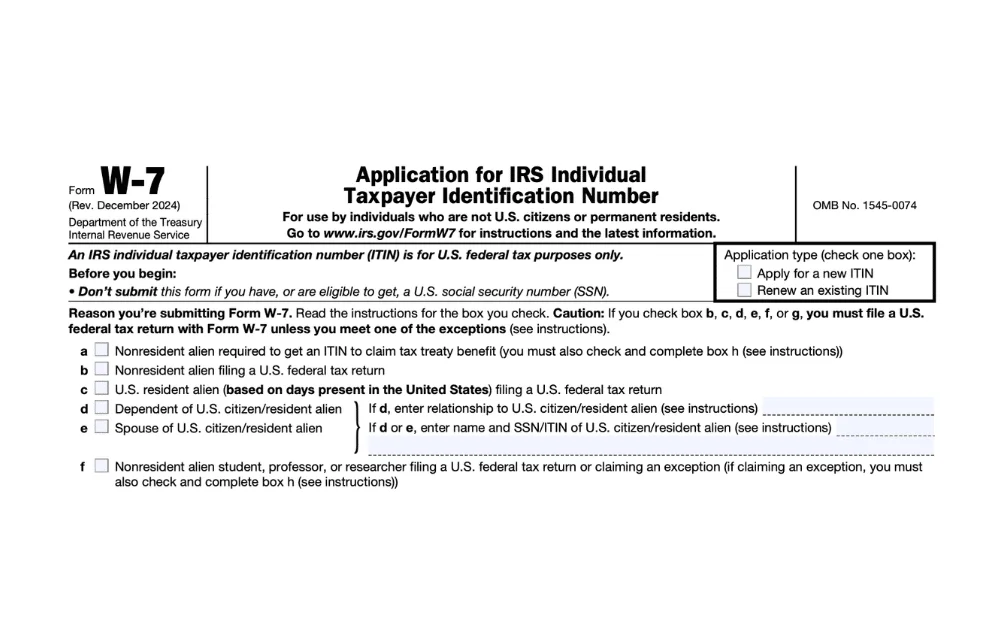
This is also why immigration-focused tax filing often comes up in the same conversation. Many noncitizens file taxes using an Individual Taxpayer Identification Number (ITIN) requested via IRS Form W-7. Whatever your policy views, the compliance logic is straightforward: taxpayers are more likely to file if they believe tax information will not be repurposed outside the tax system except where Congress clearly allows it.
Statutes, not the Constitution
When people hear “government sharing my data,” the Constitution is the first place they look. But the Constitution usually enters this story indirectly, with the day-to-day rules coming from statutes like Section 6103.
Fourth Amendment limits vary
The Fourth Amendment protects against unreasonable searches and seizures. But once you have provided information to the government as part of a regulatory system, constitutional privacy claims can be complicated. Courts have long debated how privacy principles apply to records held by third parties and by the government, sometimes described as the “third-party doctrine,” with modern refinements in cases like Carpenter v. United States.
Tax return confidentiality, though, developed largely as a legislative choice: Congress decided that tax administration works better when taxpayers can trust their information will not be repurposed freely.
Other claims can appear
Broad data-sharing programs can raise due process or equal protection issues if they are implemented in a way that deprives people of rights without adequate process, or if they become a tool for discriminatory enforcement. Those claims can be harder to litigate than a straightforward statutory argument, which is one reason Section 6103 is so often the focal point.
Where ICE fits
Because the question is usually about immigration enforcement, it helps to say this plainly: DHS and ICE are not routine recipients of federal tax return information under Section 6103. If immigration enforcement seeks IRS “return information,” the government still has to fit the request into an existing statutory exception and follow the exception’s procedural and purpose limits, often involving formal requests routed through the channels Congress specified rather than direct, day-to-day access.
What can change

Two things can move the legal landscape:
- Congress can amend Section 6103 to create broader disclosure authority, or tighten it further.
- Courts can interpret the scope of an existing exception when a real dispute is properly teed up in an actual case.
But absent a lawful exception, the default rule remains confidentiality. That is not a rumor and it does not depend on a recent court block. It is how the tax code is designed to work.
Bottom line
The best way to understand this issue is not as a new constitutional discovery or a brand-new court injunction. It is a reaffirmation of a basic principle: tax information is confidential because Congress made it confidential, and executive agencies cannot treat IRS files as a general inter-agency resource unless a specific statutory exception authorizes it.
If you are looking for the constitutional lesson, it is this: in American law, privacy often lives in the spaces between clauses, but it also lives in the deliberate choices Congress makes about how government power should be used. Section 6103 is one of those choices, and it does exactly what it was designed to do.
Quick FAQ
Can the IRS share my tax return with ICE?
Not as a general practice. Tax returns and related “return information” are confidential under 26 U.S.C. § 6103 unless a specific statutory exception permits disclosure and the government follows the exception’s procedural and purpose limits. DHS and ICE are not routine recipients under the statute.
Does the Constitution explicitly protect tax privacy?
No. The Constitution does not mention tax return confidentiality, and there is no explicit “right to privacy” clause. The primary protections here are statutory, with constitutional issues sometimes arising in the background depending on how information is sought or used.
Could this change?
Yes. Congress can amend the tax code to create broader disclosure authority, and courts can interpret existing exceptions differently in future cases. But absent a lawful exception, the default rule is confidentiality.