Immigration law is full of gray areas. Not moral gray areas. Jurisdictional ones.
Who decides whether a person has actually “entered” the United States? Who gets to decide which immigrants keep a lawful foothold after years inside the country? And perhaps most consequentially, when agencies make big calls about legal status, how much room do courts have to intervene?
This week, the Supreme Court answered those questions with two decisions, both decided 6-3, that tighten the legal pathways for immigrants to remain in the country. In one major area, the rulings also limit the ability of federal courts to second-guess an immigration judgment. In practice, the decisions hand President Trump more room to execute the immigration agenda he is already pursuing, including his stated goal of mass deportation. The combined effect is not subtle. It is a shift toward presidential control of immigration enforcement, accomplished through the Court’s reading of existing authority, not through a new statute from Congress.
Join the Discussion
The asylum line moved
The asylum ruling centers on a deceptively simple requirement: where must an asylum seeker be, physically, to invoke the protections of U.S. asylum law?
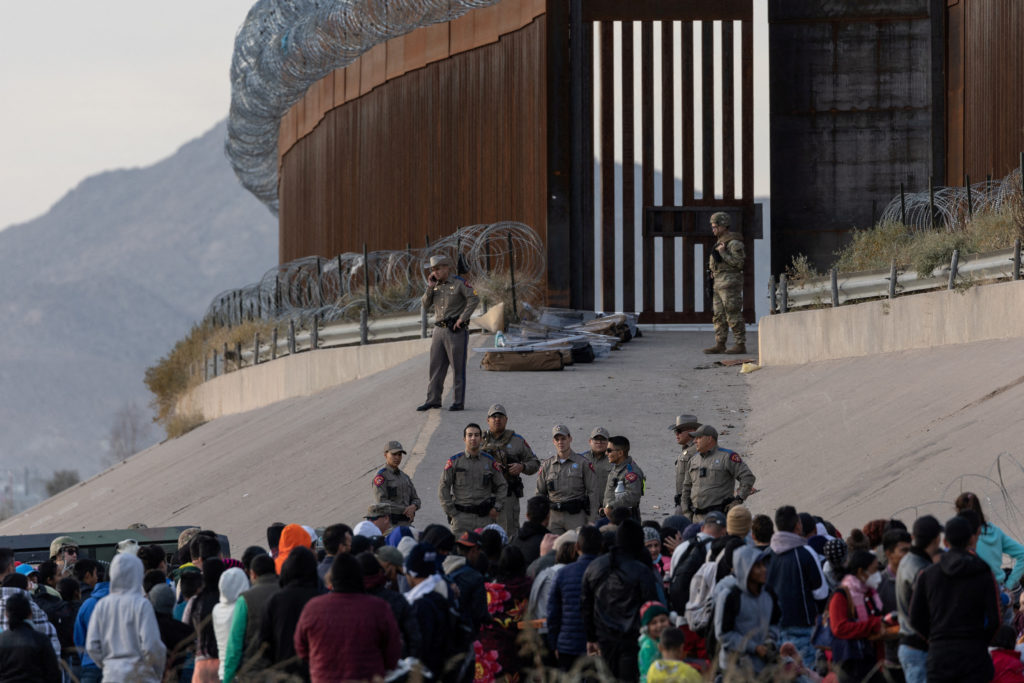
The Court backed a policy that allows Customs and Border Protection agents to turn away asylum-seekers before they cross the U.S. border. Under the order, asylum-seekers need to fully cross the U.S. border to claim asylum. If officers stop and return the person while they remain on the Mexico side, the administration treats them as ineligible to apply for legal protections to be in the U.S.
This is not just a procedural detail. It becomes a legal gate. And like most gates in immigration law, it does not simply slow the line. It decides who is eligible to make a claim at all.
Why “entry” matters
In ordinary life, “crossing the border” sounds like a geographic fact. In immigration law, it is also a switch that determines which rules can be invoked and when.
Historically, federal immigration policy has treated the border as a threshold where different rules apply depending on whether someone has been admitted, is seeking admission, or is considered to be outside the country even while physically near it. Courts have often allowed the political branches wider latitude at that threshold, especially when national sovereignty and border administration are invoked.
So when the Court endorses an order that defines who counts as having crossed, it is not only interpreting statutory language. It is shifting practical control toward executive officers making real-time decisions at ports of entry and along the border.
The consequence is straightforward. Some people who would have sought asylum through the formal process may never reach the point where the legal process recognizes them as eligible to begin. That fits neatly into an administration that has made limiting permission to enter and remain in the United States a central operational goal.
TPS and the courts
The second decision targets a different form of protection: Temporary Protected Status, or TPS.
TPS is not asylum. It is a time-limited designation offered to nationals of certain countries facing extraordinary danger such as war, natural disasters, or severe political instability. It provides protection from deportation and allows recipients to work legally in the United States. Each country’s TPS designation can last six to 18 months, and renewal or termination is left to the discretion of the secretary of Homeland Security.
In a 6-3 ruling, the conservative majority concluded that the president has virtually unrestrained power to end the program known as TPS. The case focused on TPS recipients from Haiti and Syria, totaling about 300,000 people, but the logic extends beyond those two designations. The Court agreed with the government that making those designations is up to the secretary and not subject to legal review.
That is the clearest power shift in these two cases. When a decision is “not subject to legal review,” the courts are not merely deferring. They are stepping aside.
After TPS ends
When TPS is terminated, recipients face a narrow set of options. Some may be able to adjust to another lawful status, but immigration law offers limited routes, especially for people whose lives have been built around a program that was always labeled “temporary.”
For those who cannot adjust, the choices collapse into two: depart, or remain without lawful status. Remaining can trigger familiar enforcement consequences, including arrest, detention, and deportation. It can also ripple through workplaces, because employers cannot lawfully continue employing individuals who lose work authorization when TPS ends.
Attorney Ira Kurzban, who represented Haitian TPS holders, emphasized that the affected population is not isolated from American life. “Their families are American citizens. They have American citizen children,” he said. He added, “You’re talking about millions of people in the United States who contribute to the economy.”
Kurzban also warned the government could immediately begin deporting people if they have received final orders of removal while the cases have been pending in courts.
That is the human reality behind administrative discretion. A program may be labeled temporary, but the families formed under it are not.
Trump’s policy runway
Put the two decisions together and a pattern emerges.
- At the border, the administration gains more room to prevent asylum claims from ever ripening into a formal legal process.
- Inside the country, the administration gains more insulation from courts when it withdraws a large-scale, legally recognized protection like TPS.
For President Trump, this is not theoretical. He has a broader goal of mass deportation, and his administration has already terminated TPS for nearly every country that has had it since the start of his term. These rulings make it easier to expand the pool of people eligible for deportation, including people who were already legally here.
DHS General Counsel James Percival framed the decisions as enforcement capacity, saying they provide the agency “several more important tools to continue securing our borders.” That language matters because it signals how the rulings will be used: as operational authority, not as a narrow legal clarification destined to sit quietly in a casebook.
Where Congress is
If you are looking for Congress in this story, you will mostly find absence.
The Constitution gives Congress the power to write immigration laws, fund enforcement, and set the rules that agencies must follow. But when statutes are broad or ambiguous, the executive fills the gaps through policy. And when courts decline to review a major category of executive action, those gaps become wide lanes.
That is the structural tension these cases highlight: immigration in America often functions as a contest between national legislative power in theory and presidential administrative power in practice.
The asylum case is about threshold access: who gets to invoke the process at all. The TPS case is about insulation from judicial review: who can end a protection, and whether courts can meaningfully stop it. Together, they shape who gets to be the primary architect of immigration policy between elections.
The real question
Americans argue about immigration in moral terms, cultural terms, and economic terms. But the Constitution pushes a different question to the surface:
How much of immigration policy should be made through durable, legislated rules and how much should be made through executive control that can change from one administration to the next?
These decisions do not end that debate. They sharpen it. And they remind us of something easy to forget in a polarized moment: the deepest fights are often not over what policy should be, but over who gets to decide.