
There is a particular kind of legal mess that doesn’t come from the Constitution itself. It comes from a lower court deciding, repeatedly, that it knows better than everyone else, including the Supreme Court.
That is where we are again with federal regulation of horse racing. A deeply conservative federal appeals court has once more ruled that Congress’s attempt to create uniform national safety and integrity standards for the sport is unconstitutional. The result is not only another likely trip to the Supreme Court, but another stretch of uncertainty for the people and animals the law was meant to protect.
Join the Discussion
A pattern: bold rulings, quick reversals
The Supreme Court reverses lower courts all the time. That is part of the design. But the current dynamic between the Supreme Court and the U.S. Court of Appeals for the Fifth Circuit has started to look less like ordinary error correction and more like routine damage control.
Here is the clearest data point. In the prior Supreme Court term, the justices reviewed 13 Fifth Circuit cases and reversed the court in 10 of them. This term, the Fifth Circuit has already been reversed six times, with more cases still in the pipeline.
In plain English: the Fifth Circuit has been acting like a court that expects to be overruled and is comfortable with that outcome.
Why horse racing became a test case
The horse racing case is not a culture-war headline grabber at first glance, which is exactly why it matters. Congress passed a law in 2020 after years of scandals and a patchwork system in which rules varied state to state. The goal was basic and practical: create nationwide standards for safety, medication controls, and enforcement after the state-by-state approach failed to prevent equine fatalities and corruption scandals.
Rather than build a new federal agency or load an existing one with day-to-day regulation, Congress chose a modern hybrid model. The 2020 law delegated rulemaking and enforcement power to a private corporation, the Horseracing Authority.
This is the constitutional pressure point. When a statute gives a private entity a meaningful role in public regulation, courts ask whether Congress has handed over “government power” in a way the Constitution does not allow.
That concern is often discussed under the umbrella of “nondelegation” principles. There is a specific variation sometimes called the private nondelegation doctrine, which focuses on whether a private body is exercising federal power without sufficient public accountability.
The case and the rerun ruling
Thursday’s decision came in National Horsemen’s Benevolent and Protective Association v. Black, and it is best understood as the Fifth Circuit trying, yet again, to pull the plug on the same federal regulatory design.
This dispute has been running in circles for years.
First, the Fifth Circuit struck down the federal horse racing regulatory structure in 2022, concluding that the setup placed too much governmental authority in private hands without enough supervision. The court said Congress had delegated “government power to a private entity without sufficient agency supervision.”
Congress responded by amending the law to strengthen the role of the Federal Trade Commission. The revised statute gave the FTC the last word on the rules and enforcement decisions.
The Fifth Circuit still invalidated the updated law in 2024, again saying the private authority retained too much enforcement discretion.
After that, the Supreme Court intervened on an emergency basis and blocked the Fifth Circuit from effectively wiping out the federal system while the litigation continued. Seven months later, the Supreme Court formally tossed the Fifth Circuit’s decision and sent the case back down with instructions to reconsider it in light of a major new precedent: FCC v. Consumers’ Research.
What Consumers’ Research means here
In Consumers’ Research, the Supreme Court upheld a regulatory arrangement that involved a private entity operating under federal agency control. The key idea was straightforward: Congress can delegate authority to a private entity so long as that entity “functioned subordinately to” a federal agency that “retains decision-making power.”
The constitutional safe harbor is functional. If the agency can approve, reject, revise, and ultimately control the rules and enforcement, then the private actor is not the one truly wielding federal power.
That logic maps directly onto the amended horse racing statute, where the FTC has final authority over the rules and can review enforcement decisions.
Other circuits followed the cue
When the Supreme Court sends a case back with a new precedent in hand, lower courts usually adjust course. In the horse racing dispute, other federal appeals courts did exactly that.
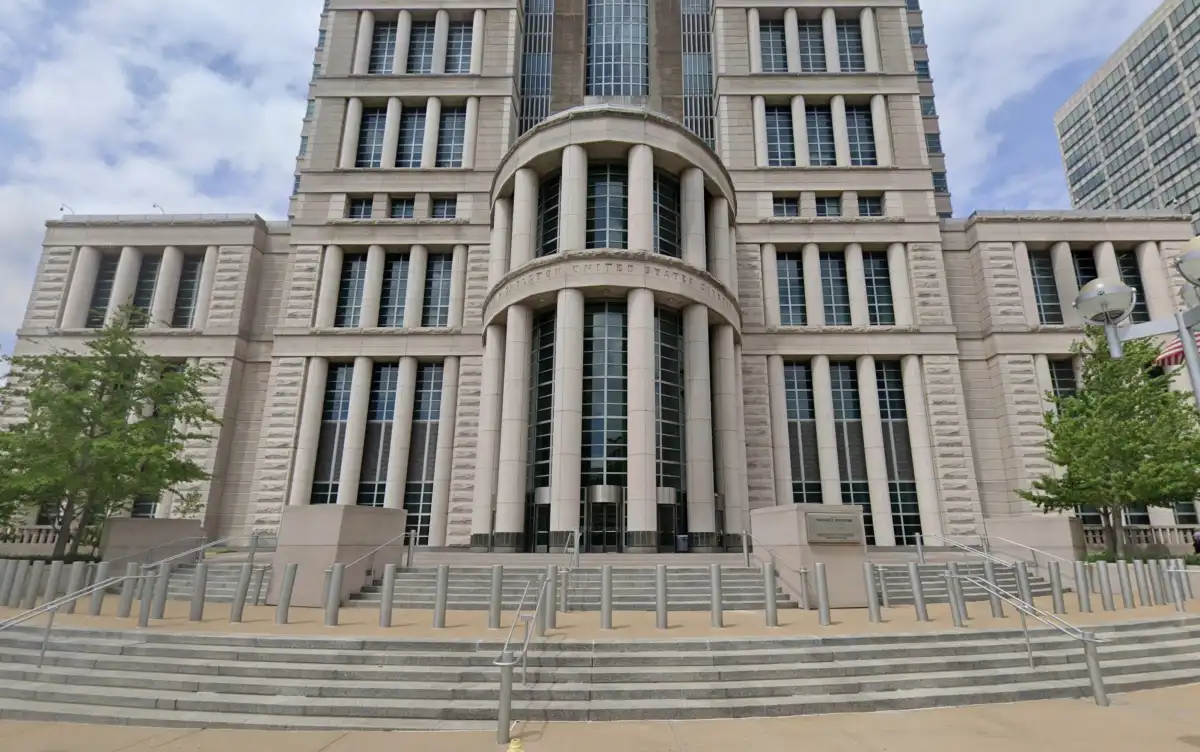
The U.S. Court of Appeals for the Sixth Circuit upheld the federal statute, emphasizing that the FTC retains “ultimate discretion” over the rules governing the industry. Chief Judge Jeffrey Sutton wrote that “the FTC is free to micromanage every particularized decision the Authority makes.”
The U.S. Court of Appeals for the Eighth Circuit reached the same bottom-line conclusion: the revised structure places the private authority under sufficient public supervision to satisfy the Constitution.
The Fifth Circuit dug in
Despite the Supreme Court’s remand and the reasoning of sister circuits, the Fifth Circuit again concluded the horse racing law is unconstitutional.
The opinion, written by Judge Stuart Kyle Duncan, focused on the enforcement role of the private Horseracing Authority and treated the FTC’s oversight as insufficient. When presented with comparisons to a private board operating under the Securities and Exchange Commission, the court highlighted narrow structural differences, including the point that the SEC can remove board members for cause while only the Authority as a whole can remove its own board members.
Most strikingly, the Fifth Circuit treated Consumers’ Research as support for staying the course. Judge Duncan asserted that the Supreme Court’s discussion of private nondelegation “only reinforces our previous conclusion.”
Why it matters beyond the track
Horse racing may seem niche. But the legal principle at stake is not. Modern government depends on specialized regulation, and Congress cannot write every technical rule itself. It routinely relies on agencies and supervised entities to fill in details.
If courts treat supervised regulatory bodies as unconstitutional simply because a private organization is involved at any stage, the consequences spill far beyond one industry.
There is also the real-world cost of uncertainty. Even if the Supreme Court eventually reverses the Fifth Circuit again, the period between a disruptive ruling and a final fix is not harmless.
Regulators hesitate.
Industry actors exploit gaps.
Workers, consumers, and in this case animals, absorb the risk.
And this is not happening in isolation. The horse racing decision fits a broader pattern in which the Fifth Circuit embraces aggressive anti-regulatory theories and dares the Supreme Court to clean up the aftermath.
The Supreme Court’s bind
When a lower court repeatedly issues rulings that appear out of step with Supreme Court guidance, the justices face an awkward choice.
They can keep reversing, case by case, which preserves the immediate regulatory system but also normalizes the lower court’s behavior. Or they can take more aggressive steps to clarify doctrine and deter repetition, which consumes time and attention that could be spent elsewhere.
Either way, the Fifth Circuit’s approach effectively forces the Supreme Court to spend docket space cleaning up problems that did not need to exist.
And for readers who are trying to understand how the judiciary is supposed to work, this is the simple takeaway: our system depends on lower courts following higher-court precedent. When that norm weakens, the rule of law starts to feel less like a stable set of rules and more like a rolling series of temporary outcomes.