
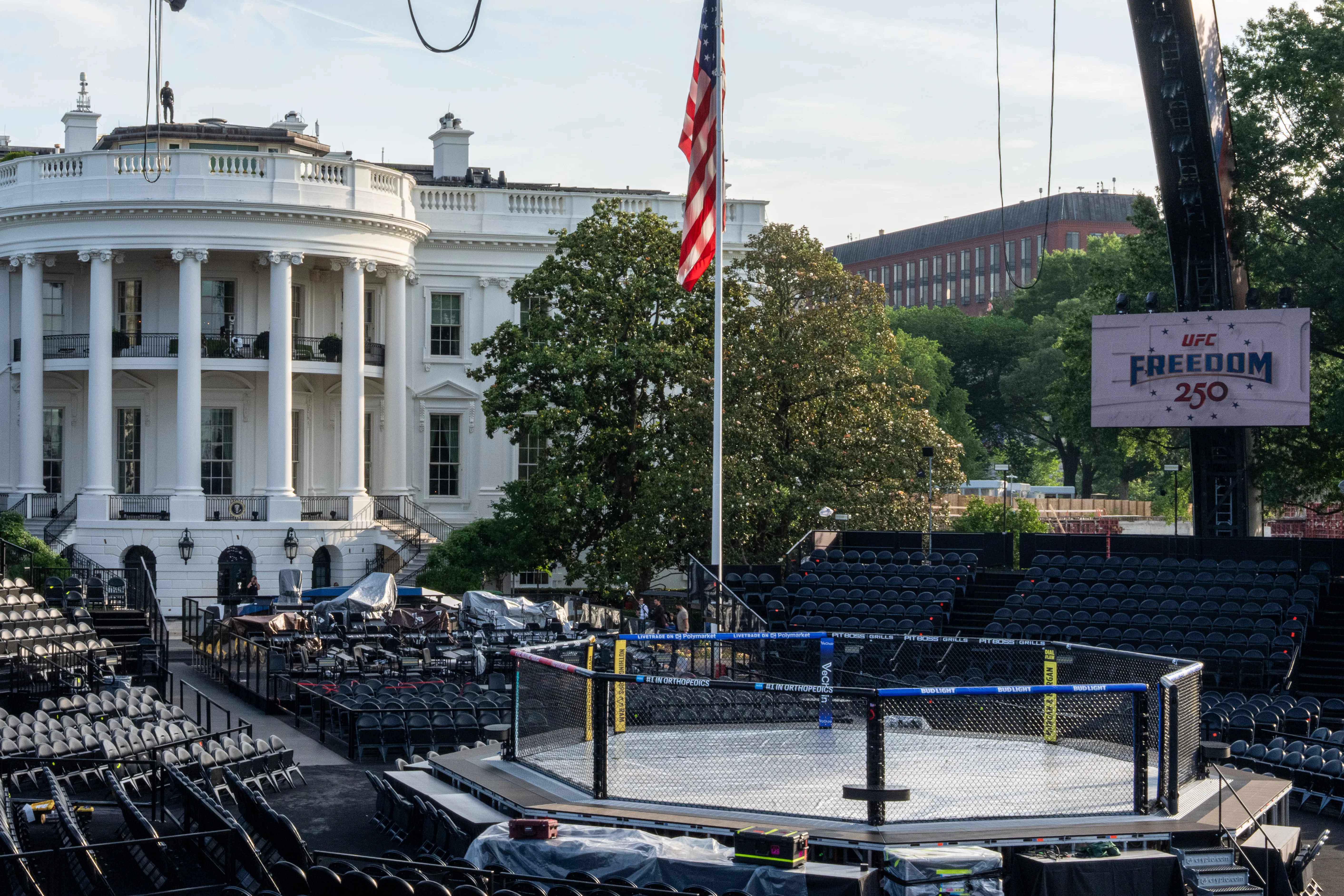
A cage on the White House South Lawn is not the kind of sentence most of us expect to read in a civics lesson. And yet, this weekend, an Ultimate Fighting Championship fight night is scheduled with “The Octagon” built on the South Lawn, timed to President Donald Trump’s 80th birthday and framed as part of a wider patriotic moment heading into the nation’s 250th anniversary celebrations next month.
About 4,000 invite-only attendees are expected. The card is set to include two title fights, and broadcaster Joe Rogan is slated to commentate. The administration has said more than $60 million has gone into preparations, involving seven federal agencies, while maintaining that the UFC is paying the majority of the cost.
That is the practical outline. The civic question is harder, and more useful: What, exactly, is a presidency allowed to do when it borrows the imagery of private entertainment and pins it to public space?
Join the Discussion
What is different
The White House hosts plenty of events that are not strictly governmental in the narrow sense: holiday celebrations, Easter gatherings, cultural performances, sports team visits. The difference here is not merely that the event is loud or violent or unusual. The difference is that a private combat-sports brand is being staged at the symbolic center of the executive branch, with attendance restricted to an invite-only list that is subject to the administration’s will.
Even if no federal law is violated, the tension is easy to recognize. The White House is both a workplace and a national symbol. When it becomes a set for a large-scale spectacle, Americans are left to wonder whether the presidency is being used to represent the nation, or to amplify a personal image of power.
No blank check
The Constitution does not contain a neat paragraph titled “The President and Entertainment.” Instead, the limits come from several overlapping ideas:
- The president’s job is public. Article II vests executive power and imposes duties. That does not forbid ceremony, but it frames the presidency as an office held in trust, not a personal platform.
- Congress controls spending. Even when the executive branch organizes an event, money and resources exist within appropriations and legal authority. That is why details like agency involvement and who pays actually matter.
- Official action carries weight. A president can attend, praise, or enjoy private entertainment. The more an event looks and feels like it is being conducted as the state, the more it raises questions about improper use of public resources or public office.
Those are governing principles, not just etiquette. The Constitution assumes we will argue about what is proper, and it gives us tools to do it: oversight, appropriations, hearings, elections, and sometimes litigation.
How we got here
Trump’s connection to combat sports is not new. In the late 1980s, he promoted WrestleMania events at a venue near his Trump Plaza Hotel and Casino in Atlantic City in 1988 and 1989. He later appeared in WWE storylines and participated in the “Battle of Billionaires” angle in 2007, backing a fighter opposite Vince McMahon.
Lowery Woodall, a professor at Millersville University in Pennsylvania who studies wrestling, has argued that professional wrestling’s flexible relationship with truth can be part of the appeal for a public figure who thrives on narrative control. Woodall put it this way: “The truth, as is told to the audience, becomes whatever is needed within that moment… which feels quite frankly very much aligned with Trump’s own political messaging outside of the world of professional wrestling.”
That quote matters here because it highlights the core mechanism of political spectacle: it turns politics into a story where the leader chooses the stage, sets the roles, and tries to write the emotional conclusion before voters ever weigh in.
Symbolism and power
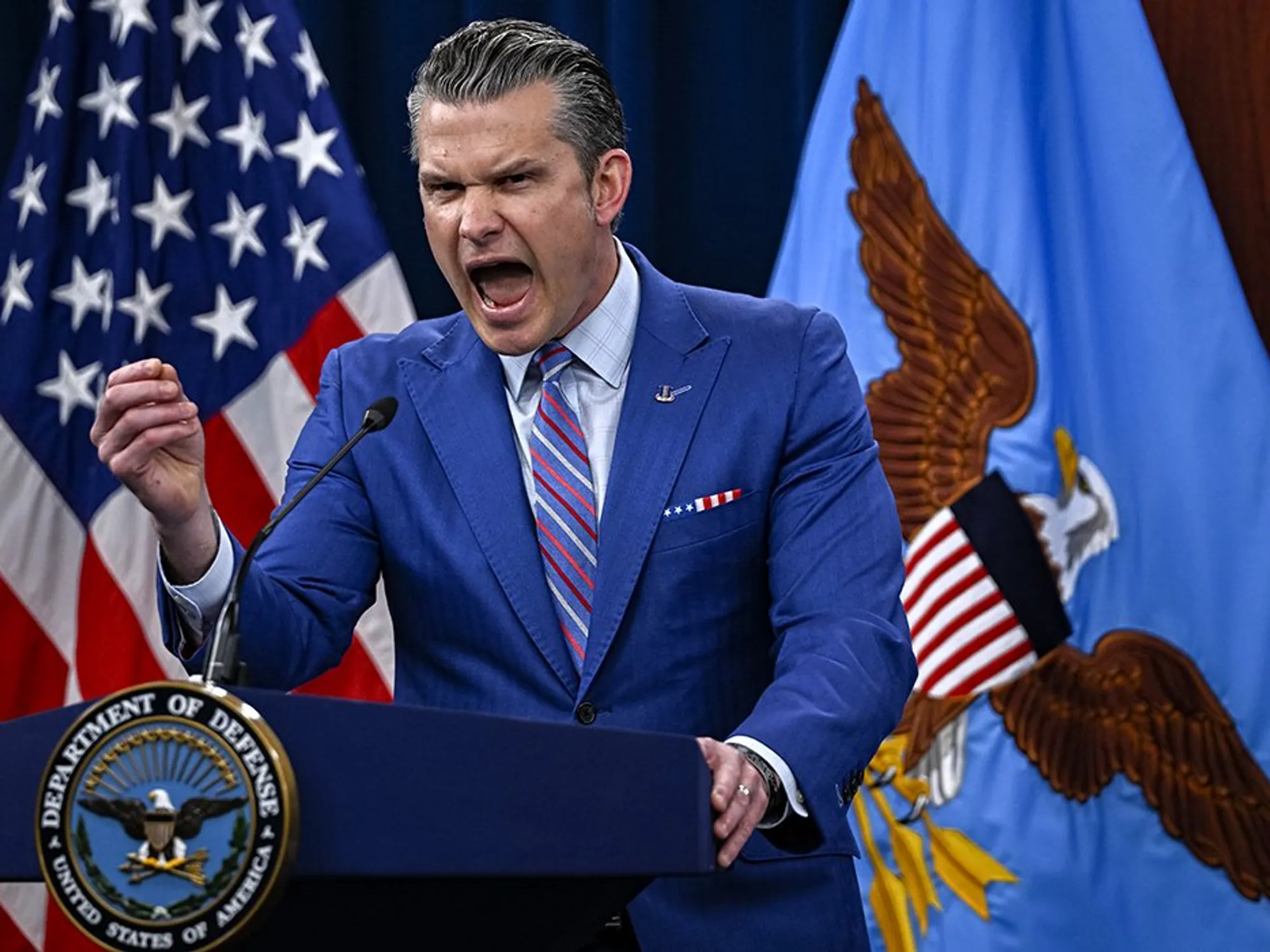
The fight night is being presented as more than entertainment. It is being framed as a statement about national identity, toughness, and what kind of country the administration wants to project. Kyle Kusz, a professor at the University of Rhode Island, said the event appears to be an attempt to project a “warrior-style sporting masculinity,” what he described as Trump’s “sporting vision of an ideal nation.” That echoes the administration’s vows, espoused by Pentagon Chief Pete Hegseth, to return a “warrior ethos” to the US military.
In the same week as the White House preparations, the government also moved to link the UFC brand with foreign policy messaging. On Thursday, UFC President Dana White and Secretary of State Marco Rubio signed an agreement aimed at promoting UFC as part of what Rubio described as a “sports diplomacy” initiative. Rubio called the UFC “the United Nations of fighting” and described the brand as distinctly American.
This is where civic concerns become practical: the more the government wraps itself around a private brand, the more Americans have to ask whether public office is being used to create private advantage, or political advantage that is inseparable from a commercial product.
Is it illegal
From the facts currently public, the question is less “is it automatically unconstitutional?” and more “what rules are implicated, and who enforces them?” Here are the big buckets.
1) Permitting and process
At least one lawsuit sought to stop the event, arguing it did not go through proper federal permitting. That effort was unsuccessful. In court filings, the administration emphasized the scale of the planning, including the seven federal agencies involved and the more than $60 million poured into the proceedings.
2) Spending and reimbursement
Even if the UFC pays most of the bill, government involvement is rarely free. Security, staffing, site preparation, and agency time are real public resources. In a constitutional system, the public is allowed to demand clarity about what is being paid for, under what authority, and whether reimbursements are real, complete, and documented.
3) Ethics and access
“Invite-only” is not inherently unlawful. But it is politically combustible because it uses a public symbol for private selection. If the guest list is controlled by the administration, it raises obvious questions about favors, donors, and who gets proximity to power.
4) Military optics
A Pentagon memo cites the “high visibility” of the event, and attending members of the US military must meet a waist-to-height ratio. Whatever one thinks of fitness standards, tying service-member participation to an entertainment spectacle underscores that this is not just a private party. It is a government-adjacent production where image management is part of the operational plan.
Distraction is politics
This event lands in a tense moment. The US is dealing with the domestic impact of the US-Israeli war with Iran, launched on February 28, and Americans have faced economic pressure including high gas prices. In that context, a high-cost, heavily staged fight night at the White House reads very differently than a routine cultural gathering.
A Reuters-Ipsos poll released Thursday found that just 16 percent of Americans said the event was appropriate, while 46 percent said it was inappropriate.
Woodall warned that it could look like “the wealthiest, most entitled parts of our society watching blood sport while their country is in economic turmoil, when people are having to make extraordinarily difficult decisions about how to pay for things like groceries and medications”.
What to ask for
If you are trying to think about this in a grounded, constitutional way, here are the questions that actually map onto accountable government:
- Authority: What legal authority is being used to close, construct, and secure the site?
- Cost: How much public money was spent, by which agencies, and under what appropriations?
- Reimbursement: If a private organization is paying “most” of the cost, what does “most” mean in dollars, and what is the paper trail?
- Access: Who was invited, and what criteria were used? Were any invitees connected to government business?
- Precedent: If this is normal now, what is the next step? Concerts? Product launches? Private leagues? Political rallies with official trappings?
The Constitution cannot stop a president from craving spectacle. But it does give the public a way to evaluate whether spectacle has crossed into misuse: follow the authority, follow the money, follow the access, and watch what becomes routine.
The bottom line
Trump’s White House-adjacent UFC spectacle is political theater in its purest form: a controlled stage, a loyal audience, and a symbolism-heavy setting that borrows the prestige of national institutions.
The presidency can host ceremonies and can certainly celebrate culture. What it cannot ethically do, and what it should not do in a constitutional democracy, is turn public symbols into props that serve private brands or personal mythology at public expense.
This weekend’s fights will end in a decision, a submission, or a knockout. The bigger decision belongs to the public: whether this is acceptable civic symbolism, or an erosion of the line between the people’s house and a political set.