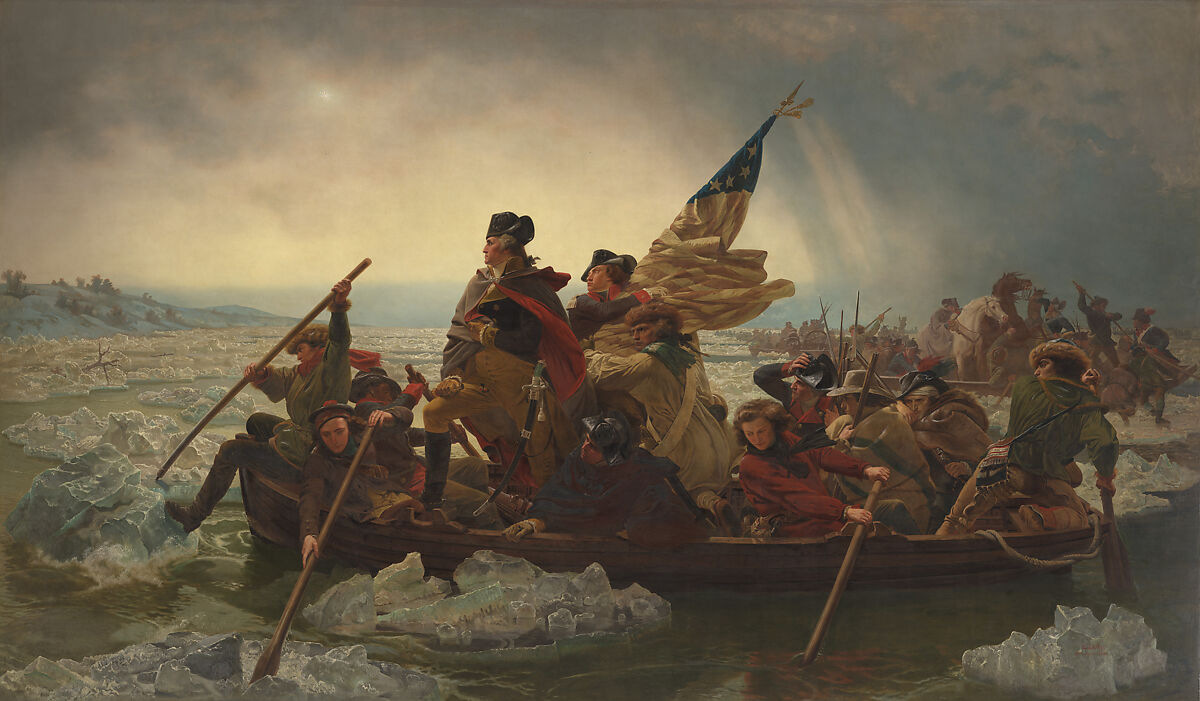
When Americans argue about the Founding, they often argue past one another. One side points to soaring language about liberty. The other points, rightly, to the brutal realities of the era: slavery, legal inequality for women, and a political community that drew its boundaries tightly.
The recent, tragic death of the towering American historian Gordon Wood has prompted many readers to return to a core theme of his work. Wood never asked anyone to ignore those realities. But he did ask us to hold two thoughts at once: the Revolution did not deliver full equality, and yet it changed the moral and political chemistry of the country in ways that made later equality movements possible.
Join the Discussion
A question that stays
Long before today’s debates, critics of the Revolution pressed an uncomfortable point: how could people speak so passionately about freedom while participating in slavery?
In 1775, Samuel Johnson entered the political fray with a scorching pamphlet that attacked the wayward colonials for disloyalty to the crown and for hypocritical talk of freedom. “How is it,” Johnson demanded, “that we hear the loudest yelps for liberty among the drivers of negroes?”
The argument was not simply that the colonists were hypocrites. It was that their claims about liberty should not be taken seriously.
Wood’s point
Wood’s response, developed most memorably in The Radicalism of the American Revolution, was not to deny hypocrisy. It was to explain why hypocrisy does not erase historical significance. The Revolution’s rhetoric and political changes mattered precisely because they created standards that later generations could use as leverage.
He warned that it is easy, especially in hindsight, to treat the Revolution as a moral disappointment because it did not abolish slavery or transform women’s status right away. But he offered a different frame, one worth sitting with:
“To focus, as we are today apt to do, on what the Revolution did not accomplish, highlighting and lamenting its failure to abolish slavery and change fundamentally the lot of women, is to miss the great significance of what it did accomplish; indeed, the Revolution made possible the anti-slavery movement and women’s rights movements of the nineteenth century and in fact all our current egalitarian thinking.”
Notice what he is claiming. Not that the Founders finished the job, but that the Revolution shifted the ground beneath American political life. It planted ideas about equality, rights, and legitimacy that did not stay politely contained.
Calhoun’s alarm
If Wood’s view feels too generous, it helps to look at how pro-slavery leaders treated the Declaration of Independence. John C. Calhoun, among the most formidable defenders of slavery in American politics, understood that the Declaration’s equality principle was not harmless poetry.
In 1848, Calhoun attacked the Declaration and Thomas Jefferson for the claim that “all men are created equal,” calling it “the most false and dangerous of all political errors.” Calhoun was no fool. He well understood that if the Declaration of Independence was ever followed to its logical conclusion, it would spell doom for American slavery.
In other words, even opponents of equality recognized that Revolutionary ideals had teeth.
Douglass’s claim
Frederick Douglass drew the opposite conclusion from Calhoun. Where Calhoun treated the Declaration as a threat to be neutralized, Douglass treated it as a promise to be claimed.
Constitutions and founding documents do not enforce themselves. Their language becomes powerful when movements, lawyers, voters, and public officials insist on reading the principles broadly and applying them to real people in real life. By the middle of the 19th century, it was Douglass, and the antislavery movement to which he devoted his life, that truly embodied the radical principles of the American Revolution.
Wood’s point was that Douglass and the antislavery movement were not abandoning the Revolution as a fraud. They were, in a meaningful sense, carrying its argument forward.
Organizing early
Wood also emphasized that the Revolutionary period did not only produce declarations and constitutions. It produced organizing.
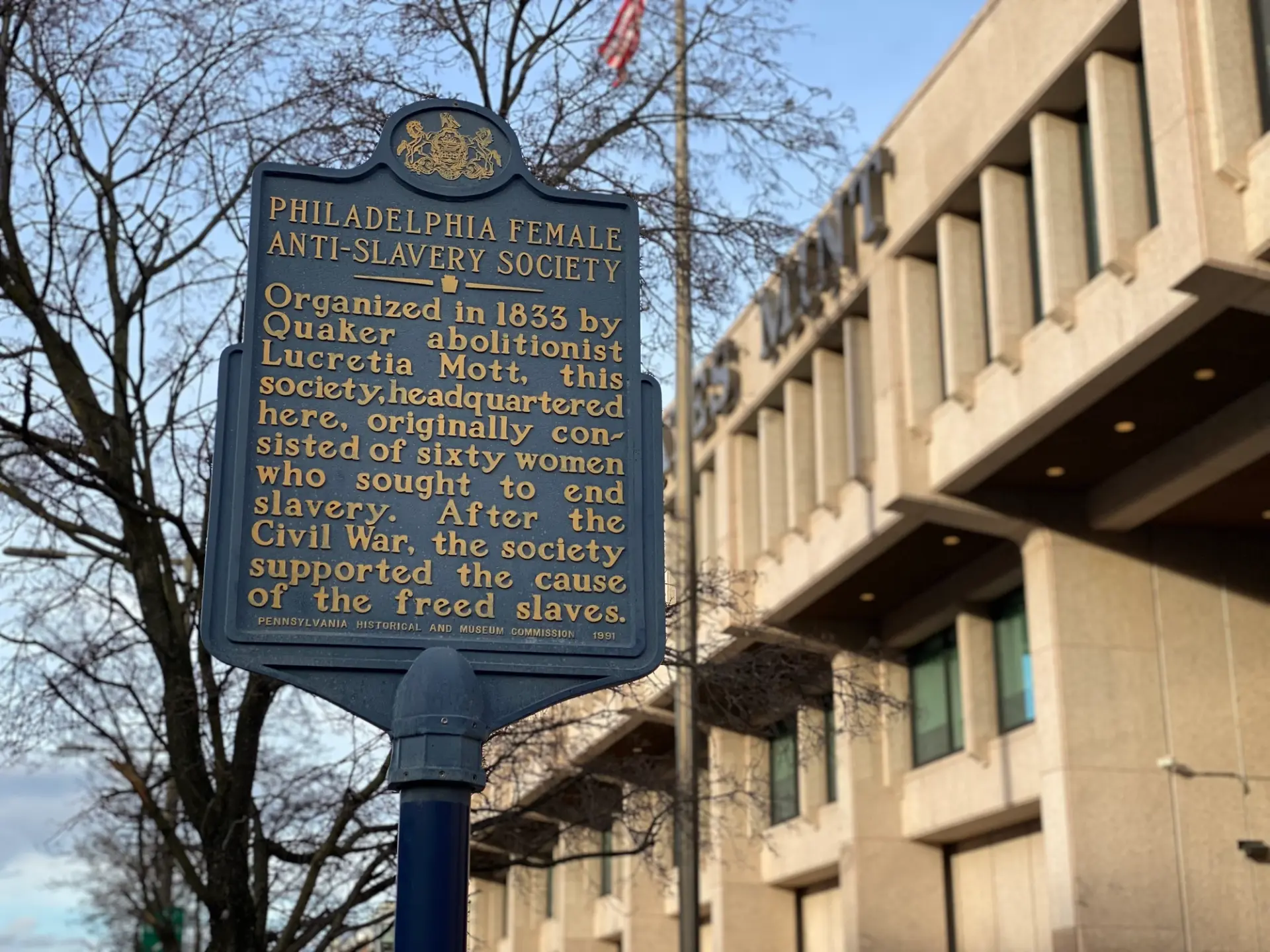
As he put it: “It was no accident that Americans in Philadelphia in 1775 formed the first anti-slavery society in the world.” The details of that moment matter because they show how quickly Revolutionary language about natural rights and liberty could be turned inward, into criticism of American practices.
None of this is a claim that the Revolution was “good enough.” It is a claim that the Revolution created political space for arguments that would have been harder to sustain in a world where monarchy and inherited hierarchy were treated as normal, even virtuous.
Why it matters here
At USConstitution, we spend a lot of time on what the text says and what courts have done with it. Wood’s work is a reminder that constitutional meaning is also shaped by public argument over time. The country has repeatedly revisited the Founding and asked: Who counts? Whose rights matter? What does equality require?
If you want a practical takeaway, it is this: you can acknowledge the Founders’ contradictions without concluding that the Revolution’s principles were empty. Wood’s reading suggests the opposite. The principles were potent enough that defenders of slavery felt compelled to attack them, and reformers felt empowered to wield them.
That is an enduring legacy, and it is one reason Americans still fight over the Revolution’s meaning. We are still living inside its arguments.
Also in the courts
The same Constitution that frames our arguments about equality also frames modern fights over speech and art, including the law of tattooing.
A copyright dispute now drawing attention involves tattoo artist Kat Von D and photographer Jeff Sedlik. Von D tattooed an image of Miles Davis on one of her friends, based on a picture of Davis taken by Sedlik. After learning about the tattoo, Sedlik demanded to be paid a licensing fee, and a federal copyright suit followed.
Von D has testified that no one in the tattoo world gets licenses to use photographs as references for their creations. She maintained her use of the Miles Davis image was “fair use” because it was her interpretation of the image and served an entirely different purpose than Sedlik’s work. Sedlik, meanwhile, has testified that he regularly scans the internet to find infringers, and described how in 2014 he tracked down another tattoo artist who had posted on social media a tattoo done based on the same Miles Davis photo.
Separate from the copyright question, tattooing has also been a First Amendment story. It was not until 2010 that a federal judge finally held that “the tattoo itself, the process of tattooing, and the business of tattooing are forms of pure expression fully protected by the First Amendment.” Whatever happens next in Sedlik v. Von Drachenberg, the outcome may have costly implications for many tattooists at work today.