
Temporary Protected Status, or TPS, rarely makes headlines until a designation is extended, narrowed, or ended. That is because TPS sits at a constitutional pressure point: Congress writes immigration statutes, the executive branch administers them, and the courts resolve disputes over what the statute permits and what a judge can review when the government changes course.
The Supreme Court has not recently issued a sweeping ruling that “ends TPS” for particular countries. Instead, its most direct modern TPS decision is Sanchez v. Mayorkas (2021), a 9-0 ruling about whether TPS, by itself, counts as an “admission” for purposes of adjusting to lawful permanent resident status (a green card).
This explainer covers what TPS is, what the Court decided in Sanchez, what it did not decide, and why TPS continues to generate separation-of-powers conflicts even when the Court is not deciding a TPS termination.

Join the Discussion
What TPS is
TPS is a temporary humanitarian protection created by Congress in the Immigration and Nationality Act (INA). It allows eligible nationals of certain designated countries to remain in the United States for a limited period if returning home would be dangerous or impracticable because of conditions like armed conflict, a major natural disaster, or other extraordinary and temporary conditions.
TPS is not a path to citizenship
TPS is often misunderstood as an immigration “amnesty.” It is not. TPS does not automatically give someone a green card, and it does not automatically lead to citizenship. It is closer to a legal pause button: while TPS is in effect, a person can generally stay in the U.S. and apply for work authorization, but their long-term immigration options depend on other parts of the law.
What TPS typically provides
- Protection from removal while TPS is valid, so long as the person remains eligible. Certain criminal, security, or other statutory bars can make someone ineligible, and TPS can be withdrawn or denied in individual cases.
- Work authorization through an employment authorization document (EAD), if approved.
- Travel authorization may be available through a separate application (often discussed as advance parole or TPS travel authorization), but it is not automatic and it can carry complex immigration consequences depending on a person’s history.
Who decides which countries get TPS
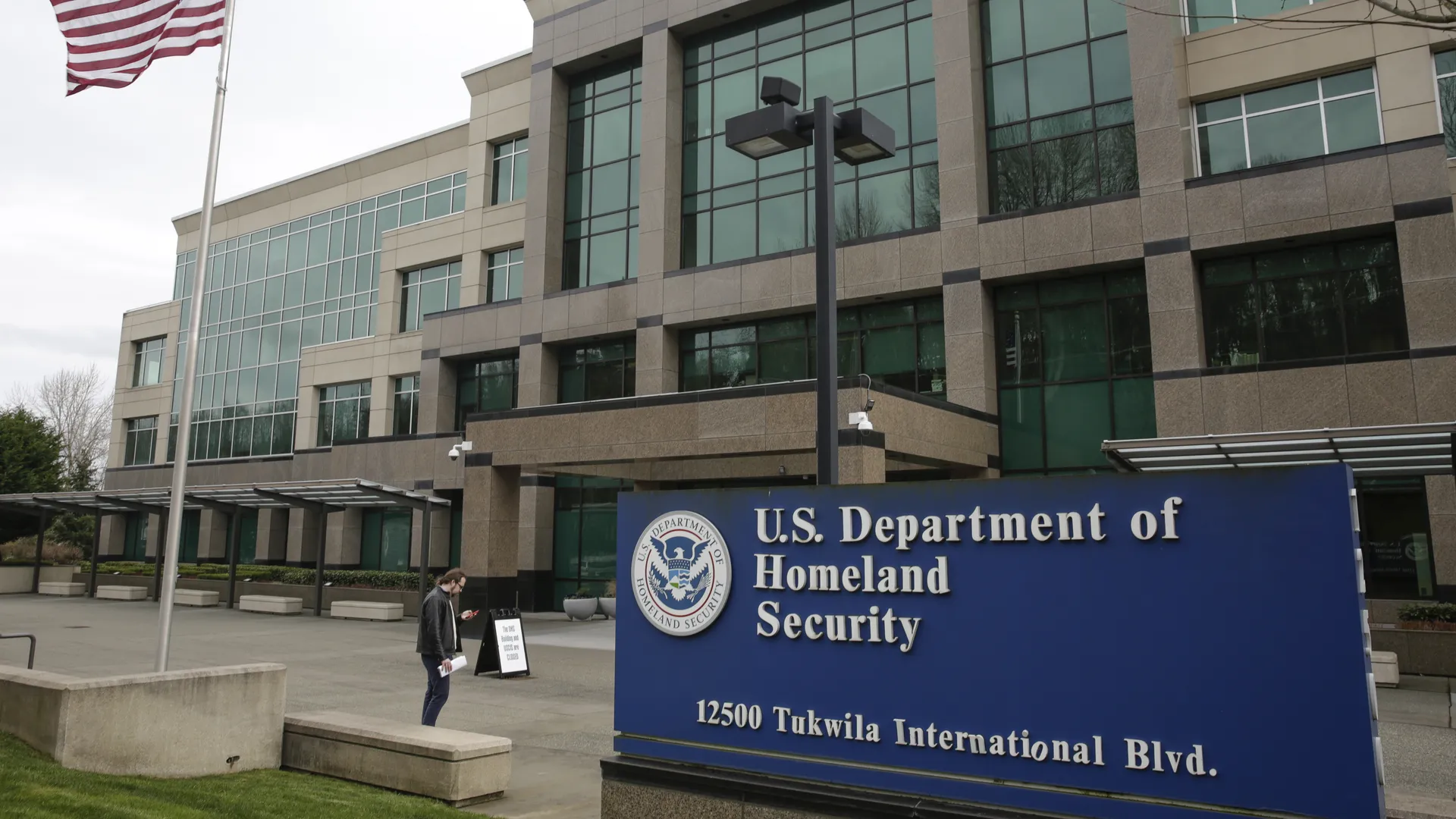
The statute puts the designation decision in the executive branch, specifically the Department of Homeland Security (DHS). DHS can designate a country for TPS and can later extend or terminate that designation, based on statutory criteria and a required review process.
Why TPS raises separation-of-powers questions
Immigration law in the United States is a shared project, but not an equal one.
- Congress has the power to “establish an uniform Rule of Naturalization” under Article I, and it uses that authority to write the immigration code, including TPS.
- The executive branch enforces and administers those statutes. In TPS, that includes making condition-based determinations about a country and running the application system.
- The courts can review executive actions, but in immigration Congress often narrows what courts can review and how. Many TPS disputes turn on whether a particular decision is reviewable at all, and if it is, whether it survives Administrative Procedure Act (APA) review under standards like “arbitrary and capricious.”
This is the constitutional hook in TPS disputes: when DHS changes a TPS designation, is that the kind of executive judgment courts can second-guess under the statute and the APA, or is it a discretionary call the law largely commits to the political branches?
What the Supreme Court decided
The Supreme Court’s major TPS decision in recent years is Sanchez v. Mayorkas (2021). The question was technical but hugely consequential for families who have lived in the U.S. for years under TPS: does a grant of TPS count as an “admission” into the United States for purposes of adjusting status to lawful permanent resident?
The Court held unanimously (9-0) that TPS does not, by itself, constitute an admission for INA § 245(a). In plain English, TPS can be lawful status, but it is not the same thing as having been inspected and admitted at the border or port of entry in the way that particular adjustment provision requires.
Status vs. admission
One reason Sanchez matters is that immigration law treats “lawful status” and “admission” as different concepts. TPS can make a person’s presence lawful for certain purposes during the TPS period. “Admission,” by contrast, is a defined statutory event tied to a lawful entry after inspection. Sanchez says TPS does not retroactively supply that entry event.
What that means on the ground
For many TPS holders, the decision means this: even if you otherwise qualify to adjust status through a family or employment petition, you may still hit a threshold problem if the adjustment path you are using requires an “admission,” and your only lawful footing is TPS.
That said, immigration law is full of exceptions, alternative routes, and fact-specific options. Some TPS holders may still be able to pursue permanent residence through other mechanisms depending on how they entered the country and what other eligibility provisions apply. The Court did not say that TPS holders can never get green cards. It said TPS alone does not supply that one statutory prerequisite.
What the Court did not decide
Sanchez was not a ruling about terminating TPS for particular countries. It did not decide whether DHS properly extended or ended TPS for Haiti, Syria, or any other nation. It did not bless or reject any specific administration’s country-by-country judgments.
It also did not automatically answer questions like these for any individual TPS holder:
- Whether a person has another lawful status available.
- Whether someone has a pending asylum claim, family petition, or other application that could provide independent protection.
- Whether Congress could change the law by statute and create a new status or a pathway to permanence.
Can a president end TPS alone
A president cannot delete TPS from the statute. TPS exists because Congress created it, and only Congress can repeal it.
But administrations do control how TPS operates in practice because DHS makes the designation, extension, and termination decisions country by country. So the institutional answer is this: the executive branch can end a TPS designation if it follows the statutory procedure and stays within the boundaries Congress set, and litigation often turns on what parts of that judgment courts can review and under what standards.
What happens when TPS ends
TPS endings are not a single switch that flips uniformly for everyone on the same day. They operate through dates and documents set out in DHS notices.
1) TPS-based protection can lapse
Once a country’s TPS designation is terminated and the termination takes effect (often after a delayed effective date), people who relied solely on TPS can become removable under immigration law. That does not mean immediate deportation for everyone. It does mean their TPS-based shield is gone, and people who have become ineligible for TPS can lose protection sooner.
2) Work authorization can end
Employment authorization is generally linked to TPS validity. When TPS ends, work authorization based on TPS can lapse, subject to any wind-down periods or automatic extensions DHS may provide by notice. Employers and employees often feel this first because it touches payroll, licensing, and day-to-day compliance.
3) Some people may have other legal options
A critical point that gets lost in political debate: TPS holders are not a monolith. Some have pending asylum applications. Some have family-based petitions. Some may be eligible for other humanitarian relief. Others may have no independent status at all.
Legally, the end of TPS forces a sorting process: who has another foothold in the immigration system, and who does not.
Why states react strongly
Immigration enforcement is federal, but the consequences are not. States and cities absorb the practical ripple effects of immigration status changes: employment disruptions, housing instability, school enrollment, public health continuity, and local labor markets.
This is also where constitutional structure meets real governance. States cannot create their own immigration statuses. They can, however, adjust state policy around licensing, benefits where permitted, and cooperation with federal enforcement. That gap between federal control and local consequence is why TPS fights, even when they are not at the Supreme Court, trigger immediate political backlash.
How this fits the Court’s approach
The Supreme Court has historically treated immigration as an area where the political branches have wide latitude, especially when Congress has spoken clearly and assigned discretionary judgments to the executive. That does not mean the executive always wins. It means challengers often face two steep hurdles at once: proving the executive violated the statute, and proving the claim is the kind a court is allowed to review.
Sanchez fits that broader posture in its own way. The Court read the statute as written, treated TPS as meaningful but limited, and refused to convert a temporary humanitarian protection into an all-purpose substitute for statutory “admission.”
What to watch next
- DHS and USCIS updates: TPS extensions and terminations are announced through DHS notices and USCIS TPS pages that set dates, eligibility rules, and document guidance. The Federal Register notice is often the definitive document for timelines and automatic EAD extensions.
- Individual applications: Even when TPS is stable, people may pursue asylum, adjustment through family or employment, or other relief based on their circumstances.
- Congressional action: The only way to convert long-running “temporary” protection into permanence at scale is legislation.
TPS is temporary by name, but it can become durable in real life when people build families, careers, and communities around it. The Supreme Court’s key recent intervention has been narrower: defining what TPS does, and does not, satisfy under the immigration statute.