
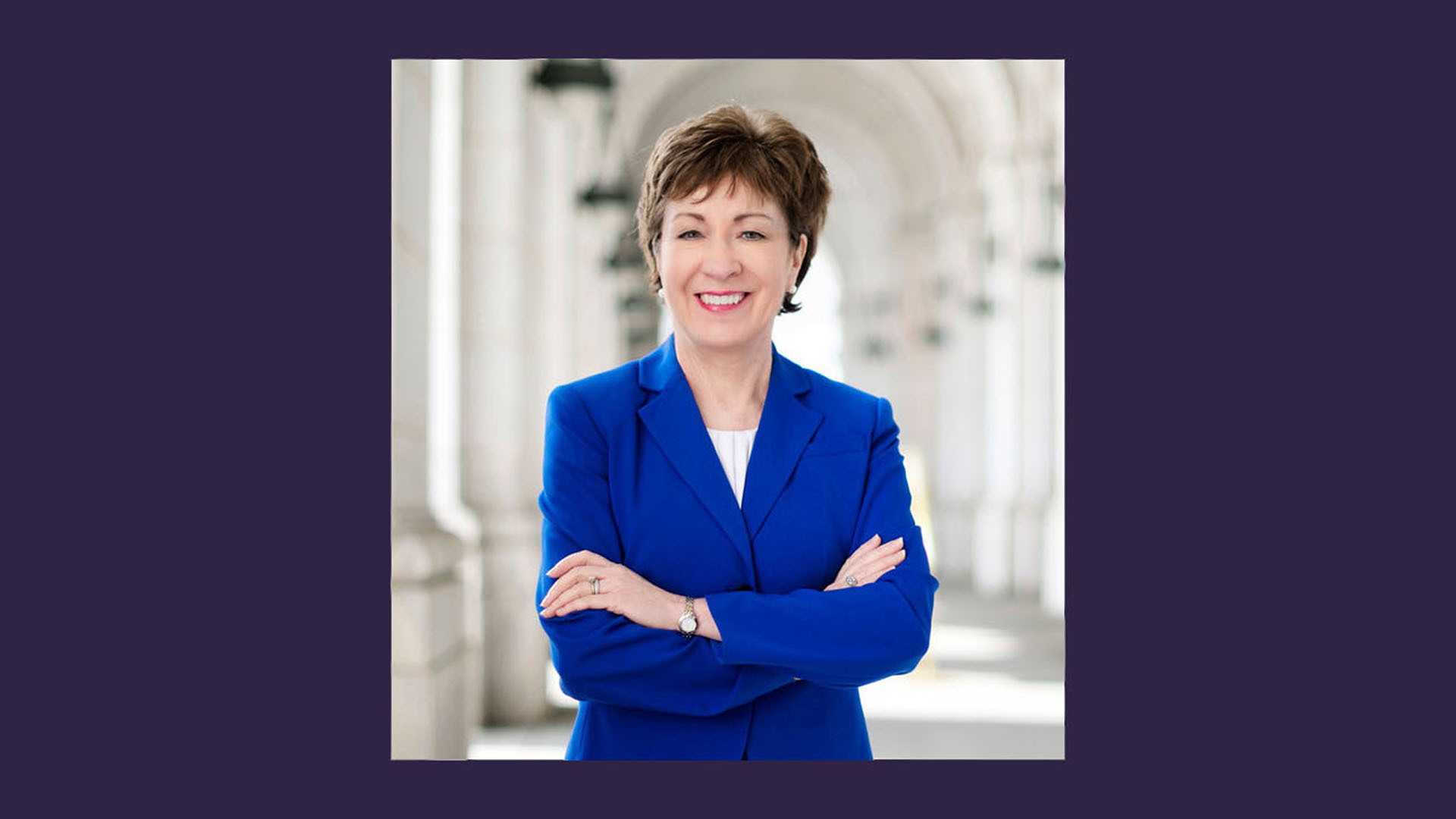
Americans love a comforting story about politics. The independent-minded senator. The brave centrist. The reluctant partisan who just cannot bring herself to go along with the worst impulses of her party.
Susan Collins has lived inside that story for decades, and she has profited from it. Maine voters were told, over and over, that they were sending a referee to Washington. A stabilizer. A grown-up.
Now comes a set of facts that should force a harder question: what if the “moderation” was not a governing philosophy at all, but a protective coating. Something that made the usual scrutiny slide right off, even when the heat was turned up.
Join the Discussion
The allegation, plainly
The basic outline is not complicated. Collins became a focus of a federal corruption probe tied to Navatek, a Hawaii-based military contractor whose CEO, Martin Kao, was arrested in 2020 for allegedly bilking $12.8 million in COVID-19 relief funds. That allegation led to a federal indictment.
When federal agents seized Kao’s computer and emails, they concluded he was running a “pay-to-play operation” involving members of Congress, including Collins.
In a 60-slide presentation agents prepared for prosecutors, investigators highlighted donations by Kao and his wife to Collins in 2018, followed by Collins placing $8 million in research funding into the federal budget.
The same investigative materials also described another stream of money: about $33,000 sent to Collins in 2019 through alleged illegal straw donors. The indictment alleged Kao gave Navatek money to various relatives so they could donate in their own names. That is not clever fundraising. It is the kind of maneuver that turns campaign finance into a laundering system.
The Corner Bakery meeting

One detail deserves special attention because it is so ordinary: a meeting at a Corner Bakery in Washington, D.C.
The allegation is that in 2019, as Collins geared up for a difficult reelection, she, Scott Reed (who headed her super PAC), and three Navatek executives met in person. Reed asked the contractor for a $500,000 donation.
Context matters here. One year earlier, Collins helped Navatek obtain a multimillion-dollar contract in Maine. By 2019, the problem was not simply that a big donor wanted influence. It was the allegation of a government contractor seeking to bankroll a political operation while federal dollars and contracts were on the line.
And when the parties do not want a direct line between the contractor and the political spending, the allegation goes, they look for a workaround: using a shell company for the contribution instead. That is not a footnote. The whole point is to conceal what would look bad, and may be illegal, in the open.
Not just one senator
It is tempting to turn this into a personality story. Collins, the serial disappointment. Collins, the performative hand-wringer. Collins, the senator who always seems to find her way back to party leadership when it counts.
But the deeper issue is structural. Corruption is not merely about individual greed. It is about incentives that reward access, punish honesty, and blur the line between representation and retail.
Congress has immense power over spending, oversight, and national priorities. Appropriations shape the real world. If lawmakers can help steer public money toward a private beneficiary while receiving political money connected to that beneficiary, then governance starts to resemble a marketplace for access.
Enforcement gets dismantled
Here is the constitutional tension that rarely gets discussed honestly: anti-corruption enforcement is an executive function, but it protects a legislative institution.
Federal investigators were still pursuing the broader thread into 2024, and agents wanted to examine whether corruption reached beyond one lawmaker. Then, in 2025, major federal anti-corruption capacity was cut back. The administration pushed out the majority of the Justice Department’s anti-corruption unit lawyers during its first year. It also broke up CR-15, an elite FBI public corruption squad focused on congressional misconduct.
Two agents associated with that effort, Michelle Ball and Kevin Gounaud, were among those who believed there was enough on Kao to pursue a broader investigation into whether other lawmakers were also bribed. Both were later fired after being targeted in a political retribution campaign, with Ball accused of “weaponizing” the Justice Department for investigating an attempt to overturn the 2020 election.
If you can disable the investigators, you do not have to win the argument. You just have to wait out the clock.
The symptom
The reason Collins draws such intense anger is not simply that she votes with her party. It is that she has mastered a particular American loophole: the accountability gap between image and consequence.
She can present herself as conflicted, concerned, careful, and always on the verge of taking a stand. Then the stand somehow never arrives, or arrives too late to matter. That pattern has trained voters to accept theater as governance.
Now place that familiar performance next to allegations of contractors, contracts, and conduit donations. The question becomes harder and uglier: was the “moderate brand” valuable precisely because it made scrutiny less likely?
The question voters should ask
Here is the civic gut-check I would give my students.
If a senator can allegedly help steer federal defense dollars toward a company, and that same company’s CEO can allegedly send political money through hidden channels, what exactly are voters electing: a representative, or a gatekeeper with a tip jar?
And if the enforcement units tasked with chasing public corruption can be dismantled, reassigned, or purged, what remains of the promise that we are a government of laws rather than of connections?
Collins may be the headline. The Constitution is the stakes.