
Dark money is political money with an identity problem. You can see the ad. You can hear the message. You can sometimes even guess who benefits. But the public cannot reliably see who paid for it, because the true donors are routed through organizations that are not required to disclose them.
That anonymity is not an accident. In many cases, it is a feature, not a bug. Dark money thrives in the space between two ideas Americans both claim to value: free political speech, and transparent elections.
Join the Discussion
Dark money in plain English
Most people use “dark money” to mean: political spending where the original source of the funds is not publicly disclosed.
That spending can take different forms:
- Issue ads that avoid explicit words like “vote for” or “defeat,” but clearly push a message right before an election.
- Independent expenditures supporting or opposing a candidate, funded through organizations that do not reveal their donors.
- Contributions to super PACs that are disclosed on paper, but only after the money has passed through an intermediary entity, so the disclosed “donor” is not a human being but an organization with its own hidden backers.
“Dark” does not necessarily mean illegal. It means undisclosed.
How dark money moves
If you want to understand dark money, picture a relay race. The donor does not hand the money directly to the political spender. The donor hands it to an entity that can accept funds without publicly listing donors. That entity then spends on politics itself, or it transfers money to another group that spends.
Here is the basic idea in one line: a person or company gives to Group A, Group A funds ads or gives to Group B, and voters mostly see only Group A or Group B.
The common vehicles
- 501(c)(4) “social welfare” organizations: These can engage in some political activity, but under IRS rules their primary purpose cannot be political campaign intervention. In practice, “primary” is not crisply defined in statute or regulation and is often applied through a facts-and-circumstances approach. They generally do not disclose donors publicly.
- 501(c)(6) trade associations: Business leagues and industry groups that can also spend on politics and typically do not disclose donors publicly. Some state laws and certain earmarking or political-fund structures can create additional disclosure in specific contexts, but the general pattern is limited public donor transparency.
- LLCs and shell entities: Sometimes used as pass-throughs. An LLC name can appear on disclosure reports without revealing the people funding it, unless other laws or investigations pierce the veil. Separate from election disclosure, beneficial ownership reporting requirements have been moving through the courts and, where in effect, are typically reported to FinCEN and are not public.
Meanwhile, the spender that voters notice can be:
- a nonprofit itself (running ads directly), or
- a super PAC receiving large contributions from nonprofits or LLCs, or
- a web of committees and committee-to-committee transfers.
Dark money vs. super PACs
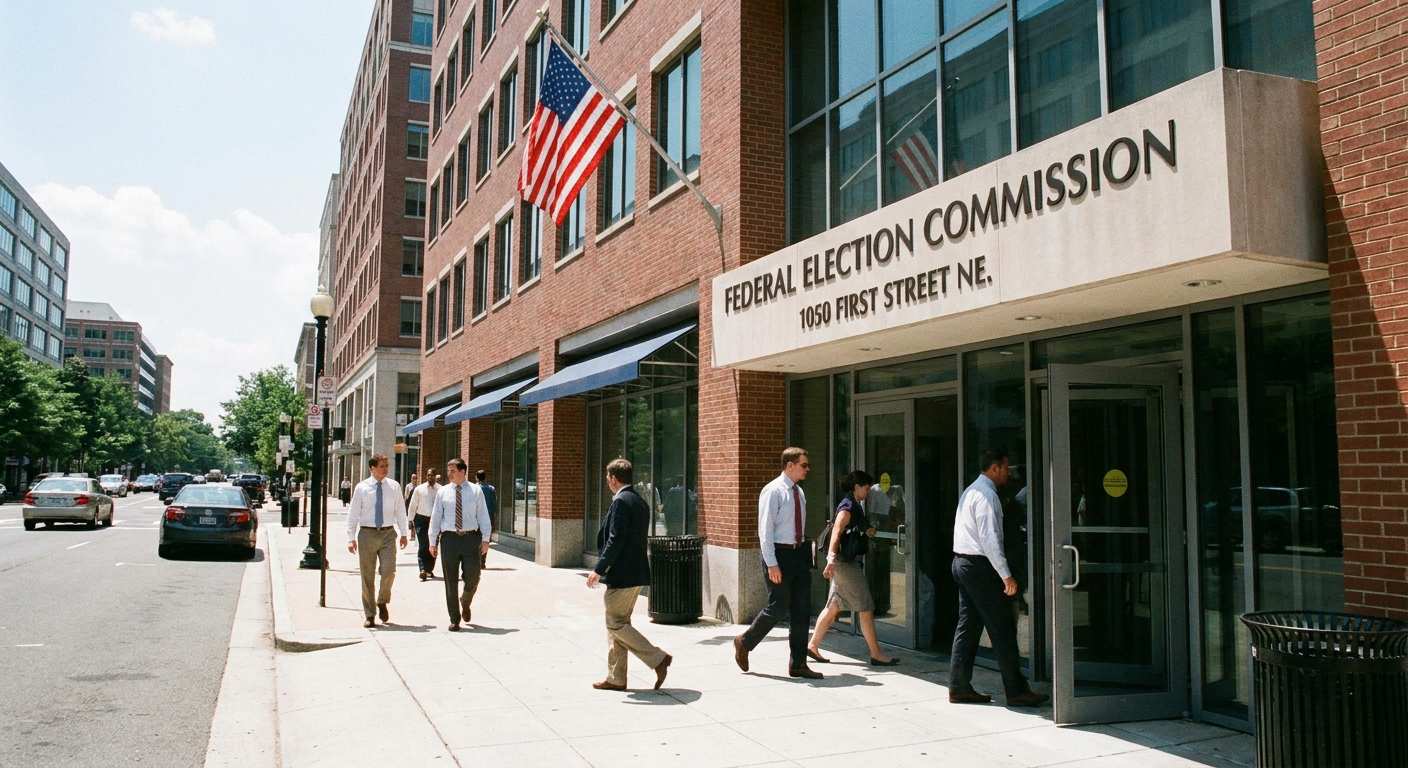
People often lump super PACs into “dark money,” but super PACs are not inherently dark. In fact, super PACs generally do disclose their donors to the Federal Election Commission.
The problem is that disclosure can become technically compliant but unilluminating when the “donor” is a group that does not disclose its donors. If a nonprofit writes a check to a super PAC, the super PAC’s report may be accurate while the public still cannot see the humans behind the money. Timing also matters: FEC reporting happens on schedules, with pre-election reports in certain windows, so voters do not always get near-real-time clarity.
Quick definitions
- Super PAC: A political committee that can raise and spend unlimited amounts independently of candidates, but must disclose donors to the FEC on regular reporting schedules.
- Dark money group: Usually a nonprofit that can spend on politics without publicly disclosing donors.
Issue ads and legal categories
A lot of the dark money debate lives in definitions, because the law treats different kinds of political messages differently.
- Express advocacy: Communications that explicitly tell people to vote for or against a candidate, often using “magic words” like “elect,” “vote for,” or “defeat.”
- Electioneering communications: A federal legal category for certain broadcast, cable, or satellite messages that refer to a clearly identified federal candidate close to an election, even if they avoid express advocacy language.
- Issue advocacy: Broader messaging about issues and public officials that can overlap with campaigns in real-world effect, but does not always trigger the same reporting rules.
This is why wording and timing matter. Rules can hinge on what an ad says, what it implies, and when it runs.
What the Constitution has to do with it
Dark money is not just a campaign-finance quirk. It is a constitutional argument that never really ends, because it sits at the intersection of the First Amendment and the public’s demand for accountable government.
Two values in tension
1) Political speech is protected speech. The Supreme Court has repeatedly treated spending money to disseminate political messages as protected under the First Amendment. This is a major reason courts are skeptical of laws that cap independent political spending.
2) Disclosure can also be constitutional. The Court has also upheld disclosure and disclaimer requirements in many contexts, reasoning that voters benefit from knowing who is trying to persuade them and that transparency can deter corruption or its appearance.
The result is a messy reality: the Constitution does not force dark money to exist, but it does shape what kinds of restrictions lawmakers can impose without violating free speech and association rights.
Key Supreme Court cases
Dark money did not appear out of nowhere. It expanded because the legal ecosystem made it useful.
Buckley v. Valeo (1976)
Buckley drew a famous line between contributions and expenditures and treated spending to influence elections as deeply connected to political speech. But it also upheld many disclosure rules, acknowledging that transparency can serve important governmental interests.
Citizens United v. FEC (2010)
Citizens United is often summarized as “corporations can spend in elections,” but the more relevant piece for dark money is this: the Court struck down limits on independent expenditures by corporations and unions, while upholding disclosure and disclaimers in the same decision.
That split matters. Unlimited independent spending can increase the demand for funding channels. If disclosure rules are incomplete, the money will tend to flow through the incomplete places.
SpeechNow.org v. FEC (D.C. Cir. 2010)
This lower-court decision, building on Citizens United, helped clear the path for modern super PACs by allowing unlimited contributions to groups making only independent expenditures. Again, super PACs disclose. But they can become endpoints for money that began in the shadows.
Why disclosure is hard
Most Americans like the idea of transparency until the details arrive. Disclosure sounds simple: “tell us who donated.” But regulators then have to define what counts as election-related spending, who counts as a donor for that purpose, and when an organization’s political activity becomes significant enough to trigger extra reporting.
Common gray areas
- Issue advocacy timing: Ads that clearly target candidates but avoid explicit electoral language, especially close to an election.
- Donor intent: Some regimes require disclosure only of donors who gave “for the purpose” of election spending. That can be hard to prove if a donor gives to a general fund.
- Multiple intermediaries: Money can pass through layers, each legal on its own, making the original source hard to trace.
- Slow or thin enforcement: If enforcement is delayed, voters may not learn key information until after Election Day, when disclosure becomes history instead of accountability.
Nonprofits also file public financial forms, but those forms do not usually solve the donor question. For example, many 501(c) organizations file IRS Form 990, yet individual donor names are generally not public on the parts of the return where they may appear.
Federal vs. state rules
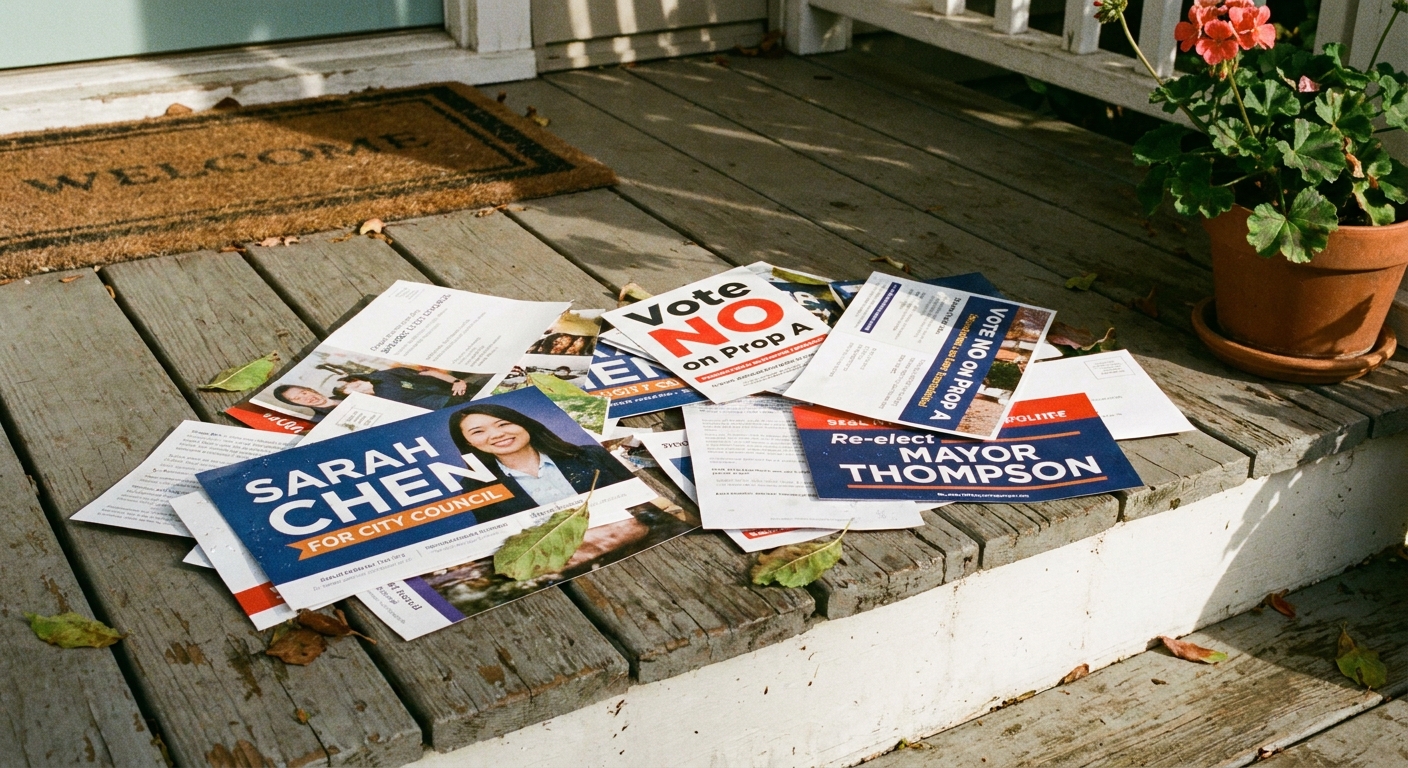
“Dark money” is a national phrase, but disclosure is not one uniform system. Federal rules govern federal candidates and certain federal ad categories. State and local rules vary widely. Some states require more robust donor disclosure for certain election ads, while others track the federal model more closely. That variation is one reason the same type of group can look more transparent in one jurisdiction and more opaque in another.
Is dark money legal?
Often, yes. Dark money is typically legal when a nonprofit follows the rules governing its tax status and election laws governing the type of communication it is paying for.
But there are edges where it can cross into illegality, such as:
- Coordination with a candidate: Independent spending is treated differently from coordinated spending. If a supposedly independent group coordinates with a campaign, different limits and rules can apply.
- Foreign national involvement: Federal law bars foreign nationals from making contributions or expenditures in connection with federal, state, or local elections. The details can get technical, including questions about decision-making, direction, or control, which is another reason layered entities complicate enforcement.
- Misreporting: False or incomplete reporting can trigger enforcement actions, though the practical likelihood varies.
Why it matters
Dark money changes what elections feel like. It can flood a race with messaging that looks grassroots but is bankrolled by interests that would rather not be named. It can also turn accountability into a scavenger hunt.
Three concrete effects
- Voters lose context: Knowing who funds a message often helps you evaluate it, not because the message is automatically wrong, but because motives matter in politics.
- Candidates face proxy warfare: Outside groups can escalate attacks while candidates keep their hands clean.
- Public trust erodes: If citizens believe major decisions are being shaped behind closed doors, civic faith can collapse even when no bribery is proven.
How to spot it
If you see a political ad and want to know whether dark money may be involved, look for the tells:
- The sponsor name is generic: “Citizens for a Better Future” style names are common for groups created to persuade without explaining who is behind them.
- The disclaimer is thin: You might see “Paid for by [Group Name]” with no easy path to donor information.
- The group is a nonprofit, not a committee: If it is a 501(c)(4) or trade association, donor disclosure is usually limited.
- The spending is concentrated late: Large ad buys right before Election Day can make real-time transparency harder.
If you want to go further, you can search FEC reports for federal races, state election databases for state races, and IRS Form 990 filings for nonprofit financial snapshots. None of these sources is perfect, but each reveals part of the story.
Where the law could go
Because dark money sits in the gap between constitutional doctrine and regulatory design, change can come from multiple directions:
- Congress or state legislatures can expand disclosure rules, tighten definitions, and fund enforcement, within constitutional limits.
- Agencies like the FEC and IRS can clarify and enforce existing rules, although institutional deadlock and resource limits often matter as much as the text of the law.
- The courts can reshape what kinds of disclosure are permissible, especially if new cases challenge donor disclosure on First Amendment grounds.
The core reality remains: if political influence can be amplified with money, the public will eventually demand to know who is doing the amplifying. Dark money is what happens when the legal system answers, “Not always.”