

If you want to understand America, watch what happens at state borders. A line on a map can turn a legal act into a felony, and it can happen in the space of a highway exit.
That is the quiet tension behind the next big concealed-carry question: can a state refuse to recognize a concealed-carry permit issued by another state? And if it can, how far does that power go after the Supreme Court’s modern Second Amendment cases?
This fight is not just about guns. It is about what kind of union we are. Are we a single nation with portable rights, or a patchwork of fifty licensing regimes where your status changes the moment you cross a line?
Join the Discussion
The news peg
The Supreme Court is slated to hold a “long conference” on Sept. 28, where it is expected to decide whether to hear the many cases before it. One of the disputes on the Court’s doorstep is whether states can be forced to recognize out-of-state concealed-carry permits.
The problem
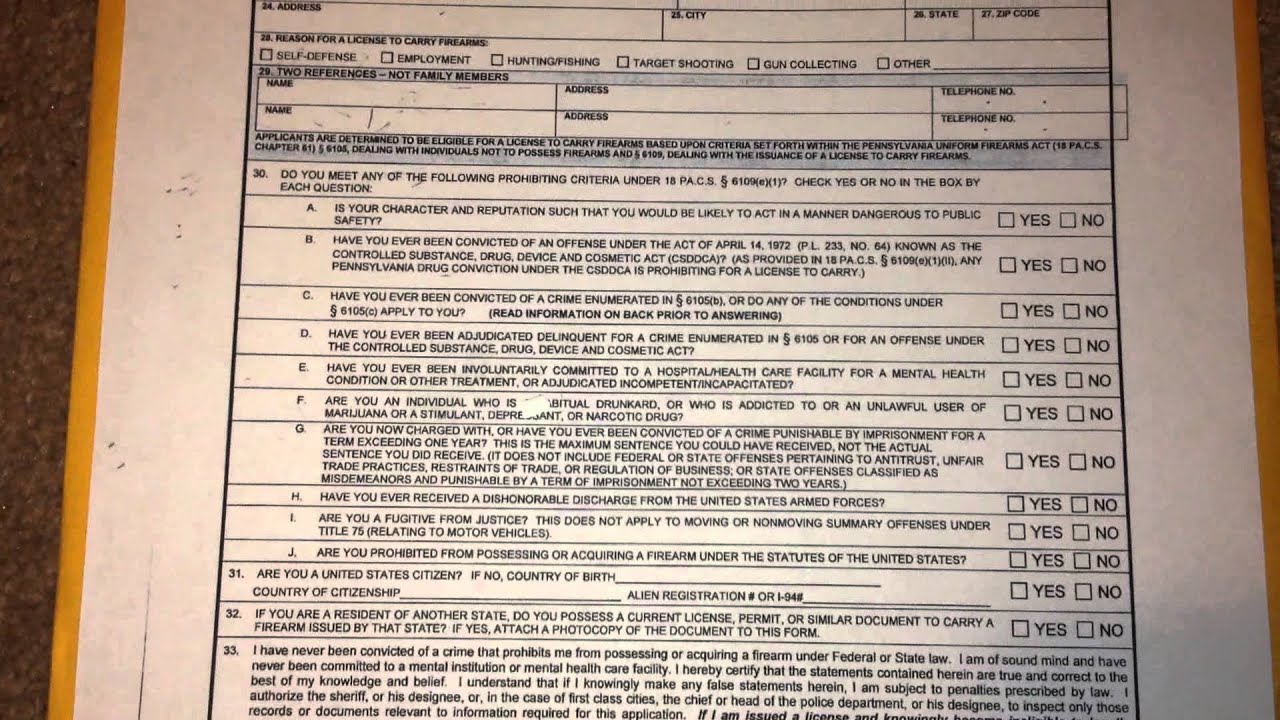
Many states either allow permitless carry or recognize out-of-state permits broadly, but a smaller set of states rejects permits from some or all other states, which creates predictable traps for travelers who are otherwise law-abiding.
One commonly cited figure is that ten states reject concealed-carry permits issued by some or all other states. That reality is what keeps producing lawsuits, and why the issue keeps landing in federal court.
The tempting analogy
People reach for the driver’s-license comparison because it feels intuitive. You can drive in all 50 states on the license from your home state. So why not carry under the permit from your home state?
Here’s the hard truth: the Constitution does not actually contain a “driver’s license clause.” Interstate recognition of licenses is largely a product of state cooperation, practical necessity, and uniform norms developed over decades. It is a policy success story, not a constitutional command on its face.
That matters because concealed-carry permits are not simply identity documents. They are weapons licenses tied to a state’s view of training, vetting, age rules, residency, disqualifiers, and enforcement priorities. That is where the constitutional collision happens.
The Second Amendment path
If you ask gun-rights plaintiffs how to force recognition, most will not begin with Full Faith and Credit. They begin with the Second Amendment.
The reason is strategic and legal. After District of Columbia v. Heller and McDonald v. Chicago, the right to keep and bear arms is treated as an individual right enforceable against the states. And after New York State Rifle & Pistol Association v. Bruen, the Court’s test pushes judges to ask whether modern restrictions fit within the nation’s historical tradition of firearm regulation.
From that perspective, the key question becomes: if the Second Amendment includes a right to carry a handgun in public for self-defense, can a state make that right effectively disappear for nonresidents who have already been cleared and licensed elsewhere?
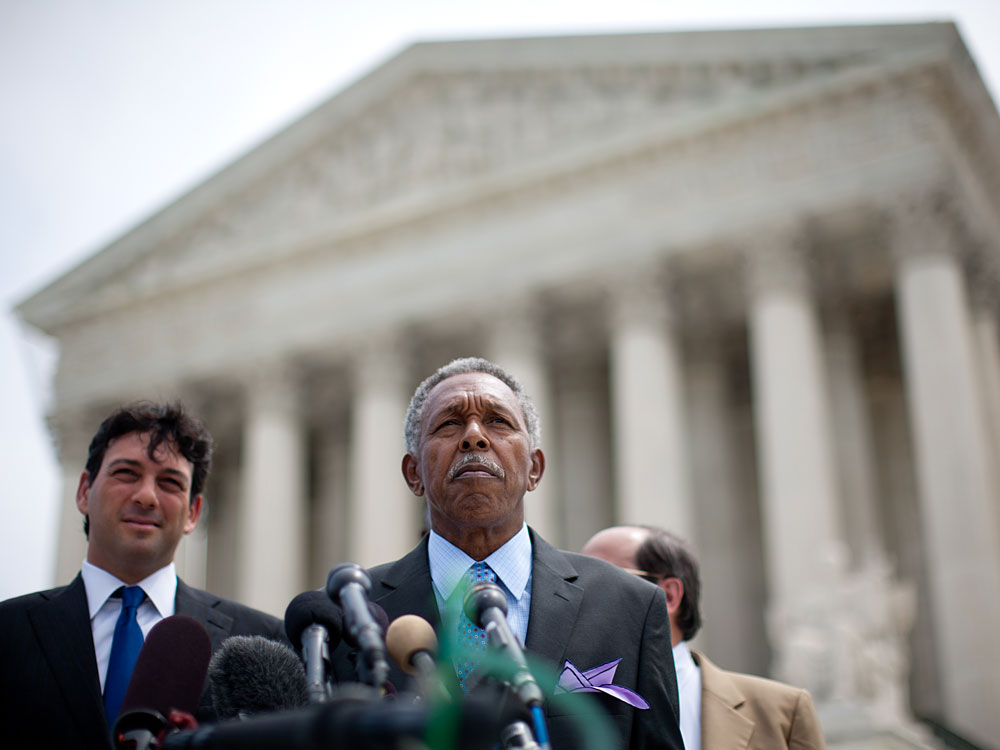
Litigants have framed the problem bluntly. In one petition to the Supreme Court, the Liberty Justice Center argued: “In the Eighth Circuit’s view, an individual’s Second Amendment rights are confined to the borders of the state of where he holds a firearm permit.” That is the heart of it. Does the right stop at the border, or does only the license stop at the border?
Full Faith and Credit limits

At first glance, the Full Faith and Credit Clause sounds like the solution. Article IV says states must give “Full Faith and Credit” to the “public Acts, Records, and judicial Proceedings” of other states. If a permit is a state record, should it be honored?
Here is where constitutional law gets unromantic fast. Full Faith and Credit is strongest for court judgments. If a court in State A enters a valid money judgment, State B generally cannot shrug and say, “Not our style.”
Licensing is different. A license is a forward-looking permission issued under a state’s police power. States do not routinely treat another state’s licensing choices as binding. They often respect them, but they also carve exceptions, impose conditions, or reject them when local policy is different.
Even lawyers on the pro-recognition side have acknowledged the thin case law for using Full Faith and Credit to compel carry-permit reciprocity. Liberty Justice Center attorney Ryan Morrison put it plainly: “There’s no law out there discussing the full faith and credit clause with respect to the Second Amendment.” That does not prove the argument is wrong. It does show why most litigants do not want to bet the case on a clause courts rarely use for licensing fights.
Federalism, in plain English

This is the part of the debate that civics class was built for.
States have broad “police power” to regulate public safety. That is not a throwaway phrase. It is one of the basic premises of American federalism: most day-to-day rules about where, when, and how people may carry weapons have historically been written and enforced at the state level.
But the post-Civil War Constitution also pulls in the other direction. Through the Fourteenth Amendment, many rights are treated as national privileges of citizenship that states may not abridge without constitutional justification.
So the concealed-carry reciprocity fight becomes a test of which idea is doing the work:
- State control theory: A carry permit is a state-granted permission to carry concealed within that state’s regulatory regime. Outsiders must comply with local rules, even if it means applying again.
- National right theory: Carrying for self-defense is a constitutional right, and states cannot functionally nullify it for nonresidents merely because they are nonresidents.
And yes, both sides will call their position “federalism.” One side will mean state sovereignty. The other will mean a federal Constitution that limits state sovereignty.
What the new lawsuits seek
Some of the newest cases are not framed as a polite request for administrative comity. They are framed as a constitutional challenge to excluding nonresidents from carrying.
Gun Owners of America’s senior vice president Erich Pratt summarized the claim in everyday language: “Our constitutional rights don’t end at a state border.” He analogized gun rights to speech and religious liberty, arguing that states do not get to erase enumerated rights for travelers.
In Oregon, for example, Gun Owners of America and its Oregon state director, Cynthia Ladd, sued the city of Salem and the Marion County sheriff in federal court demanding that the state’s ban on non-residents carrying firearms be ruled a violation of the Second Amendment. Ladd described her job duties requiring travel to Oregon in a sworn declaration, including planned trips to Salem and surrounding areas like Eugene. The nonresident fact pattern is not incidental. It is the point: a clean vehicle for testing whether the right to bear arms can be conditioned on residency.
Oregon does not recognize any other state’s concealed carry permit, nor do another nine states.
Delays as a second front

Not every case is about blanket nonrecognition. Another line of attack targets processing delays that make nonresident permits practically unreachable.
In August 2025, the Second Amendment Foundation and others sued Massachusetts over alleged delays for nonresident applicants seeking carry permits. On Aug. 28, Chief U.S. District Judge Denise Casper allowed the case to proceed, keeping the constitutional questions alive rather than dismissing them at the threshold.
And Massachusetts is not the only place where “delay” becomes policy. The Second Amendment Foundation and the Justice Department previously reached settlements with Los Angeles County over delays in processing applications for carry permits.
If the Court takes a case
If the Supreme Court agrees to hear one of these disputes, expect the argument to come in layers.
1) What exactly is the “right”?
The challengers will say the right is carrying a handgun in public for self-defense, and that the state cannot make that right depend on being a resident or repeating licensing steps that have already been satisfied elsewhere.
The state will respond that the right is not a right to carry concealed under any terms you prefer, but a right to carry subject to historically grounded regulation. They will argue they may choose their own mechanism for determining who may carry concealed within their borders.
2) The history fight
After Bruen, the parties will duel over historical analogues: were there historical restrictions on nonresidents bearing arms, licensing regimes that varied by jurisdiction, or other traditions that justify treating travelers differently?
3) The remedy
Even if a court agrees that total exclusion of nonresidents is unconstitutional, the fix is not obvious. The court might:
- Order the state to recognize valid out-of-state permits.
- Order the state to offer a workable nonresident permit process on equal terms.
- Strike down residency barriers but leave room for training or background-check requirements applied to residents and nonresidents alike.
4) The federalism pushback
States resisting recognition will argue that mandatory reciprocity forces them to accept another state’s judgments about training and vetting, effectively letting other states write their gun policy. That argument will be framed as state sovereignty and local accountability: if something goes wrong, the state where it happened will bear the political and public-safety cost.
Congress and reciprocity
Congress has periodically flirted with national reciprocity proposals. If Congress acted, the constitutional debate would shift again, toward enumerated powers and implementation.
In other words, Congress could try to settle the policy. But it would not settle the constitutional argument. It would relocate it.
The question underneath
Here is the question I would ask my students, and I will ask it here: if a constitutional right can be practically switched off at the border, how “constitutional” is it really?
At the same time, if one state must accept another state’s permit standards, how much self-government does the receiving state retain on the issue most tied to public safety and local law enforcement?
That is the real conflict: portable rights versus portable policy. The Supreme Court might soon have to choose which one the Constitution is built to protect, and how much friction between states we are supposed to tolerate in the meantime.
Quick FAQ
Does Full Faith and Credit require reciprocity?
Not automatically. Full Faith and Credit is strongest for court judgments, and its application to state licensing is far less direct.
Is this mostly a Second Amendment issue now?
Yes. Post-Bruen litigation tends to focus on whether a state’s restrictions on public carry align with historical tradition and whether the state is effectively denying the right for certain categories of people, including nonresidents.
What should travelers watch for?
Whether a state recognizes your permit and, if not, whether it offers a realistic nonresident pathway without delays that function like a denial.