Every civics student learns the comforting phrase: you can take your case to court. Then real life walks in and asks a harder question: which court, when, and on whose timeline?
Next term, the Supreme Court will confront that question in a case that sits at the intersection of two American promises that do not always coexist neatly: the nation’s obligation to veterans and the Constitution’s guarantee that the government itself can be challenged in an independent judiciary.

Join the Discussion
The case
The dispute is Johnson v. United States Congress, built around the story of Floyd Johnson, a U.S. Army veteran who served honorably from 1983 to 1985. After a deadly training exercise in Germany, Johnson later lived with serious trauma that was ultimately diagnosed as post-traumatic stress disorder (PTSD).
In Johnson’s case, he was diagnosed with PTSD while incarcerated in Florida and evaluated under the VA disability scale that runs from 0% to 100%, measuring how severely a condition impairs a veteran’s ability to function in daily life.
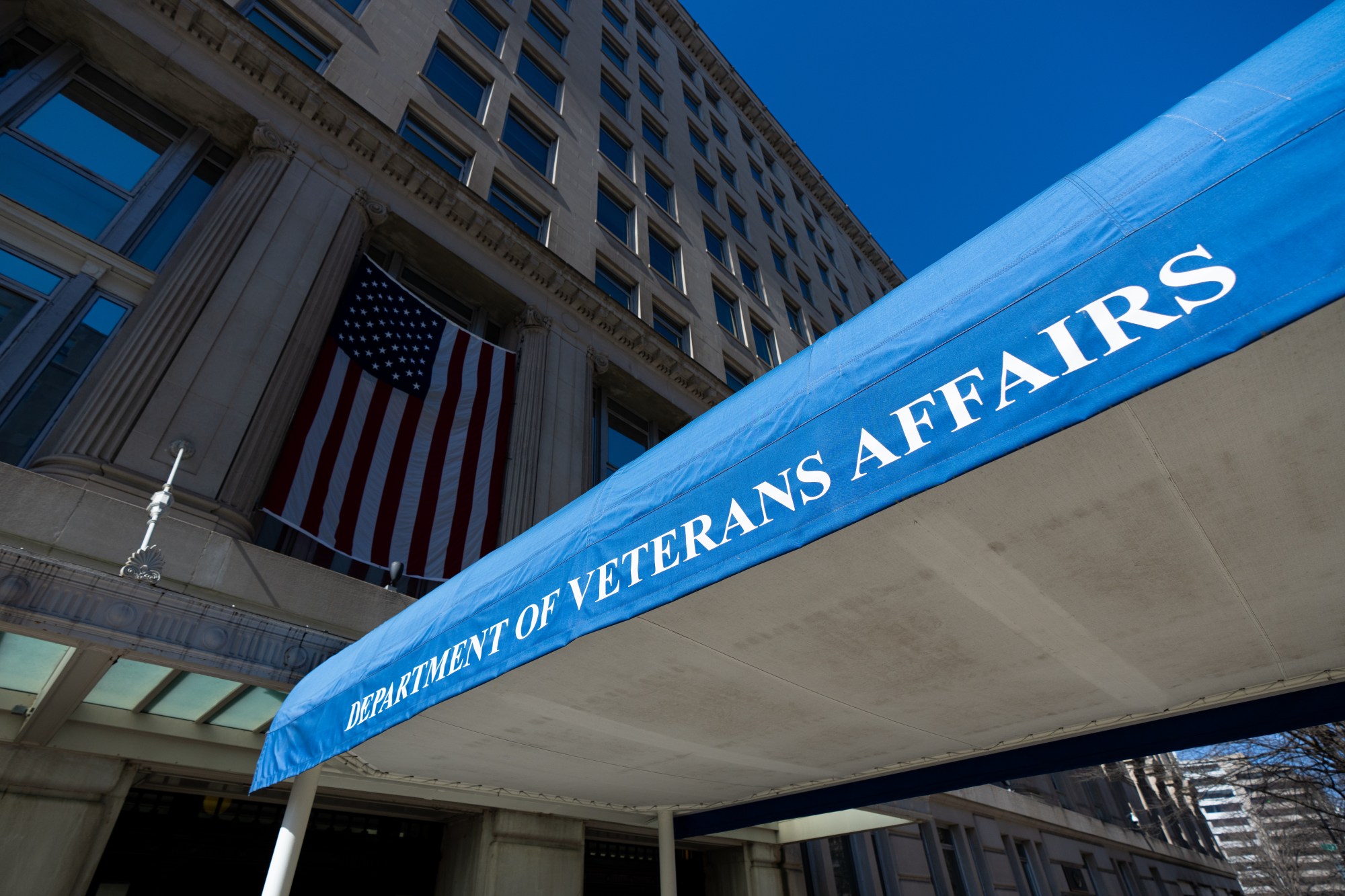
Decades after his service, the Department of Veterans Affairs determined his PTSD was service-connected and assigned an 80% disability rating. But federal law imposes a separate rule for veterans who are incarcerated for a felony: their benefits are capped at the equivalent of a 10% rating while incarcerated.
That is the spark. Johnson’s position is not simply that the VA misread his file. It is that the statute itself, by cutting benefits because of incarceration, violates constitutional protections, including equal protection principles.
Where the fight begins
On paper, this looks like a veterans benefits dispute. In practice, it is a jurisdiction fight, and those fights tend to decide far more than one person’s claim.
Johnson challenged the statute in federal district court, alleging it violates the Constitution’s equal protection guarantee. A federal court dismissed his case. The dismissal helped crystallize the larger question that has divided courts nationwide: does a veteran have the right to bring that kind of constitutional challenge in federal district court at all?
The Supreme Court is now being asked to decide whether veterans who bring a constitutional challenge to a benefits statute must route that claim through the VA’s specialized review process, or whether they can go straight to a federal district court in the first instance.
If you are wondering why that matters, consider what each path means:
- The VA track is expert-driven and specialized, but it is also sequential, procedural, and slow by design.
- Federal district court is the traditional place Americans test the constitutionality of laws, with an independent judge who is not part of the agency structure being challenged.
The constitutional tension is obvious: must you ask the agency to referee whether Congress gave the agency unconstitutional authority before you are allowed to ask an Article III court?
The 1988 review law
The legal battleground runs through the Veterans’ Judicial Review Act of 1988, which created a distinct pipeline for benefits disputes. The sequence runs from a VA regional office to the Board of Veterans’ Appeals, then to the U.S. Court of Appeals for Veterans Claims, and then to the U.S. Court of Appeals for the Federal Circuit.
That system exists for a reason. Veterans law is technical. Disability ratings can be granular. Congress built a specialized lane where expertise and uniformity could, at least in theory, thrive.
But the Court is now being asked whether that lane is exclusive even when the argument is not about medical evidence or rating schedules, but about whether Congress crossed a constitutional line in the first place.
The amicus brief
On June 12, the Pacific Legal Foundation filed an amicus brief supporting Johnson on the question whether federal district courts retain jurisdiction over constitutional challenges to veterans benefits statutes. The brief is described as 36 pages in connection with the filing and 32 pages in discussion of its contents.
PLF attorney Spencer Davenport warned that the scope of the Court’s eventual opinion will matter well beyond one veteran: "With any sort of case, depending on how narrow or how broadly the Court writes the opinion, it can have far-reaching consequences for other claims," he said.
Davenport also described PLF’s interest in the case in broader, structural terms: "Why PLF became involved in the case is because we've been involved in cases involving access to courts and the constitutional limits on agencies across the country, and so we viewed this case as presenting an important question about when people may seek judicial overview of constitutional claims and whether Congress has clearly displaced the typical judicial review scheme," he added.
The circuit split
This case arrives with the kind of judicial conflict the Supreme Court tends to resolve: different federal appellate courts have given different answers about where these lawsuits belong.
The split is unusually specific. The Eleventh Circuit has said veterans must use the VA system first, and the Eighth Circuit has sided with that view. But six other federal appeals courts have held that district courts retain jurisdiction over these constitutional challenges.
In other words, the country is already living under different rules depending on geography, which is often the clearest signal that the Court is going to step in.
Axon and agency timing
There is a reason this case is landing now. In recent years, the Court has shown more willingness to question whether Congress can require people to run constitutional claims through an agency’s process before a federal court will hear them.
A key reference point is the Court’s 2023 decision in Axon Enterprise v. FTC, where the Justices allowed certain structural constitutional challenges to be brought in federal court without first completing the agency’s administrative process.
Davenport drew the parallel directly, describing Johnson’s situation as “somewhat related” to Axon and emphasizing the core dispute over timing and venue. "This involves veterans' benefits, and so Mr. Johnson brought a bill of attainder clause claim and an equal protection component. It's very similar to Axon with whether he needs to go through the VA review process before going to federal court, or if he can bring those claims to federal court in the first instance," he said.
Specialized or sealed off
Americans tend to assume specialization is always a virtue. Sometimes it is. But specialization can also become insulation.
If the Court says veterans must always use the VA pipeline first, even for constitutional attacks on the statute, the practical result is that Congress can channel constitutional disputes into a forum where the claimant may spend years in procedure before an Article III court ever reaches the question.
If the Court goes the other way and opens district court doors to these claims, the VA system could face an uptick in parallel litigation. That may mean more judicial scrutiny, more inconsistency across districts, and more pressure on a system that was designed to centralize veterans law in specialized courts.
Neither option is automatically anti-veteran or pro-veteran. The real question is what kind of constitutional culture we want: one where the government can be challenged promptly in ordinary courts, or one where Congress can require most fights to be filtered through administrative channels first.
What happens next
Oral argument is expected in October or November during the upcoming term. A decision could clarify, in plain terms, whether a veteran alleging a benefits statute is unconstitutional can file in federal district court immediately or must first travel the full administrative and specialized-court route created in 1988.
For veterans, the result could shape how quickly constitutional claims get a hearing. For Congress, it will test how much power it has to route constitutional disputes into particular systems. And for the rest of us, it is another reminder that “access to justice” is not just a slogan. It is a set of procedural gates, and someone always holds the keys.